
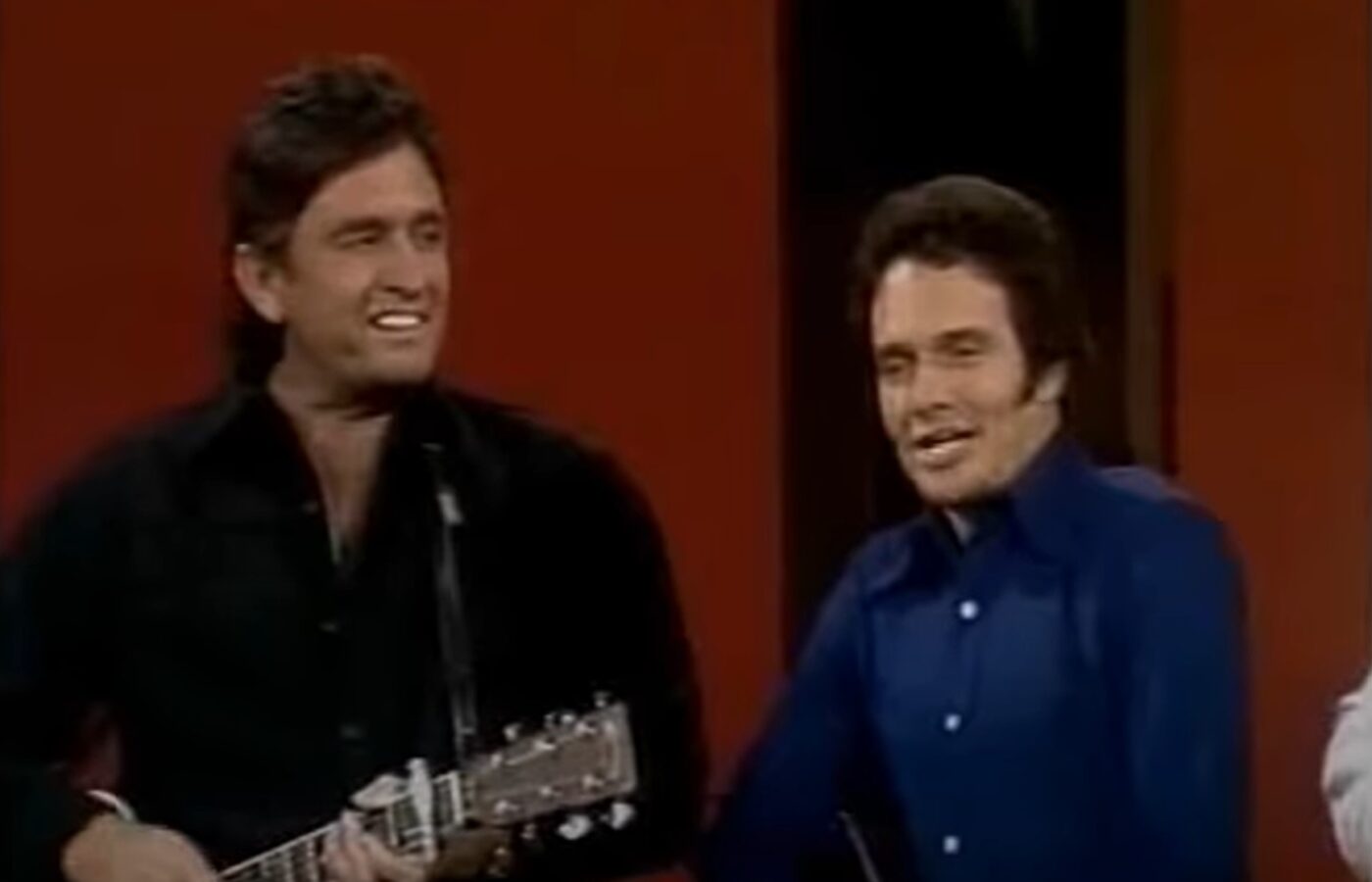
Merle Haggard’s Early Skepticism of Johnny Cash
Merle Haggard, a future country music legend, initially dismissed Johnny Cash’s musical style as “kind of corny.” This sentiment was common among some listeners before Cash solidified his outlaw image and unique sound. Haggard’s early impressions were not of admiration but of detached observation regarding Cash’s burgeoning career.
Haggard’s own life experiences were already shaping his musical sensibilities. He was known for his rebellious spirit and a deep connection to traditional country and Bakersfield Sound. His personal journey, marked by hardship and brushes with the law, would eventually align with themes Cash explored.
The era saw country music evolving. Artists like Cash were pushing boundaries, blending folk, gospel, and blues into a distinctive style. Haggard, at this point, had not yet fully recognized the depth and impact of Cash’s approach.
The Pivotal Day at San Quentin Prison: 1958
The turning point for Merle Haggard’s view of Johnny Cash occurred on January 1, 1959. On this day, Cash performed at San Quentin State Prison. Haggard was an inmate at the institution at the time, serving a sentence for burglary.
This performance was not Cash’s most famous San Quentin concert, which would take place in 1969 and be recorded for the album At San Quentin. However, the 1958 event was deeply significant for Haggard. It was a raw, unfiltered experience of Cash’s artistry within the confines of a maximum-security prison.
Cash’s presence in a prison environment resonated deeply with the incarcerated audience. His songs of struggle, redemption, and the common man found a captive and understanding ear. Haggard was among those prisoners, witnessing the spectacle unfold.
Johnny Cash’s Raw Performance
Johnny Cash’s performance at San Quentin in 1958 was characterized by its intensity and authenticity. He connected with the inmates through his direct lyrics and commanding stage presence. Cash understood the plight of the men behind bars, having cultivated an outlaw persona himself.
He performed songs that spoke to themes of regret, sin, and hope. The stark reality of the prison setting amplified the message of his music. This was not a polished concert hall show, but a visceral exchange between artist and audience.
The atmosphere was charged with emotion. Cash’s distinctive baritone voice filled the prison hall, cutting through the despair. He delivered his songs with conviction, forging an undeniable bond with the men who listened.
Haggard’s Transformation: From Skeptic to Believer
Merle Haggard’s initial perception of Johnny Cash as “corny” evaporated during the San Quentin performance. He witnessed Cash’s ability to captivate and move an audience under the most challenging circumstances. The raw power of the music and the genuine connection Cash established were undeniable.
Haggard later recounted how profoundly this experience affected him. He saw beyond the perceived simplicity of Cash’s style. He recognized the profound truth and emotional resonance in Cash’s songs, particularly those addressing life on the margins.
The concert provided Haggard with a new understanding of what country music could achieve. It demonstrated the power of authenticity and empathy. This moment served as a crucial catalyst for Haggard’s own musical aspirations.
The Impact on Haggard’s Musical Journey
The San Quentin experience became a foundational element in Merle Haggard’s artistic development. It inspired him to pursue music seriously upon his release. He began to see music not just as entertainment, but as a vehicle for storytelling and social commentary.
Haggard’s own music would later explore themes of incarceration, the struggles of the working class, and the complexities of redemption. Songs like “Mama Tried” and “Sing Me Back Home” directly reflect these influences. His compositions often carried a similar weight and authenticity to Cash’s prison songs.
The concert solidified Haggard’s respect for Cash. It showed him the path to becoming a voice for those often overlooked. The raw, honest approach he witnessed that day became a cornerstone of his own legendary career.
The Legacy of Johnny Cash’s Prison Concerts
Johnny Cash’s prison concerts, particularly those at Folsom and San Quentin, became legendary events. They cemented his image as the “Man in Black” who sympathized with the downtrodden. These performances were not mere shows; they were cultural phenomena.
The 1969 San Quentin concert, recorded for his iconic album, brought the prison experience to a global audience. It showcased Cash’s fearless approach to challenging norms. His decision to perform for inmates was a testament to his character and his belief in the power of music.
These concerts humanized the incarcerated population for many listeners. They highlighted the shared humanity between those inside and outside prison walls. Cash’s willingness to engage with this audience was revolutionary for its time.
How Prison Performances Shaped Country Music
Cash’s prison performances had a lasting impact on country music. They broadened the genre’s thematic scope. Artists felt more empowered to address difficult subjects, including crime, punishment, and social injustice.
The success of Cash’s live prison albums demonstrated a market for such raw and honest narratives. It proved that audiences craved authenticity. This paved the way for other artists to explore similar themes without fear of alienating their fanbase.
The concerts also reinforced the idea of the country artist as a voice for the common person. Cash’s connection with the inmates exemplified this role. It inspired a generation of musicians, including Merle Haggard, to speak truth through their songs.
Merle Haggard’s Rise to Stardom and Shared Themes
After his release from San Quentin, Merle Haggard embarked on a remarkable musical career. He became one of the most influential figures in country music, pioneering the Bakersfield Sound. His songs often reflected his personal history, including his time in prison.
Haggard’s authenticity and storytelling prowess quickly gained him a loyal following. He wrote and performed songs that resonated with working-class Americans. His narratives often touched on themes of hardship, resilience, and patriotism.
The parallels between Haggard’s and Cash’s careers are striking. Both artists found success by embracing their personal histories and channeling them into their music. Both became voices for the marginalized and the often-misunderstood.
The Connection Between Two Legends
The San Quentin encounter forged an invisible bond between Merle Haggard and Johnny Cash. Haggard’s respect for Cash grew into a deep admiration. He often cited Cash as a significant influence.
Their shared experiences, particularly with the justice system, provided a unique common ground. Both men understood the weight of second chances and the importance of redemption. This understanding permeated their respective bodies of work.
Over the years, both artists continued to challenge the Nashville establishment. They maintained their artistic integrity, refusing to compromise their sound or their message. Their legacies are intertwined through their commitment to honest, heartfelt country music.
The Enduring Influence on Country Music
The story of Merle Haggard witnessing Johnny Cash at San Quentin is more than an anecdote; it is a foundational myth in country music. It illustrates the powerful way art can transform individuals and inspire future generations.
The authenticity and raw emotion that Cash brought to his prison performances set a standard. It showed that country music could be both popular and profoundly meaningful. This lesson was not lost on Haggard, who carried it forward into his own career.
Both Cash and Haggard transcended the genre. They became cultural icons whose music spoke to universal human experiences. Their influence continues to shape contemporary country artists, who often look to their legacies for inspiration and guidance.
The early dismissal. The unexpected encounter. The profound transformation.
The enduring legacy.
Country music.