
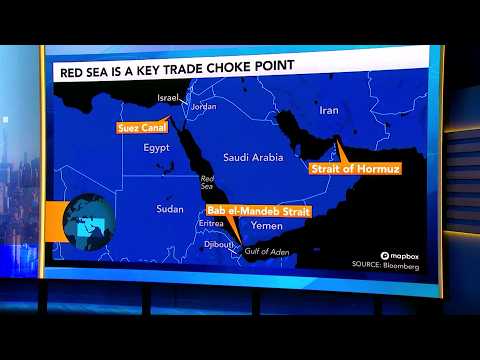
Former President Trump is reportedly weighing options for wider military attacks against Iran. These considerations come as Houthi forces have intensified their involvement in regional conflicts. The expanded Houthi actions have prompted a strategic reassessment within the former Trump administration regarding stability in the Middle East.
The potential for direct action against Iran represents a significant shift. Such a move would mark an escalation in U.S. policy towards the Islamic Republic. It underscores the complex and volatile nature of current geopolitical dynamics.
The Escalating Houthi Involvement
Houthi forces, based in Yemen, have increasingly played a role in recent Middle East conflicts. Their actions have included missile and drone attacks targeting various regional interests. These operations have been described by U.S. and allied intelligence as destabilizing.
The Houthis have demonstrated an enhanced capability for long-range strikes. This capacity poses a direct threat to international shipping lanes and regional energy infrastructure. Their involvement is seen as a proxy for Iranian influence in the region.
Recent Houthi aggressions have prompted a robust response from international coalitions. However, these responses have not fully deterred the group’s activities. The continued Houthi operations are a key factor in the current U.S. policy review.
Strategic Deliberations in Washington
Discussions within former President Trump’s national security team have intensified. Senior advisors are examining a range of military options. These options reportedly extend beyond existing retaliatory strikes against Houthi targets.
The focus has shifted to the source of Houthi capabilities. U.S. intelligence assessments frequently link Houthi armaments and training to Iran. This connection forms the basis for considering direct action against Iranian assets.
The deliberations involve the Department of Defense, the State Department, and the National Security Council. Former President Trump is receiving regular briefings on the evolving situation. All potential outcomes and regional impacts are being thoroughly analyzed.
Examining the Scope of Potential Attacks
The term ‘wider Iranian attacks’ suggests a broad array of targets. These could include Iranian military installations, naval assets, and missile development sites. Cyber warfare capabilities are also likely being considered.
Any action would aim to degrade Iran’s ability to support proxy groups. It would also seek to limit Iran’s influence in the Middle East. The administration seeks to restore deterrence in a region increasingly marked by volatility.
Analysts suggest that such strikes would be carefully calibrated. The goal would be to send a strong message without triggering an all-out war. However, the risk of miscalculation remains a significant concern for international observers.
Historical Context of U.S.-Iran Tensions
U.S.-Iran relations have been fraught for decades. The 1979 Iranian Revolution severed diplomatic ties. Subsequent events, including the Iran-Contra affair and Iran’s nuclear program, have maintained high tensions.
President Trump’s first term saw the U.S. withdraw from the Joint Comprehensive Plan of Action (JCPOA) in 2018. This move reimposed sanctions on Iran. It intensified economic pressure and diplomatic isolation.
The U.S. has consistently accused Iran of state-sponsored terrorism. It has also criticized Iran’s development of ballistic missiles. These long-standing grievances underpin the current policy considerations.
Previous Military Confrontations and Deterrence
Direct military confrontations between the U.S. and Iran have been rare but significant. The 1988 Operation Praying Mantis involved U.S. naval forces engaging Iranian naval elements. This action was a response to Iranian mining of international waters.
In early 2020, the U.S. conducted a drone strike that killed Qasem Soleimani. Soleimani was a prominent Iranian military commander. This event led to immediate retaliatory missile strikes by Iran against U.S. bases in Iraq.
These past incidents highlight the delicate balance of deterrence. Any new military action would carry the risk of a similar, or greater, retaliatory cycle. The administration is acutely aware of these historical precedents.
Regional Allies and Their Perspectives
Key U.S. allies in the Middle East are closely monitoring the situation. Saudi Arabia, Israel, and the United Arab Emirates share concerns about Iranian influence. They have historically advocated for a strong stance against Tehran.
These allies have also faced direct threats from Iranian-backed groups. This includes missile attacks and maritime disruptions. Their security interests align with U.S. objectives to curb Iranian aggression.
However, regional partners also express caution about widespread conflict. An all-out war could destabilize the entire region. It could disrupt global oil supplies and trigger humanitarian crises. Balancing these concerns is a critical diplomatic challenge.
International Reactions and Diplomacy
The international community is watching developments with apprehension. European powers, signatories to the JCPOA, have consistently pushed for diplomatic solutions. They advocate for de-escalation and dialogue.
The United Nations has also called for restraint from all parties. Secretary-General António Guterres has urged adherence to international law. He has emphasized the importance of protecting civilian lives.
Any U.S. military action against Iran would likely draw widespread international condemnation. It could complicate efforts to form a unified front against other global challenges. Diplomacy remains a preferred, though increasingly difficult, path.
Economic Implications of Escalation
A wider conflict involving Iran would have significant global economic repercussions. The Strait of Hormuz is a critical chokepoint for oil shipments. Disruptions there could send energy prices soaring worldwide.
Global financial markets typically react negatively to geopolitical instability. Increased tensions could lead to investor uncertainty. This could trigger sell-offs in equity markets and a flight to safe-haven assets.
The U.S. economy, while robust, would not be immune. Higher oil prices would impact consumers through increased fuel costs. Businesses would face higher operational expenses. The administration must weigh these economic costs against strategic objectives.
Cyber Warfare and Hybrid Threats
Modern conflicts are not limited to conventional military engagements. Cyber warfare is a growing component of state-sponsored aggression. Iran has demonstrated sophisticated cyber capabilities in the past.
A wider conflict could involve intensified cyberattacks against critical infrastructure. This includes energy grids, financial systems, and communication networks. Such attacks could have far-reaching effects beyond the immediate conflict zone.
Hybrid threats, combining conventional, unconventional, and cyber tactics, are also a concern. Iran’s use of proxy groups exemplifies this strategy. The U.S. must prepare for a multi-domain response to any escalation.
The Path Forward for Former President Trump
President Trump faces a complex decision matrix. He must balance national security interests with the risks of regional destabilization. The desire to deter Iranian aggression confronts the imperative to avoid a protracted war.
Options range from targeted punitive strikes to a broader campaign aimed at dismantling Iranian capabilities. Each option carries distinct advantages and severe potential drawbacks. The ultimate decision will shape U.S. foreign policy for years.
The administration’s rhetoric suggests a firm resolve. However, the exact nature of any action remains under wraps. Diplomacy, while challenging, is unlikely to be entirely abandoned, even amidst military considerations.
The Middle East remains a crucible of geopolitical tension. Houthi actions. Iranian influence. U.S. resolve. A critical juncture.