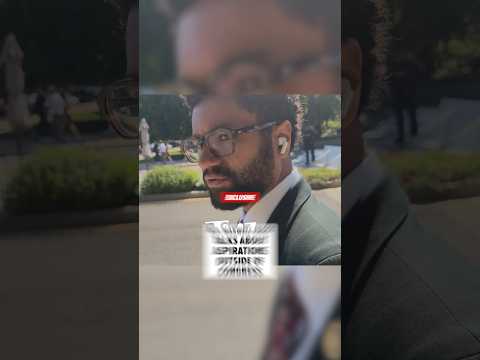
Representative Maxwell Frost, a Democratic Congressman from Florida, recently disclosed his musical ambitions during an interaction with TMZ. This moment captured by the celebrity news outlet illustrates the evolving landscape where political figures increasingly engage with entertainment media, showcasing personal interests beyond their legislative duties. Frost’s public comments reveal a facet of his personality that connects him to the arts, particularly music, and signal a potential path for future artistic endeavors.
The encounter with TMZ occurred in Washington D.C., a common location for the outlet to capture candid moments with politicians and other public figures. Frost’s willingness to discuss such personal aspirations on a platform typically associated with celebrity gossip marks a departure from conventional political communication strategies. It suggests a deliberate or organic effort to present a more multifaceted image to the public, blending the roles of legislator and artist.
The Intersection of Politics and Pop Culture
The convergence of politics and popular culture is not a new phenomenon, but its manifestation through platforms like TMZ represents a contemporary evolution. Historically, politicians have used various media to connect with constituents, from radio addresses to television appearances. The digital age, however, has amplified the reach and immediacy of these interactions, making personal revelations more accessible.
Maxwell Frost’s engagement with TMZ is noteworthy because it bypasses traditional political press in favor of an outlet focused on celebrity. This choice or circumstance allows for a more informal and perhaps more authentic portrayal of the individual behind the political office. It also taps into a different audience demographic, potentially reaching voters who might not regularly consume political news through conventional channels.
This strategy aligns with a broader trend of politicians leveraging social media and entertainment platforms to cultivate a relatable personal brand. By sharing aspects of their lives that extend beyond policy debates, elected officials can foster a deeper connection with the electorate, humanizing their roles in government. Frost’s musical aspirations serve as a prime example of this evolving dynamic.
Maxwell Frost’s Background in Music
Maxwell Frost’s connection to music predates his political career. He is known to have a history as a drummer, participating in various bands and exploring different musical genres. This background provides context for his recent comments to TMZ, indicating that his musical interests are not a sudden development but rather a long-standing passion.
His musical tastes are reportedly diverse, encompassing genres from hardcore punk to jazz. This breadth of appreciation suggests a deep engagement with the art form, beyond a casual hobby. Such a background offers a unique perspective for a member of Congress, potentially influencing his approach to cultural policy or simply adding another dimension to his public persona.
During his younger years, Frost was involved in the local music scene in Florida. This immersion allowed him to develop skills as a musician and to understand the cultural significance of music within communities. His experience in bands also cultivated a sense of collaboration and performance, traits that can be surprisingly relevant in the political arena.
Early Activism and Musical Expression
Before his election to Congress, Frost was a prominent activist. He worked with organizations such as the American Civil Liberties Union (ACLU) and March for Our Lives. His activism often involved organizing and public speaking, skills that resonate with the performative aspects of music.
The energy and passion often associated with musical performance, particularly in genres like punk, can also be observed in political activism. Frost’s ability to engage crowds and articulate a message, honed through his activist work, may draw parallels to his experiences as a musician. Both fields demand conviction, presence, and the ability to connect with an audience.
His journey from grassroots organizing to the halls of Congress reflects a dedicated commitment to public service. However, his continued interest in music demonstrates that these two spheres, politics and art, are not mutually exclusive. For Frost, they appear to be complementary expressions of his engagement with the world.
The Role of TMZ in Political Discourse
TMZ, originally an acronym for Thirty Mile Zone, is an entertainment news website and syndicated daily television show. It gained prominence for its coverage of celebrity gossip and breaking news in the entertainment industry. Its foray into political figures, while not its primary focus, has become increasingly common.
The platform’s candid, often ambush-style interviews provide an unfiltered glimpse into the lives of public figures. For politicians, this can be a double-edged sword. It offers an opportunity for direct communication without the mediation of traditional political journalists, but it also carries the risk of unforeseen or off-message comments.
In Maxwell Frost’s case, the TMZ interaction was seemingly benign, focusing on a personal interest rather than a political controversy. This type of engagement can humanize politicians, making them more approachable and relatable to a broader audience. It presents them as individuals with hobbies and passions, not just policy platforms.
Shifting Media Landscapes
The media landscape has undergone significant transformations in the 21st century. The rise of digital platforms, social media, and 24/7 news cycles has fragmented traditional media consumption. This fragmentation has created new avenues for public figures to disseminate information and connect with the public.
For politicians, adapting to this new landscape means engaging with diverse media outlets, including those traditionally outside the political beat. TMZ, with its vast reach and informal style, offers a unique channel for this engagement. It represents a departure from the formal press conferences and Sunday morning talk shows that once dominated political communication.
The willingness of a sitting Congressman to share personal aspirations on TMZ signifies an acceptance of this evolving media environment. It suggests that politicians recognize the importance of meeting audiences where they are, even if that means stepping into the realm of celebrity news.
The Broader Implications for Political Figures
Maxwell Frost’s open discussion of his musical aspirations carries broader implications for how political figures are perceived and how they interact with the public. It challenges the traditional image of a politician as solely focused on legislative matters, presenting a more holistic view of their lives.
This approach can contribute to a more authentic and transparent political discourse. When politicians share their personal interests and passions, it can break down barriers between elected officials and their constituents. It allows the public to see them as individuals with diverse interests, similar to themselves.
Furthermore, such revelations can inspire younger generations to consider careers in public service. By demonstrating that one can pursue both political leadership and artistic expression, Frost offers a model that expands the perception of what a politician can be. This could encourage a more diverse array of individuals to enter politics.
Connecting with the Electorate
In an era of increasing political polarization, finding common ground between politicians and the electorate is crucial. Shared interests, such as a love for music, can serve as a bridge, fostering connections that transcend partisan divides. When a politician reveals a personal passion, it can resonate with individuals who share that interest, regardless of their political affiliations.
Maxwell Frost’s musical background, particularly his involvement in genres like hardcore punk, could appeal to a demographic that might feel disenfranchised by mainstream politics. It demonstrates an understanding of subcultures and an openness to diverse forms of expression, potentially broadening his appeal.
This strategy of personal revelation is not without its risks. Politicians must carefully navigate the line between authenticity and oversharing. However, when executed genuinely, as appears to be the case with Frost, it can significantly enhance a public figure’s relatability and appeal. It allows for a more human connection in an often-impersonal political landscape.
Future Endeavors: Music and Policy?
The question remains whether Maxwell Frost’s musical aspirations will manifest in public performances, recordings, or some other form of artistic endeavor while he serves in Congress. The demands of legislative work are substantial, but many politicians maintain hobbies and interests outside their official duties.
It is conceivable that Frost could find ways to integrate his passion for music into his public life, perhaps through charity events, cultural initiatives, or even as a means of personal expression to balance the rigors of political life. The history of American politics includes examples of figures who also pursued artistic or athletic careers, demonstrating that these paths are not always mutually exclusive.
Regardless of how his musical ambitions unfold, Frost’s openness about them signals a potential shift in how politicians engage with their personal lives in the public eye. It suggests a future where authenticity and relatability are increasingly valued, and where the lines between professional and personal identities become more fluid for elected officials.
The drums still call. The voters still watch. The cameras still roll. TMZ.