President Trump’s Latest Stance on Iran
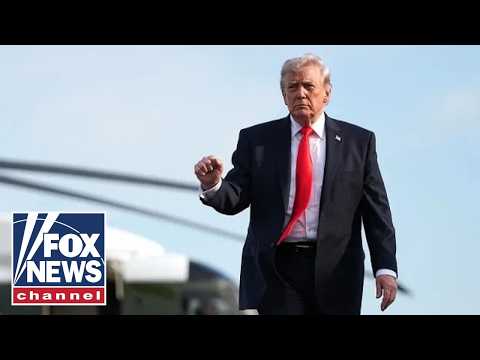
President Donald Trump issued a new warning to Iran on July 22, 2026. This declaration marks a significant moment in the ongoing diplomatic and strategic landscape between the United States and the Islamic Republic. The warning signals a potential escalation in the long-standing tensions that have characterized relations between the two nations.
This recent communication from the White House follows a period of heightened rhetoric and strategic maneuvers. The specific nature of the warning was not immediately detailed, but its issuance indicates a firm stance from the current U.S. administration.
A History of Warnings and Diplomatic Strain
The relationship between the United States and Iran has been marked by periods of intense strain for decades. Following the 1979 Iranian Revolution, diplomatic ties were severed. Subsequent U.S. administrations have grappled with Iran’s nuclear ambitions, its support for various non-state actors in the Middle East, and its ballistic missile program.
President Trump’s first term saw the U.S. withdraw from the Joint Comprehensive Plan of Action (JCPOA) in May 2018. This agreement, signed in 2015, aimed to limit Iran’s nuclear program in exchange for sanctions relief. The withdrawal reintroduced a broad range of U.S. sanctions against Iran, significantly impacting its economy.
The years following the JCPOA withdrawal were characterized by a series of confrontational incidents. These included attacks on oil tankers in the Persian Gulf, the downing of a U.S. drone, and a drone attack on Saudi Arabian oil facilities in September 2019, which the U.S. and its allies attributed to Iran.
In January 2020, a U.S. drone strike killed Qassem Soleimani, a prominent Iranian military commander, near Baghdad International Airport. Iran retaliated with missile strikes against U.S. forces in Iraq. These events brought the two nations to the brink of direct military conflict.
The Geopolitical Context of 2026
As of July 2026, the geopolitical landscape remains complex. Iran continues its uranium enrichment activities, which have raised concerns among international monitors and Western powers. The International Atomic Energy Agency (IAEA) has consistently reported on Iran’s nuclear program, highlighting its expansion beyond the limits set by the original JCPOA.
Regional tensions persist in the Middle East. Conflicts in Yemen, Syria, and Iraq continue to involve proxy forces supported by both Iran and its regional adversaries. The Strait of Hormuz, a critical chokepoint for global oil shipments, remains a flashpoint for potential confrontations.
The current administration in Washington D.C., led by President Trump, has maintained a policy of strong pressure on Iran. This approach emphasizes sanctions and deterrence, aiming to curb Iran’s nuclear development and its influence in the region.
International Reactions and Concerns
The international community has reacted to the ongoing U.S.-Iran tensions with a mix of concern and calls for de-escalation. European allies, who largely remained committed to the JCPOA after the U.S. withdrawal, have sought diplomatic solutions. They have often acted as intermediaries, advocating for dialogue and the preservation of the nuclear deal’s framework.
Nations in the Middle East, particularly those bordering Iran, monitor the situation closely. Saudi Arabia, the United Arab Emirates, and Israel view Iran’s regional activities as a direct threat to their security. These countries often align with the U.S. stance on containing Iranian influence.
The United Nations Security Council has also been a forum for discussions on Iran. Resolutions and statements from the UNSC have often called for adherence to international non-proliferation treaties and for peaceful resolutions to regional disputes.
Economic Pressures and Internal Dynamics in Iran
Sanctions imposed by the United States have had a significant impact on Iran’s economy. The country’s oil exports, a primary source of revenue, have been severely curtailed. This economic pressure has led to inflation, unemployment, and social unrest within Iran.
Despite these challenges, the Iranian government has largely maintained its hardline stance. Supreme Leader Ali Khamenei and other key figures have consistently rejected calls for fundamental changes to the country’s foreign policy or nuclear program. They often frame U.S. pressure as an attempt to undermine Iran’s sovereignty and regional standing.
Internally, Iran faces a complex political environment. Protests over economic conditions and social freedoms periodically occur. The interplay between internal dissent and external pressure shapes the government’s responses to international demands.
The Role of Cyber Warfare and Hybrid Threats
In recent years, the U.S.-Iran rivalry has also extended into the cyber domain. Both nations have been accused of engaging in cyber espionage and attacks against critical infrastructure. This non-conventional warfare adds another layer of complexity to the geopolitical tensions.
Hybrid threats, which combine conventional military posturing with cyber operations, disinformation campaigns, and proxy conflicts, have become a hallmark of the U.S.-Iran dynamic. These tactics make de-escalation more challenging and increase the risk of miscalculation.
Looking Ahead: Pathways and Perils
The latest warning from President Trump on July 22, 2026, underscores the persistent nature of the U.S.-Iran standoff. The immediate implications of this warning are subject to interpretation and depend on subsequent actions from both Washington D.C. and Tehran.
Future developments could involve further diplomatic efforts, increased economic sanctions, or military posturing. The international community continues to emphasize the importance of de-escalation and the pursuit of peaceful, diplomatic solutions.
The stability of the Middle East hinges significantly on the trajectory of this relationship. Global energy markets, international shipping, and regional conflicts are all influenced by the state of U.S.-Iran tensions.
Conclusion
President Trump issued a new warning to Iran. Geopolitical tensions remain high. International observers watch closely. Regional stability hangs in the balance. The global community seeks a path to peace.
De-escalation.