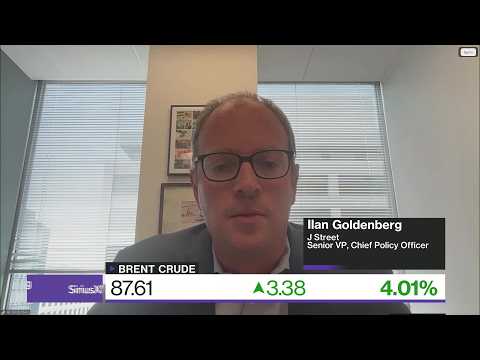

On July 15, 2026, President Trump issued a warning concerning Iran, a statement that immediately drew international attention to the ongoing geopolitical situation in the Middle East. This warning, delivered during a period of heightened global tensions, underscored concerns about regional stability and the future of international agreements. The announcement coincided with financial news highlighting the economic impact of technological advancements, specifically the rising demand for semiconductor manufacturing equipment from companies like ASML, driven by the expansion of artificial intelligence.
These two distinct but equally significant developments, a presidential warning on a critical geopolitical front and a report on the economic forces shaping the tech industry, illustrate the dual pressures of global security and technological evolution in mid-2026. The world navigates complex political landscapes while simultaneously adapting to rapid technological shifts that redefine industries and economies.
President Trump’s Warning on Iran
President Trump’s statement on Iran on July 15, 2026, reiterated the administration’s stance on the nation’s nuclear program and regional activities. The specific details of the warning were not immediately disclosed but were understood to relate to ongoing diplomatic efforts and security concerns. Such warnings often precede or accompany diplomatic maneuvers or policy adjustments designed to influence international behavior.
The relationship between the United States and Iran has been a consistent feature of international policy for decades. Various administrations have approached this relationship with differing strategies, encompassing sanctions, diplomatic engagement, and military deterrence. President Trump’s current administration has maintained a firm stance on preventing Iran from developing nuclear weapons and curbing its influence in the Middle East.
Geopolitical analysts widely discussed the implications of this warning. Concerns often center on the Strait of Hormuz, a critical chokepoint for global oil shipments, and the broader stability of the Persian Gulf region. Any escalation of tensions in this area has the potential to impact global energy markets and international trade routes.
The warning also likely touched upon Iran’s ballistic missile program and its support for various non-state actors in the region. These elements are frequently cited by the United States and its allies as destabilizing factors. International bodies such as the International Atomic Energy Agency (IAEA) continue to monitor Iran’s compliance with nuclear safeguards, adding another layer of complexity to the situation.
Diplomatic efforts involving European powers and other international partners often seek to de-escalate tensions and find common ground for negotiations. However, progress on these fronts has historically been challenging, marked by periods of intense negotiation and subsequent stalemates. President Trump’s warning served as a reminder of the persistent challenges in achieving lasting peace and security in the Middle East.
The Rise of AI and ASML’s Role
Simultaneously with the geopolitical news, reports emerged on July 15, 2026, detailing the soaring demand for semiconductor manufacturing equipment, primarily driven by the rapid advancements in artificial intelligence. This trend significantly impacts companies like ASML Holding N.V., a Dutch multinational corporation specializing in the development and manufacturing of photolithography systems.
ASML’s technology is critical for producing the advanced microchips that power everything from smartphones to supercomputers. The company holds a near-monopoly on extreme ultraviolet (EUV) lithography machines, which are essential for manufacturing the most advanced semiconductor nodes. These nodes are precisely what AI applications require to process vast amounts of data and perform complex computations at high speeds.
Artificial intelligence, in 2026, is no longer a nascent technology. It has permeated various sectors, including healthcare, finance, automotive, and entertainment. The development of large language models, advanced machine learning algorithms, and sophisticated AI hardware necessitates an ever-increasing supply of powerful and efficient semiconductors. This demand translates directly into orders for ASML’s cutting-edge equipment.
The global semiconductor shortage experienced in the early 2020s highlighted the fragility of the supply chain and the critical importance of chip manufacturing capabilities. In response, many nations, including the United States and European Union members, have invested heavily in domestic chip production. This push further fuels the demand for ASML’s machinery, as new fabs (fabrication plants) are built or expanded worldwide.
ASML’s strategic importance extends beyond its technological prowess. It represents a vital choke point in the global technology supply chain. Without ASML’s EUV machines, manufacturing the most advanced chips becomes exceedingly difficult, if not impossible. This position gives the company significant leverage and makes it a focal point for geopolitical and economic competition.
Interconnected Global Dynamics
The convergence of President Trump’s Iran warning and the AI-driven surge in ASML’s demand illustrates the interconnectedness of global affairs. Geopolitical stability is often a prerequisite for economic growth and technological advancement. Conversely, technological competition can become a source of international tension.
For instance, the ability of nations to access advanced semiconductor technology is increasingly linked to national security and economic competitiveness. Restrictions on technology exports, often driven by geopolitical considerations, can have profound impacts on global supply chains and the pace of innovation. The United States, for example, has implemented measures to limit China’s access to advanced chip technology, directly impacting companies in the semiconductor ecosystem, including those that rely on ASML’s equipment.
The pursuit of AI supremacy is a global race, with major powers investing billions in research, development, and infrastructure. This race is not just about technological leadership; it is also about economic dominance and military advantage. The capacity to develop and deploy advanced AI systems depends heavily on access to the most sophisticated computing hardware, which in turn depends on the output of companies like ASML.
Therefore, a warning about Iran, while seemingly distant from semiconductor manufacturing, is part of a larger tapestry of global risk and opportunity. Stable international relations allow for predictable trade and technological collaboration, fostering an environment where innovation can thrive. Instability, however, can disrupt supply chains, deter investment, and redirect resources from technological advancement towards security concerns.
The events of July 15, 2026, serve as a microcosm of the challenges faced by leaders and policymakers. They must navigate a world where geopolitical flashpoints can emerge rapidly, while simultaneously adapting to and harnessing the transformative power of technologies like artificial intelligence. The decisions made today in one domain can have ripple effects across others, shaping the global landscape for years to come.
The Impact on International Relations
President Trump’s warning to Iran will invariably influence diplomatic discussions and alliances. Allies of the United States in the Middle East, such as Saudi Arabia and Israel, often share concerns about Iran’s regional activities. A strong stance from Washington can be seen as a reaffirmation of security commitments.
Conversely, nations that advocate for a more conciliatory approach with Iran may view the warning as a potential impediment to diplomatic resolutions. European nations, in particular, have often sought to maintain channels of communication and trade with Iran, even amidst sanctions. The warning could complicate these efforts.
The United Nations and its various agencies also play a role in monitoring international agreements and mediating disputes. Any significant shift in policy or rhetoric from a major power like the United States can prompt discussions within these multilateral forums. The goal is often to prevent escalation and ensure adherence to international law.
The warning’s long-term impact will depend on subsequent actions and reactions from all parties involved. Whether it leads to intensified negotiations, further sanctions, or other measures remains to be seen. The Middle East remains a region of complex interdependencies, where even a single statement can have wide-ranging consequences.
Economic Implications of AI Growth
The accelerated demand for ASML’s products underscores a broader economic trend: the massive investment flowing into the AI sector. This investment is not limited to software development; it extends to the foundational hardware infrastructure required to run AI models effectively. Data centers are expanding, requiring more powerful and energy-efficient chips.
This growth creates significant economic opportunities but also presents challenges. The concentration of advanced chip manufacturing in a few key regions, primarily East Asia and the Netherlands, raises concerns about supply chain resilience. Diversifying manufacturing capabilities has become a strategic priority for many governments to mitigate future disruptions.
The economic benefits of AI are projected to be substantial, driving productivity gains across industries and creating new markets. However, the equitable distribution of these benefits and the potential for job displacement due to automation are also subjects of ongoing debate. The demand for ASML’s technology is a tangible manifestation of these powerful economic forces at play.
The confluence of geopolitical warnings and technological acceleration shapes the global narrative. Nations are grappling with the need for security in an unpredictable world. They are also competing for economic and technological leadership in a rapidly evolving digital landscape. President Trump’s warning. AI-driven demand. Global shifts.
Complexity.
FAQ Section
What was President Trump’s warning about on July 15, 2026?
President Trump issued a warning concerning Iran on July 15, 2026. The warning addressed ongoing geopolitical concerns related to Iran’s nuclear program and its regional activities, underscoring the administration’s focus on Middle East stability.
How is AI impacting the demand for semiconductor equipment?
Artificial intelligence advancements are significantly increasing the demand for advanced semiconductor manufacturing equipment. AI applications require powerful and efficient microchips to process large datasets and execute complex algorithms, leading to a surge in orders for companies like ASML that produce these critical machines.
What is ASML’s role in the semiconductor industry?
ASML Holding N.V. is a crucial supplier to the semiconductor industry, specializing in photolithography systems. The company is particularly dominant in extreme ultraviolet (EUV) lithography, technology essential for manufacturing the most advanced and smallest microchips used in cutting-edge AI and other high-tech applications.
Why are geopolitical events and technological trends discussed together?
Geopolitical events and technological trends are often discussed together because they are deeply interconnected. Geopolitical stability can enable technological advancement, while technological competition can create new geopolitical tensions. For example, access to advanced AI technology is now a matter of national security and economic competitiveness, making the stability of supply chains and international relations crucial.
What are the broader implications of these global shifts?
The broader implications include increased international focus on both regional security and technological leadership. Nations are navigating complex diplomatic challenges while simultaneously investing heavily in AI and semiconductor manufacturing to secure future economic growth and strategic advantage. These shifts define the global landscape of the mid-2020s.