
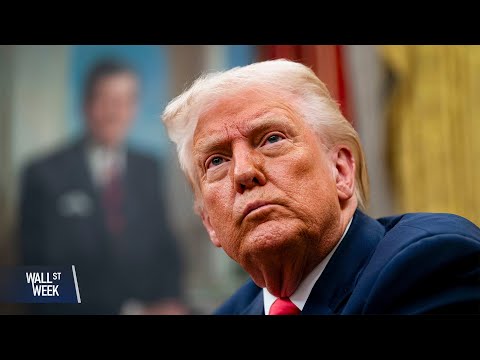
The United States-Mexico-Canada Agreement (USMCA), which replaced the North American Free Trade Agreement (NAFTA) on July 1, 2020, faces potential challenges if former President Donald Trump secures a second term in office. The agreement’s future hinges on the political and economic priorities of a new administration, particularly regarding trade balances and domestic manufacturing.
This uncertainty generates both anxiety and anticipation among businesses, policymakers, and citizens across North America. The debate centers on the balance between free trade, national sovereignty, and the protection of domestic industries.
The Origins of USMCA
The USMCA emerged from a period of intense renegotiation of NAFTA, a trade pact that had been in effect since January 1, 1994. Former President Donald Trump campaigned on a platform critical of NAFTA, labeling it a ‘disaster’ and vowing to replace it. Negotiations began in August 2017 among the United States, Mexico, and Canada.
Key US demands included stronger protections for American workers, increased domestic content in manufactured goods, and updated provisions for digital trade. The negotiations were often contentious, marked by tariffs and threats of withdrawal.
An agreement in principle was reached in September 2018. The formal signing occurred on November 30, 2018, in Buenos Aires, Argentina, by President Trump, then-Canadian Prime Minister Justin Trudeau, and then-Mexican President Enrique Peña Nieto. Each country then underwent its domestic ratification process.
Key Provisions and Changes from NAFTA
The USMCA introduced several significant changes compared to its predecessor. One of the most notable was in the automotive sector. The agreement increased the regional value content (RVC) requirement for cars and trucks to qualify for duty-free treatment. Under USMCA, 75% of auto content must originate in North America, up from 62.5% under NAFTA.
Furthermore, 70% of the steel and aluminum used in North American vehicles must originate from the region. A new provision also stipulated that 40-45% of auto content must be made by workers earning at least $16 per hour. This ‘labor value content’ rule aimed to incentivize higher wages in Mexican auto plants and prevent outsourcing to lower-wage countries.
Other significant updates included stronger intellectual property protections, particularly for pharmaceuticals and digital products. The agreement also included new chapters on digital trade, environmental protections, and labor rights. Canada agreed to open its dairy market further to U.S. producers, a long-standing point of contention.
A critical, and often debated, feature of the USMCA is its ‘sunset clause.’ This provision mandates that the agreement expires after 16 years, unless the parties agree to renew it. A joint review of the agreement is required every six years, allowing for potential amendments or extensions.
The Trump Administration’s Trade Philosophy
Former President Donald Trump’s approach to trade was characterized by a focus on bilateral agreements, reducing trade deficits, and protecting domestic industries. He often employed tariffs as a negotiating tool, notably imposing duties on steel and aluminum imports from various countries, including Canada and Mexico, during the USMCA negotiations.
His administration prioritized what it termed ‘fair trade’ over ‘free trade,’ arguing that previous agreements had disadvantaged American workers and industries. This philosophy guided the renegotiation of NAFTA and the initiation of trade disputes with China and the European Union.
Key figures in the first Trump administration’s trade policy included U.S. Trade Representative Robert Lighthizer and Commerce Secretary Wilbur Ross. Their work emphasized aggressive enforcement of trade laws and a willingness to challenge established global trade norms.
Potential Scenarios for a Second Trump Term
The prospect of a second Trump administration raises multiple scenarios for the USMCA. One possibility is a renewed push for renegotiation. Former President Trump has consistently expressed a desire to revisit trade agreements he perceives as unfavorable to the United States. He has indicated a preference for bilateral deals over multilateral ones.
A second scenario involves the potential activation of the sunset clause, or at least leveraging its existence. The six-year review period for USMCA is scheduled for 2026. This timing coincides with the early years of a potential second Trump term, providing an immediate opportunity to scrutinize the agreement’s effectiveness.
Another, more extreme, scenario could be a withdrawal from the USMCA. While the agreement itself was a signature achievement of his first term, a renewed focus on ‘America First’ policies could lead to a re-evaluation of all international commitments. Such a move would have significant economic repercussions for all three North American economies.
Impact on Canada and Mexico
For Canada, the USMCA represents stability in its largest trading relationship. The United States is Canada’s primary export market, accounting for a substantial portion of its GDP. Any disruption to the USMCA could lead to economic uncertainty, particularly for sectors like automotive, agriculture, and energy.
During the initial NAFTA renegotiations, Canada faced threats of auto tariffs and other trade penalties. A similar approach in a second Trump term could force Canada to make further concessions or face economic headwinds.
Mexico also relies heavily on its trade relationship with the United States. The USMCA’s rules of origin, particularly for the automotive sector, have integrated Mexican manufacturing into North American supply chains. Changes to the agreement could lead to significant restructuring within Mexican industries, impacting employment and investment.
Mexico’s current leadership, under President Andrés Manuel López Obrador until October 2024, maintained a pragmatic relationship with the Trump administration during the initial USMCA talks. A future Mexican government would face similar pressures to navigate any new trade demands from Washington.
Economic Implications and Supply Chains
The USMCA underpins vast and complex North American supply chains. Industries such as automotive, aerospace, electronics, and agriculture have structured their operations around the agreement’s provisions. Changes to the USMCA could force companies to re-evaluate their production strategies, potentially leading to increased costs, reduced efficiency, and relocation of facilities.
For instance, if the automotive rules of origin were further tightened or if tariffs were reintroduced, manufacturers might struggle to meet compliance requirements or find it more cost-effective to produce outside the region. This could disrupt the flow of goods and components across the U.S.-Mexico and U.S.-Canada borders.
The agreement’s impact extends beyond large corporations. Small and medium-sized enterprises (SMEs) that participate in cross-border trade would also face heightened uncertainty. The stability provided by a predictable trade framework is crucial for these businesses to plan investments and manage risks.
The Role of Congress and Domestic Politics
Any significant changes to the USMCA, such as withdrawal or major renegotiation, would likely involve the U.S. Congress. While the President has considerable authority in trade policy, congressional approval is often required for new trade agreements or substantial amendments.
The political landscape in 2026 will play a critical role. The composition of the House of Representatives and the Senate would influence the feasibility of a President’s trade agenda. Divisions within political parties regarding trade policy could either facilitate or obstruct efforts to alter the USMCA.
Domestic industries and labor unions also exert significant influence. Groups that benefited from the USMCA’s protections, such as certain manufacturing sectors and agricultural producers, would likely lobby to maintain the agreement. Conversely, industries that feel disadvantaged might advocate for further changes.
Looking Ahead: Trade in a Multipolar World
Beyond the immediate future of USMCA, the broader context of global trade is shifting. The rise of protectionist sentiments in various countries, coupled with geopolitical tensions, suggests a move away from purely globalized supply chains towards more regionalized or ‘friend-shored’ approaches.
The USMCA, in many ways, was an early example of this trend, emphasizing regional content and labor standards. Its fate under a second Trump administration could signal the direction of U.S. trade policy for years to come, impacting relationships not only with Canada and Mexico but also with other major trading partners.
The debate over USMCA’s survival reflects deeper questions about economic sovereignty, national security, and the future of international cooperation in an increasingly complex world.
The Path Forward
The 2026 review period for USMCA looms as a critical juncture. Canada and Mexico will likely prepare for various contingencies, including potential demands for renegotiation. Businesses throughout North America will monitor political developments closely, adapting their strategies to navigate potential shifts in trade policy.
The agreement’s resilience will be tested. Its ability to adapt to changing economic realities and political priorities will determine its longevity.
Governments conferred. Businesses adapted. Citizens watched.
Uncertainty.