
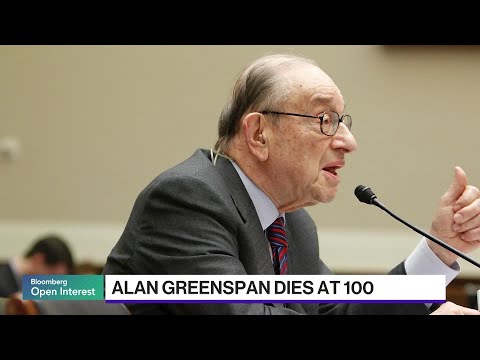
The Longest Tenure at the Eccles Building
Alan Greenspan served as the 13th Chairman of the Federal Reserve from August 11, 1987, to January 31, 2006, overseeing U.S. monetary policy through the 1987 stock market crash, the 1990s dot-com boom, and the early 2000s housing expansion. Today, Wall Street remembers his tenure as a complex era of unprecedented economic growth that ultimately laid the deregulatory groundwork for the 2008 global financial crisis. His legacy is defined by a deep belief in self-regulating markets, prolonged low-interest-rate policies, and the implicit market backstop known as the Greenspan Put.
In many ways, the modern financial system still operates in his shadow.
The Federal Open Market Committee currently navigates an economic landscape shaped by his structural decisions. The banking sector of 2026 manages risk parameters established during his tenure. But the story of his influence does not begin with an economic boom. It begins with a sudden, catastrophic collapse.
October 1987 and the Birth of the Greenspan Put
Alan Greenspan took the oath of office on August 11, 1987. He succeeded Paul Volcker at the Eccles Building in Washington, D.C. Volcker had previously crushed double-digit inflation using punishingly high interest rates. Greenspan inherited a stabilizing economy. Then the market broke.
October 19, 1987. History records the date as Black Monday. The Dow Jones Industrial Average plummeted 508 points. The decline represented a 22.6 percent drop in a single trading session. Panic gripped the New York Stock Exchange. Portfolio insurance algorithms triggered a cascade of automated selling. The global financial system teetered on the edge of a systemic freeze.
Greenspan acted immediately. He issued a single, one-sentence statement before the markets opened on Tuesday morning, October 20. The Federal Reserve affirmed its readiness to serve as a source of liquidity to support the economic and financial system.
He flooded the market with cash. The Federal Reserve orchestrated massive open-market purchases. Greenspan personally urged commercial banks to keep credit lines open to solvent securities firms. The panic subsided within days. The broader market recovered.
Wall Street learned a crucial lesson from the intervention. The central bank would intervene to prevent catastrophic asset deflation. Financial commentators coined a new term. The Greenspan Put was born. It established the implicit belief that the Federal Reserve would always step in to place a floor under falling equity prices. This psychological safety net changed risk assessment on Wall Street for decades.
The Briefcase Indicator and Central Bank Mystique
During his tenure, Greenspan operated with an aura of deliberate mystery. Financial analysts scrutinized the physical thickness of his leather briefcase on Federal Open Market Committee meeting days. A thick briefcase suggested heavy reading and steady interest rates. A thin briefcase suggested swift policy action. The financial world watched his every physical step.
They parsed his every convoluted syllable. He mastered the art of Fedspeak. This was a dialect of dense, qualified economic jargon designed to avoid market panic while preserving maximum policy flexibility. He famously told a congressional committee that if he seemed unduly clear, they must have misunderstood him.
Modern central banking relies on explicit forward guidance and dot plots. Current Federal Reserve Chairman Jerome Powell holds regular press conferences to explain policy decisions. Greenspan offered no such clarity. He functioned as an economic oracle. Wall Street preferred the mystery.
The 1990s Productivity Miracle
The 1990s cemented the Chairman’s legend. The United States entered the longest peacetime economic expansion in its history. Traditional economic models, specifically the Phillips curve, suggested that low unemployment would trigger runaway inflation. Greenspan looked deeper into the labor data.
He identified a structural shift in the American workplace. The integration of computers, software, and information technology was driving a massive surge in worker productivity. This productivity miracle meant the economy could grow faster without overheating.
He held the federal funds rate steady. He allowed the economy to run hot. Millions of jobs materialized. The federal government under President Bill Clinton achieved a budget surplus. Wall Street valuations soared as the decade progressed.
In 2000, journalist Bob Woodward published a biography of the Chairman. The title consisted of a single word. Maestro. The moniker stuck permanently. Wall Street viewed Greenspan not just as a regulator, but as a virtuoso conductor orchestrating the perfect balance of growth and price stability.
He achieved a level of celebrity rarely afforded to central bankers. He sat next to First Lady Hillary Clinton during State of the Union addresses. Queen Elizabeth II knighted him in 2002. President George W. Bush awarded him the Presidential Medal of Freedom in 2005. He stood as the undisputed heavyweight champion of global finance.
The Warning of Irrational Exuberance
The technology boom eventually morphed into a speculative frenzy. Valuations defied traditional financial logic. Companies like Pets.com and Webvan achieved massive initial public offerings without demonstrating a path to profitability. The Nasdaq Composite Index climbed at an unprecedented trajectory.
On December 5, 1996, Greenspan delivered a televised speech at the American Enterprise Institute in Washington, D.C. He posed a rhetorical question to the audience.
But how do we know when irrational exuberance has unduly escalated asset values, which then become subject to unexpected and prolonged contractions as they have in Japan over the past decade?
The phrase sent immediate shockwaves across global markets. The Japanese Nikkei 225 dropped. European markets opened lower. The Dow Jones Industrial Average fell at the opening bell in New York.
Yet, the intervention remained purely verbal. Greenspan did not raise margin requirements. He did not aggressively hike interest rates to puncture the inflating bubble. He maintained that central banks could not reliably identify asset bubbles while they were expanding.
He believed the role of the Federal Reserve was to clean up the economic mess after a bubble burst, not to preemptively pop it. The market quickly recovered from his warning. The dot-com bubble inflated for another three years.
When the bubble finally burst in March 2000, trillions of dollars in paper wealth evaporated. The Nasdaq Composite fell from 5,048 to under 1,200 by October 2002. The subsequent recession was relatively mild, but the structural precedent held firm. The Federal Reserve would manage the fallout, not restrict the buildup.
The 1.0 Percent Solution
The early 2000s tested the limits of the Greenspan doctrine. The dot-com crash damaged the broader economy. The September 11, 2001, terrorist attacks temporarily paralyzed the nation. Corporate accounting scandals at Enron and WorldCom shattered retail investor confidence.
Deflation became the primary fear at the Eccles Building. Greenspan responded with overwhelming monetary force. The Federal Open Market Committee aggressively slashed the federal funds rate.
By June 2003, the target rate hit 1.0 percent. It marked the lowest level in nearly half a century. Greenspan held the rate at 1.0 percent for a full year. He then raised it at a measured, heavily telegraphed pace.
This prolonged period of cheap money fundamentally altered Wall Street mechanics. Institutional investors faced a severe crisis of yield. Traditional fixed-income investments offered negligible returns. Capital began searching for higher yields across alternative asset classes.
It found a willing partner in the American real estate market. The low interest rates fueled a massive, nationwide housing boom. Wall Street financial engineers packaged subprime mortgages into complex securities. Collateralized debt obligations proliferated across global bank balance sheets.
The financial system became highly leveraged. The foundation for the 2008 financial crisis was poured during this window. It was funded by the cheapest capital in modern history.
Deregulation and the Objectivist Foundation
To understand the policy decisions, one must understand the underlying philosophy. Alan Greenspan was deeply influenced by the Objectivist philosophy of Ayn Rand. He joined her inner circle, known as the Collective, in New York City during the 1950s.
He contributed essays to her publications. He believed fundamentally in the moral and practical superiority of laissez-faire capitalism. He trusted that market participants would rationally self-regulate to protect their own long-term interests.
This ideological foundation drove his approach to financial regulation. Greenspan consistently opposed the regulation of over-the-counter derivatives. The market for credit default swaps grew exponentially under his watch.
In 1998, the hedge fund Long-Term Capital Management collapsed. The Federal Reserve Bank of New York orchestrated a 3.6 billion dollar bailout to prevent systemic contagion. Despite this near-miss, Greenspan resisted calls for tighter oversight.
Commodity Futures Trading Commission Chairperson Brooksley Born warned Congress about the dangers of unregulated derivatives in the late 1990s. Greenspan, alongside Treasury Secretary Robert Rubin and SEC Chairman Arthur Levitt, aggressively opposed her efforts. They championed the Commodity Futures Modernization Act of 2000. The legislation effectively banned the regulation of over-the-counter derivatives.
Greenspan also supported the repeal of the Glass-Steagall Act. Congress passed the Gramm-Leach-Bliley Act in 1999. The legislation dismantled the Depression-era wall between commercial banking and investment banking. Citigroup formed. Financial conglomerates grew massive. The concept of institutions being too big to fail became a structural reality.
Wall Street celebrated the legislative victories. The major investment banks expanded their derivative desks. The shadow banking system grew larger than the traditional depository banking system.
The 2008 Reckoning and Historical Revision
Alan Greenspan stepped down as Chairman on January 31, 2006. Ben Bernanke assumed control of the Federal Reserve. Two years later, the global financial system collapsed. The subprime mortgage market imploded. Lehman Brothers filed for bankruptcy on September 15, 2008. The housing bubble burst.
The crisis forced a severe historical revision of the Greenspan legacy. On October 23, 2008, the former Chairman testified before the House Committee on Oversight and Government Reform. Representative Henry Waxman pressed him on his deregulatory ideology.
Greenspan offered a rare admission. He stated that he had found a flaw in the model that he perceived as the critical functioning structure that defines how the world works. He admitted shock that financial institutions had failed to protect shareholder equity.
The Maestro moniker faded. Critics pointed to his 1.0 percent interest rate policy as the primary catalyst for the housing bubble. Economists criticized his refusal to regulate derivatives. The policies that earned him universal praise in the 1990s became the exact policies blamed for the Great Recession.
Congress responded by passing the Dodd-Frank Wall Street Reform and Consumer Protection Act of 2010. The legislation aimed to dismantle the deregulatory framework Greenspan had helped build. The era of pure self-regulation ended.
How Markets View the Era in 2026
Today, financial markets view the Greenspan era with a complex mixture of nostalgia and caution. The inflation battles of the early 2020s framed his 1990s tenure in a new light. Achieving high economic growth with low inflation remains the ultimate, elusive goal of central banking.
Yet, the structural realities established during his nineteen years remain. The reliance on monetary policy to solve structural economic problems persists. The expectation of central bank intervention during market panics remains entrenched.
Wall Street still operates on the foundation he poured. The derivatives market remains massive. The tension between financial innovation and systemic risk continues to define regulatory debates in Washington.
Presidents praised him. Markets trusted him. History reevaluated him.
The Maestro.