
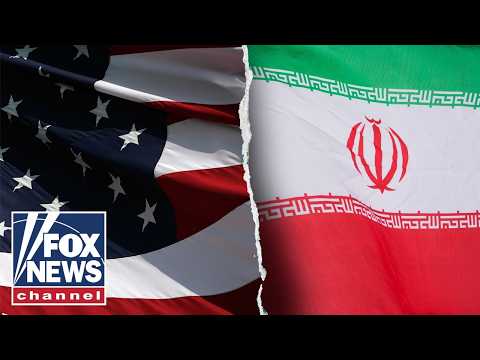
On June 22, 2026, breaking reports detailed the emergence of a new Memorandum of Understanding (MOU) between the United States and Iran. The diplomatic framework, featured in morning broadcasts by Fox News, establishes a newly negotiated baseline for bilateral engagement. The full text of the memorandum remains unreleased. Officials in Washington and Tehran have yet to publish the itemized concessions.
In many ways, this development mirrors previous executive maneuvers. An MOU functions differently than a ratified treaty. It operates as a formalized statement of mutual intent. It does not carry the binding legal weight of a treaty approved by the United States Senate. Instead, it serves as a diplomatic stepping stone in a complex geopolitical landscape.
The Mechanics of Executive Diplomacy
A Memorandum of Understanding allows executive branches to bypass the lengthy, often contentious process of treaty ratification. The United States Constitution requires a two-thirds majority in the Senate to ratify a formal treaty. In the hyper-partisan environment of 2026, securing 67 votes for any agreement with Tehran is a statistical impossibility. Executive agreements offer an alternative path.
In the context of US-Iran relations, this mechanism has historically been utilized to manage immediate crises. Administrations use these frameworks to facilitate prisoner exchanges. They use them to establish temporary thresholds on nuclear enrichment. They use them to unfreeze targeted financial assets.
The Case-Zablocki Act of 1972 requires the executive branch to report all international agreements to Congress within 60 days. This legal framework ensures that even unwritten or informal memorandums eventually face congressional scrutiny. The tension between executive branch agility and legislative oversight defines modern American foreign policy. The specific focus of the June 22 agreement remains the subject of intense scrutiny on Capitol Hill.
The June 2026 Fox News Broadcast
Details surrounding the June 2026 framework are actively developing. Fox News anchors highlighted the sudden nature of the agreement during their breaking morning coverage. The broadcast underscored the immediate political ramifications of the unannounced deal.
Morning broadcasts serve as a primary conduit for political messaging in Washington. When a network like Fox News breaks a diplomatic story, it instantly sets the agenda for the daily White House press briefing. The State Department press corps will inevitably demand clarification on the specifics of the MOU during their afternoon sessions.
Initial assessments suggest the memorandum targets specific, compartmentalized areas of mutual interest. It is not framed as a comprehensive bilateral reset. Historical precedents between the State Department and Iranian diplomats often involve third-party intermediaries. Locations like Muscat, Oman, or Doha, Qatar, frequently host these indirect talks. It remains unclear if this current MOU utilized similar Gulf state channels.
Historical Precedent for Unwritten Agreements
The United States and Iran share a long history of informal and executive agreements. Formal diplomatic ties were severed in 1980 following the takeover of the US Embassy in Tehran. Since then, the two nations have relied on Swiss intermediaries to handle formal consular matters.
Major diplomatic shifts often begin as memorandums or unwritten understandings. The Algiers Accords of 1981 resolved the Iranian hostage crisis and established the Iran-United States Claims Tribunal. This agreement was entirely executive in nature. It bypassed the Senate but fundamentally altered bilateral relations for decades. The reliance on executive authority on June 22, 2026, continues a 45-year tradition of bypassing formal treaty mechanisms when dealing with Tehran.
The 2015 Joint Comprehensive Plan of Action (JCPOA) was a political commitment, not a treaty. When the United States withdrew from the JCPOA in May 2018, the architecture of the agreement dissolved precisely because it lacked binding treaty status.
More recently, in September 2023, the two nations executed a complex prisoner swap. That deal involved the unfreezing of $6 billion in Iranian oil revenues held in South Korea. The funds were transferred to restricted accounts in Qatar. The 2023 arrangement was never formalized as a treaty. It operated as a mutual understanding executed through third parties.
Potential Parameters of the New Framework
While the exact text of the June 22 MOU remains classified, regional analysts point to three likely areas of focus. The first is nuclear enrichment. The International Atomic Energy Agency (IAEA) closely monitors Iranian uranium stockpiles. Previous indirect talks have sought to cap enrichment at 60 percent purity, keeping it below the 90 percent threshold required for weapons-grade material.
The second potential area involves regional de-escalation. Proxy forces in Iraq, Syria, and Yemen frequently engage US military assets. An MOU could include informal commitments to rein in these militia groups.
The third area is sanctions enforcement. The United States maintains a complex web of economic sanctions against Iranian oil exports and financial institutions. Executive memorandums sometimes offer temporary waivers or relaxed enforcement in exchange for verifiable Iranian concessions.
The Role of the IAEA and International Monitors
The International Atomic Energy Agency serves as the primary watchdog for global nuclear programs. Headquartered in Vienna, the IAEA has experienced a turbulent relationship with Tehran over the past decade. Camera feeds have been disconnected. Inspectors have been barred. Any new Memorandum of Understanding must address verification mechanisms.
Without IAEA access, the United States cannot verify compliance with enrichment caps. The June 22 framework likely includes provisions for restoring some level of inspector access to facilities at Natanz and Fordow. Diplomatic agreements require technical verification to survive congressional scrutiny.
Geopolitical Reactions in the Middle East
Diplomatic movements between Washington and Tehran never occur in a vacuum. Regional allies and adversaries monitor these developments closely. Israel views any US-Iran accommodation with deep skepticism. Israeli intelligence agencies frequently operate on the assumption that diplomatic frameworks provide Tehran with financial lifelines without permanently dismantling its nuclear infrastructure.
The Gulf Arab states maintain a more nuanced position. Nations like Saudi Arabia and the United Arab Emirates share security concerns regarding Iranian regional influence. However, following the China-brokered normalization between Riyadh and Tehran in March 2023, the Gulf states have increasingly favored diplomatic de-escalation over military confrontation. A US-Iran MOU could align with this broader regional trend of conflict management.
Economic Implications and Global Oil Markets
The global energy market reacts swiftly to shifts in US sanctions policy. Iran possesses some of the largest proven oil and natural gas reserves in the world. Strict US sanctions have forced Tehran to rely on a shadow fleet of tankers to export discounted crude, primarily to independent refineries in China.
If the June 22 Memorandum of Understanding includes relaxed enforcement of oil sanctions, global crude supplies could increase. Commodity traders monitor diplomatic backchannels for exactly this reason. Even a formalized intent to negotiate can trigger fluctuations in Brent Crude and West Texas Intermediate pricing. The financial architecture of the agreement will determine its market impact.
The Congressional Response
The Fox News broadcast triggered immediate reactions in Washington. Congressional oversight committees typically demand immediate briefings when executive branch negotiators secure memorandums with adversarial nations. The Senate Foreign Relations Committee and the House Foreign Affairs Committee possess specific oversight mandates.
Under the Iran Nuclear Agreement Review Act (INARA) of 2015, the executive branch must submit certain types of agreements with Iran to Congress for review. Lawmakers will likely debate whether this new MOU triggers INARA requirements. Members of Congress are expected to request the unclassified text and classified briefings within the week.
Frequently Asked Questions
What is the 2026 US-Iran MOU?
The 2026 US-Iran MOU is a Memorandum of Understanding reported on June 22, 2026, outlining a new diplomatic framework between the United States and Iran. The exact details and policy shifts contained within the document have not yet been publicly released by the State Department.
Did the US and Iran sign a new peace treaty?
No. A Memorandum of Understanding is a formalized statement of mutual intent, not a binding legal treaty. Unlike a treaty, an MOU does not require ratification by the United States Senate.
Who broke the news about the US-Iran MOU?
Initial reports regarding the diplomatic framework were broadcast by Fox News on the morning of June 22, 2026. The network highlighted the sudden emergence of the agreement, prompting immediate calls for Congressional briefings.
A Developing Diplomatic Situation
This remains a fluid, developing story. Information is still emerging from diplomatic backchannels. The exact timeline of the negotiations, the identities of the primary signatories, and the specific policy shifts outlined in the document are not yet confirmed.
The Natural Observer will update this briefing as the State Department releases official documentation. Until the text is public, the parameters of the agreement exist only as broadcast reports.
State Department officials prepare the briefing. Congressional oversight committees schedule the hearings. International monitors await the text.
Washington.


