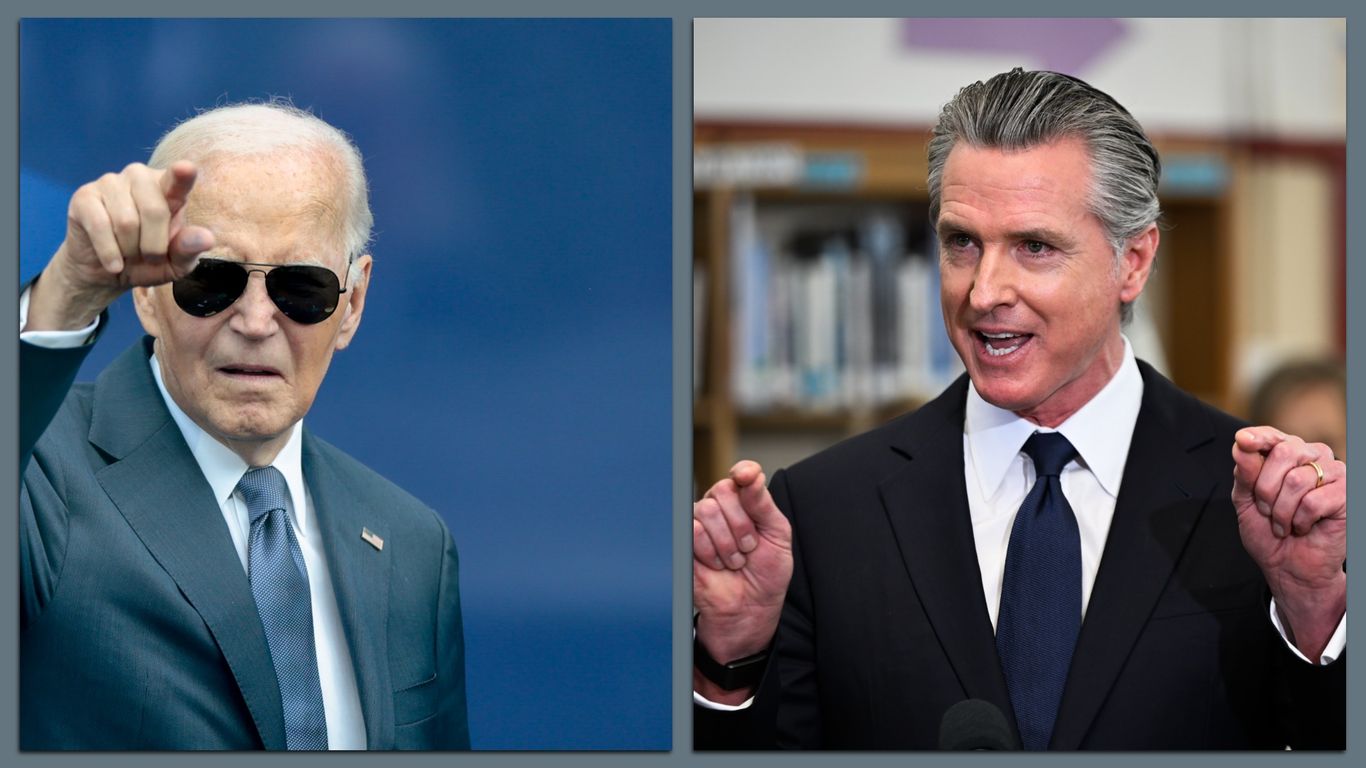
California Governor Gavin Newsom has officially tethered his 2028 presidential ambitions to the legacy of President Joe Biden, signaling a strategic pivot to capture the Democratic establishment lane ahead of an expected open primary. By loudly embracing the Biden administration’s record in June 2026, Newsom aims to lock down institutional donors, secure the loyalty of the Democratic National Committee, and preemptively box out centrist rivals. The strategy is straightforward. Run as the ultimate defender of the incumbent. Inherit the political apparatus. Leave the outsider lanes to others.
The invisible primary for 2028 is no longer invisible. It is playing out in the fundraising circuits of Silicon Valley, the cable news green rooms of Manhattan, and the early primary battlegrounds of South Carolina and Nevada. Newsom, whose second and final term as governor concludes in January 2027, is utilizing his remaining months in Sacramento to position himself not as a California renegade, but as the national standard-bearer for the Biden-era Democratic Party.
This is a calculated risk. Tying a future campaign to a sitting president means owning the administration’s economic baggage, geopolitical challenges, and approval ratings. But the California governor has done the math. In a fractured media environment, institutional backing remains the most reliable currency in a Democratic primary.
The Strategy of Proximity
Political distance is often the default setting for ambitious governors. They typically run by contrasting their state-level agility with Washington gridlock. Newsom is doing the exact opposite. He is running as the ultimate insider.
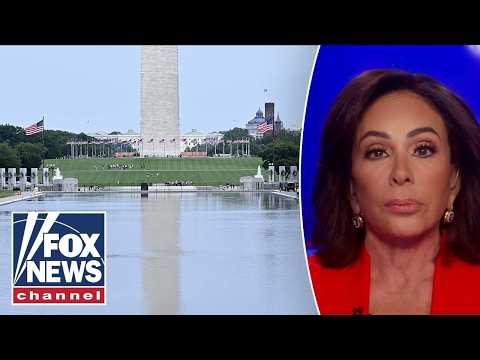
Throughout the spring of 2026, Newsom has deployed his Campaign for Democracy PAC as a shadow defense mechanism for the White House. He has appeared on conservative networks, including Fox News, specifically to litigate the Biden administration’s achievements. He recites job creation metrics, infrastructure spending totals, and manufacturing investments with the precision of a White House press secretary.
This proximity serves two immediate purposes. First, it endears him to the Biden-loyal donor class. Major bundlers in New York and Los Angeles value loyalty. By acting as the administration’s most aggressive attack dog, Newsom earns chits that can be cashed in when the 2028 fundraising quarter begins. Second, it starves his potential rivals of oxygen. If Newsom occupies the space of “the president’s most effective surrogate,” other ambitious Democrats are forced to either echo him or critique the administration. Critiquing a Democratic incumbent is a historically fatal move in a primary.
The White House has quietly welcomed the cover. With the 2026 midterms looming, having a high-profile governor relentlessly hammering Republican talking points provides necessary air support for congressional Democrats. Newsom gets the national spotlight. The administration gets a polished defender. The transaction is seamless.
The Infrastructure Playbook
The ideological bridge between Sacramento and Washington D.C. is built on concrete and silicon. Newsom has aggressively branded California’s recent economic projects as direct extensions of Biden’s signature legislative victories: the Bipartisan Infrastructure Law, the CHIPS and Science Act, and the Inflation Reduction Act.
When ground is broken on a high-speed rail segment in the Central Valley, Newsom explicitly credits federal partnerships. When a new semiconductor facility opens in Santa Clara County, the governor frames it as a victory for the national industrial policy championed by the Oval Office. He is translating federal policy into state-level ribbon cuttings.
This is not merely good governance. It is a messaging architecture. By the time the 2028 debates begin, Newsom intends to present himself as the executive who actually implemented the Biden agenda. He wants to be the physical manifestation of the administration’s legislative text.
This tactic also blunts a persistent vulnerability. California is frequently caricatured by conservative media as a dystopian landscape of high taxes and urban decay. By anchoring his narrative to federal infrastructure and manufacturing, Newsom reframes his state as the engine of American industrial resurgence. He shifts the conversation from San Francisco street conditions to billion-dollar manufacturing plants.
The Kamala Harris Complication
No discussion of the 2028 Democratic primary can ignore the geographic and political overlap between Gavin Newsom and Vice President Kamala Harris. Both forged their careers in the crucible of San Francisco politics. Both share a network of early California donors. Both are inextricably linked to the current administration.
Newsom’s embrace of Biden complicates the landscape for Harris. Traditionally, the sitting Vice President is the undisputed heir to the establishment lane. They inherit the infrastructure by default. By aggressively defending the president’s record, Newsom is subtly auditioning for the role of heir apparent.
He never critiques Harris. The Natural Observer notes that his rhetoric regarding the Vice President is always impeccably respectful, filled with praise for her leadership on reproductive rights and voting access. But the subtext of his omnipresence on cable news is unavoidable. He is demonstrating a combative media proficiency that some Democratic operatives privately wish the Vice President possessed.
The donor class is watching this dynamic closely. Silicon Valley venture capitalists and Hollywood executives who have funded both politicians for two decades will eventually have to choose. By hugging Biden tightly, Newsom is signaling to these donors that he, too, is a safe, institutional investment.
Boxing Out the Midwestern Firewall
The 2028 Democratic field is expected to feature a formidable Midwestern contingent. Michigan Governor Gretchen Whitmer, Pennsylvania Governor Josh Shapiro, and Transportation Secretary Pete Buttigieg all represent a pragmatic, Rust Belt-adjacent brand of politics. They offer the party a proven ability to win swing voters in battleground states.
Newsom lacks that specific geographic advantage. California is not a swing state. To counter the Midwestern appeal, Newsom must dominate the national narrative. He cannot win an argument about who understands the Rust Belt better than Whitmer or Shapiro. Instead, he must make the primary about who can prosecute the case against the Republican nominee most effectively on a national stage.
This is where the Biden embrace becomes a weapon. If Whitmer or Shapiro attempt to distance themselves from unpopular federal policies to maintain their swing-state appeal, Newsom will be positioned to accuse them of disloyalty. He will own the party base. He will point to his unwavering defense of the administration when times were tough.
It is a strategy designed to consolidate the progressive and establishment wings of the party. By defending the administration’s climate investments, he appeals to the left. By defending its economic record, he appeals to the center. The Midwestern governors are left to navigate the tricky terrain in between.
The Shadow Primary of 2026
The midterm elections of 2026 will serve as the proving ground for this strategy. Newsom is expected to deploy his PAC heavily in key congressional races across the country. He will travel to Ohio, Wisconsin, Arizona, and Georgia. He will not be on the ballot, but his political brand will be tested in every district he visits.
Every rally, every fundraiser, and every television appearance will be a data point for the 2028 campaign. He will be building a national voter file. He will be collecting IOUs from vulnerable House members and ambitious Senate candidates. He will be constructing the architecture of a presidential campaign under the guise of midterm surrogate work.
The embrace of Biden provides the perfect cover for this national tour. He is not traveling to build his own profile; he is traveling to defend the president. It is an unassailable alibi for a politician with obvious national ambitions.
The Republican Governors Association has already recognized the threat. Figures like Florida Governor Ron DeSantis and Texas Governor Greg Abbott frequently use Newsom as a foil. They elevate him because he represents the coastal liberalism they despise. Newsom welcomes the attacks. Every time a Republican governor mentions his name, his stock rises within the Democratic base.
The Final Pivot to 2027
When Newsom leaves the governor’s mansion in January 2027, he will face a critical transition. He will no longer have the formal power of the California executive branch. He will be a private citizen for the first time in decades.
This is the moment when the strategy of proximity must pay off. Without a formal office, he will rely entirely on the networks, alliances, and media presence he built during his final years in Sacramento. The narrative he is constructing now, the loyal soldier, the effective surrogate, the heir to the Biden legacy, must be strong enough to sustain him through the wilderness year of 2027.
The political graveyard is filled with former governors who faded from memory the moment they lost their state police detail. Newsom is determined to avoid that fate. He is building a national political machine that does not require a government title to operate.
The strategy is set. The alliances are forming. The money is moving. California’s governor is not waiting for permission. He is taking the establishment lane by force.
Donors aligned. Surrogates deployed. The primary begins.
Washington.