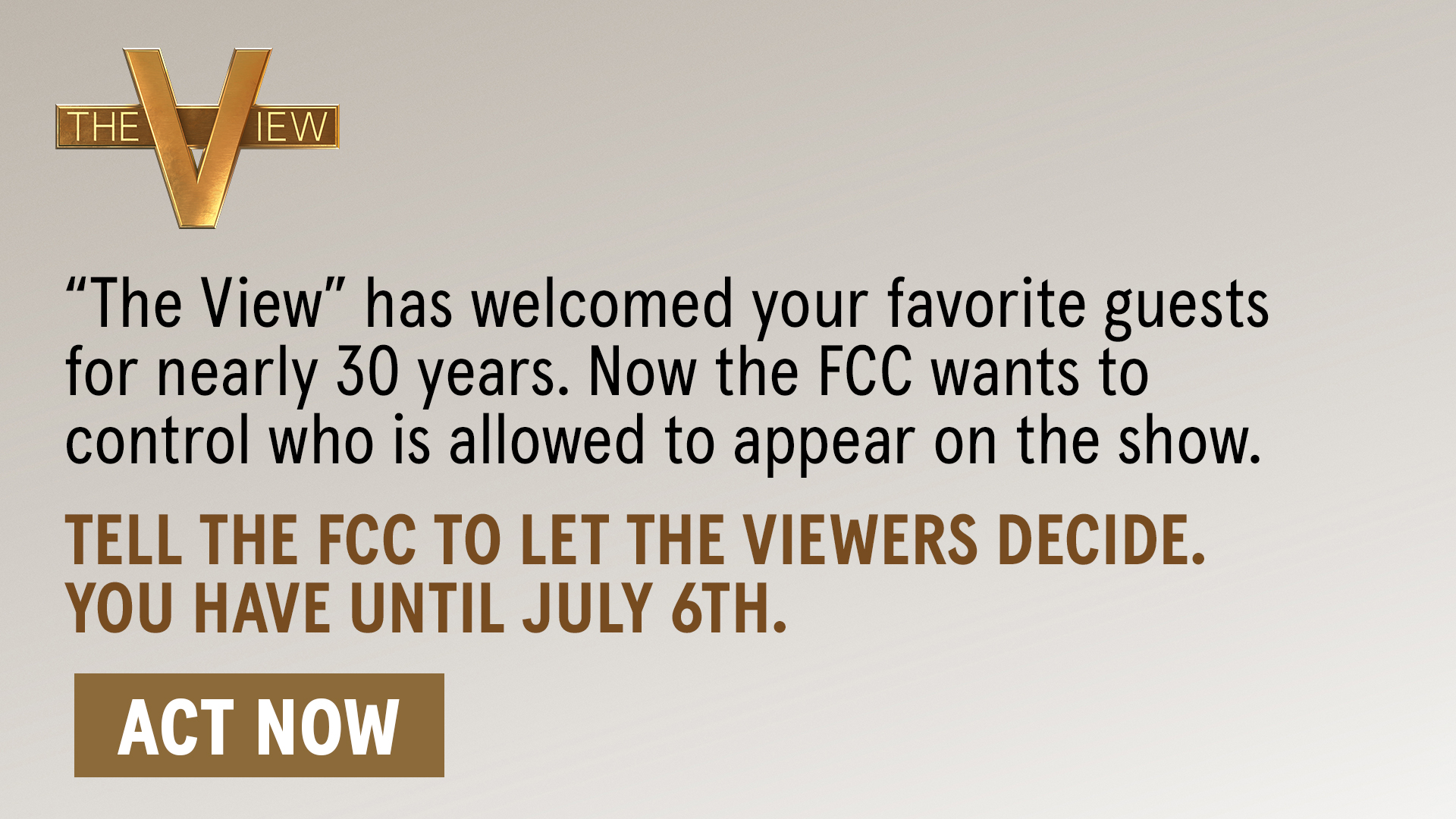
On June 15, 2026, ABC interrupted its prime-time lineup with a direct plea to viewers. The network launched a nationwide on-air campaign warning the public about FCC Docket 26-104. This proposed Federal Communications Commission rule would reallocate a significant portion of the broadcast spectrum to commercial wireless carriers. ABC claims the move will devastate local affiliate revenues and cripple local news broadcasting. The network is using its massive reach to drive millions of public comments to the FCC portal before the July 30 deadline. The battle lines for the future of free, over-the-air television are now drawn in the living room.
The Core of FCC Docket 26-104
The Federal Communications Commission introduced Docket 26-104 in May 2026. The agency calls it the Next-Generation Spectrum Optimization Order. Broadcasters call it an existential threat. The proposal seeks to reclaim specific ultra-high frequency (UHF) bands currently used by local television stations. The FCC intends to auction these bands to telecommunications companies to expand 6G wireless networks in rural areas.
Spectrum is finite. It is the invisible real estate that makes wireless transmission possible. When the FCC takes spectrum from broadcasters, stations must repack their signals into a narrower band. This degrades picture quality. It limits the ability to broadcast multiple digital subchannels. Most importantly, it threatens the rollout of ATSC 3.0, the next-generation broadcast standard that networks rely on for targeted advertising and 4K resolution.
The FCC argues the spectrum is underutilized. The agency claims wireless broadband is a higher national priority than legacy television broadcasting. ABC strongly disagrees. The network views the docket as a corporate giveaway to telecom giants at the expense of free public information.
ABC’s Unprecedented On-Air Strategy
Broadcasters usually fight regulatory battles in Washington. They deploy lobbyists. They file legal briefs. ABC has chosen a different theater. The network is leveraging its most valuable asset: its audience.
The on-air campaign is aggressive. During commercial breaks for high-rated programs like The Bachelor and live NBA broadcasts, the screen cuts to a stark, black-and-white graphic. A voiceover warns that local news, emergency weather alerts, and free sports programming are under threat. A massive QR code appears on the screen. Viewers who scan the code are taken directly to a pre-filled form on the FCC’s Electronic Comment Filing System (ECFS).
This bypasses the traditional friction of civic engagement. The FCC portal is notoriously difficult to navigate. By providing a direct, mobile-optimized link, ABC has weaponized second-screen viewing. The network is transforming passive television watchers into active regulatory petitioners in less than thirty seconds.
The Economics of Retransmission
The fight over Docket 26-104 is fundamentally about money. Broadcast networks like ABC do not just make money from advertising. They rely heavily on retransmission consent fees. Cable and satellite providers pay these fees to carry local affiliate signals.
If the FCC degrades the broadcast spectrum, the value of that signal drops. If local stations cannot broadcast high-definition signals or offer robust digital subchannels, cable companies will demand lower retransmission fees. For The Walt Disney Company, which owns ABC, this represents a potential loss of hundreds of millions of dollars in annual revenue.
The network cannot say this directly in a thirty-second commercial. Instead, the on-air campaign focuses on the downstream effects. If revenue drops, local stations will cut costs. The first cuts always happen in the newsroom. ABC is framing a corporate revenue dispute as a battle for the survival of local journalism.
Local Affiliates on the Front Lines
ABC does not own every station that broadcasts its programming. The network owns eight major-market stations, including WABC-TV in New York and KABC-TV in Los Angeles. The rest of the country is served by independent affiliate groups like Sinclair Broadcast Group, Nexstar Media Group, and Tegna.
These affiliates are highly vulnerable to spectrum reallocation. A station in a mid-sized market like Springfield, Missouri, relies on its digital subchannels to broadcast local weather radar and secondary network programming. Losing spectrum means losing those channels.
The on-air campaign is customized by market. When a viewer in Philadelphia sees the warning on WPVI-TV, the voiceover specifically mentions the threat to local Action News. This hyper-local targeting increases the emotional resonance of the campaign. It transforms a complex Washington policy debate into a direct threat to the viewer’s daily routine.
The Role of the National Association of Broadcasters
ABC is not fighting this war alone. The National Association of Broadcasters (NAB) is coordinating the broader industry response. The NAB is one of the most powerful lobbying groups in Washington D.C. The organization represents more than 8,300 terrestrial radio and television stations.
While ABC runs the public-facing campaign, the NAB is executing the inside game. The association has flooded the FCC with technical engineering reports. These documents attempt to prove that 6G wireless expansion can occur without cannibalizing the television spectrum. The NAB is also lobbying the Senate Commerce Committee, urging lawmakers to pressure the FCC to abandon the docket.
The dual-track strategy is highly coordinated. The NAB handles the technical and political arguments. ABC handles the populist outrage. Together, they are attempting to make Docket 26-104 politically toxic.
Historical Precedent in Broadcast Regulation
The tension between broadcasters and regulators is older than television itself. The Communications Act of 1934 established the fundamental bargain of American broadcasting. Stations receive free use of the public airwaves. In exchange, they must operate in the “public interest, convenience, and necessity.”
This bargain has been renegotiated several times. The 1996 Telecommunications Act deregulated ownership rules, leading to massive media consolidation. The 2009 digital television transition forced broadcasters to abandon analog signals, freeing up spectrum for early 4G LTE networks.
During the 2009 transition, the government heavily subsidized the shift, offering coupons for digital converter boxes. Broadcasters accepted the change because digital transmission offered superior quality. Docket 26-104 is different. Broadcasters see no upside. They view it as a pure extraction of resources by a regulatory agency captured by the telecommunications lobby.
The Mechanics of Public Comment
The Administrative Procedure Act governs how federal agencies make rules. When the FCC issues a Notice of Proposed Rulemaking (NPRM), it must open a public comment period. This is not a mere formality. The agency is legally required to read and respond to substantive comments before issuing a final order.
ABC understands this legal requirement. By driving massive volume to the ECFS portal, the network is creating a bureaucratic logjam. If the FCC receives three million unique comments opposing the docket, agency staff must process them. If the FCC ignores overwhelming public opposition, it leaves the final rule vulnerable to legal challenges in federal court.
The strategy is known as astroturfing when done artificially. But ABC is generating genuine, organic responses from real citizens. The network is utilizing the exact mechanisms of participatory democracy designed by the Administrative Procedure Act.
The Silence of the Rivals
While ABC has taken the loudest public stance, the rest of the broadcast industry is watching closely. NBC, CBS, and Fox have not yet launched similar prime-time campaigns. They are adopting a wait-and-see approach.
Corporate structure dictates this hesitation. NBC is owned by Comcast, a massive cable and broadband provider. Comcast stands to benefit from wireless spectrum expansion. This creates an internal conflict of interest. CBS is owned by Paramount Global, which is currently navigating complex merger negotiations and wishes to avoid regulatory scrutiny. Fox is highly focused on its cable news operations.
This leaves ABC as the primary tip of the spear. The Walt Disney Company has no major broadband or wireless divisions. Its interests are purely aligned with content creation and broadcast distribution. This corporate purity allows ABC to attack the FCC without collateral damage to other corporate divisions.
The First Amendment Question
The FCC has broad authority over spectrum allocation, but it cannot regulate the content of broadcast journalism. ABC is subtly framing the spectrum grab as a First Amendment issue. By degrading the ability of local stations to broadcast news, the network argues the FCC is indirectly suppressing local journalism.
Legal scholars are divided on this argument. The courts have traditionally granted the FCC wide latitude in managing the technical aspects of the airwaves. However, the loss of local news in rural areas is a recognized crisis. If ABC can prove that Docket 26-104 will directly result in the closure of local newsrooms, the courts may intervene.
The NAB is already preparing the lawsuits. If the FCC votes to approve the final order in late 2026, the broadcast industry will immediately file for an injunction in the D.C. Circuit Court of Appeals.
The Next 30 Days
The public comment period for Docket 26-104 closes on July 30, 2026. After that date, the FCC enters a reply comment period, allowing interested parties to respond to the initial wave of filings. A final vote is expected by November.
ABC will likely escalate the on-air campaign as the deadline approaches. The network has integrated the warning into its morning programming. Anchors on Good Morning America have begun conducting segments on the importance of local emergency broadcasting during hurricane season. The messaging is shifting from a regulatory warning to a public safety alert.
The FCC faces a difficult calculation. Chairwoman Jessica Rosenworcel must balance the legitimate need for expanded rural broadband against the political nightmare of shutting down local television stations. The agency did not anticipate a prime-time mobilization.
The screen goes black. The QR code fades. The viewer reaches for the remote. Broadcasters waited. Regulators watched. The public typed. Connection.