
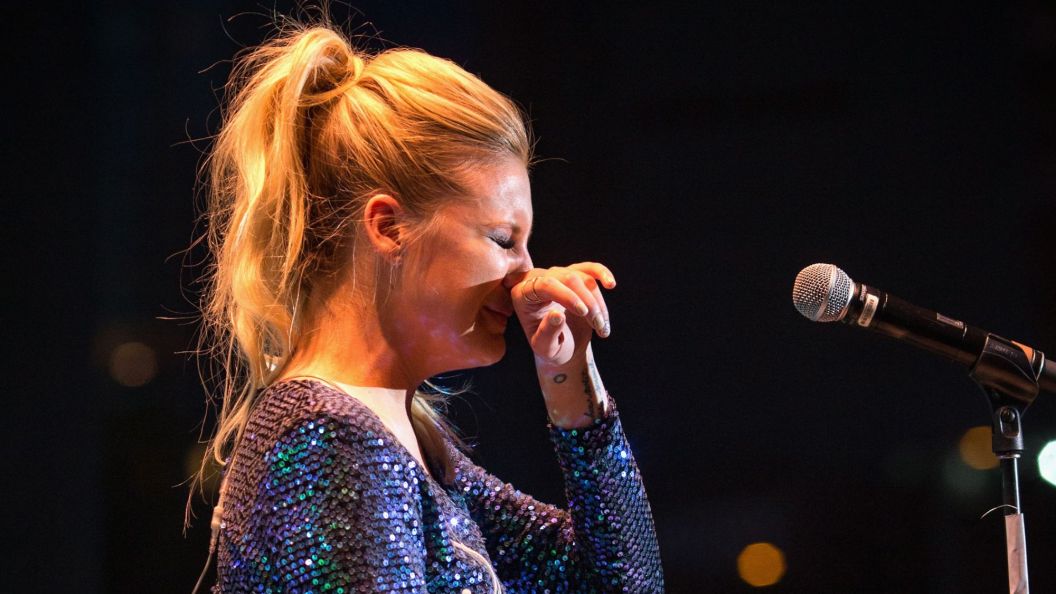
Country music star Kelsea Ballerini broke down in tears mid-performance at Nashville’s Bridgestone Arena on June 19, 2026, halting her acoustic rendition of ‘Leave Me Again’ while processing a recent, heartbreaking personal loss. The emotional moment, captured by thousands of fans and reported by American Songwriter, highlighted the intense vulnerability that has defined her recent era of songwriting and touring. The crowd of 15,000 immediately stepped in, singing the remaining lyrics in unison until the artist could compose herself.
The lights dimmed inside the arena. The backing band stepped into the shadows. Ballerini stood alone at the edge of the stage with a single acoustic guitar. This was not a choreographed pause. It was a fracture.
For the past three years, Ballerini has operated at the absolute edge of emotional endurance. Her transition from radio-friendly pop-country to raw, diary-entry storytelling changed the trajectory of her career. It also changed the price of admission. What looks like a simple performance is often a nightly exercise in reopening old wounds for public consumption. But the story does not begin with a single missed chord in Nashville. It begins with the architecture of modern country music.
The Architecture of Vulnerability
The modern country music industry demands authenticity. In previous decades, artists were expected to compartmentalize their personal tragedies. The show always went on. Public relations teams at major labels built impenetrable walls around their stars. That model collapsed with the rise of social media and direct-to-fan communication.
Ballerini helped dismantle that wall. Her project ‘Rolling Up the Welcome Mat’ stripped away the glossy production of her earlier work. She traded stadium anthems for quiet, devastating truths. The project earned Grammy nominations. It earned critical acclaim from American Songwriter. It also required her to sing about her deepest personal traumas night after night.
The June 19 concert at Bridgestone Arena was the centerpiece of her 2026 summer tour. Tickets averaged $150. Fans traveled from across the Midwest and the Deep South. They did not come for a flawless vocal performance. They came for connection. When Ballerini’s voice cracked during the second verse of ‘Leave Me Again,’ the audience did not demand a refund. They recognized the human toll of the art they consumed.
The Specifics of the Nashville Stage
Bridgestone Arena sits at the corner of Broadway and Fifth Avenue. It is the proving ground for country music royalty. Selling out the venue is a career milestone. Headlining the arena requires immense stamina. The pressure is both financial and psychological.
Black River Entertainment, Ballerini’s long-time label, invested heavily in the 2026 production. The stage design featured massive LED screens, intricate lighting rigs, and a catwalk extending into the lower bowl. Yet, the most talked-about moment of the night required none of that technology. It required only a microphone and a moment of overwhelming grief.
According to reports from American Songwriter, the breakdown was triggered by a recent personal loss. The specifics of the tragedy remain private. The weight of it, however, was entirely public. Grief does not adhere to a tour schedule. It arrives unannounced. On a Friday night in downtown Nashville, it arrived in front of 15,000 witnesses.
The Economics and Exhaustion of the 2026 Arena Tour
Touring in 2026 is a grueling enterprise. The post-pandemic live music boom established new benchmarks for artist endurance. Live Nation and AEG route tours with brutal efficiency. Artists often perform four nights a week. They sleep on buses. They wake up in new time zones. They conduct VIP meet-and-greets, soundchecks, and media interviews before the arena doors even open.
The financial stakes are massive. Streaming revenue pays fractions of a cent per play. Live performances generate the vast majority of an artist’s income. A single canceled arena show can cost hundreds of thousands of dollars in venue fees, crew wages, and logistical penalties. Artists are incentivized to push through illness, exhaustion, and profound personal grief.
Ballerini has spoken openly about the mental health challenges of this lifestyle. She has documented her struggles with anxiety. She has advocated for therapy and mental health resources within the music industry. Her breakdown at Bridgestone Arena was a physical manifestation of a systemic issue. The human body is not designed to process profound loss under a 10,000-watt spotlight.
A History of Country Music Confessionals
Country music is built on a foundation of heartbreak. The genre’s greatest moments often involve artists bleeding on stage. Hank Williams sang about profound loneliness while self-destructing in real time. Loretta Lynn wrote ‘Coal Miner’s Daughter’ as a raw historical document of her own poverty. Tammy Wynette’s voice carried the authentic weight of her tumultuous personal life.
In the modern era, Miranda Lambert famously broke down while performing ‘Tin Man’ at the Academy of Country Music Awards. Carly Pearce has wept through performances of ’29.’ The Nashville audience understands this dynamic. They revere it. They view the stage as a confessional booth.
Ballerini’s moment fits squarely into this tradition. She is not a pop star selling an illusion of perfection. She is a country artist selling the reality of survival. When she stopped singing, the illusion shattered. The reality remained. The fans stepped into the void because they knew the lyrics. They knew the lyrics because they had lived them too.
The Digital Amplification of Grief
In 1996, a mid-concert breakdown would be discussed by the people in the room. In 2026, it is broadcast to the world instantly. Within minutes of Ballerini stepping back from the microphone, dozens of videos were uploaded to TikTok and Instagram. The algorithms prioritized the emotional content. The videos accumulated millions of views before the concert even ended.
This digital amplification changes the nature of public grief. It creates a parasocial feedback loop. Fans online leave thousands of supportive comments. The artist’s management team monitors the sentiment. Music publications like American Songwriter publish think-pieces by morning. The private moment of loss is immediately commodified into content.
Yet, the core emotion remains genuine. The internet can amplify the moment, but it cannot manufacture the tears. Ballerini’s vulnerability cuts through the digital noise precisely because it is unscripted. In an era of artificial intelligence and heavily curated social media feeds, a genuine human breakdown is the ultimate proof of life.
The Business of Authenticity
The music industry has taken note of this cultural shift. A decade ago, a publicist might have issued a statement apologizing for the interruption. They might have blamed vocal fatigue. Today, the strategy is different. The vulnerability is the brand.
Black River Entertainment did not issue an apology. They did not need to. The narrative wrote itself. Ballerini was praised for her bravery. Her streaming numbers for ‘Leave Me Again’ spiked in the 48 hours following the concert. The incident deepened the bond between the artist and her core demographic.
This is the paradox of modern fame. The things that hurt the artist the most are often the things that make them the most valuable. Their pain is relatable. Their grief is marketable. Ballerini navigates this paradox with grace, but the toll it takes is undeniable. She is a rising traditionalist in a genre that demands blood.
What Happens Next
The 2026 tour continues. The trucks pack up the stage. The buses drive to the next city. The contracts are signed, and the tickets are sold. Ballerini will step onto another stage. She will pick up the acoustic guitar. She will sing the same songs.
Healing is not a linear process. There will be other nights where the weight of the lyrics becomes too heavy. There will be other pauses. The audience will be there to catch her. That is the unspoken contract between a country music singer and her fans.
The lights came back up. The guitar was tuned. The crowd cheered.
The music stopped. The fans sang. The artist listened.
Nashville.


