When Peter Serafinowicz entered the recording booth to give voice to Darth Maul in the 1999 blockbuster Star Wars: Episode I – The Phantom Menace, the expectation was clear. He was told, directly, that he was the “new James Earl Jones.” The comparison was monumental. It promised a legacy. It suggested a permanent place in the pantheon of cinematic villains. But the reality of the compensation offered by George Lucas and Lucasfilm told a starkly different story. Serafinowicz’s subsequent reaction, “Then why are you paying me such shit money, George Lucas?”, captures a fundamental tension at the heart of franchise filmmaking. The cultural value of a character rarely matches the initial financial investment in the actor who creates it.
The gap between the promise of a role and the reality of the paycheck is a recurring theme in Hollywood. It is particularly acute in the realm of voice acting and physical performance splits. The Darth Maul situation is a textbook example. It reveals the mechanics of how value is assigned, and withheld, in the creation of global intellectual property.
The Anatomy of a Sith Lord
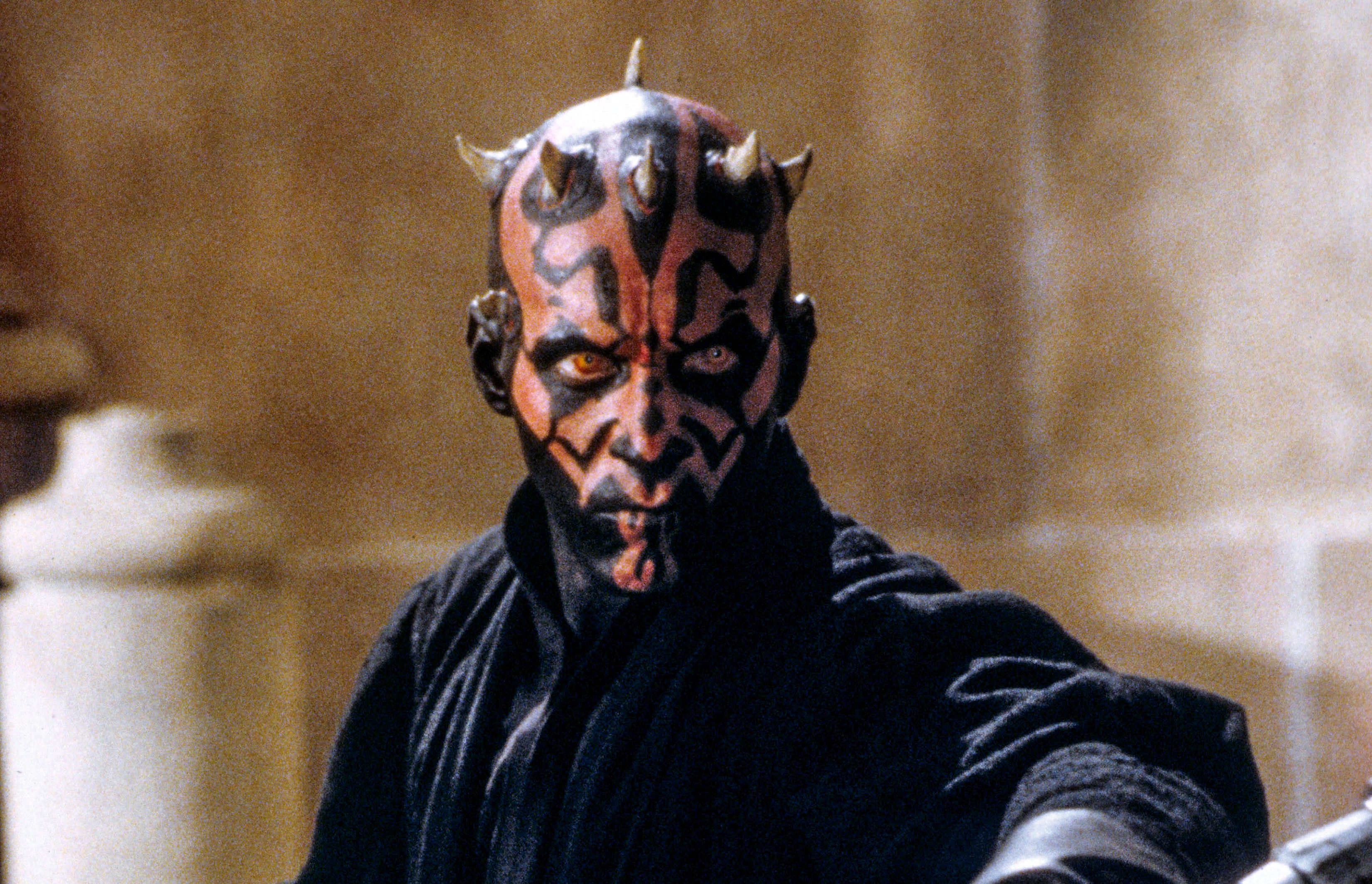
Darth Maul was engineered to be an icon. The visual design, featuring red and black facial tattoos and a crown of horns, was instantly arresting. The physical performance, executed by martial artist Ray Park, brought a kinetic energy previously unseen in Star Wars lightsaber duels. But the character needed a voice. It needed a vocal presence that could carry the weight of the dark side.
Peter Serafinowicz, a British actor and comedian, was brought in to provide that voice. The task was specific. He needed to deliver a few lines, but those lines had to resonate. They had to establish Maul not just as a physical threat, but as a menacing intelligence.
The recording process was brief. The lines were few. But the context provided to Serafinowicz was immense. Being compared to James Earl Jones, the voice of Darth Vader, arguably the most famous cinematic villain of the 20th century, set an expectation of value. It framed the contribution not as a minor voice-over gig, but as a foundational element of the new Star Wars trilogy.
The Reality of the Paycheck
The disconnect occurred when the compensation was finalized. While specific dollar amounts have not been publicly detailed in this recent revelation, Serafinowicz’s blunt assessment makes the scale clear. The pay was, in his words, “shit money.”
This discrepancy is not unique to Serafinowicz or to Lucasfilm. It is a structural feature of how studios manage risk and control costs, particularly with actors who are not yet established box office draws. The studio holds the leverage. The intellectual property, the Star Wars brand, is the primary draw. The actors, especially in roles where the face is hidden or the performance is split, are often treated as replaceable components.
George Lucas built an empire by maintaining tight control over the Star Wars property. This included aggressive management of production budgets and merchandising rights. The strategy was highly effective for Lucasfilm, maximizing profitability. But it often left the individual contributors feeling undervalued, especially when the characters they helped create generated billions in revenue.
The Franchise Machine and the Value of Voice
The Serafinowicz revelation highlights a specific vulnerability for voice actors. Their contribution is essential, yet it is often invisible. When a character becomes a global phenomenon, the financial rewards flow to the studio, the producers, and the merchandising partners. The voice actor, typically paid a flat fee or scale, rarely sees a proportional share of the ongoing profits.
Darth Maul is a prime example of this dynamic. The character was ostensibly killed off at the end of The Phantom Menace. Yet, the striking visual design and the menacing presence ensured Maul’s survival in the broader Star Wars ecosystem. Maul returned in animated series like The Clone Wars and Rebels, in comic books, in video games, and eventually in a live-action cameo in Solo: A Star Wars Story.
- Merchandising Power: Darth Maul action figures, lightsabers, and apparel have generated massive revenue since 1999.
- Expanded Universe: The character’s lore was expanded significantly in novels and comics, driving further sales.
- Animated Revival: The return of Maul in The Clone Wars (voiced by Sam Witwer) solidified the character’s enduring popularity.
The initial investment in the character, including the payments to Park and Serafinowicz, was a fraction of the value Maul eventually generated. This is the business model of franchise filmmaking. It relies on acquiring talent at a low cost before the value of the specific character is proven in the marketplace.
The James Earl Jones Precedent
The comparison to James Earl Jones is particularly telling. Jones famously requested to be left uncredited for his work as Darth Vader in the original 1977 Star Wars film. He viewed his contribution as merely “special effects” and was paid a relatively small sum, reportedly $7,000, for his time.
It was only later, as Darth Vader became a cultural monolith, that Jones’s contribution was fully recognized and compensated. The promise made to Serafinowicz, that he was the “new James Earl Jones”, carried the implicit suggestion of that massive cultural weight. But it did not carry the financial weight that Jones eventually commanded.
The studio system often uses the promise of exposure and the prestige of a franchise as a substitute for upfront compensation. The opportunity to be part of Star Wars is presented as a reward in itself. For many actors, this is a compelling argument. But when the dust settles, and the merchandise sales are tallied, the initial flat fee can feel profoundly inadequate.
The Evolution of Actor Leverage
The landscape of actor compensation in franchise films has shifted since 1999. The rise of the Marvel Cinematic Universe and the continued expansion of Star Wars under Disney have formalized the process of locking actors into multi-picture deals. These deals often include escalating pay scales and, for top-tier stars, backend participation.
However, the dynamic remains challenging for actors in secondary roles, voice-over positions, or physical performance suits. The leverage still heavily favors the studio. The intellectual property is the star. The actor is the vessel.
The recent strikes by the Screen Actors Guild (SAG-AFTRA) highlighted these ongoing tensions. The core issues included residual payments for streaming and the protection of actors’ likenesses and voices from artificial intelligence. The underlying theme is the same: the struggle for fair compensation in an industry where the value of a performance can be endlessly replicated and monetized by the studio.
Serafinowicz’s story is a historical footnote, but it is a resonant one. It strips away the mythology of the filmmaking process and exposes the raw economics of the franchise machine. It is a reminder that behind every iconic character, there is a negotiation. And in those negotiations, the house usually wins.
“Then why are you paying me such shit money, George Lucas?”
The question is rhetorical, but the answer is embedded in the business model of Hollywood. The pay was low because the studio had the power to set the price. The character was essential; the specific actor was deemed replaceable until proven otherwise. The legacy of Darth Maul is undeniable. The legacy of the compensation is a stark reminder of where the power truly lies in the creation of modern myths.
The recording booth. The promise of legacy. The reality of the ledger. The franchise.