
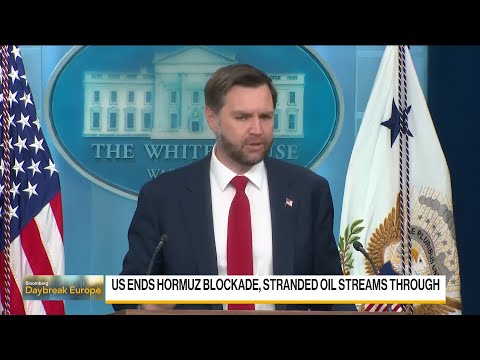
On June 20, 2026, Vice President JD Vance abruptly delayed his scheduled diplomatic trip to Geneva, Switzerland, pausing high-stakes proximity talks with Iran. The postponement stems from last-minute disagreements over sanctions relief and nuclear enrichment caps, prompting Washington to freeze the summit until Tehran provides verifiable concessions through Swiss intermediaries. The decision halts months of quiet diplomatic maneuvering.
The diplomatic calendar shattered on a Thursday morning. The machinery of international diplomacy runs on momentum. When momentum stops, leverage shifts. Washington signaled that it would not be rushed. Tehran received the message.
In many ways, the delay is more significant than the summit itself. It reveals the exact boundaries of American patience in 2026. What looks like a simple scheduling conflict is actually a calculated geopolitical maneuver. The story does not begin with a canceled flight. It begins with the complex architecture of back-channel diplomacy.
The Mechanics of Proximity Talks
The United States and the Islamic Republic of Iran do not speak directly. They have not maintained formal diplomatic relations since April 1980. Every interaction requires a mediator. Every negotiation requires a neutral floor.
Geneva provides that floor. Switzerland has served as the protecting power for US interests in Iran for nearly five decades. Swiss diplomats operate the US Interests Section at the Swiss Embassy in Tehran. They carry the messages. They manage the logistics.
The planned June 2026 summit was designed as a “proximity talk.” This is a highly choreographed diplomatic dance. The American delegation, led by Vance, was scheduled to occupy one luxury hotel near the Palais des Nations. The Iranian delegation was scheduled to occupy another. They would never share a room. They would never shake hands.
Swiss diplomats, operating under the direction of the Swiss Federal Department of Foreign Affairs, would physically walk between the two hotels. They would carry draft texts. They would relay verbal caveats. It is a slow, tedious, and highly controlled method of negotiation.
Vance’s delay breaks this choreography. By refusing to board the plane, the Vice President forces the Iranian delegation to wait. It is a textbook demonstration of withholding participation as a negotiating tactic.
The Nuclear Arithmetic
The core of the dispute remains buried deep underground. The Iranian nuclear program operates out of heavily fortified facilities at Fordow and Natanz. The arithmetic of uranium enrichment dictates the timeline of global security.
Weapons-grade uranium requires 90 percent enrichment. Civilian nuclear power requires roughly 3 to 5 percent. In recent years, international inspectors from the International Atomic Energy Agency (IAEA) have detected traces of uranium enriched to 60 percent and higher within Iranian facilities. This is the threshold of breakout capacity.
Washington demands a verifiable halt to high-level enrichment. Tehran demands the immediate unfreezing of billions of dollars in foreign-held assets. The exchange rate between nuclear compliance and economic relief is the hardest currency in international diplomacy.
Vance’s team reportedly received intelligence that Tehran intended to alter the baseline of the agreement upon the American delegation’s arrival in Geneva. The Iranian negotiators allegedly planned to link enrichment caps to the complete removal of secondary sanctions on their energy sector. Washington refused the linkage.
The Economic Leverage
Sanctions are the invisible walls of the global economy. The US Treasury Department maintains a complex web of financial restrictions against Iranian entities. These sanctions target the Central Bank of Iran, the Islamic Revolutionary Guard Corps (IRGC), and the national petrochemical industry.
Despite these walls, Iran continues to export oil. A shadow fleet of aging tankers moves millions of barrels of crude oil to independent refineries in China. These transactions bypass the US dollar. They bypass traditional maritime insurance markets. They keep the Iranian economy afloat.
The Geneva talks were supposed to address this shadow economy. Washington holds the power to tighten maritime enforcement. Tehran holds the power to disrupt maritime traffic. The Strait of Hormuz remains the most critical oil chokepoint on the planet. Roughly 20 percent of global oil consumption passes through its narrow waters.
Vance understands the economic leverage. His political brand is built on economic realism. He views foreign policy through the lens of industrial capacity and trade leverage. By delaying the trip, he signals that the United States is willing to endure the status quo rather than accept a flawed economic compromise.
The Regional Proxies
The negotiations in Geneva cannot be separated from the violence in the Middle East. Iran operates a sophisticated network of regional proxies. The “Axis of Resistance” stretches from the Levant to the Arabian Peninsula.
Hezbollah maintains a massive missile arsenal in southern Lebanon. The Houthis continue to disrupt commercial shipping in the Red Sea and the Gulf of Aden. Iraqi militias periodically target US military installations in the region. Tehran provides the funding, the training, and the munitions for these groups.
Any comprehensive agreement must address this proxy network. Washington demands a de-escalation in the Red Sea. The cost of shipping containers has skyrocketed due to rerouted global trade. Insurance premiums for vessels transiting the Bab-el-Mandeb strait remain prohibitively high. This is a direct tax on global commerce.
Vance’s delay serves as a warning. The US will not compartmentalize the negotiations. Nuclear compliance cannot be traded for regional instability. The ledger must balance.
The Domestic Calculus
Diplomacy does not happen in a vacuum. It happens on a political calendar. In June 2026, Washington is already looking toward the midterm elections. The domestic political environment is unforgiving.
A bad deal with Iran is a political liability. A strong stance against Tehran is a political asset. The American electorate remains deeply skeptical of foreign entanglements, but simultaneously demands strong leadership on the global stage. Vance navigates this contradiction daily.
Critics in Congress were already preparing to scrutinize any agreement emerging from Geneva. Lawmakers demand congressional oversight over any sanctions relief. They cite the Iran Nuclear Agreement Review Act (INARA) of 2015. They demand transparency.
By halting the trip, Vance silences the critics. He demonstrates a willingness to walk away from the table. In the theater of domestic politics, walking away is often viewed as the ultimate projection of strength.
The Historical Echoes
The history of US-Iran relations is a graveyard of failed agreements and broken trust. The legacy of the 1979 hostage crisis still shadows every interaction. The collapse of the 2015 Joint Comprehensive Plan of Action (JCPOA) proved that diplomatic agreements are only as durable as the political will of the administrations that sign them.
In 1980, the Algiers Accords required months of agonizing, indirect negotiations to secure the release of American hostages. In 2026, the mechanics remain largely the same. The mistrust remains exactly the same.
The Swiss intermediaries understand this history better than anyone. They have watched administrations come and go. They have watched red lines drawn and erased. They operate with a glacial patience. When Vance delayed the trip, the Swiss Federal Department of Foreign Affairs simply issued a terse statement acknowledging the schedule change. They did not panic. They adjusted the timeline.
The Next Move
The immediate future of the Geneva talks remains uncertain. The hotels stand empty. The draft texts remain locked in briefcases. The shadow fleet continues to move oil. The centrifuges continue to spin.
Washington has placed the burden of action on Tehran. The US delegation will not travel until the parameters of the proximity talks are locked. The Swiss intermediaries will continue to carry messages. The back-channel remains open, even if the front door is temporarily closed.
This is the reality of modern statecraft. It is rarely solved in a single summit. It is a war of attrition fought with schedules, sanctions, and silence.
Diplomats waited.
Reporters waited.
Washington waited.
Silence.


