
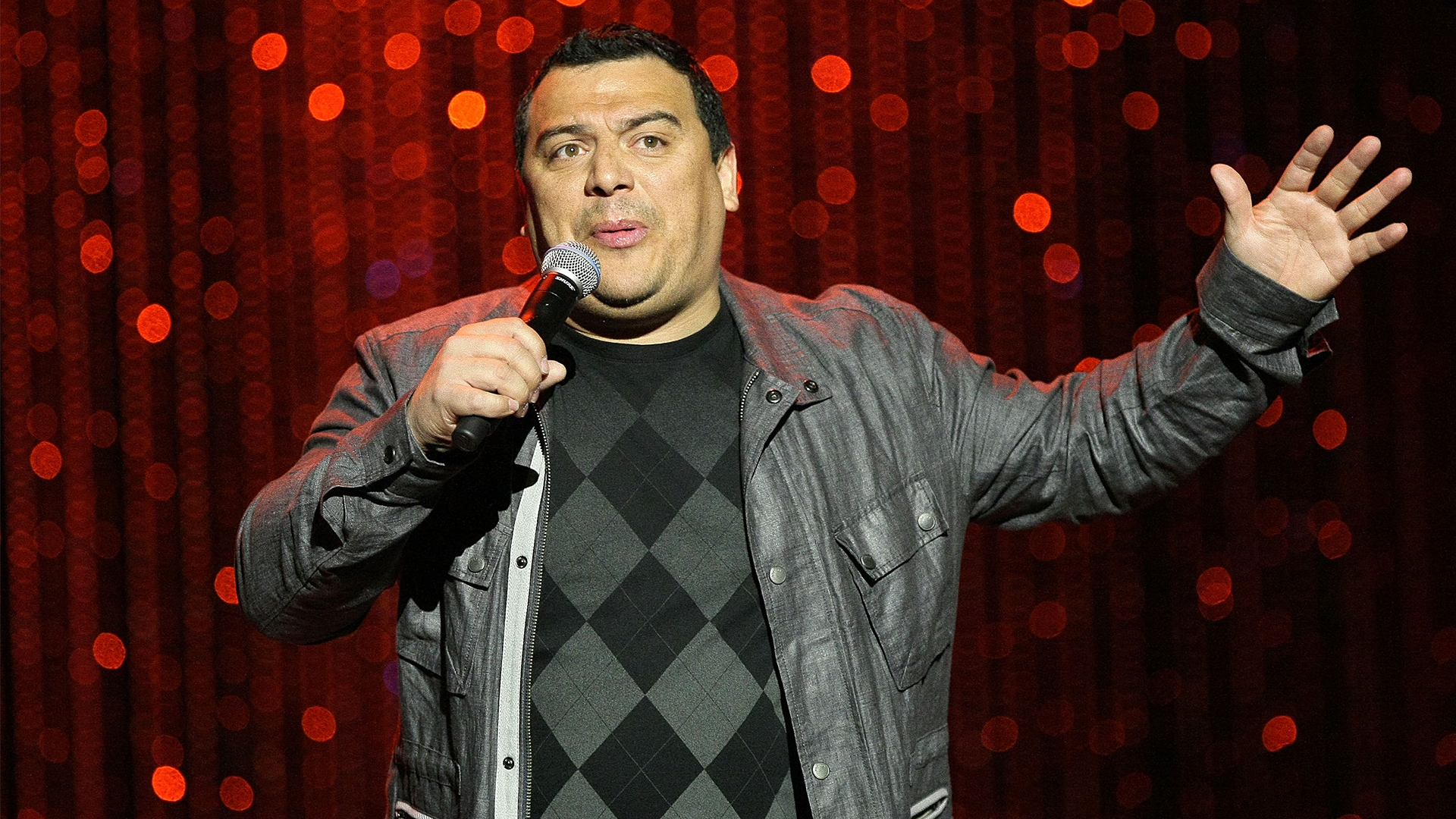
Carlos Mencia, the former host of Comedy Central’s hit series Mind of Mencia, was arrested in Los Angeles in June 2026 on multiple felony tax fraud charges. Authorities allege the 58-year-old comedian concealed millions of dollars in income through a complex network of shell companies to evade state and federal taxes. The arrest brings a sudden and severe legal reckoning to a performer who once stood at the absolute pinnacle of American stand-up comedy.
The story of this arrest is not just about a single missed tax deadline. It is a sprawling narrative of financial obfuscation.
For years, rumors circulated about Mencia’s financial maneuvers as his mainstream television career cooled. Now, the Los Angeles County District Attorney’s Office, working in tandem with federal investigators, has unsealed an indictment that paints a stark picture of deliberate wealth concealment. What looks like a sudden downfall actually began years ago in the ledgers of obscure limited liability companies.
The Dawn Arrest in Los Angeles
The operation unfolded quietly. On a Tuesday morning in June 2026, plainclothes agents from the Internal Revenue Service Criminal Investigation (IRS-CI) division, flanked by officers from the Los Angeles Police Department, arrived at Mencia’s residence. There were no flashing lights. There was no media circus at the gate.
Mencia, born Ned Arnel Mencía, was taken into custody without incident.
He was transported to the Clara Shortridge Foltz Criminal Justice Center in downtown Los Angeles for processing. Bail was initially set at $250,000. Within hours, the entertainment industry began to process the news. The charges were not related to his past professional controversies. They were strictly financial, strictly mathematical, and strictly felonious.
The California Franchise Tax Board (FTB) had reportedly been auditing the comedian’s returns for over three years. What began as a routine civil inquiry escalated into a criminal probe when forensic accountants discovered a pattern of deliberate deception.
The Mechanics of the Alleged Fraud
The unsealed indictment details a sophisticated effort to hide touring revenue, merchandise sales, and residual income. Prosecutors allege that between 2020 and 2024, Mencia failed to report approximately $2.4 million in gross income.
The strategy allegedly involved:
- Routing performance fees from independent comedy clubs into out-of-state business entities.
- Classifying personal lifestyle expenses, including luxury vehicle leases and private travel, as deductible corporate overhead.
- Failing to file personal income tax returns in the State of California for three consecutive fiscal years.
- Utilizing cash-heavy transactions for private corporate gigs to avoid generating 1099 tax forms.
Tax avoidance is a legal strategy utilized by countless high-net-worth individuals. Tax evasion is a felony. The District Attorney’s office asserts that Mencia crossed this line deliberately and repeatedly.
“The deliberate concealment of income to defraud the taxpayers of California is not an accounting error. It is a crime. No individual, regardless of their past celebrity or public profile, is exempt from the revenue laws that fund our public infrastructure.”
The Rise and Reign of the “Mind of Mencia” Empire
To understand the scale of Mencia’s financial history, one must look back to the mid-2000s. In 2005, Comedy Central premiered Mind of Mencia. The show was an immediate, explosive success.
At its peak, it was the second highest-rated program on the network, trailing only Chappelle’s Show. Mencia became a cultural phenomenon. He coined catchphrases. He sold millions of DVDs. He embarked on nationwide stadium tours that grossed tens of millions of dollars.
During this era, Mencia was not just a comedian. He was an enterprise.
The revenue generated during the 2005 to 2008 window was staggering. Merchandise sales alone accounted for massive streams of passive income. He commanded premium guarantees for live performances. He secured lucrative endorsement deals. The money flowed into a variety of corporate entities designed to manage the sudden influx of wealth.
But the empire was built on a fragile foundation of public perception. And that perception was about to shatter.
A History of Industry Controversies
The financial charges in 2026 cannot be entirely divorced from the professional controversies that derailed his mainstream career two decades earlier. Mencia’s fall from grace in the comedy community is well-documented.
For years, fellow comedians accused Mencia of plagiarism. The allegations were whispered in the hallways of The Comedy Store and the Laugh Factory in Los Angeles. Comedians like George Lopez and Bill Cosby were frequently cited as victims of Mencia’s alleged joke thievery.
The boiling point occurred in February 2007.
During a set at The Comedy Store, comedian Joe Rogan confronted Mencia on stage. Rogan explicitly accused Mencia of stealing material from other working comics. The confrontation was recorded, uploaded to a nascent YouTube, and went viral. It was a watershed moment in the history of stand-up comedy.
The public backlash was swift and severe. Mind of Mencia was canceled in 2008. Mencia’s mainstream television opportunities evaporated. He became a pariah in elite comedy circles. He was, in modern terms, canceled before the term existed in the cultural lexicon.
The Financial Impact of Exile
When the television contracts vanished, Mencia was forced to pivot. He returned to his roots: relentless, grueling road work.
He continued to tour, playing smaller theaters and eventually comedy clubs. While he remained a draw for his dedicated fanbase, the economics of his career had fundamentally changed. He was no longer generating Comedy Central-level money. He was operating as an independent contractor in a highly competitive landscape.
Financial experts note that when a high-net-worth individual experiences a sudden, permanent drop in income, the pressure to maintain their previous lifestyle often leads to aggressive accounting. The overhead remains high. The revenue drops. The math stops working.
Prosecutors allege this exact dynamic fueled the tax fraud. As the legitimate, massive paydays dwindled, the effort to shield the remaining income from taxation allegedly intensified.
The Broader Crackdown on Entertainment Wealth
Mencia’s arrest is part of a larger, aggressive initiative by state and federal tax authorities targeting high-net-worth individuals in the entertainment sector. The IRS-CI division in Los Angeles has historically made examples of celebrities to drive compliance among the general public.
The strategy is known as deterrence through publicity.
When actor Wesley Snipes was convicted of willful failure to file federal income tax returns in 2008, he served three years in federal prison. The message was clear. More recently, reality television stars Todd and Julie Chrisley were sentenced to federal prison for bank fraud and tax evasion. The justice system consistently demonstrates a willingness to incarcerate public figures for financial crimes.
The California Franchise Tax Board is equally aggressive. California possesses some of the highest state income tax rates in the nation. The state relies heavily on the tax revenue of its wealthiest residents. When a high-profile resident attempts to bypass this system, the FTB pursues the matter with vast resources.
The Legal Road Ahead
Mencia now faces a perilous legal journey. Felony tax fraud in California carries severe penalties, including substantial fines, mandatory restitution, and potential time in state prison.
His legal team will likely attempt to shift the blame to his accountants and financial managers. This is the standard defense in celebrity tax evasion cases. The defense argues that the celebrity is an artist, not a CPA, and that they relied in good faith on licensed professionals to handle their complex financial affairs.
To secure a conviction, prosecutors must prove intent. They must prove that Mencia knew he was hiding money and actively participated in the deception.
The evidence will heavily rely on paper trails. Emails, text messages, bank transfers, and the testimony of former business associates will form the core of the state’s case. If Mencia’s signature is on documents authorizing the creation of offshore accounts or fraudulent deductions, the “ignorant artist” defense will crumble.
A preliminary hearing is scheduled for late July at the Clara Shortridge Foltz Criminal Justice Center. Until then, Mencia remains free on bail, his passport surrendered, his financial life under a microscope.
The legacy of Ned Arnel Mencía is now fractured beyond repair. He survived the plagiarism scandals. He survived the loss of his television empire. But surviving the forensic accountants of the federal government is an entirely different challenge.
The stage lights faded. The television contracts expired. The auditors arrived.
Accountability.