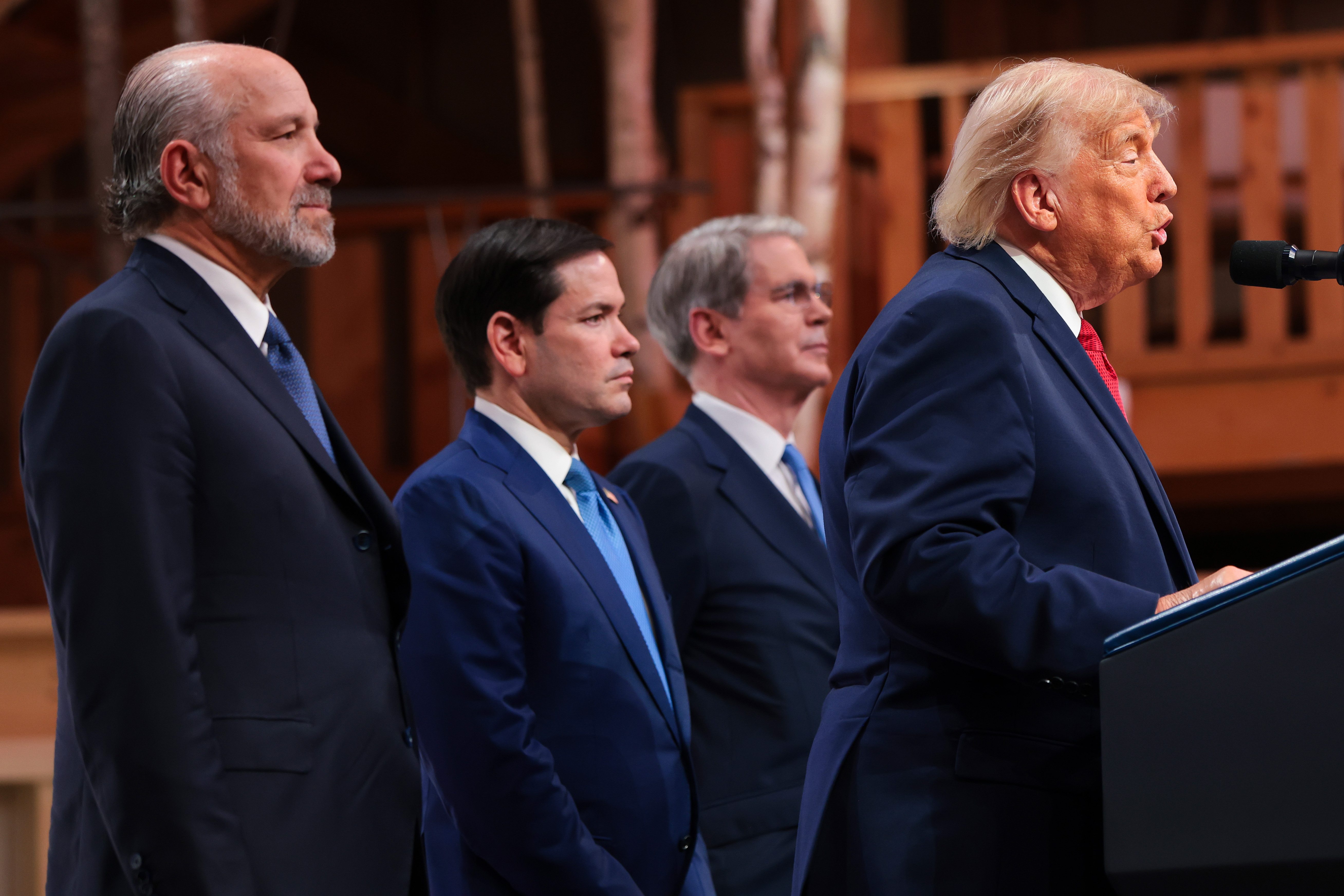
In June 2026, Donald Trump publicly defended his administration’s new diplomatic agreement with Iran while simultaneously declaring that if the deal failed, he would place the blame entirely on Vice President JD Vance. The assertion occurred during a highly publicized press event where Trump fiercely criticized major media outlets for their coverage of the ongoing negotiations. The rhetoric highlighted a stark pivot from his 2018 withdrawal from the Joint Comprehensive Plan of Action (JCPOA), blending high-stakes international diplomacy with preemptive domestic scapegoating.
The podium was set. The microphones were hot. The narrative was entirely controlled by a single voice. Trump leaned into the microphones and delivered a defense of what many considered an impossible diplomatic maneuver. He was negotiating with Tehran. He was defending the terms. And he was already mapping the exit strategy if the framework collapsed.
The media questioned the viability of the pact. Trump fired back. He called the press the enemy of the deal. He accused them of wanting a Middle Eastern conflict to boost ratings. Then, in a moment of rhetorical whiplash that has defined his political career, he pivoted to his own Vice President.
If the ayatollahs broke the terms, it would be JD Vance’s fault. If the centrifuges spun back up, the blame would fall on the Vice President. It was delivered as a riff. It landed as a directive. The base cheered. The press scrambled. The diplomatic corps held its collective breath.
The Reversal in Tehran Policy
History provides the necessary context for the June 2026 announcement. On May 8, 2018, during his first term, Donald Trump walked up to a podium in the Diplomatic Room of the White House and dismantled the legacy of his predecessor. He announced the United States would withdraw from the JCPOA, the 2015 nuclear agreement brokered by the Obama administration, John Kerry, and a coalition of European allies.
Trump called the 2015 pact the worst deal ever negotiated. He cited the unfreezing of roughly $150 billion in Iranian assets. He implemented a policy of “maximum pressure.” Sanctions crushed the Iranian rial. Oil exports plummeted. Tensions peaked on January 3, 2020, when a U.S. drone strike in Baghdad killed Qasem Soleimani, the commander of the Quds Force.
The geopolitical landscape of 2026 looks vastly different. The maximum pressure campaign altered the economic reality in Tehran, but uranium enrichment continued. By 2024, international watchdogs reported Iran was enriching uranium to 60 percent purity, a short technical step away from the 90 percent required for weapons-grade material. A new approach was required.
Trump’s return to the negotiating table shocked the foreign policy establishment. Neoconservatives in Washington balked. The America First populist wing watched closely. Trump needed a deal that looked tougher than Obama’s, but he also needed to avoid a multi-trillion-dollar ground war in the Middle East.
- The 2015 JCPOA: Lifted sanctions in exchange for strict, temporary limits on nuclear enrichment.
- The 2018 Withdrawal: Reimposed crippling sanctions, targeting oil exports and banking.
- The 2026 Framework: A newly proposed transactional agreement aimed at capping enrichment while offering highly conditional, heavily monitored economic relief.
Defending this new framework required a masterclass in political framing. Trump could not appear soft. He had to appear pragmatic. He had to sell a compromise to a base that had been trained to view any negotiation with Tehran as capitulation.
The Press as the Primary Adversary
To sell the deal, Trump needed an enemy. The Ayatollah Ali Khamenei was the literal adversary across the negotiating table in Vienna and Oman, but the domestic adversary was the American press corps.
During the June 2026 address, Trump spent as much time dismantling the media’s credibility as he did explaining the mechanics of the nuclear framework. He named CNN. He named MSNBC. He targeted the editorial board of The New York Times.
“They loved it when John Kerry gave away the store. They cheered for it. Now we make a real deal, a strong deal, and suddenly they care about enforcement. They don’t care about enforcement. They care about ratings.”
The strategy is a known commodity. By attacking the press, Trump forces his political base into a binary choice: side with the media establishment, or side with the administration. For the America First voter, the choice is automatic. The cultural defense mechanism activates.
The media’s critiques of the 2026 deal focused on verification protocols. How would the International Atomic Energy Agency (IAEA) inspect military sites like Parchin? What were the exact dollar amounts of the sanctions relief? Trump dismissed the specifics as bureaucratic obsession. He framed the agreement as a victory of sheer willpower.
The Hypocrisy Narrative
Trump’s media bashing relies on the hypocrisy narrative. He routinely highlights the difference in tone between the coverage of the 2015 Obama-era negotiations and his own efforts. In 2015, the press largely framed the JCPOA as a triumph of diplomacy over war. In 2026, the press framed Trump’s efforts as a volatile gamble by an unpredictable leader.
Trump uses this dichotomy as a shield. Whenever a reporter asks a technical question about centrifuge cascades or heavy water reactors, Trump pivots to media bias. It is a highly effective deflection tactic that keeps the focus on cultural grievances rather than diplomatic minutiae.
The JD Vance Scapegoat Protocol
The most striking moment of the June 2026 defense was the sudden inclusion of Vice President JD Vance. Mid-riff, while discussing the potential pitfalls of trusting the Iranian regime, Trump offered a preemptive contingency plan.
If the deal fails, it will be Vance’s fault.
The comment was delivered with a smirk, but in the ecosystem of Trump’s Washington, jokes carry operational weight. JD Vance, the author of Hillbilly Elegy and the junior Senator from Ohio before his elevation to the vice presidency, represents the intellectual core of the New Right. Vance is deeply skeptical of foreign entanglements. He has consistently argued against neoconservative interventionism. He is the avatar of the America First foreign policy doctrine.
By tying Vance to the success or failure of the Iran deal, Trump accomplished three distinct political objectives simultaneously.
First, he provided himself with a heat shield. Trump has a long history of utilizing subordinates to absorb political damage. From Rex Tillerson to John Bolton to Mike Pence, the Trump administration has always featured a rotating cast of lightning rods. If the Iran deal collapses, Vance absorbs the conservative backlash.
Second, he forced Vance to actively defend the deal. As Vice President, Vance cannot distance himself from the administration’s signature foreign policy achievement. He must go on Sunday morning talk shows. He must face the cameras. He must sell a compromise with Tehran to the populist base that elevated him.
Third, it tests the loyalty of the heir apparent. Vance is widely considered the future of the MAGA movement. Managing a volatile diplomatic crisis is the ultimate stress test. Trump is forcing Vance to prove his political utility in real-time.
The Cultural Defense of Diplomacy
The audience watching the June 2026 address did not care about the technical specifications of the Fordow Fuel Enrichment Plant. They cared about strength. They cared about dominance. They cared about cultural defense.
Trump’s rhetoric is engineered for this exact frequency. He does not sell policy; he sells posture. The Iran deal is not presented as a complex web of sanctions relief and nuclear physics. It is presented as a transaction where America wins and the establishment loses.
When Trump bashes the media, the audience feels validated. The press is viewed as a hostile entity, an elite class that looks down on the working-class voter. By attacking the reporters in the room, Trump signals to his voters that he is fighting their enemies.
When Trump blames JD Vance, the audience feels a sense of inside-joke camaraderie. It is reality television mechanics applied to global diplomacy. The base understands the game. They know Trump takes the credit for victories and assigns blame for defeats. They accept this transaction because Trump serves as their ultimate cultural defender against an establishment they despise.
The global oil markets reacted to the speech. Brent Crude hovered around $85 a barrel, fluctuating on the news of potential Iranian supply re-entering the market. European allies issued cautious statements of support from Brussels and Paris. Israeli leadership watched with deep skepticism from Jerusalem.
But in the room, none of that mattered. What mattered was the performance. The defiance. The sheer audacity of reversing a legacy-defining policy while simultaneously attacking the people pointing out the reversal.
Sanctions lift. Centrifuges spin. The media types. Trump speaks. Vance waits. Washington.