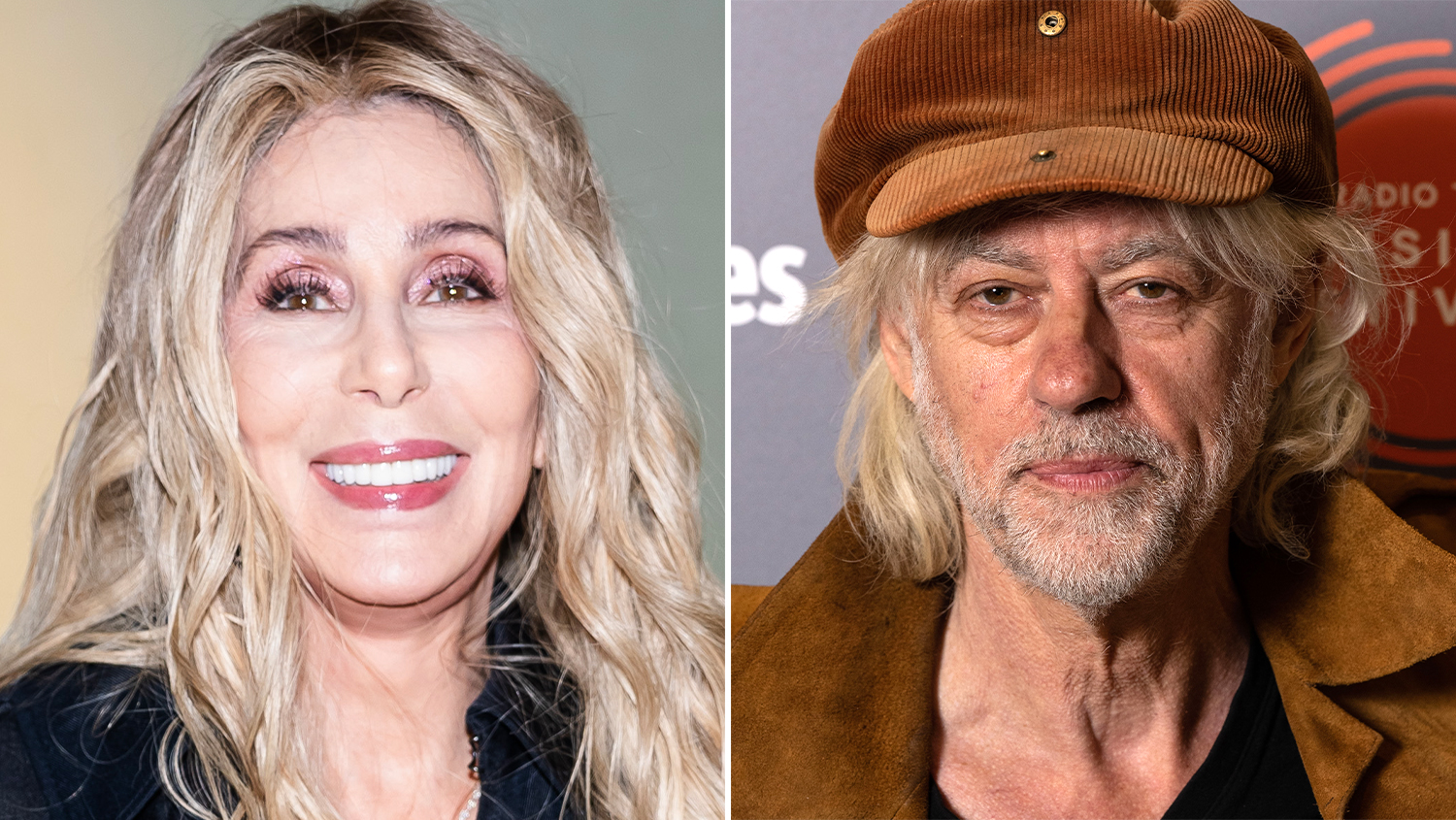
Cher and Bob Geldof are currently in active negotiations to star in the upcoming animated feature film FlySquad – First Strike!. The development, first reported in June 2026, pairs the Goddess of Pop with the architect of Live Aid in a voice-acting capacity. If deals close, the project will unite two of the most recognizable vocal timbres in modern music history within a single animated universe.
The announcement arrives without a designated release date or an attached animation studio. The plot remains classified. The character designs are locked in pre-production vaults. Yet, the mere attachment of these two names signals a specific type of Hollywood packaging. Studios do not pursue Cher and Bob Geldof for background texture. They pursue them for marquee gravity.
What looks like a sudden casting quirk actually reflects a calculated shift in how the animation industry leverages legacy talent. The modern animated feature relies heavily on multi-generational appeal. Parents buy the tickets; children consume the merchandise. Casting figures who dominated the cultural conversation in the 1980s and 1990s secures the parental demographic immediately.
The Economics of the Recognizable Voice
Animation casting changed permanently in 1992. When Robin Williams voiced the Genie in Disney’s Aladdin, the industry realized that an A-list celebrity could drive box office returns just as effectively from a recording booth as they could on a live-action set. Aladdin grossed $504 million worldwide. The precedent was set.
Today, the economics are even more refined. Voice acting requires a fraction of the time commitment of a live-action shoot. There are no 4:00 AM makeup calls. There are no grueling location shoots in adverse weather. Actors can record their lines in isolated studios in Los Angeles, London, or even from their own homes via high-fidelity ISDN lines.
For legacy musicians, this presents an ideal scenario. They retain their artistic output without the physical toll of a global concert tour or a demanding film set. The compensation structure for high-profile voice work often includes significant backend participation. If FlySquad – First Strike! launches a franchise, the financial upside for its vocal stars is substantial.
Cher and Geldof possess something studios cannot synthesize: vocal distinctiveness. Cher’s deep, resonant contralto has been a fixture on global radio since 1965. Geldof’s gritty, urgent Irish rasp defined the punk and new wave eras. In animation, where visual cues must be matched by immediate auditory recognition, these distinct sonic signatures are highly commodified assets.
Cher’s Enduring Hollywood Footprint
Cher does not need to act. Her status as a mononymous cultural pillar was cemented decades ago. Yet, her selective filmography reveals a highly strategic approach to Hollywood.
She pivoted from television variety shows to serious cinema in the early 1980s. Her performance in Mike Nichols’ Silkwood (1983) earned her an Academy Award nomination for Best Supporting Actress. Four years later, on April 11, 1988, she won the Academy Award for Best Actress for her role as Loretta Castorini in Norman Jewison’s Moonstruck. That film grossed over $80 million against a $15 million budget.
In the decades since, her screen appearances have been carefully curated events. She starred alongside Christina Aguilera in Burlesque (2010), a film that grossed $90 million globally and generated a highly successful soundtrack. In 2018, she appeared in Mamma Mia! Here We Go Again, stealing the third act and subsequently releasing an album of ABBA covers that charted worldwide.
Voice acting is not entirely new territory for her. She provided the voice of Janet the Lioness in the 2011 comedy Zookeeper. However, a top-billed role in an action-oriented animated feature like FlySquad – First Strike! represents a different tier of engagement. It suggests a character built specifically around her persona. Cher brings an inherent theatricality to a recording booth. The animators will likely tailor her character’s micro-expressions to match her real-world cadence.
The Geldof Equation: A Rare Cinematic Return
Bob Geldof’s relationship with cinema is far more adversarial. The former frontman of the Boomtown Rats is globally recognized for his philanthropy, most notably organizing the Live Aid concerts on July 13, 1985, which raised an estimated $127 million for famine relief in Ethiopia.
His acting resume is brief but legendary. In 1982, Geldof starred as Pink in Alan Parker’s film adaptation of Pink Floyd – The Wall. The performance was visceral, demanding, and largely dialogue-free, relying instead on Geldof’s intense physical presence and emotional volatility. The film became a cult classic, grossing $22 million in the United States and cementing Geldof’s image as a brooding, serious artist.
Since The Wall, Geldof has largely avoided acting. He has focused on his music, his business ventures, including the television production company Planet 24, which he co-founded in 1992, and his ongoing activist work. He was granted an honorary knighthood by Queen Elizabeth II in 1986.
His potential involvement in FlySquad – First Strike! is the anomaly of this announcement. Why would a famously uncompromising activist and musician choose a mainstream animated feature as his return to acting? The answer likely lies in the script. Geldof has historically leveraged media to amplify a message. If the narrative of FlySquad contains a satirical edge, an environmental message, or a subversive take on modern society, it aligns with his historical sensibilities.
The Mechanics of Modern Voice Production
If the deals close, the production of FlySquad – First Strike! will follow the rigorous protocols of modern animation. The voices are recorded first. This is a critical distinction from live-action dubbing.
Cher and Geldof will stand in isolated booths. A director will guide them through the script, often asking for dozens of variations of a single line. They will provide “efforts”, the grunts, sighs, and exhalations required when an animated character jumps, falls, or fights. This audio is then handed over to the animation department.
Animators spend months matching the digital or hand-drawn lip movements to the recorded audio tracks. They study video footage of the actors in the recording booth, integrating the actors’ natural facial tics and hand gestures into the animated characters. This process, known as reference animation, ensures that the final product feels organic rather than robotic.
What the Title Implies: The Franchise Strategy
The title FlySquad – First Strike! carries the unmistakable cadence of an intellectual property launch. The inclusion of a subtitle, ”First Strike!”, indicates that the studio envisions a sequel before the first frame is even rendered.
In the current theatrical landscape, original animated properties face immense pressure. They must compete against established behemoths from Pixar, Illumination, and DreamWorks. To mitigate risk, independent or emerging animation studios rely on stunt casting. A poster featuring the names “Cher” and “Bob Geldof” guarantees immediate press coverage across entertainment, music, and mainstream news verticals.
The word “FlySquad” suggests an ensemble piece, likely in the action-comedy genre. It evokes imagery of an elite team, possibly anthropomorphic animals or futuristic pilots. The contrast between Cher’s polished, commanding delivery and Geldof’s raw, cynical tone provides a natural comedic friction. This is the buddy-cop dynamic translated into vocal frequencies.
The Broader Industry Trend
This casting news does not exist in a vacuum. It is part of a wider movement of legacy musicians finding new avenues for expression and revenue in the streaming era.
- Snoop Dogg has built a massive secondary career in voice acting and commercial endorsements.
- Pharrell Williams recently saw his life story adapted into a feature-length animated film using LEGO bricks.
- Elton John leveraged his catalog and persona into the highly successful fantasy-musical biopic Rocketman (2019).
For artists of this caliber, the traditional album-and-tour cycle is no longer the sole metric of success. Cultural omnipresence is the new goal. An animated feature places their voices in front of millions of children who have never heard “If I Could Turn Back Time” or “I Don’t Like Mondays.” It is an exercise in legacy preservation.
The negotiations are ongoing. The ink is not yet dry. Hollywood is littered with announced projects that never escape development hell. But the alignment of these two specific icons for this specific medium indicates a serious intent. The studios understand the value of the asset. The artists understand the leverage they hold.
The contracts are drafted. The recording booths are prepped. The legacy artists review the scripts. FlySquad.


