
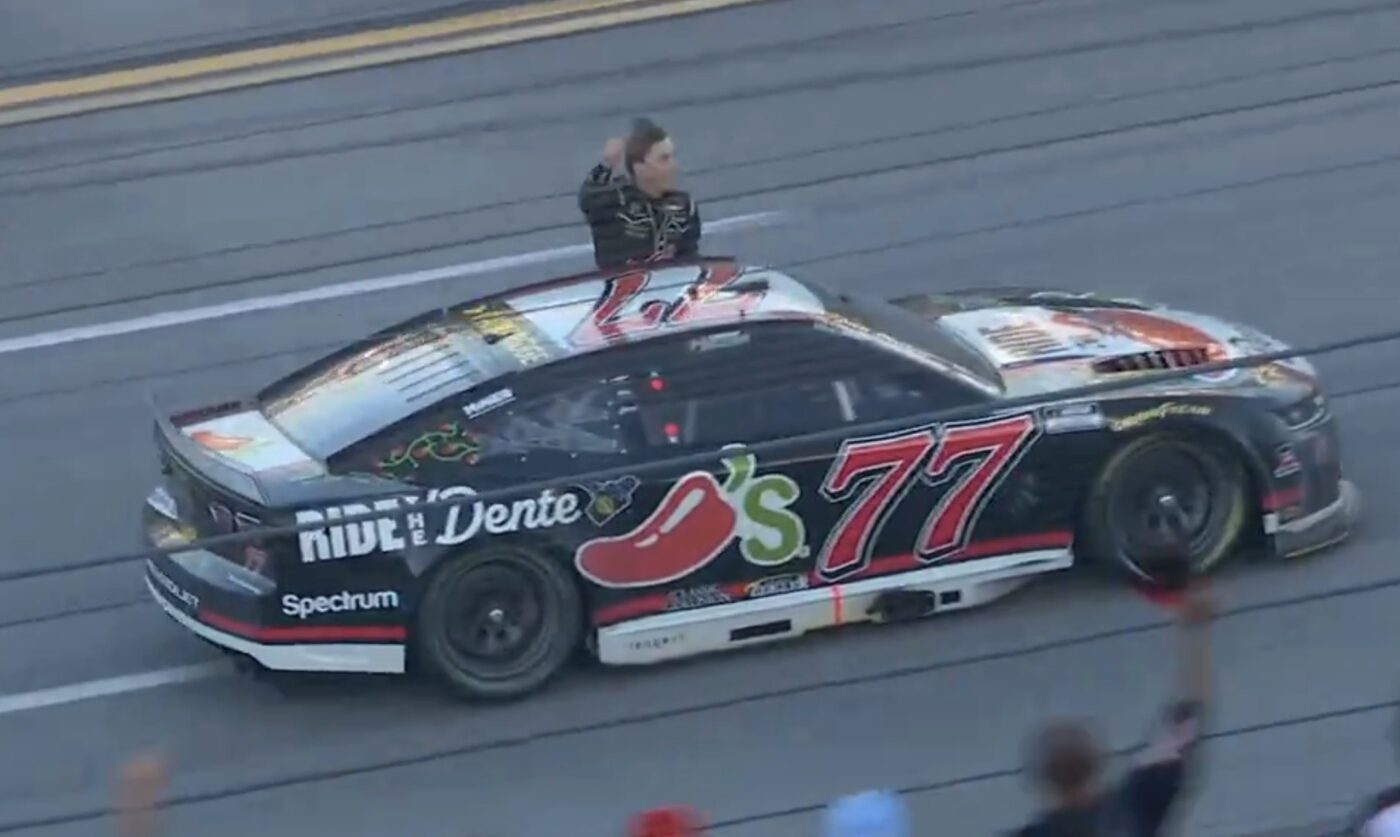
NASCAR Cup Series driver Carson Hocevar drove roughly 100 miles from Pocono Raceway in Pennsylvania to Madison Square Garden in New York City on June 12, 2026, to attend the NBA Finals, only to discover the New York Knicks were playing the Spurs 1,700 miles away in San Antonio, Texas. The Spire Motorsports driver had secured tickets and navigated Manhattan evening traffic before realizing his geographical error. The incident quickly became a viral moment, highlighting the intense, tunnel-vision reality of professional racing schedules.
The story begins in the Pocono Mountains. The NASCAR Cup Series schedule is unforgiving. It demands constant motion. Drivers move from state to state, track to track, living out of luxury motorhomes and chartered aircraft. The bubble is absolute.
In mid-June 2026, the circuit arrived at Long Pond, Pennsylvania. Pocono Raceway, known as the Tricky Triangle, sits in a rural stretch of Monroe County. It is a massive, 2.5-mile asphalt track surrounded by dense forests and unpredictable weather patterns. For a professional race car driver, the weekend consists of practice sessions, qualifying runs, sponsor obligations, and engineering debriefs. The outside world largely disappears.
Carson Hocevar drives the No. 77 Chevrolet Camaro ZL1 for Spire Motorsports. At twenty-three years old, he represents the new generation of NASCAR talent. The demands on his time are relentless. When a rare evening of free time presented itself during the Pocono race weekend, Hocevar looked toward the biggest sporting event happening in the country: the 2026 NBA Finals.
The Route to Manhattan
The New York Knicks had secured a spot in the NBA Finals against the San Antonio Spurs. The cultural gravity of the series was immense. Basketball fans across the Northeast were consumed by the matchup.
Hocevar decided to attend. The logistics seemed straightforward. Pocono Raceway is located approximately 100 miles west of New York City. It is a direct drive. A driver leaves the track, merges onto Interstate 80 East, and follows the highway through the Delaware Water Gap. The route cuts across northern New Jersey, transitioning to Interstate 280, and eventually feeds into the Lincoln Tunnel.
On the evening of June 12, Hocevar made this exact drive. He left the quiet mountains of Pennsylvania. He navigated the sprawling infrastructure of the New Jersey Turnpike. He sat in the inevitable bottleneck of tunnel traffic beneath the Hudson River. He emerged into the chaotic, neon-lit grid of Midtown Manhattan.
Driving into Manhattan is an intentional act. It requires patience. It requires navigating one-way streets, aggressive taxi drivers, and exorbitant parking fees. Hocevar committed to the journey. His destination was 4 Pennsylvania Plaza. Madison Square Garden. The Mecca of basketball.
He arrived. He parked. He prepared to watch the New York Knicks compete for an NBA Championship.
The Madison Square Garden Realization
A typical game night at Madison Square Garden is unmistakable. The sidewalks along 7th and 8th Avenues swell with thousands of fans wearing blue and orange. Scalpers work the corners. Police barricades direct the flow of pedestrian traffic. The energy of 19,000 ticket-holders radiates into the surrounding blocks of Penn Station.
When Hocevar arrived, the environment did not match the occasion. The sidewalks were standard Manhattan busy, but not playoff-basketball busy. The massive digital marquees wrapping the exterior of the arena were not broadcasting live warm-ups.
The realization set in slowly, then all at once. The New York Knicks were indeed playing in the NBA Finals that night. But they were not in New York.
The NBA Finals utilize a 2-2-1-1-1 format. The higher-seeded team hosts the first two games. The series then shifts to the lower-seeded team’s arena for the next two games. On this specific night, the series had shifted to Texas.
The New York Knicks were inside the Frost Bank Center in San Antonio. They were 1,700 miles away. Madison Square Garden was empty.
The Hyper-Focused Bubble of Professional Racing
To the average observer, driving two hours to a stadium without checking the location of the game seems impossible. In the context of a modern professional athlete’s schedule, it becomes entirely plausible.
NASCAR operates on a 38-week schedule. From the Busch Light Clash in early February to the Championship race in November, drivers do not get weekends off. Their lives are managed by public relations representatives, crew chiefs, and team owners. Their schedules are broken down into fifteen-minute increments.
When an athlete lives inside this highly structured environment, the cognitive load shifts. They focus entirely on tire wear, aerodynamic packages, and track temperatures. The broader details of the outside world fade into the background. Hocevar knew the Knicks were in the Finals. He knew they played at Madison Square Garden. He knew he had a rare evening free in the Northeast. His brain connected the data points and executed the plan.
He simply forgot to check the venue.
This phenomenon is not unique to Hocevar. Athletes frequently lose track of days, time zones, and geographic locations. When a charter flight lands, a driver gets into a waiting rental car and drives to a hotel. The next morning, they drive to the track. The city outside the track is often irrelevant to the job at hand. The bubble creates a specific type of blindness.
The Social Media Aftermath
The story broke the following day. On June 13, 2026, the country music and lifestyle outlet Whiskey Riff published the details of the mix-up. The headline asked the question directly: Did Carson Hocevar really drive from Pocono to Madison Square Garden without realizing the game was in San Antonio?
The answer was yes. The NASCAR community quickly seized on the error. Social media platforms lit up with memes and commentary. Rival drivers and team mechanics offered lighthearted jabs.
Hocevar leaned into the mistake. In the modern media landscape, self-deprecation is the most effective defense mechanism. Acknowledging the absurdity of sitting in Manhattan traffic for an empty arena defuses the criticism. The Spire Motorsports driver owned the error. It humanized him. It transformed a logistical failure into a relatable cultural moment.
Fans engage with athletes who display vulnerability. A driver navigating a 3,400-pound stock car at 190 miles per hour seems untouchable. A driver realizing he drove to the wrong state for a basketball game is universally understood.
The Logistical Reality of the Error
The financial and temporal cost of the mistake is worth examining. Tickets to an NBA Finals game run into the thousands of dollars. While it remains unclear if Hocevar had physical tickets in hand for a future game or simply assumed he could procure them upon arrival, the intent was clear.
The time investment was equally significant. A two-hour drive into Manhattan is exhausting. A two-hour drive back to the Pocono Mountains in the dark is punishing. Hocevar spent at least four hours on Interstate 80 and the New Jersey Turnpike for an event that did not exist.
He returned to Long Pond. He slept in his motorhome. The next morning, he strapped into the No. 77 Chevrolet. The engine fired. The spotter came over the radio. The basketball game in Texas was forgotten. The Tricky Triangle demanded his full attention.
The incident remains a footnote in the 2026 NASCAR season. It is a testament to the strange, isolated reality of professional sports. Athletes move through the world at incredible speeds. Sometimes, the map simply fails to load.
The engine cooled. The highway emptied. The arena stayed dark.
San Antonio.


