
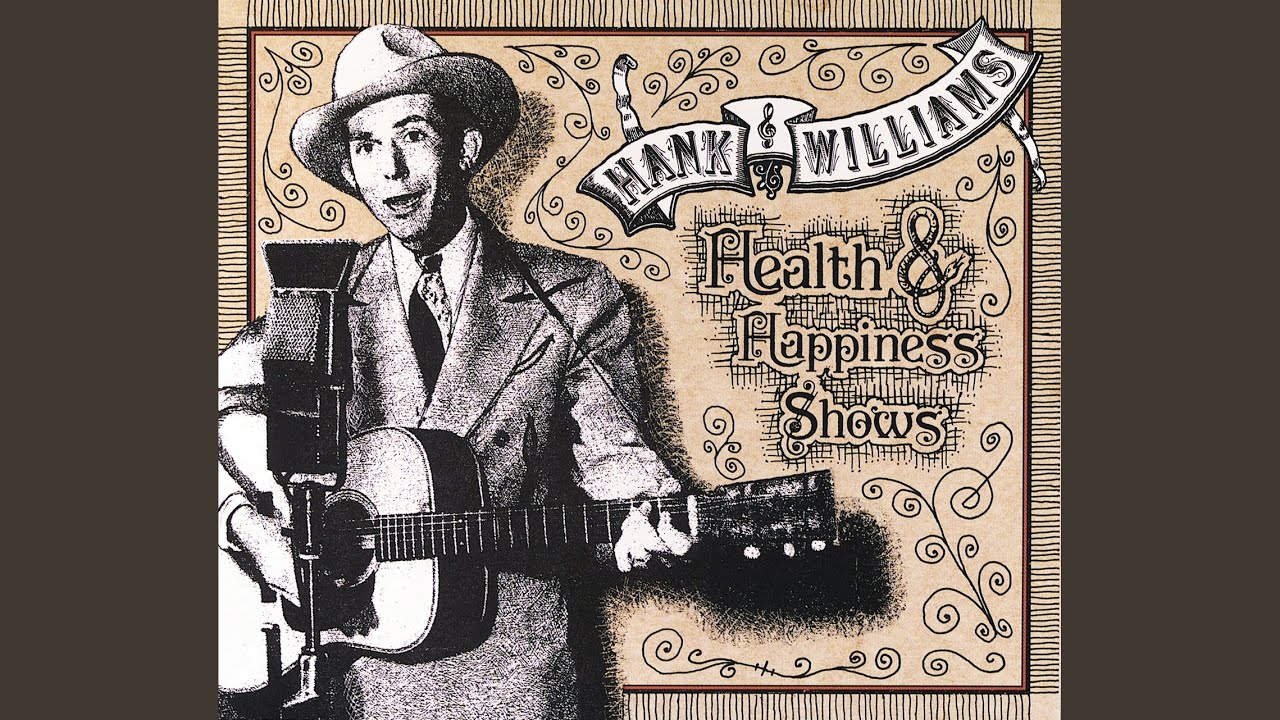
Hank Williams walked into Herzog Studio in Cincinnati on December 22, 1948, carrying an old Tin Pan Alley show tune called “Lovesick Blues.” His producer, Fred Rose, hated it. His backing band, the Drifting Cowboys, thought it was a joke. But Williams ignored their objections, recorded the yodeling track anyway, and inadvertently created the defining country music crossover hit of the 20th century. The song that everyone in the room tried to kill became the song that built an empire.
In many ways, the modern country music industry was born out of this single act of defiance. The establishment wanted traditional mountain music. The establishment wanted original compositions that kept publishing royalties in-house. Williams wanted to yodel a forgotten pop song he had learned from a minstrel record.
The tension in that Cincinnati studio was not just about musical taste. It was a battle over the future of a genre. The men in the control room represented the rigid rules of Nashville. The man behind the microphone represented the unpredictable, undeniable force of popular appeal.
The Cincinnati Session of 1948
The year was 1948. The recording ban imposed by the American Federation of Musicians was coming to an end. MGM Records needed new material. Hank Williams, a twenty-five-year-old singer from Alabama, was summoned to E.T. Herzog Recording Studio at 811 Race Street in Cincinnati, Ohio. Herzog Studio was a neutral ground. It was far from the strict oversight of Nashville’s emerging Music Row.
Williams arrived with his producer, Fred Rose. Rose was a brilliant musical mind. He was the co-founder of Acuff-Rose Publications, the first major country music publishing house in Nashville. Rose knew song structure. He knew the market. He knew how to mold rough rural talent into commercial success.
He also knew what he did not like. When Williams announced his intention to record “Lovesick Blues,” Rose balked. The producer’s objections were immediate and forceful. He argued the song was archaic. He argued it did not fit the “Hillbilly Shakespeare” persona they were carefully crafting for Williams. Most importantly, Acuff-Rose did not own the publishing rights to the song. If it became a hit, the royalties would flow back to New York, not Nashville.
The backing musicians agreed with Rose. The session players included Jerry Byrd on steel guitar, Tommy Jackson on fiddle, Louis Innis on rhythm guitar, and Zeb Turner on lead guitar. They were seasoned professionals. They listened to Williams run through the song and dismissed it as a novelty act. Byrd famously remarked that the song was out of meter and made no musical sense.
A Tin Pan Alley Relic
The objections were historically justified. “Lovesick Blues” was not a country song. It was not born in the Appalachian Mountains or the honky-tonks of Texas. It was born in Manhattan.
Cliff Friend and Irving Mills wrote the song in 1922. It was a Tin Pan Alley creation, designed for the Broadway stage. Elsie Clark first recorded it that same year. It was a standard pop tune of the jazz age, complete with a vaudeville bounce and theatrical phrasing. It had nothing to do with the rural southern experience.
Williams had never heard the Broadway version. He learned the song from a 1925 recording by Emmett Miller. Miller was a complex, controversial figure in American music. He was a blackface minstrel performer from Georgia who possessed a strange, breaking falsetto voice. Miller’s delivery was a bizarre fusion of jazz phrasing, blues timing, and a distinct yodel. It was this specific vocal break, the catch in the throat, that fascinated the young Williams.
Rex Griffin, a country singer, had recorded a version in 1939. Griffin stripped away the jazz instrumentation and played it with a simple acoustic guitar. Williams absorbed both Miller’s vocal acrobatics and Griffin’s stripped-down arrangement. By the time Williams brought it to Cincinnati, the song was a hybrid monster. It was a New York pop song, sung with a minstrel yodel, played to a country rhythm.
The Resistance of Fred Rose
Fred Rose was a man of strict musical principles. He believed in the narrative power of the country ballad. He had already helped Williams polish hits like “Move It On Over” and “Honky Tonkin’.” Rose saw Williams as a songwriter first and a performer second. Recording a cover song from 1922 felt like a massive step backward.
“Fred Rose told him not to do it. The band told him not to do it. They thought it was the worst piece of garbage they had ever heard. But Hank just smiled and said he was going to sing it anyway.”
The argument in Herzog Studio grew heated. Rose allegedly threatened to walk out of the control room. He told Williams that the song would ruin his career. He warned that radio disc jockeys would refuse to play a yodeling pop song. The established country music audience, Rose argued, wanted authenticity. They wanted songs about drinking, cheating, and heartbreak. They did not want vaudeville.
Williams was unbothered by the criticism. He had been testing the song on live audiences across the South. He knew something the executives in the control room did not know. He knew what the song did to a crowd. When he hit the falsetto break on the word “cry,” audiences went wild. The song was a showstopper. Williams trusted the reaction of the ticket-buyers over the theories of his producer.
He planted his feet. He told Rose he was recording the song.
Cutting the Track
The recording session commenced. The band struggled to find the groove. The timing of “Lovesick Blues” is notoriously difficult. Williams did not sing strictly on the beat. He dragged the phrasing, stretching syllables across the bar lines, and then rushed the next measure to catch up. It was a nightmare for the rhythm section.
Jerry Byrd and Louis Innis had to abandon standard country timing. They stopped trying to lead Williams and started following him. They watched his boots tap the floor. They watched his shoulders move. They played to the man, not the metronome.
Williams leaned into the microphone. He did not just sing the song; he attacked it. He pushed his voice to the absolute breaking point. The yodel was not precise or polished. It was raw. It sounded frantic. It sounded desperate. The performance transformed the theatrical lyrics into a genuine expression of rural angst.
- Take One: The band lost the timing.
- Take Two: The vocals were pushed too hard into the red.
- Take Three: The magic happened. The rhythm locked in. The yodel soared.
When the take ended, the room was quiet. The band still thought it was a strange record. Fred Rose still disliked it. But the track was cut. It was pressed to wax. The decision was now out of their hands.
The Release and the Explosion
MGM Records released “Lovesick Blues” on February 11, 1949. The B-side was “Never Again (Will I Knock on Your Door).” The label executives had low expectations. They shipped the standard promotional copies to radio stations and waited.
The reaction was instantaneous. The song did not just climb the charts; it detonated. Listeners jammed the phone lines at radio stations across the South and Midwest, demanding to hear the yodeling song again. Disc jockeys who initially dismissed the record were forced to put it into heavy rotation.
By May 1949, “Lovesick Blues” reached Number One on the Billboard Top C&W singles chart. It did not leave that spot. It stayed at Number One for an astonishing sixteen consecutive weeks. It remained on the charts for forty-two weeks total. It became Billboard’s top country record of the entire year.
The financial impact was staggering. The record sold over millions of copies. It crossed over into pop markets. People who had never bought a “hillbilly” record in their lives bought “Lovesick Blues.” Fred Rose’s fears about publishing royalties were realized, Acuff-Rose did not make a dime off the songwriting, but the sheer volume of record sales made everyone involved incredibly wealthy.
The Grand Ole Opry Debut
The massive success of the single forced the hand of the establishment. The Grand Ole Opry, broadcast live from the Ryman Auditorium in Nashville, Tennessee, was the pinnacle of country music. The Opry management had previously rejected Williams. They thought he was too unreliable. They knew about his heavy drinking. They considered him a liability.
But they could not ignore the biggest record in the country. On June 11, 1949, Hank Williams was invited to make his debut on the Grand Ole Opry. He was introduced by Red Foley. The Ryman Auditorium was packed. The audience was waiting for one specific song.
Williams stepped up to the WSM microphone. He was wearing a white western suit with musical notes embroidered on the sleeves. He struck the opening chord on his Martin guitar. He leaned in and delivered the opening line.
The crowd erupted. They did not just applaud; they screamed. When he finished the song, the applause was deafening. The Opry had strict rules about encores to keep the live radio broadcast on schedule. But the crowd refused to stop cheering. Williams was called back to the microphone. He sang it again. The crowd cheered louder. He sang it a third time. A fourth time. A fifth time.
Hank Williams performed six encores of “Lovesick Blues” that night. It was an unprecedented event in the history of the Grand Ole Opry. Comedian Minnie Pearl, who was standing in the wings, later recalled that the hair on the back of her neck stood up. She had never seen an audience react to a human being with such primal intensity.
The Legacy of a Stubborn Decision
The success of “Lovesick Blues” permanently altered the trajectory of Hank Williams’ career. He was no longer just a regional star. He was a national phenomenon. The song provided him with the leverage to dictate his own terms to producers, promoters, and label executives.
It also changed the architecture of country music. The crossover success of the single proved that country music did not have to remain isolated in rural markets. It proved that a raw, emotional vocal performance could transcend genre boundaries. It paved the way for the massive crossover artists of the 1950s and 1960s, from Elvis Presley to Johnny Cash.
Fred Rose eventually admitted he was wrong. He recognized that Williams possessed an instinct for popular appeal that could not be taught. Rose continued to produce Williams, but he never again tried to completely override the singer’s gut instincts. The dynamic shifted. Williams was the undisputed architect of his own sound.
The song itself became a standard. It has been covered by countless artists, from Patsy Cline to George Strait to Mason Ramsey. But no one has ever replicated the frantic, desperate energy of the 1948 Herzog Studio recording. The magic of that track is intrinsically tied to the defiance of the man singing it.
He walked into a room. He was told no. He sang it anyway. He changed the world.
The band objected. The producer objected. The establishment objected.
Hank.