
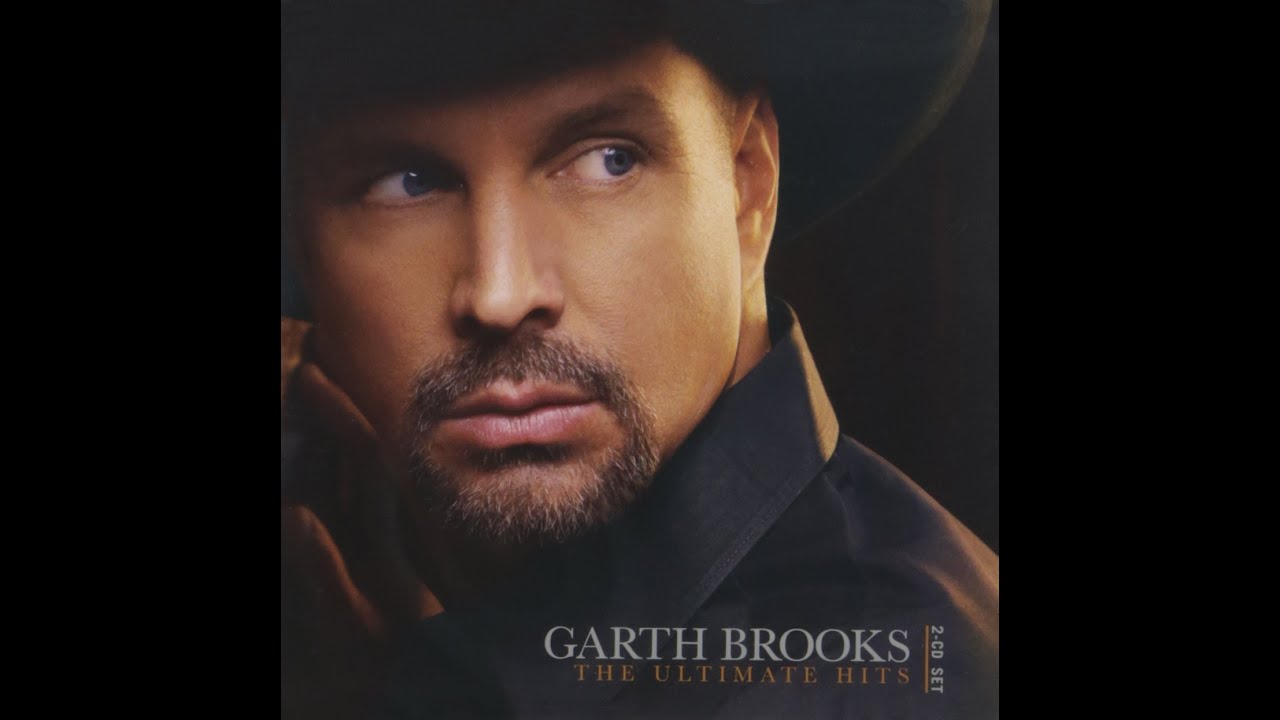
Garth Brooks has officially become the first artist in music history to earn ten Diamond-certified albums from the Recording Industry Association of America (RIAA), an honor recognizing albums that have sold over 10 million copies in the United States. The milestone represents 100 million physical and digital units moved across just ten specific titles. It is a commercial threshold no other solo artist, rock band, or pop icon has ever crossed.
The record books used to belong to The Beatles. For decades, the British quartet held the high-water mark for American album sales.
Now, the absolute ceiling of commercial music belongs to a man from Yukon, Oklahoma.
What looks like a modern industry victory is actually the culmination of a physical-media empire built over three decades. The achievement spans from the cassette tape era of 1989 to the streaming economy of the 2020s. It is a story of arena rock theatrics, barcode scanning technology, and a relentless focus on the album as a singular, unbreakable format.
The Mathematics of Diamond Status
The Recording Industry Association of America created the Diamond Award in 1999. It was designed to recognize a new echelon of commercial success.
The traditional metrics were no longer sufficient. Gold status recognized 500,000 units sold. Platinum status, introduced in 1976, recognized one million units. By the late 1990s, the music industry was experiencing an unprecedented physical boom. Compact discs were generating massive revenue. Megastars were selling millions of units in a matter of weeks.
The RIAA needed a new tier. They set the threshold at 10 million units.
Moving 10 million copies of a single album requires immense cultural penetration. It means the album was purchased by roughly three percent of the entire United States population. It requires crossover appeal. It requires multiple hit singles. Most importantly, it requires sustained shelf life at retail stores.
“Earning a Diamond Award is one of the most elusive achievements in the history of recorded music. Earning ten of them is a statistical anomaly that may never be repeated.”
To understand the scale of Brooks’ achievement, one must look at his closest competitors. The Beatles hold six Diamond albums. Led Zeppelin holds five. Shania Twain and the Eagles hold three.
Brooks sits entirely alone with ten.
The 1991 SoundScan Revelation
The foundation of this ten-Diamond empire was built on a technological shift in how the music industry counted sales.
Before 1991, Billboard magazine determined its album charts by calling record store clerks. Clerks would estimate what was selling. These estimates heavily favored pop and rock records sold in coastal, urban record stores. Country music sales, which often occurred in truck stops, department stores, and rural retailers, were vastly undercounted.
In May 1991, Billboard adopted Nielsen SoundScan. This system tracked actual sales by scanning barcodes at the cash register.
The truth was instantly revealed. Country music fans were buying albums at massive volumes.
In September 1991, Garth Brooks released Ropin’ the Wind. Because of SoundScan, it debuted at number one on the all-genre Billboard 200 chart. It was the first country album in history to do so. The sheer volume of barcode scans proved that Brooks was not just a country star. He was a global pop phenomenon.
Ropin’ the Wind would go on to sell 14 million copies. It became one of his ten Diamond pillars.
The Ten Pillars of the Empire
The ten albums that achieved Diamond status map the trajectory of Brooks’ career. They represent distinct eras of his dominance in the 1990s and his strategic retail maneuvers in the 2000s.
The Early Studio Dominance
His 1989 self-titled debut, Garth Brooks, introduced a new sound to Nashville. It blended traditional honky-tonk themes with the acoustic rock sensibilities of James Taylor. It quietly sold 10 million copies over the ensuing decade.
His sophomore album, No Fences (1990), changed the industry. Driven by the generational anthem “Friends in Low Places” and the dramatic narrative of “The Thunder Rolls,” the album moved 18 million units. It transformed Brooks from a rising star into an arena headliner.
The Chase (1992) and In Pieces (1993) continued the streak. Brooks integrated 1970s stadium rock elements into his live shows. He wore wireless headset microphones. He smashed acoustic guitars. He flew over the crowd in harnesses. The spectacle drove physical album sales.
The Compilation Strategy
Greatest hits packages are powerful tools for achieving Diamond status. They consolidate an artist’s best work for casual fans.
The Hits (1994) sold 10 million copies. The Ultimate Hits (2007), a later compilation featuring 34 songs and a DVD, also crossed the 10 million mark.
His live album, Double Live (1998), remains a statistical juggernaut. Recorded during his massive 1996–1998 world tour, the two-disc set was certified 21-times Platinum. Under RIAA rules, multi-disc sets over a certain running time count each disc as a separate sale. A two-disc album selling 10.5 million physical copies results in 21 million certified units.
The Big Box Retail Era
By the mid-2000s, the music industry was collapsing under the weight of digital piracy and the unbundling of the album on Apple’s iTunes.
Brooks refused to participate. He pulled his music from digital storefronts. He demanded that his music be sold as full albums, not as 99-cent individual tracks.
Instead of relying on traditional record stores, Brooks partnered with Walmart. In 2005, he released The Limited Series, an exclusive box set sold only at the retail giant. In 2014, he partnered with Target and his own GhostTunes platform to control his digital distribution.
By forcing fans to buy physical box sets and full-album digital downloads, Brooks maintained his sales volume while the rest of the industry watched their physical numbers plummet.
Redefining the Ceiling of Country Music
Before Garth Brooks, a successful country album sold 500,000 copies. A blockbuster country album sold one million.
Brooks pushed the ceiling to 10 million, and then to 18 million. He proved that country music could scale to the absolute limits of American commerce.
He brought the marketing tactics of KISS and Queen to Nashville. He utilized aggressive pricing strategies, often insisting that his CDs be priced below the industry standard to ensure maximum volume. He understood that a cheaper CD would sell three times as many copies, generating more total revenue and cementing a larger cultural footprint.
The Holdout and the Amazon Partnership
As streaming overtook physical sales and digital downloads, Brooks remained one of the final holdouts.
He kept his catalog off Spotify. He kept it off Apple Music.
In 2016, he finally struck a deal with Amazon Music. The exclusive partnership brought his catalog into the streaming era, but on his own terms. His physical sales had already secured his legacy. The streaming numbers simply added modern momentum to an already unassailable record.
The Legacy of the Ten
The achievement of ten Diamond albums is not just a testament to popularity. It is a testament to format control.
Brooks maximized the compact disc era. He leveraged the multi-disc RIAA rules. He cornered the big-box retail market. He controlled his master recordings and dictated how his art would be consumed.
The music industry has fundamentally changed. The physical album is now a niche collector’s item. The likelihood of another artist selling 10 million physical or digital equivalent albums of ten different projects is mathematically remote.
The record is secure.
The plaques were minted. The executives gathered. The record books were rewritten.
History.


