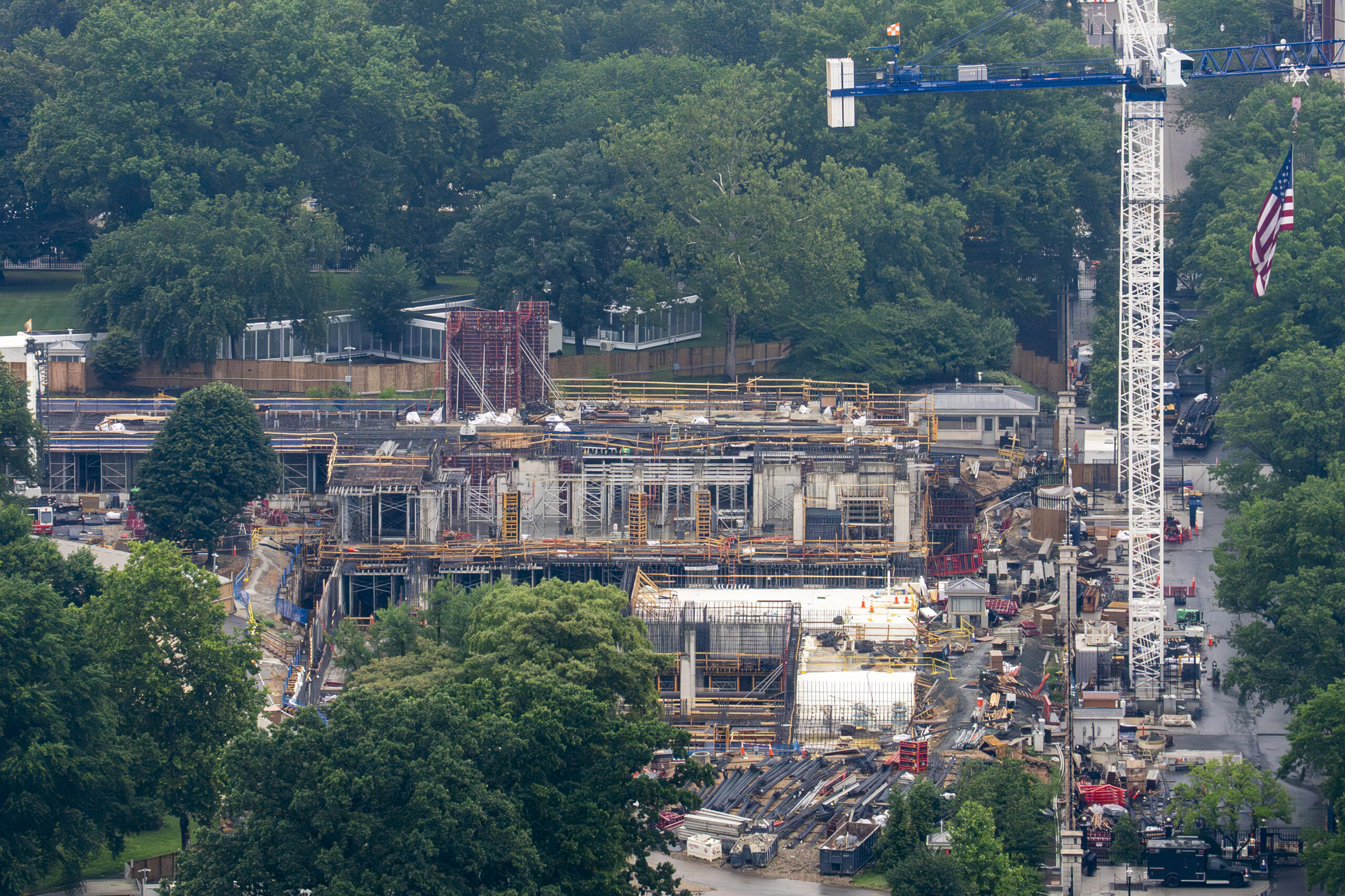
On August 7, 2026, the U.S. Court of Appeals for the D.C. Circuit issued a significant ruling concerning presidential authority over White House modifications. The court determined that President Donald Trump cannot proceed with the construction of a $400 million White House ballroom without securing congressional approval.
This 2-1 decision upholds a preliminary injunction previously issued by a lower court. That injunction had already paused the controversial construction project.
The Court’s Rationale: Temporary Tenant, Not Owner
The majority opinion from the appellate panel articulated a foundational principle of presidential tenure. It stated that the President of the United States serves as a temporary tenant of the White House. The President is not considered the owner of the executive mansion.
This distinction is critical. It implies that a president cannot utilize executive self-help measures to bypass the legislative authority of Congress. Major structural alterations, particularly those involving significant public funds, fall under congressional purview.
The proposed $400 million ballroom project had already led to substantial changes. The White House East Wing had been demolished as part of the initial phases of the construction plan.
Legal Precedent and Executive Power
The ruling underscores the checks and balances inherent in the U.S. governmental system. Presidential actions, especially those with financial and structural implications for national assets, are subject to oversight.
The court’s decision did not immediately halt all proceedings. The appeals court stayed its ruling for a period of 14 days. This temporary stay provides the administration with an opportunity to appeal the decision to the highest court in the land.
The Path to the Supreme Court
President Trump responded swiftly to the appellate court’s decision. He announced his immediate intent to appeal the ruling to the U.S. Supreme Court. This indicates a continued legal battle over the scope of presidential power regarding federal property.
The case now moves to a higher judicial stage. The Supreme Court will consider the arguments regarding executive authority versus congressional appropriation powers. The outcome will set a precedent for future presidential administrations and their ability to alter federal landmarks.
Implications for Future White House Projects
This ruling establishes a clear boundary for presidential actions concerning the White House. It reinforces the idea that the executive branch operates within a framework of shared governance.
Any future large-scale renovation or construction projects at the White House will likely face increased scrutiny. Congressional approval will be a mandatory step, as affirmed by this appellate decision.
The decision highlights the role of the judiciary in interpreting constitutional powers. It ensures that significant expenditures and structural changes to national symbols are subject to legislative consent.
The East Wing Demolition
The demolition of the White House East Wing occurred prior to the finalization of this legal challenge. This action became a point of contention in the legal proceedings.
Critics argued that the demolition proceeded without proper authorization. Proponents maintained that the President had the authority to initiate such changes for security or functional improvements.
The court’s ruling effectively retroactively questions the legality of that demolition. It suggests that even preliminary actions for such projects require prior congressional consent.
A Question of Stewardship
The core of the legal argument centered on the concept of stewardship. Is the President merely a caretaker, or does the office confer broader rights over federal property?
The D.C. Circuit Court sided with the former interpretation. It views the President as a steward, accountable to Congress for major decisions affecting national assets.
This ruling could influence how future administrations approach modifications to the White House. It could also impact other federal properties under executive control.
The Cost and Controversy
The $400 million price tag for the proposed ballroom was a significant factor. Such a large expenditure typically requires specific appropriations from Congress.
The project generated considerable public debate. Concerns were raised about the cost, the necessity, and the process by which the project was initiated.
The court’s decision validates the concerns regarding fiscal oversight. It ensures that large-scale federal projects are subject to the legislative process of budgeting and approval.
Next Steps in the Legal Battle
The administration has 14 days from August 7, 2026, to file its appeal with the Supreme Court. This timeline sets the stage for a rapid escalation of the legal dispute.
The Supreme Court will then decide whether to hear the case. If it does, the arguments will likely focus on the separation of powers and the interpretation of executive authority.
The outcome will have lasting implications. It will define the boundaries of presidential power over federal property and the role of Congress in approving significant expenditures.
Lawyers gathered. Justices gathered. Presidents gathered. Washington.