Tag: Wga

  • DGA, WGA, SAG-AFTRA Protest Emmy Cuts, Unions Decry “Devaluation”

    DGA, WGA, SAG-AFTRA Protest Emmy Cuts, Unions Decry “Devaluation”

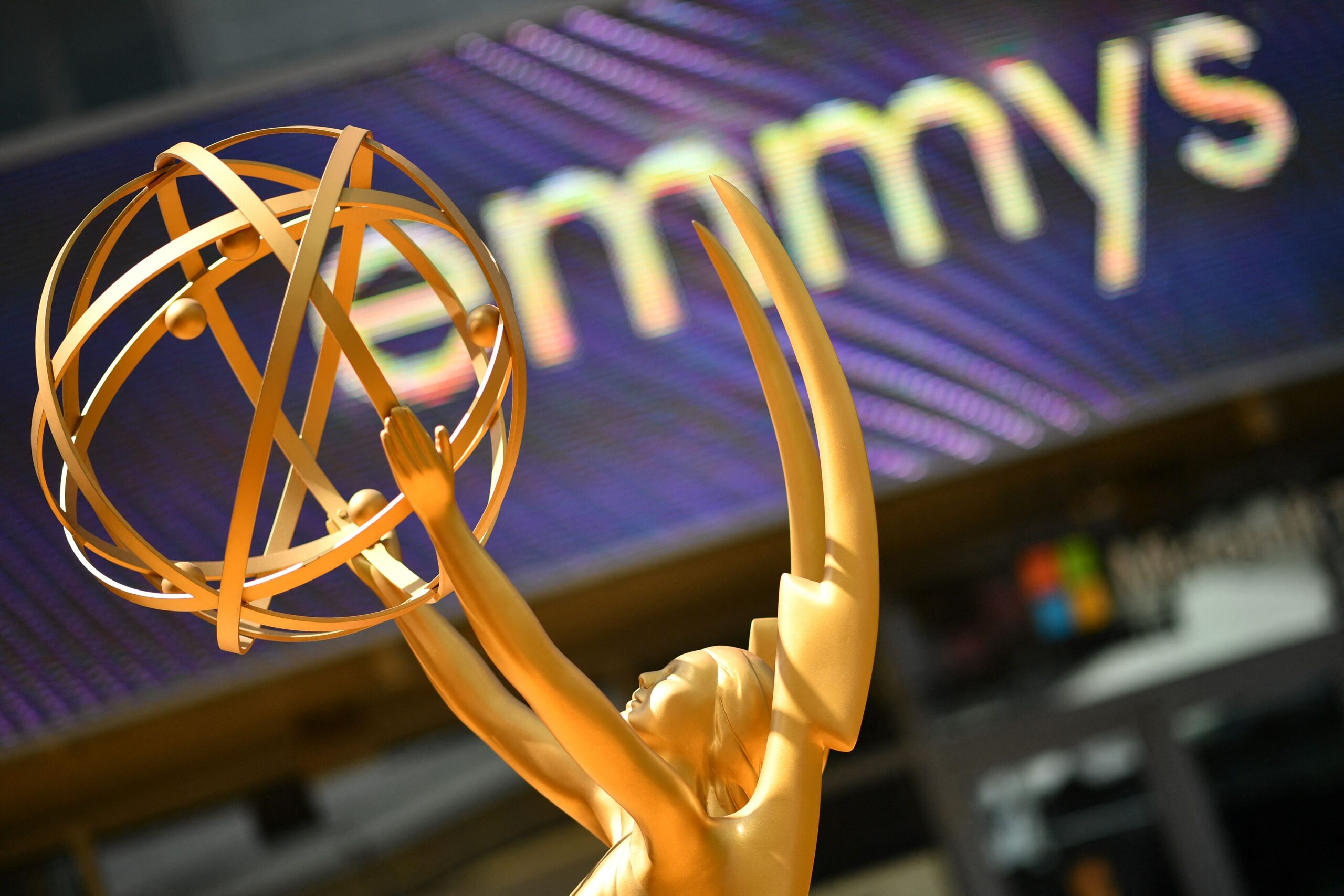
    The Directors Guild of America (DGA), the Writers Guild of America (WGA), and SAG-AFTRA have issued a collective protest against the Emmy Awards’ decision to reduce the number of categories presented during its televised ceremony. This unified stance from major Hollywood unions argues that such cuts devalue the crucial contributions of creative professionals across the television landscape.

    What appears to be a logistical choice by awards show producers is viewed by these organizations as a significant slight. It reignites long-standing debates about the visibility and respect afforded to the myriad roles that bring television productions to life.

    The Core of the Controversy: Category Cuts

    The Television Academy, the organization behind the Emmy Awards, periodically reviews its telecast format. These reviews often aim to streamline the broadcast and increase viewership appeal. A common strategy involves moving certain award presentations to non-televised ceremonies, such as the Creative Arts Emmys.

    However, the recent decision to cut categories from the main telecast has drawn sharp criticism. Specific categories, often representing vital craft and artistic achievements, are impacted. These include areas like outstanding directing for a variety series, outstanding writing for a variety series, and various technical and behind-the-scenes awards.

    The unions contend that every nominee, regardless of their specific craft, has earned their place on the broadcast stage. They argue that relegating these awards to a separate, less-viewed event diminishes their importance and public recognition.

    Union’s Joint Statement: A Unified Front

    The DGA, WGA, and SAG-AFTRA released a joint statement outlining their objections. This rare display of solidarity across three powerful guilds underscores the gravity of the issue within the industry.

    Their statement emphasized that the decision to cut categories “devalues” the contributions of the very people the Academy purports to honor. It highlights a fundamental disagreement over how artistic and technical excellence should be celebrated in a public forum.

    The guilds represent tens of thousands of professionals. These include directors, writers, actors, stunt performers, journalists, and broadcast talent. Their collective voice carries significant weight in Hollywood negotiations and industry standards.

    Historical Context of Emmy Telecast Changes

    The Emmy Awards have a long history of adapting their broadcast structure. The first Emmy Awards ceremony took place in 1949, recognizing achievements in Los Angeles-area television. As television grew, so did the number of categories.

    By the 1970s and 1980s, the telecast began to expand, leading to the creation of the Creative Arts Emmy Awards. These ceremonies were designed to honor a broader range of technical and artistic achievements that could not fit into the main primetime broadcast.

    The balance between recognizing all deserving talent and maintaining an engaging, time-constrained primetime show has always been a challenge. Over the decades, the Television Academy has faced similar criticisms from various industry segments whenever category adjustments were made.

    The Impact on Creative Professionals

    For many creative professionals, an Emmy nomination or win represents the pinnacle of their career. It provides recognition, opens doors for future opportunities, and validates years of dedication to their craft.

    When an award is presented during the main telecast, it receives national and international exposure. The winners’ speeches are heard, their work is highlighted, and their names become part of the cultural conversation.

    Moving categories to a non-televised event, or one with significantly lower viewership, reduces this exposure. It can make these achievements feel less significant to the broader public, and potentially, to the industry itself.

    This affects not only the individuals receiving the awards but also the perception of their entire department or craft. For example, a director of a variety series might feel their work is less valued if their category is not part of the main show, despite the complexity and artistry involved.

    Economic and Status Implications

    Beyond prestige, there are tangible economic and status implications. Public recognition from an Emmy win can lead to higher-profile jobs, increased negotiating power, and better compensation.

    For guilds like the DGA and WGA, ensuring their members receive appropriate recognition is part of their mission. It helps elevate the standing of their respective crafts within the entertainment hierarchy.

    SAG-AFTRA, representing a vast array of performers, also advocates for the visibility of its members’ diverse contributions. This includes not just leading actors but also supporting roles, stunt performers, and voice actors, many of whom contribute to categories often moved off the main telecast.

    The Role of the Television Academy

    The Television Academy is responsible for upholding the integrity and prestige of the Emmy Awards. Its stated mission includes recognizing excellence in the television industry.

    Decisions regarding telecast structure are often made in consultation with network partners, who are concerned with ratings and advertising revenue. The pressure to produce a fast-paced, star-studded show is immense.

    However, the unions argue that this pursuit of a commercially viable broadcast should not come at the expense of honoring the full spectrum of creative talent. They suggest that alternative solutions could be explored to balance entertainment value with comprehensive recognition.

    Previous Protests and Industry Tensions

    This is not the first time industry guilds have voiced concerns over awards show formats. Similar debates have occurred with the Academy Awards (Oscars) regarding craft categories and the Grammy Awards concerning genre-specific recognitions.

    The 2023 strikes by the WGA and SAG-AFTRA highlighted pre-existing tensions regarding fair compensation, working conditions, and the value of creative labor in the streaming era. The current protest over Emmy categories can be seen as an extension of these broader themes.

    It reflects an ongoing struggle to ensure that the economic and cultural contributions of all workers in the entertainment industry are respected and adequately compensated.

    The Path Forward: Dialogue and Resolution

    The joint protest from the DGA, WGA, and SAG-AFTRA puts pressure on the Television Academy to reconsider its decision. It opens a dialogue about the fundamental purpose of awards shows.

    Will the Academy reverse its decision? Or will it seek a compromise that addresses the unions’ concerns while maintaining its telecast objectives? The outcome will likely influence future awards show planning and industry relations.

    The unions’ unified front sends a clear message. The creative community demands to be seen and celebrated in its entirety. This is a battle for visibility. This is a fight for recognition. This is a stand for respect.

    Hollywood.

  • WGA Sues to Block Paramount-Warner Bros. Discovery Merger

    WGA Sues to Block Paramount-Warner Bros. Discovery Merger

    The Writers Guild of America Files Lawsuit

    The Writers Guild of America (WGA) has filed a lawsuit seeking to block the proposed merger between Paramount Global and Warner Bros. Discovery. This legal action, initiated in 2026, stems from significant concerns that the consolidation of these two major media entities would detrimentally affect writers’ compensation and employment opportunities across the entertainment industry.

    The WGA’s filing argues that a combined Paramount-Warner Bros. Discovery would create an anti-competitive environment. Such a merger, the Guild contends, would grant the new entity undue market power, enabling it to dictate terms that are less favorable to writers.

    Concerns Over Market Concentration

    The core of the WGA’s argument centers on market concentration. If Paramount Global and Warner Bros. Discovery merge, the number of major buyers for screenplays and television scripts would decrease. This reduction in competition, the WGA asserts, would directly translate into diminished bargaining power for individual writers and the Guild as a whole.

    Historically, a diverse marketplace with multiple studios and distributors has offered writers more options and leverage. The WGA fears that a more concentrated market would allow the merged company to suppress wages and impose less favorable working conditions without significant pushback.

    Impact on Writer Compensation

    A primary concern for the WGA is the potential for reduced writer pay. The Guild’s lawsuit details how a consolidated entity could exert greater control over the rates paid for scripts, series development, and residuals. With fewer studios competing for talent, the pressure to offer competitive compensation packages would lessen.

    This concern is particularly acute for mid-career and emerging writers, who often rely on a competitive market to secure viable projects and fair compensation. The WGA argues that such a scenario could lead to a significant decline in the overall economic well-being of its members.

    Fewer Opportunities for Writers

    Beyond compensation, the WGA’s lawsuit also highlights the risk of fewer job opportunities. Mergers often result in redundancies, not only in corporate structures but also in creative development departments. A combined studio might streamline its content slate, leading to fewer greenlit projects and, consequently, fewer writing assignments.

    This reduction in opportunities could disproportionately affect diverse voices and niche genres, as a larger, more risk-averse entity might prioritize broad appeal projects. The WGA emphasizes that a healthy industry requires a constant influx of new stories and perspectives, which depends on a robust and accessible marketplace for writers.

    The Broader Landscape of Hollywood Mergers

    The WGA’s legal challenge is not an isolated incident but rather a reflection of ongoing anxieties within Hollywood regarding corporate consolidation. The entertainment industry has seen a series of high-profile mergers and acquisitions in recent years, each raising similar questions about market power, competition, and the impact on creative talent.

    Past mergers, such as Disney’s acquisition of 21st Century Fox, have demonstrated the potential for significant shifts in industry dynamics. While proponents argue that such mergers create efficiencies and enable greater investment in content, critics often point to the negative consequences for labor and independent creators.

    Regulatory Scrutiny of Media Mergers

    The proposed Paramount-Warner Bros. Discovery merger is likely to face intense scrutiny from regulatory bodies. Antitrust concerns are central to such reviews, with regulators assessing whether a merger would substantially lessen competition or create a monopoly in any market segment.

    The WGA’s lawsuit provides regulators with a detailed account of how the merger could specifically harm creative labor. This input can be crucial in shaping the regulatory response, potentially leading to conditions being placed on the merger or, in some cases, outright blocking it.

    The WGA’s History of Advocacy

    The Writers Guild of America has a long history of advocating for its members’ rights and interests. The Guild has been instrumental in securing fair wages, residuals, and working conditions for screenwriters and television writers through collective bargaining and, when necessary, legal action.

    The current lawsuit against the Paramount-Warner Bros. Discovery merger aligns with the WGA’s established mission to protect the economic and creative livelihoods of writers. The Guild views this legal challenge as a crucial step in preventing a significant setback for its members and the broader writing community.

    Previous Labor Disputes

    The WGA has engaged in significant labor disputes in recent history, including major strikes. These actions have often centered on issues of compensation, streaming residuals, and the overall economic model of the entertainment industry. The current lawsuit can be seen as an extension of these ongoing efforts to ensure writers receive fair value for their work in an evolving media landscape.

    The legal strategy employed by the WGA in this case draws upon precedents and arguments developed during previous negotiations and disputes, aiming to demonstrate a clear pattern of potential harm to workers from unchecked corporate power.

    Potential Outcomes of the Lawsuit

    The WGA’s lawsuit could lead to several outcomes. The courts might issue an injunction to halt the merger, pending further review or resolution of the Guild’s concerns. Alternatively, the lawsuit could prompt the merging companies to negotiate concessions with the WGA, addressing some of their demands regarding writer compensation and opportunities.

    A less favorable outcome for the WGA would be the court dismissing the lawsuit, allowing the merger to proceed without specific protections for writers. However, even in such a scenario, the lawsuit serves to highlight the issues and could influence public opinion and future regulatory actions.

    Implications for the Entertainment Industry

    The outcome of this lawsuit will have significant implications for the entertainment industry as a whole. A successful challenge by the WGA could set a precedent for other labor unions to intervene in major corporate mergers, asserting the rights of creative professionals in an increasingly consolidated market.

    Conversely, if the merger proceeds despite the WGA’s objections, it could signal a weakening of labor’s ability to influence large-scale corporate decisions, potentially emboldening further consolidation efforts by media giants.

    The Future of Content Creation

    The debate surrounding the Paramount-Warner Bros. Discovery merger and the WGA’s lawsuit touches upon the fundamental question of who controls the creation and distribution of stories. The WGA argues that a highly concentrated industry risks stifling creativity and reducing the diversity of voices.

    The Guild’s vision is one where writers have fair compensation and ample opportunities, leading to a richer and more varied content landscape for audiences. The lawsuit is a direct challenge to the idea that corporate efficiency should supersede the well-being of the creative talent that fuels the industry.

    Writers organize. Unions litigate. Industries consolidate.

    Hollywood.

  • The F-Grade Screenplay – Gore Verbinski Proposes an AI Rating System for Hollywood

    The F-Grade Screenplay – Gore Verbinski Proposes an AI Rating System for Hollywood

    In June 2026, director Gore Verbinski proposed a formal A-to-F grading system to label the use of Artificial Intelligence in feature films. Speaking at the Taormina Film Fest in Sicily, the director behind the multi-billion-dollar Pirates of the Caribbean franchise drew a hard line on generative text and video in cinema. “If you use AI to write a script, you get an F,” Verbinski stated. This proposal aims to give audiences absolute transparency about human authorship in an era where studios increasingly leverage machine learning to cut production costs. The concept introduces a radical shift in how consumers might evaluate entertainment, moving the conversation from what is on the screen to how it was generated behind the scenes.

    The Taormina Declaration

    The Taormina Film Fest takes place in an ancient Greek theater. It is a venue built on millennia of human storytelling. In 2026, it became the staging ground for a modern defense of the cinematic craft. Verbinski did not mince words. He targeted the foundational blueprint of cinema: the screenplay. The director argued that the origin of a story dictates its soul. A script born from lived human experience carries weight. A script aggregated by a large language model carries only data. Verbinski’s proposal is not merely a philosophical stance. It is a consumer protection framework. By attaching a recognizable grade to a film’s marketing and distribution, audiences would know exactly what they are paying for. The system would function much like nutritional labels on food packaging. It forces the supply chain into the light.

    The Mechanics of an AI Rating System

    An A-to-F grading system requires strict parameters. While Verbinski offered the “F” grade as a definitive punishment for AI-generated screenplays, the broader spectrum of the scale addresses the nuanced reality of modern filmmaking. The industry already relies heavily on digital intervention. The grading system would need to isolate generative AI from traditional computational tools.

    • Grade A: Pure human authorship. Zero generative AI used in pre-production, production, or post-production. Traditional VFX and CGI remain permissible.
    • Grade B: Minimal AI assistance. Generative tools used strictly for background asset generation or minor audio cleanup, with full disclosure.
    • Grade C: Moderate AI integration. Use of AI for pre-visualization, storyboarding, or generating non-hero visual assets.
    • Grade D: Heavy AI reliance. AI-generated dialogue polishing, deepfake background actors, or algorithmic pacing adjustments.
    • Grade F: Algorithmic core. AI used to write the screenplay, direct scene composition, or generate primary performances via tools like OpenAI’s Sora.

    Implementing such a system would require an independent auditing body. Studios would have to submit production logs, software licenses, and vendor contracts for review. The logistical hurdle is massive. The cultural impact would be immediate.

    The Shadow of the 2023 Hollywood Strikes

    Verbinski’s proposal does not exist in a vacuum. It is a direct continuation of the labor battles that paralyzed Hollywood just three years prior. In May 2023, the Writers Guild of America (WGA) went on a 148-day strike. The Screen Actors Guild (SAG-AFTRA) soon followed. The core of both labor disputes was the existential threat of Artificial Intelligence. Writers feared studios would use ChatGPT to generate first drafts, hiring humans only at reduced rates to rewrite machine code. Actors feared studios would scan their likenesses and use them in perpetuity without compensation. The 2023 strikes ended with landmark contractual guardrails. Studios agreed that AI could not be credited as a writer. They agreed to informed consent for digital replicas. But contracts expire. Technology accelerates. By 2026, generative video models had evolved from crude, hallucinatory experiments into broadcast-quality engines. Verbinski’s rating system represents the next phase of the labor movement. It shifts the power from union negotiators to the ticket-buying public.

    A Pioneer of Visual Effects Draws the Line

    The weight of Verbinski’s statement comes from his resume. He is not a Luddite rejecting technology out of hand. He is a pioneer of digital cinema. In 2006, Verbinski directed Pirates of the Caribbean: Dead Man’s Chest. The film featured Davy Jones, a fully computer-generated character brought to life through groundbreaking motion capture by Industrial Light & Magic (ILM). The character won an Academy Award for Best Visual Effects. In 2011, Verbinski directed Rango, an animated feature that pushed the boundaries of digital rendering and lighting. He understands the intersection of silicon and storytelling better than most working directors. This makes his rejection of AI screenwriting highly specific. Verbinski draws a fundamental distinction between a digital tool and a generative engine. A tool requires a human hand. Maya, Nuke, and ZBrush require artists to make thousands of micro-decisions. A generative engine replaces the human mind. When a prompt generates a scene, the machine is making the decisions. Verbinski’s “F” grade is reserved for the abdication of creative choice.

    The Economics of the F Grade

    Hollywood is a business. The push toward AI integration is driven entirely by the bottom line. Film budgets have ballooned. Marketing costs often exceed production costs. Studio executives face immense pressure from Wall Street to maximize margins. Generative AI promises to slash overhead. If a studio can generate background plates without sending a crew to Iceland, they save millions. If they can use an LLM to generate coverage reports on ten thousand script submissions, they eliminate the need for entry-level readers. The economic incentive to automate is overwhelming. Verbinski’s rating system introduces a counter-incentive. If audiences reject movies with a “D” or “F” AI rating, the financial math changes. The risk of a box office boycott might outweigh the savings of algorithmic production. The rating system weaponizes public sentiment against corporate cost-cutting. It forces studios to calculate the monetary value of human authenticity.

    The Definition of Human Authorship

    The legal landscape surrounding AI in cinema remains fractured. The United States Copyright Office has repeatedly ruled that works created entirely by AI cannot be copyrighted. Human authorship is a fundamental requirement for intellectual property protection. This legal reality creates a paradox for studios. If a studio uses AI to write a script, they may not own the copyright to that script. Anyone could theoretically produce a sequel, print merchandise, or distribute the text without penalty. To circumvent this, studios seek to use AI as a “co-writer” or an “ideation tool,” ensuring a human touches the script just enough to secure copyright. Verbinski’s “F” grade targets this exact loophole. It does not matter if a human polished the dialogue. If the structural foundation was generated by a machine, the film fails the test of authenticity. The rating system demands a higher standard than the U.S. Copyright Office. It demands a soul.

    The Historical Precedent of the MPAA

    The concept of an industry-wide rating system is not unprecedented. In 1968, Jack Valenti and the Motion Picture Association of America (MPAA) introduced the voluntary film rating system. It replaced the draconian Hays Code. The MPAA system (G, PG, R, X) was designed to inform parents about the content of a film before they bought a ticket. It was a preemptive measure to avoid government censorship. Verbinski’s AI rating system follows the same logic. It is a preemptive measure to avoid audience abandonment. Just as the MPAA system shaped the economics of Hollywood, studios notoriously re-cut films to avoid the commercially restrictive NC-17 rating, an AI rating system would shape production pipelines. Directors would fight to keep their films in the “A” or “B” tier. Studios would mandate “C” tier limits to avoid the stigma of the “F” grade. The label itself becomes the guardrail.

    A Cultural Defense of the Blank Page

    Writing is an act of discovery. The blank page represents a terrifying, necessary void. Screenwriters spend months, sometimes years, wrestling with narrative structure, character motivation, and thematic resonance. The struggle is the process. The friction of human doubt produces art. Generative AI eliminates the friction. It provides an immediate, frictionless approximation of a story. It aggregates the history of human storytelling and regurgitates a statistically probable sequence of events. It is mathematically competent and entirely hollow. Verbinski’s stance at Taormina is a cultural defense of the blank page. It is a declaration that the struggle matters. The audience may not see the deleted scenes, the discarded drafts, or the sleepless nights, but they feel the weight of the effort in the final product. An AI-written script is weightless. It costs nothing to generate, and ultimately, it means nothing to consume.

    The Future of the Algorithmic Cinema

    The industry sits at a crossroads. The technology will not regress. Generative video models will soon be capable of rendering photorealistic sequences indistinguishable from traditional camera work. Synthetic voice models can already replicate human emotion with alarming accuracy. The physical barriers to filmmaking are collapsing. In this environment, the only remaining differentiator is intent. Why was the film made? Who made it? What were they trying to say? An AI rating system forces these questions to the forefront of the marketing campaign. It strips away the illusion of magic and reveals the mechanics of production. It asks the audience to vote with their wallets on the value of human consciousness in art. The Taormina Film Fest provided the microphone. Verbinski provided the ultimatum. The industry must now decide how to label its own evolution.

    The Terminal Drop

    The lines are drawn. The technology advances. The studios calculate. The algorithms generate. The lawyers negotiate. Writers fight. Directors speak. Audiences decide. Cinema.