Tag: Wabc Tv

  • The Anchor’s Final Sign-Off – Bill Ritter Steps Down from ABC7 New York Following Alzheimer’s Diagnosis

    The Anchor’s Final Sign-Off – Bill Ritter Steps Down from ABC7 New York Following Alzheimer’s Diagnosis

    Bill Ritter, the defining voice of New York City local news for more than a quarter-century, is stepping down from the WABC-TV anchor desk following a diagnosis of Alzheimer’s disease. The veteran journalist announced his immediate retirement during a June 2026 broadcast, ending a historic run at the nation’s most-watched local television station. For millions of viewers across the tri-state area, Ritter was not just a newsreader. He was the steady presence at the center of the storm. Now, he faces a profoundly personal storm of his own.

    The announcement arrived without the usual fanfare of a planned television retirement. There were no weeks of retrospective montages leading up to the final broadcast. Instead, Ritter looked directly into the camera lens and delivered the hardest news of his career. He spoke with the same measured, authoritative cadence that New Yorkers have relied upon since the late 1990s. He explained the diagnosis. He explained the reality of cognitive decline. He thanked the city for its trust.

    In many ways, the departure of a legacy anchorman marks the end of an era for broadcast journalism. But the story of Bill Ritter’s final sign-off is larger than television. It is a story about the vulnerability of the human mind, the courage required to step away from a lifelong identity, and the profound connection between a city and the people who tell its stories.

    The Weight of the Anchor Chair

    To understand the magnitude of Ritter’s departure, one must understand the unique ecosystem of New York local news. WABC-TV, Channel 7, is not just another local affiliate. It is the flagship station of the ABC television network. It is a billion-dollar broadcast property. For decades, its Eyewitness News format has dominated the ratings in the largest media market in the United States.

    Sitting in the main anchor chair at ABC7 is akin to holding a major public office in New York City. The position requires more than journalistic acumen. It requires a specific kind of civic stamina. Viewers invite these anchors into their living rooms, kitchens, and bedrooms every single night. Trust is not given freely in New York. It is earned over thousands of hours of live television.

    Ritter earned that trust. He did not possess the booming, theatrical voice of the anchors from the 1970s. He did not rely on sensationalism. His delivery was grounded, empathetic, and relentlessly factual. When the teleprompter failed, Ritter did not panic. When breaking news shattered the evening rundown, Ritter guided the control room and the audience with a calm hand.

    A Career Built on Curiosity

    The path to the anchor desk at Columbus Avenue and 66th Street was not a straight line. Bill Ritter was born in 1950. He grew up in Southern California and attended San Diego State University. His journalism career began in print. He worked as a reporter for the San Diego Union-Tribune, learning the foundational skills of source-building, fact-checking, and narrative structure.

    He transitioned to television news in the 1980s. He worked as an investigative reporter for Fox Television. His work caught the attention of national network executives. In 1992, Ritter joined ABC News. He served as a correspondent for the newsmagazine 20/20 and eventually became the co-anchor of the Sunday edition of Good Morning America.

    But the defining chapter of his career began in 1998. WABC-TV tapped Ritter to join its evening anchor team. He was paired with veteran journalists like Diana Williams and, later, Sade Baderinwa. Together, they formed an unstoppable ratings juggernaut. They became the faces of the city.

    Broadcasting Through the Ashes

    The true measure of a local news anchor is not taken on quiet news days. It is taken when the city is in crisis. During his tenure at ABC7, Ritter guided New Yorkers through some of the darkest and most disorienting moments in modern American history.

    On September 11, 2001, Ritter was on the desk. As the World Trade Center towers collapsed, the local news stations became a lifeline for a terrified region. Cell phone networks failed. The internet was paralyzed. Millions of people turned on their televisions to understand if they were still under attack. Ritter stayed on the air for hours, processing the trauma of his own city in real-time while maintaining the composure required of his profession.

    Two years later, during the Northeast Blackout of 2003, Ritter was there again. When Hurricane Sandy drowned the coastlines of Staten Island, Brooklyn, and New Jersey in 2012, Ritter anchored continuous coverage. He detailed the storm surges. He tracked the power outages. He interviewed the survivors.

    In 2020, the COVID-19 pandemic forced the city into lockdown. The WABC-TV studios were largely emptied. Ritter broadcast the evening news from a makeshift studio in his own living room. He read the daily death tolls. He reported on the refrigerated trucks parked outside the hospitals in Queens. He provided a sense of continuity when the world felt fundamentally broken. He was the familiar voice in the dark.

    The Cruelty of the Diagnosis

    Alzheimer’s disease is a specific kind of thief. It does not announce itself with sudden, dramatic physical symptoms. It works quietly, erasing the architecture of the mind. For a journalist, a person whose entire life is built on memory, recall, language, and communication, the disease is particularly cruel.

    An anchor must process complex information in real-time. They must listen to a producer in their earpiece while simultaneously reading a prompter and maintaining eye contact with a camera. They must recall names, dates, and historical context instantly during breaking news. The cognitive load is immense.

    By stepping away immediately, Ritter chose transparency over concealment. Public figures often hide cognitive diagnoses, fearing a loss of dignity or professional standing. By naming his disease on live television, Ritter performed one final act of public service. He dragged the disease into the light.

    “Alzheimer’s is not a silent disease unless we choose to be silent about it. By stepping down publicly, Bill Ritter has given voice to millions of families navigating this exact same heartbreak.”

    According to the Alzheimer’s Association, more than 6 million Americans are living with the disease. It is a relentless, progressive condition. It strips away short-term memory first, eventually compromising the brain’s ability to carry out basic bodily functions. There is currently no cure. The financial and emotional toll on families and caregivers is staggering.

    The Changing Landscape of Local News

    Ritter’s exit highlights a broader transition occurring in the media industry. The era of the lifelong local anchorman is fading. The media landscape has fractured. Audiences no longer gather at 6:00 p.m. to learn what happened in their city. They receive push notifications on their phones. They scroll through social media feeds. They ask artificial intelligence platforms for news summaries.

    The shared reality that local television news once provided is dissolving. When Ritter started at WABC-TV in 1998, the evening news was a communal event. It was the campfire around which the city gathered. The anchors were the elders who interpreted the day’s events.

    Today, the economics of local television are challenging. Station groups are consolidating. Budgets are shrinking. The next generation of broadcasters will not have the same decades-long runway to build trust with an audience. Ritter represents the twilight of a specific broadcast tradition. He is one of the last of the institutional voices.

    The Reaction from the City

    The announcement sent shockwaves through the New York media establishment. Competing stations, which had spent decades trying to unseat Ritter in the ratings, offered immediate tributes. Anchors at WNBC, WCBS, and WNYW paused their own broadcasts to acknowledge his legacy.

    Sade Baderinwa, Ritter’s longtime co-anchor, fought back tears during the broadcast. The chemistry between co-anchors is difficult to manufacture. It requires genuine affection and mutual respect. For years, Baderinwa and Ritter operated with a seamless rhythm, passing stories back and forth with effortless grace. The sudden severing of that partnership left a visible void on the set.

    New York City officials, including the mayor and the governor, issued statements of support. But the most poignant reactions came from the viewers. Social media platforms were flooded with messages from tri-state residents. They shared memories of watching Ritter with their parents. They recalled his coverage of specific snowstorms and local elections. They expressed profound sadness, not just for the journalist, but for the man.

    A Legacy Anchored in Truth

    What remains when the cameras are turned off? For Bill Ritter, the legacy is not just the thousands of broadcasts archived in the ABC network vaults. It is the standard of decency he set for the industry.

    He treated the news with respect. He treated the audience with respect. He never allowed the cynicism of the industry to erode his fundamental belief in the importance of local journalism. He understood that a fire in the Bronx, a transit strike in Manhattan, or a political scandal in Albany mattered deeply to the people living through it.

    As he faces the realities of Alzheimer’s disease, Ritter steps into a deeply private battle. The public will no longer see him every evening. The familiar theme music of Eyewitness News will play, and a different face will read the top story. The machinery of television will continue to turn. The news never stops.

    But the city remembers. The viewers remember. The colleagues remember. They gathered around their screens. They listened to the final sign-off. They watched the veteran anchor step away from the desk.

    Silence.

    New York.
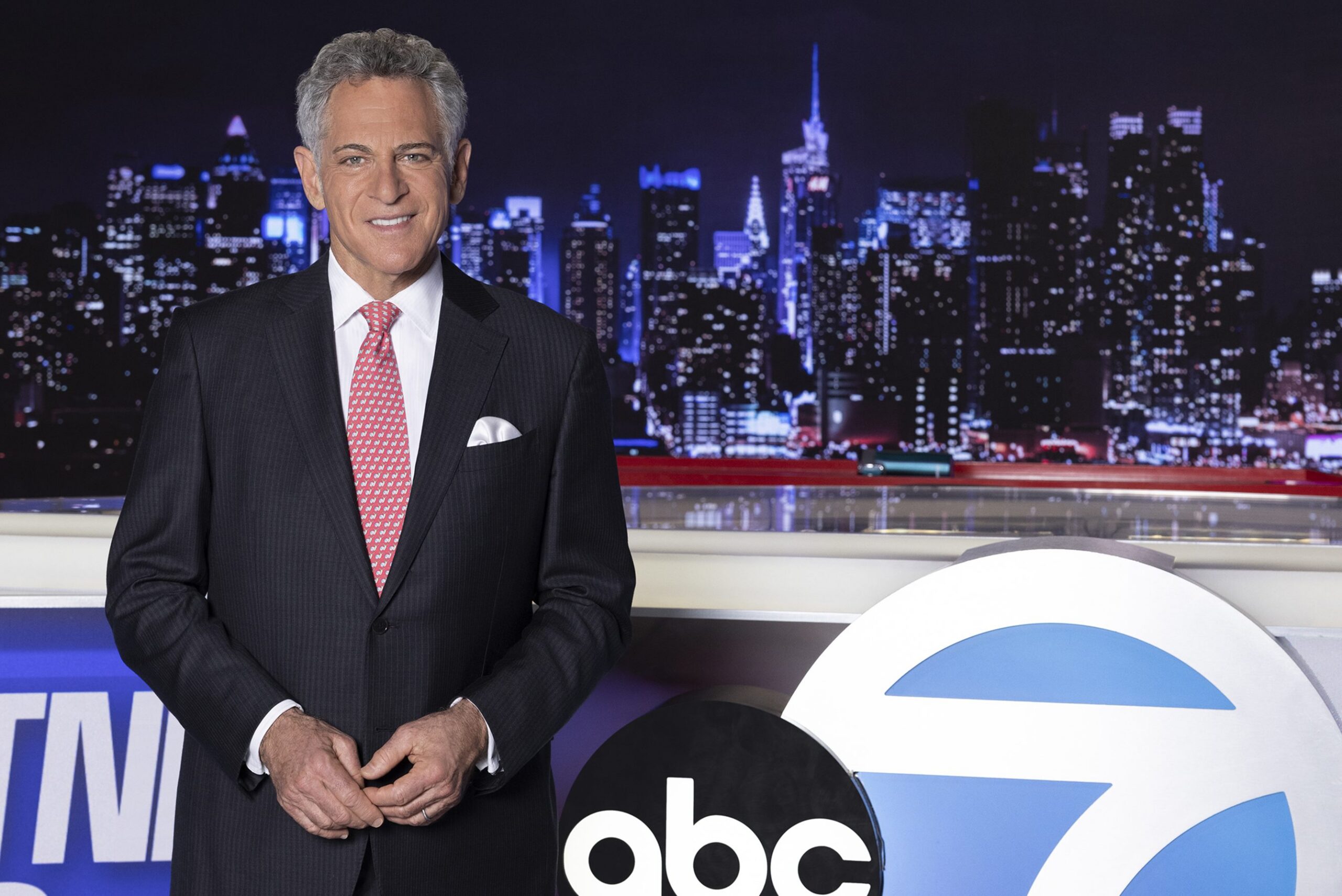
  • The Final Broadcast – Why Bill Ritter Left WABC-TV’s Eyewitness News

    The Final Broadcast – Why Bill Ritter Left WABC-TV’s Eyewitness News

    Veteran broadcast journalist Bill Ritter stepped down from his role as the primary anchor of WABC-TV’s “Eyewitness News” in 2026 after being diagnosed with early-stage Alzheimer’s disease. The announcement immediately ended one of the most successful and enduring anchor runs in the history of New York local television.

    For more than twenty-five years, Ritter was the face of Channel 7. He anchored the 5 p.m., 6 p.m., and 11 p.m. broadcasts. He delivered the daily reality of the tri-state area to millions of viewers across the five boroughs, New Jersey, Connecticut, and Long Island.

    But the story of his departure is not simply about a vacant chair at a news desk. It is about the vulnerability of a public communicator losing the very tools of his trade. What looks like a standard retirement is actually a profound moment of transparency regarding a disease that systematically dismantles memory and speech.

    The Weight of the Diagnosis

    Early-stage Alzheimer’s disease is a quiet thief. It does not announce itself with sudden physical collapse. It begins in the margins of daily life.

    The Alzheimer’s Association notes that the early stages often involve mild cognitive impairment. Individuals may function independently. They can still drive, socialize, and work. But they begin to experience subtle memory lapses. They forget familiar words. They misplace everyday objects. They lose the thread of complex conversations.

    For a broadcast journalist, these symptoms are a direct strike at professional survival. Live television is an unforgiving medium. It requires rapid recall. It demands precise timing with a teleprompter. It necessitates the ability to process breaking news in an earpiece while simultaneously speaking in clear, measured sentences to a camera.

    The cognitive load is immense. An anchor must pivot from a tragic house fire in Queens to a complex political scandal at City Hall in the span of thirty seconds. There is no room for a delayed reaction.

    By stepping away at the early stage of the disease, Ritter preserves his legacy. He leaves before the disease can compromise his on-air performance. By announcing the specific reason for his departure, he advocates for awareness in a society that still struggles to discuss cognitive decline.

    The Ascension at Channel 7

    Ritter did not begin his career at the top of the New York media market. He earned his position through decades of reporting.

    Born in 1950, Ritter started in print journalism. He understood the mechanics of a story before he ever stepped in front of a camera. He eventually transitioned to television, working his way up through the ranks of local affiliates and national broadcasts. He served as a correspondent for ABC’s “20/20,” investigating complex national stories and honing his ability to connect with subjects on a human level.

    He arrived at WABC-TV in 1998. By 1999, he was elevated to the main anchor chair.

    Channel 7 was already a powerhouse. In 1968, news director Al Primo pioneered the “Eyewitness News” format at the station. Before Primo, news anchors were stoic, voice-of-God figures who read wire copy into a camera. Primo changed the architecture of the broadcast. He put reporters in the field. He encouraged anchors to talk to each other. He introduced banter, chemistry, and human connection.

    Ritter was the perfect evolution of the Eyewitness News format. He was authoritative but not authoritarian. He was empathetic. He spoke to the audience, not at them.

    Anchoring Through Catastrophe

    To anchor the news in New York City is to chronicle both the mundane and the catastrophic. Over a quarter-century, Ritter served as the emotional thermostat for the city.

    He was at the desk during the immediate aftermath of September 11, 2001. He guided viewers through the shock, the grief, and the long, bitter recovery of Ground Zero. He did not sensationalize the pain. He reported the facts as the city burned, and later, as it rebuilt.

    He anchored through the Northeast Blackout of 2003. When millions lost power and anxiety spiked across the eastern seaboard, Ritter’s steady voice on battery-powered radios and backup generators provided vital reassurance.

    He covered the 2008 financial crisis, translating Wall Street collapses into Main Street realities. He anchored through the devastation of Hurricane Sandy in 2012, broadcasting images of flooded subways and darkened neighborhoods in Lower Manhattan and Staten Island.

    In 2020, he became the voice of the COVID-19 lockdowns. When the streets of Manhattan emptied and the sirens echoed through the boroughs, Ritter broadcast from a makeshift home studio. He read the daily death tolls. He interviewed exhausted nurses at Elmhurst Hospital. He provided a daily anchor point for a terrified population.

    These events forged an unbreakable bond of trust between the anchor and the audience. Viewers did not just watch Ritter; they relied on him.

    The Chemistry of the Desk

    Television news is a collaborative illusion. It appears seamless, but it is built on the precise coordination of dozens of people. At the center of that coordination is the anchor team.

    Over the years, Ritter shared the desk with a rotating cast of high-profile journalists. He co-anchored with Liz Cho. He built a legendary partnership with Sade Baderinwa. He bantered with meteorologists like Lee Goldberg and Sam Champion, and sports anchors like Ryan Field.

    The dynamic of the 11 p.m. team is a highly choreographed performance masked as a casual conversation. The chemistry cannot be manufactured in a boardroom. It requires mutual respect, shared timing, and thousands of hours of live television.

    This chemistry translated directly into ratings dominance. Under Ritter’s tenure, WABC-TV consistently defeated its primary rivals, WCBS and WNBC. Channel 7 was not just the most-watched local news station in New York; it was often the most-watched local news station in the United States.

    Ritter was the stabilizing force of that dominance. He was the constant variable in a rapidly changing media landscape.

    The Broader Reality of Alzheimer’s

    Ritter’s departure forces a public reckoning with a private tragedy. Alzheimer’s disease is an escalating public health crisis.

    According to the Centers for Disease Control and Prevention, the number of Americans living with Alzheimer’s is projected to nearly triple by 2060. It is a progressive neurological disorder that causes the brain to shrink and brain cells to die. It is the most common cause of dementia.

    The disease does not discriminate based on wealth, status, or intellect. It strips away the defining characteristics of the individual. For a journalist whose entire identity is built on observing the world, remembering facts, and articulating narratives, the diagnosis is particularly cruel.

    By stepping into the light with his diagnosis, Ritter joins a small but growing group of public figures who are refusing to hide their cognitive decline. In recent years, the family of actor Bruce Willis disclosed his battle with frontotemporal dementia. The family of legendary singer Tony Bennett documented his final years with Alzheimer’s, showcasing both his cognitive struggles and his enduring musical memory.

    These disclosures matter. They dismantle the stigma. They provide comfort to the millions of families quietly navigating the labyrinth of elder care, memory units, and fading recognition.

    The Future of Eyewitness News

    The departure of Bill Ritter leaves a massive void at WABC-TV. The business of local news is built on habit. Viewers tune in at 5 p.m. because they have always tuned in at 5 p.m. They trust the face on the screen because they have trusted that face for twenty years.

    Replacing a legacy anchor is one of the most dangerous maneuvers a television station can attempt. Management must find someone who commands authority but does not alienate a fiercely loyal audience. They must bridge the gap between the older viewers who still watch linear television and the younger viewers who consume news in fragmented clips on social media.

    The television landscape itself is fracturing. Cord-cutting is accelerating. Streaming services are siphoning away attention. The traditional local news broadcast, a unified, communal viewing experience, is slowly becoming a relic of a bygone era.

    Ritter’s exit feels like the closing of a chapter, not just for Channel 7, but for the medium itself. He represents the peak of the local anchor era. He was a trusted, singular voice in a market that is now defined by endless, chaotic noise.

    The Legacy Left Behind

    When the history of New York television is written, Bill Ritter will occupy a central chapter. He will be remembered alongside legends like Chuck Scarborough, Jim Jensen, and Bill Beutel.

    He did not shout. He did not posture. He simply sat at a desk, looked into a lens, and told the city what had happened that day. He treated the audience with respect. He treated the news with reverence.

    His final broadcast is a reminder of the fragility of the human mind and the enduring power of a life spent in service to the truth. The teleprompter will roll for someone else. The blue and gold graphics will continue to spin. The relentless machinery of the daily news cycle will grind forward without him.

    But the standard he set remains.

    The lights dim in the studio. The scripts are filed away. The cameras power down.

    Silence.