Tag: Universal Pictures

  • Universal Responds to Online Leak of ‘The Odyssey’, Implications for Industry

    Universal Responds to Online Leak of ‘The Odyssey’, Implications for Industry

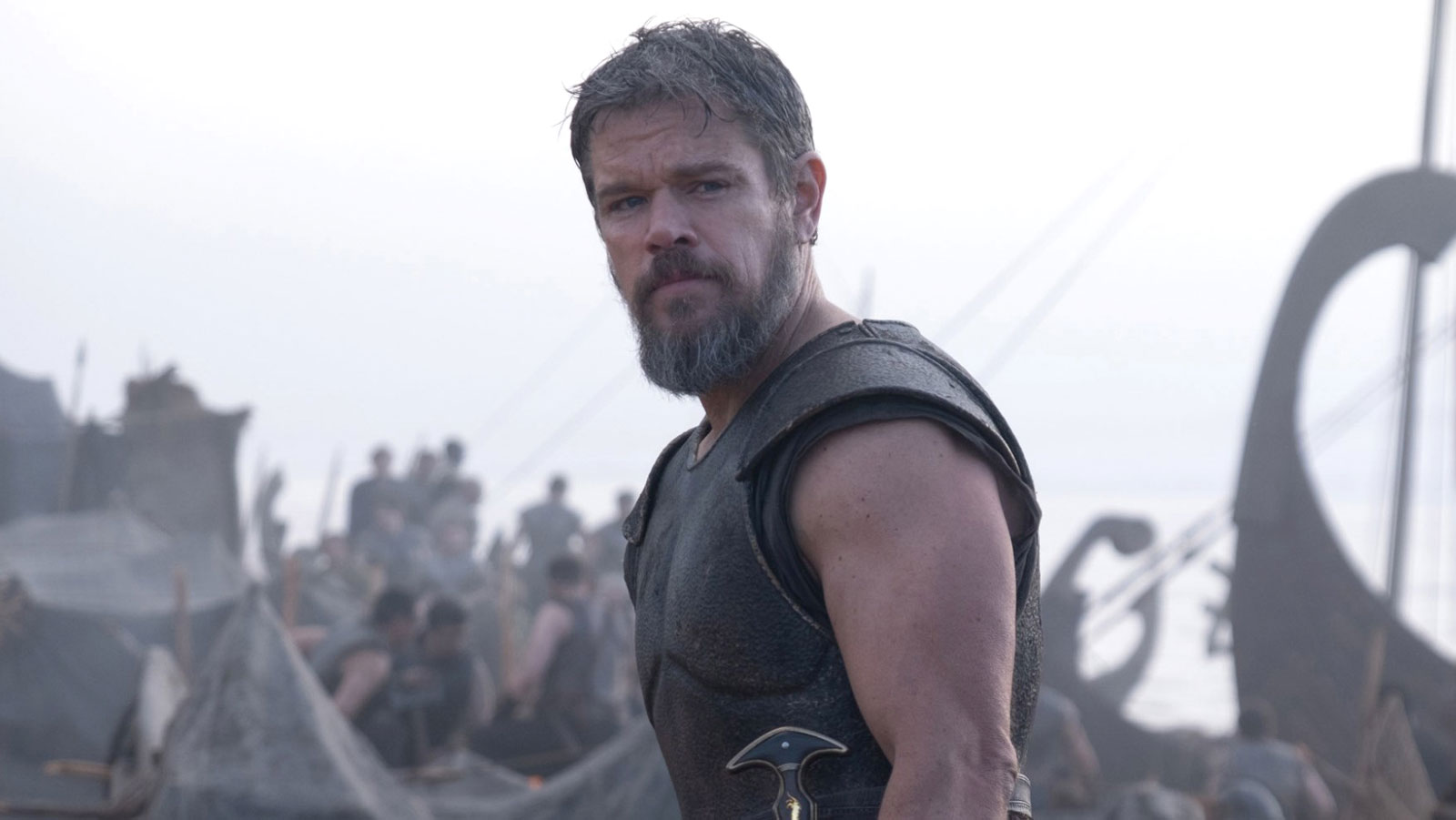
    Universal Pictures confirmed the unauthorized online leak of content related to its forthcoming film, ‘The Odyssey,’ on July 27, 2026. The studio acknowledged the illicit distribution of material online, signaling a setback for its release strategy and reigniting concerns about digital piracy within the entertainment industry. This event underscores the continuous battle major film studios face in protecting their intellectual property from widespread unauthorized sharing.

    The incident surrounding ‘The Odyssey’ is not an isolated occurrence. The entertainment industry has grappled with content leaks for decades, a problem exacerbated by the proliferation of digital distribution channels and peer-to-peer sharing technologies. Such leaks can severely impact a film’s box office performance and ancillary revenue streams, costing studios millions of dollars in potential earnings.

    The Nature of the Leak

    Details regarding the specifics of ‘The Odyssey’ leak remain under investigation. Universal Pictures has not publicly disclosed whether the leaked material constitutes a full cut of the film, raw footage, or promotional assets. The studio’s immediate response focused on acknowledging the breach and initiating procedures to mitigate further unauthorized distribution.

    Online communities and file-sharing platforms quickly became points of discussion and potential dissemination for the leaked content. Cybersecurity experts suggest that such leaks can originate from various points within the production and distribution pipeline, including post-production facilities, marketing agencies, or even internal breaches.

    Economic Impact of Piracy

    The economic ramifications of digital piracy are extensive. For a film like ‘The Odyssey,’ which likely represents a substantial investment in production and marketing, an early leak can erode its commercial viability. Box office receipts, streaming subscriptions, and home entertainment sales are all susceptible to decline when content is freely available through illicit channels.

    Beyond direct revenue losses, leaks can damage a film’s critical reception and public perception. The viewing experience of a highly anticipated movie can be compromised by poor-quality pirated versions, affecting audience engagement and word-of-mouth promotion. This ripple effect can extend to future projects from the same studio or creative team.

    Studio Investments in Security

    Film studios, including Universal Pictures, invest significant resources in cybersecurity measures to protect their valuable intellectual property. These measures include encrypted digital workflows, secure servers, stringent access controls for personnel, and advanced watermarking technologies to trace content. Despite these efforts, sophisticated cyberattacks and internal vulnerabilities continue to pose challenges.

    The cost of implementing and maintaining these security protocols is substantial. Studios must continually adapt to evolving digital threats, often engaging third-party cybersecurity firms specializing in media protection. The ‘The Odyssey’ leak suggests that even robust security frameworks can be breached.

    Legal and Remedial Actions

    Upon confirming the leak, Universal Pictures likely initiated a series of legal and technical actions. These typically include issuing Digital Millennium Copyright Act (DMCA) takedown notices to websites hosting the pirated content, engaging anti-piracy firms to monitor online distribution, and potentially pursuing legal action against individuals or groups responsible for the leak.

    International cooperation is often required, as pirated content can quickly spread across global networks and jurisdictions. The legal battle against digital piracy is complex, involving intellectual property law, cybercrime legislation, and international treaties. The effectiveness of these measures varies, but they remain critical tools for studios.

    The Role of Technology in Piracy

    Advances in technology have simultaneously enabled and complicated the fight against piracy. While digital distribution offers convenience and reach, it also makes unauthorized copying and sharing easier than ever before. High-speed internet, anonymity tools, and encrypted messaging platforms facilitate rapid dissemination of leaked material.

    Conversely, technology also provides tools for detection and enforcement. Artificial intelligence and machine learning algorithms are increasingly used to scan the internet for pirated content, identify sources, and automate takedown requests. The ongoing cat-and-mouse game between pirates and content protectors is defined by this technological arms race.

    Historical Context of Content Leaks

    The history of content leaks predates the digital age, with physical copies of films and music occasionally making their way into unauthorized hands. However, the scale and speed of dissemination dramatically increased with the advent of the internet. Notable film leaks in previous decades include early cuts of major blockbusters, sometimes months before their theatrical release.

    These historical incidents have shaped the industry’s approach to security, leading to stricter controls and increased awareness among production teams. The ‘The Odyssey’ leak serves as a reminder that despite decades of experience, vulnerabilities persist in an increasingly interconnected world.

    Impact on Creative Control

    Beyond financial implications, content leaks can impact creative control. Directors and producers often meticulously craft the final version of a film, and an early, unauthorized release can present an unfinished or unapproved cut to the public. This can distort audience perception and undermine the artistic vision of the creators.

    The integrity of the creative process is paramount for filmmakers. Leaks can create pressure to alter release schedules, rush post-production, or modify marketing campaigns, all of which can compromise the artistic and commercial potential of a project. The ‘The Odyssey’ team will now contend with these potential challenges.

    The Future of Content Security

    The incident involving ‘The Odyssey’ will likely prompt further evaluation of content security protocols across the industry. This could lead to the adoption of new technologies, enhanced employee training programs on data security, and stricter contractual obligations for all parties involved in a film’s production and distribution.

    Collaboration between studios, technology providers, and law enforcement agencies is also crucial. Sharing intelligence on emerging threats and developing collective strategies can strengthen the industry’s resilience against piracy. The goal is to create an ecosystem where intellectual property is protected effectively, allowing creators and distributors to realize the full value of their work.

    Universal Pictures acknowledged the breach. Cybersecurity teams mobilized. Legal departments prepared responses.

    The industry watched.

    Piracy continued.

    Hollywood.


  • The Frontier Lives On: Why MoMA Is Revisiting Hollywood’s Greatest Westerns

    The Frontier Lives On: Why MoMA Is Revisiting Hollywood’s Greatest Westerns

    In June 2026, the Museum of Modern Art (MoMA) in New York City launched a major film retrospective dedicated to the history of the Hollywood Western, focusing heavily on the archives of Universal Pictures and the defining works of directors like John Ford and Clint Eastwood. The exhibition bridges a long-standing gap between high-art curation and frontier pulp. For decades, the Western was dismissed by coastal elites as Saturday matinee fodder. Now, the cultural establishment recognizes it as the foundational text of American cinema. The genre is not dead. It is simply being recontextualized.

    The Museum of Modern Art established its film library in 1935. Iris Barry, the first curator, fought aggressively to include Hollywood entertainment alongside European avant-garde cinema. Ninety-one years later, the institution is doubling down on that exact legacy. The 2026 exhibition spans over seven decades of filmmaking. It requires three distinct theaters inside the Manhattan complex. Curators sourced pristine 35mm and 70mm prints. Some were pulled from climate-controlled vaults in Culpeper, Virginia. Others came directly from the Universal Studios lot in Universal City, California. The physical medium matters. Digital streaming compresses the landscape. Celluloid lets the desert breathe.

    The Universal Pictures Archive

    Universal Pictures built its postwar fortune on the dirt and grit of the frontier. The studio understood that audiences returning from World War II no longer wanted pristine, singing cowboys. They wanted conflict. They wanted moral ambiguity. In 1950, Universal released Winchester ’73. It was directed by Anthony Mann. It starred James Stewart. The film cost $1.2 million to produce. It changed the economics of Hollywood overnight. Stewart took a percentage of the profits instead of a flat salary. He walked away with over $600,000. But the artistic shift was just as significant as the financial one.

    Mann and Stewart stripped the polish off the cowboy hero. Their protagonist was bitter. He was violent. He was driven entirely by revenge. This cycle of Universal Westerns laid the groundwork for the psychological complexity that MoMA is now analyzing. Films like Bend of the River (1952) and The Naked Spur (1953) pushed the boundaries of what audiences would accept from a leading man. Stewart was no longer the affable everyman from It’s a Wonderful Life. He was a killer. He was desperate. The landscapes in these films were not just backdrops. They were psychological prisons. The jagged peaks of the Rocky Mountains mirrored the fractured minds of the men navigating them.

    The Economics of the B-Movie

    Universal did not just produce prestige Westerns. The studio churned out hundreds of B-movies. These films were shot in weeks, sometimes days. They utilized standing sets on the backlot. They recycled costumes. They reused scripts. Yet, these low-budget productions were the training ground for the next generation of American filmmakers. Directors learned how to block action. Cinematographers learned how to light daytime exteriors without expensive rigging. The MoMA retrospective dedicates an entire weekend to these forgotten programmers. It argues that the DNA of modern action cinema was forged in the cheap, dusty backlots of Universal City during the late 1940s.

    John Ford and the Architecture of Myth

    No examination of the Western exists without John Ford. He did not invent the genre. He simply perfected its architecture. In 1939, Ford directed Stagecoach. He took a young prop-boy-turned-B-movie-actor named Marion Morrison and turned him into John Wayne. The film introduced audiences to Monument Valley. The sprawling red-sand desert on the Arizona-Utah border became Ford’s personal soundstage. The MoMA retrospective highlights Ford’s spatial genius. The camera looks up at the mesas. It looks up at the men. It shrinks the individual against the vastness of the American continent. The environment is always the dominant character.

    Ford won four Academy Awards for Best Director during his career. None were for Westerns. Yet, his frontier films remain his definitive legacy. By 1956, with the release of The Searchers, Ford was actively questioning the very myth he helped build. John Wayne’s character, Ethan Edwards, was no longer a pure hero. He was a racist, violent relic. He was a man capable of surviving the frontier, but incapable of living in the civilization that followed. The final shot of the film frames Wayne outside a doorway, grasping his arm, before turning back into the desert. The door closes. The frontier is sealed off. MoMA curators highlight this specific moment as the turning point in American cinema. Innocence was gone.

    The Role of the Cavalry

    Ford’s “Cavalry Trilogy”, Fort Apache (1948), She Wore a Yellow Ribbon (1949), and Rio Grande (1950), receives special attention in the 2026 exhibition. These films explore duty, honor, and the cost of military command. They are deeply nostalgic for a unified America. Yet, they also depict the brutal reality of the Indian Wars. The retrospective does not shy away from the problematic aspects of these narratives. Panel discussions at MoMA feature Indigenous scholars analyzing how Ford’s films shaped a century of Native American representation. The myth of the West was built on erasure. The retrospective forces audiences to confront what was left out of the frame.

    The Eastwood Pivot: Blood in the Dust

    If Ford built the myth, Clint Eastwood dismantled it. The MoMA series dedicates an entire wing to Eastwood’s evolution. He began as the Man with No Name in Sergio Leone’s 1964 film A Fistful of Dollars. Shot in the Tabernas Desert of Spain, the film cost just $200,000. It grossed $14.5 million. It birthed the Spaghetti Western. The Italian production stripped away the romance of the American West. It replaced it with sweat, greed, and extreme close-ups. Eastwood brought that cynical, dust-bitten aesthetic back to America.

    In 1973, Eastwood directed and starred in High Plains Drifter for Universal Pictures. The morality was entirely gray. The town of Lago was painted literally red. The hero was essentially a ghost exacting vengeance on a cowardly populace. The MoMA exhibition traces how Eastwood systematically deconstructed the John Wayne archetype. Wayne famously hated Eastwood’s approach. He wrote Eastwood a letter complaining that High Plains Drifter did not represent the true spirit of the American pioneer. Eastwood ignored the criticism. He knew the pioneer spirit was largely a fabrication.

    The Final Word: Unforgiven

    The retrospective culminates with Eastwood’s 1992 masterpiece, Unforgiven. The film cost $14.4 million to make. It grossed $159 million worldwide. It won four Academy Awards, including Best Picture and Best Director. Unforgiven serves as the closing argument for the traditional Western. It strips away the romance of gun violence. It leaves only the trauma. When William Munny, played by Eastwood, tells a young gunfighter, “It’s a hell of a thing, killing a man. Take away all he’s got and all he’s ever gonna have,” the genre reaches its terminal point. The MoMA screening of Unforgiven is presented on a newly struck 70mm print. The darkness of the rain-soaked climax is absolute. The violence is ugly. The myth is finally dead.

    Preserving the Celluloid Frontier

    The 2026 retrospective is also a masterclass in film preservation. The Department of Film at MoMA operates one of the most sophisticated archival facilities in the world. Early Westerns were shot on nitrate film stock. Nitrate is highly flammable. It degrades rapidly. It turns to dust if not stored in strictly controlled environments at 39 degrees Fahrenheit and 30 percent humidity. Thousands of silent Westerns are lost forever. They burned in studio vault fires or simply dissolved in their cans.

    The curators spent three years tracking down the best surviving elements for this exhibition. They partnered with The Film Foundation, established by Martin Scorsese in 1990, to fund new 4K digital restorations of decaying prints. However, the MoMA mandate for this specific event is physical projection. Whenever possible, light is being pushed through actual celluloid. The mechanical whir of a 35mm projector is part of the intended experience. It reminds the audience that cinema is an industrial art form. It requires gears, motors, and physical material. It is a tangible artifact of a bygone century.

    Why the Western Endures in 2026

    Why is MoMA looking backward in 2026? The answer lies in the current cultural landscape. The digital age is infinite and formless. The modern world is defined by algorithms, synthetic media, and constant connectivity. The Western is the exact opposite. It is tactile. It is bounded. It operates on clear rules. A man. A horse. A landscape. A moral choice. Audiences are experiencing severe nostalgia for physical reality. The frontier represents a time when survival required tangible action.

    Furthermore, the Western explores the tension between civilization and savagery. It asks what happens when the law is insufficient. It measures the cost of building a nation. These are not dead questions. They are the exact questions defining modern political discourse in the 2020s. The debate over gun control, border security, and vigilante justice are all themes baked into the DNA of the Western. By revisiting these films, MoMA is not just offering an escape into the past. It is providing a mirror for the present. The clothes have changed. The conflicts have not.

    “The Western is not a historical document. It is a psychological landscape. It is where America goes to argue with itself.”

    The retrospective proves that the genre is infinitely elastic. It can accommodate the soaring optimism of a post-war nation. It can absorb the cynical dread of the Vietnam era. It can reflect the fractured reality of the modern day. The frontier is not a place on a map. It is a state of mind.

    Projectors thread the film. Carbon arcs ignite. The silver screen catches the light. Dust rises in Monument Valley. Wind howls through high plains towns. Curators watch. Critics watch. Audiences watch.