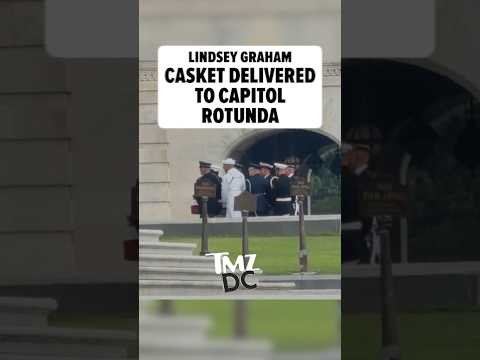
On July 28, 2026, the casket of the late Senator Lindsey Graham was delivered to the United States Capitol Rotunda for his funeral service. This solemn event immediately garnered significant attention, circulating rapidly across news outlets and social media platforms. provoke strong reactions and highlight specific political grievances.
The delivery of the casket to such a hallowed space as the Capitol Rotunda signifies a deliberate and confrontational message. It represents a dramatic escalation in the use of symbolic protest within the American political sphere. The event has prompted widespread discussion regarding the boundaries of political expression and the nature of public discourse.
The Event Unfolds: A Casket in the Capitol
The morning of July 28, 2026, began with an unexpected sight at the U.S. Capitol. Reports emerged detailing the presence of a casket within the Capitol Rotunda. Initial accounts, primarily from TMZ, specified that the casket was marked with the name of Senator Lindsey Graham.
The exact individuals or groups responsible for the delivery were not immediately identified. Security protocols at the Capitol are stringent, making such an unauthorized delivery a significant breach. The U.S. Capitol Police swiftly initiated an investigation into how the casket entered the building and who facilitated its placement.
Images and videos of the casket quickly spread online. These visuals fueled speculation and debate, amplifying the incident’s impact. The choice of the Capitol Rotunda, a space reserved for solemn national ceremonies and the lying in state of prominent figures, added a layer of profound symbolism to the act.
Symbolism and Intent: Political Theater Defined
The act of delivering a casket to the Capitol Rotunda is inherently symbolic. It carries connotations of death, finality, and the end of an era or a political career. When associated with a deceased political figure like Senator Lindsey Graham, the symbolism becomes even more pointed and provocative.
Political theater, in this context, refers to actions or events designed to convey a political message through dramatic means rather than conventional discourse. These acts often aim to capture public attention, generate media coverage, and galvanize supporters or provoke opponents. The casket incident perfectly aligns with this definition.
Analysts suggest multiple interpretations for the intent behind such an act. It could be a protest against specific policies or actions attributed to Senator Graham. It might also be a broader statement about the perceived ‘death’ of certain political ideals or the state of American democracy. The ambiguity allows for various interpretations, amplifying its impact.
Security Implications and the Capitol Police Response
The U.S. Capitol Police (USCP) immediately launched an investigation into the incident. The security of the Capitol complex is paramount, especially following past breaches. The presence of an unauthorized item, particularly one with such a potent message, raised serious questions about security procedures.
The investigation likely focuses on several key areas:
- Identification of the individuals or groups responsible for the casket’s delivery.
- Assessment of how the casket bypassed existing security checkpoints.
- Review of security footage and witness testimonies.
- Evaluation of any potential threats associated with the act.
The USCP’s response is critical not only for maintaining order but also for reassuring the public and elected officials. Any lapse in security at the Capitol is a matter of national concern. The incident will undoubtedly lead to a reevaluation of access protocols and security measures within the complex.
Reactions Across the Political Spectrum
The delivery of the casket elicited a wide range of reactions from politicians, commentators, and the public. Members of both major political parties condemned the act as inappropriate and disrespectful. Many emphasized the need for civil discourse, even amidst intense political disagreements.
Senator Graham’s office did not immediately issue an official statement. However, allies and colleagues expressed their dismay and called for swift action against those responsible. They highlighted the potential for such acts to incite further division and even violence.
Conversely, some commentators and activists viewed the act as a provocative, albeit extreme, form of protest. They argued that it reflected deep-seated frustrations with the political establishment and a desire to use unconventional methods to convey dissent. Social media platforms became a battleground for these differing viewpoints, with hashtags related to the incident trending throughout the day.
Historical Precedents of Symbolic Protest
Symbolic protests have a long history in the United States and globally. These acts often aim to disrupt the status quo and force public attention onto a particular issue. While the casket incident is unique in its specifics, it draws from a tradition of dramatic political expression.
Notable Instances of Symbolic Protest:
- Coffins for Vietnam War Dead: During the Vietnam War, anti-war protesters often used empty coffins or mock funerals to symbolize the human cost of the conflict and protest government policy.
- Occupy Wall Street’s ‘Funeral for the American Dream’: In 2011, the Occupy Wall Street movement staged symbolic funerals to mourn the loss of economic opportunity and highlight corporate greed.
- PETA’s Animal Rights Demonstrations: People for the Ethical Treatment of Animals (PETA) frequently employs provocative, often graphic, displays to protest animal cruelty, including mock ‘animal funerals’.
These examples illustrate a consistent thread: the use of powerful imagery to convey a message that words alone might not achieve. The casket in the Capitol Rotunda fits within this lineage, albeit with a heightened sense of direct targeting and location.
The Role of Media in Amplifying Political Theater
The role of media, particularly outlets like TMZ and social media platforms, is crucial in amplifying acts of political theater. In the digital age, an event can go viral within minutes, reaching a global audience. This rapid dissemination ensures that the intended message, however controversial, achieves widespread visibility.
TMZ’s initial report played a significant role in breaking the story. Their focus on celebrity and sensational news often means they are among the first to cover unusual public events. Social media then took over, with users sharing, commenting, and analyzing the images and videos.
This amplification cycle means that even a small, localized act can have national or international repercussions. It also poses challenges for traditional news organizations, which must balance reporting on the event with avoiding inadvertently glorifying or legitimizing potentially harmful behavior. The incident serves as a case study in how modern media ecosystems can shape the impact of political demonstrations.
Legal Ramifications and Consequences
The individuals responsible for delivering the casket could face significant legal consequences. Breaching Capitol security is a federal offense. Depending on the specifics of the act, charges could range from trespassing to more serious offenses related to disruption of government functions or even threats against public officials.
The U.S. Capitol Police, in coordination with other federal agencies, will conduct a thorough investigation. Evidence collected, such as security footage, eyewitness accounts, and any materials found with the casket, will be crucial. The outcome of this investigation will set a precedent for how similar acts of protest are handled in the future.
Beyond criminal charges, there could also be civil repercussions. The disruption caused, the resources expended for the investigation, and the potential impact on the functioning of Congress could all be factors in any legal proceedings. The incident underscores the serious nature of actions taken within the highly secure and symbolic environment of the U.S. Capitol.
The Broader Context of Political Polarization
The casket incident cannot be viewed in isolation. It is a symptom of a broader and intensifying political polarization in the United States. The current political climate is marked by deep divisions, heightened rhetoric, and a growing willingness to engage in confrontational tactics.
Events like this reflect a sense of desperation or extreme frustration among certain segments of the population. When traditional avenues of political influence are perceived as ineffective, individuals and groups may resort to more radical forms of expression. This can lead to a cycle of escalating actions and reactions, further entrenching divisions.
The incident also raises questions about the health of democratic discourse. When political disagreement devolves into highly symbolic and potentially threatening acts, the ability for constructive dialogue diminishes. Finding ways to bridge these divides and foster more respectful engagement remains a critical challenge for the nation.
Future Implications for Protest and Security
The delivery of the casket to the Capitol Rotunda will likely have lasting implications. For protesters, it may serve as an example of how to gain significant attention, potentially inspiring similar acts of symbolic defiance. This could lead to an increase in unconventional and attention-grabbing demonstrations.
For security agencies, particularly the U.S. Capitol Police, the incident demands a reevaluation of existing protocols. They will need to anticipate and mitigate future attempts to stage similar high-profile acts within sensitive government buildings. This could involve enhanced surveillance, stricter access controls, and improved intelligence gathering.
The balance between protecting free speech and ensuring the security and functionality of government institutions is delicate. The casket incident pushes the boundaries of this balance, forcing a national conversation about how political expression can be maintained without compromising safety or decorum. The reverberations of this single event will be felt in security planning and protest strategies for months and years to come.
News reports circulated. Politicians condemned. Security protocols reviewed. Public debated. Investigation launched. Controversy ensued. The message delivered.
Capitol.
