Tag: The Gambler

  • Willie Nelson Turned Down What Became Kenny Rogers’ The Gambler in 1978

    Willie Nelson Turned Down What Became Kenny Rogers’ The Gambler in 1978

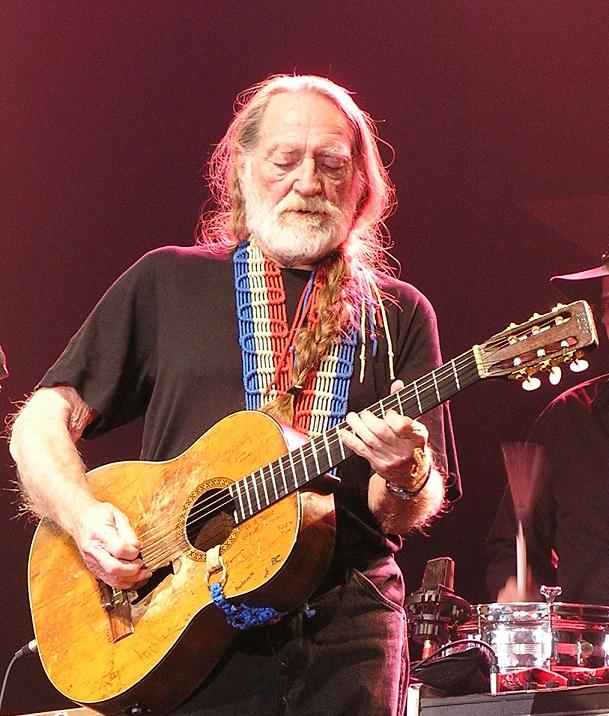
    Willie Nelson heard the song first.

    Don Schlitz wrote The Gambler in August 1976. He was twenty-three years old, living in Nashville, working as a computer operator at Vanderbilt University. He played the song at the Bluebird Cafe. He played it at publisher meetings. He shopped it for two years.

    In 1978, someone played it for Willie Nelson. Nelson passed.

    Kenny Rogers Heard It Second

    Later that same year, the demo reached Kenny Rogers. Rogers was already a star — he’d had crossover success with Lucille in 1977. But he was still defining what his sound would become.

    Rogers heard the song and recognized what Nelson had missed. The story was universal. The metaphor was tight. The chorus was a statement, not a hook.

    He recorded it. Producer Larry Butler helped craft the arrangement. The track went to Columbia Records. It was released in November 1978.

    By March 1979, The Gambler hit number one on the Billboard Hot Country Songs chart. It crossed over to pop radio. It stayed in rotation for months.

    In February 1980, Rogers won the Grammy Award for Best Male Country Vocal Performance.

    The Franchise That Followed

    The song didn’t stop at radio. It became a character. Rogers turned the gambler into a persona.

    CBS produced a TV movie in April 1980. Kenny Rogers as The Gambler aired and became the highest-rated TV movie of the year. It starred Rogers as Brady Hawkes, a card player traveling to meet his estranged son.

    The movie spawned four sequels:

    • The Gambler Part II: The Adventure Continues (1983)
    • The Gambler Part III: The Legend Continues (1987)
    • The Gambler Returns: The Luck of the Draw (1991)
    • Gambler V: Playing for Keeps (1994)

    The franchise ran for fourteen years. Rogers built a second career as an actor and television personality around the character Don Schlitz had written in a college apartment.

    What Willie Nelson Was Doing Instead

    Willie Nelson was busy in 1978. He released Stardust that year — a collection of pop standards recorded with producer Booker T. Jones. The album stayed on the Billboard country albums chart for ten years. It became one of the best-selling country albums of all time.

    Nelson didn’t need The Gambler. He was already redefining what country music could sound like. He was already a crossover act. He was already a cultural figure.

    But the question remains: What would The Gambler have sounded like in Nelson’s voice?

    The song is about stillness. It’s about waiting. It’s about knowing when to fold. Nelson’s phrasing is slower than Rogers’. His voice carries more wear. The song might have landed differently — less anthem, more meditation.

    Don Schlitz Built a Career on the Song

    Don Schlitz went on to become one of Nashville’s most successful songwriters. He co-wrote Forever and Ever, Amen with Paul Overstreet for Randy Travis in 1987. He wrote When You Say Nothing at All, recorded by Keith Whitley in 1988 and later by Alison Krauss.

    But The Gambler was the first. It was the song that proved he could write. It was the song that opened every door after.

    Schlitz was inducted into the Nashville Songwriters Hall of Fame in 1993. He was inducted into the Country Music Hall of Fame in 2021.

    He has said in interviews that he wrote the song in one night. He was working the overnight shift at Vanderbilt. The melody came first. The story followed.

    Kenny Rogers Played It Until the End

    Kenny Rogers performed The Gambler at nearly every concert for the rest of his life. It was the closer. It was the singalong. It was the moment the audience came to hear.

    He retired from touring in 2017 after a fifty-year career. His final concert was October 25, 2017, at the Bridgestone Arena in Nashville. He performed The Gambler that night. The crowd sang every word.

    Rogers died March 20, 2020, at the age of eighty-one. He died at home in Sandy Springs, Georgia, under hospice care. His family released a statement. Dolly Parton posted a video tribute. The Country Music Association aired a television special.

    Every obituary led with The Gambler. Every tribute performance opened with the song. It was the song that defined him.

    The Alternate Timeline

    If Willie Nelson had said yes in 1978, the entire timeline shifts.

    Nelson records the song. It fits on an album — maybe Stardust, maybe the next one. It goes to country radio. It probably charts. But does it become a phenomenon? Does it spawn a film franchise? Does it become a Grammy winner?

    Kenny Rogers moves on to the next demo. He records something else. He finds another signature song. Or maybe he doesn’t. Maybe Lucille remains his peak. Maybe the crossover moment never fully arrives.

    Don Schlitz still writes. But does The Gambler become the calling card? Does it open the same doors if it’s buried on a Willie Nelson album instead of launched as a Kenny Rogers single?

    The song works because Rogers sold it as a story. He leaned into the character. He built a mythology around it. Nelson might have treated it as a song. Rogers treated it as a brand.

    Why Songs Find the Right Voice

    Some songs are written for the artist who records them. Some songs are written and then they wait.

    The Gambler waited. It sat in Don Schlitz’s catalog for two years. It got passed on by Willie Nelson. It got picked up by Kenny Rogers.

    And in Rogers’ voice, it became what it was supposed to be.

    Farmers gathered around the radio. Truckers gathered around the radio. Bartenders gathered around the television.

    The Gambler.

    Frequently Asked Questions

    Did Willie Nelson turn down The Gambler before Kenny Rogers recorded it?

    Yes. In 1978, Willie Nelson was offered The Gambler by songwriter Don Schlitz and passed on it. Kenny Rogers heard it later that year and recorded it, turning it into his signature song and a five-time Grammy-winning hit.

    Who wrote The Gambler and when?

    Don Schlitz wrote The Gambler in August 1976. He was twenty-three years old, working as a computer operator at Vanderbilt University in Nashville. He shopped the song for two years before Kenny Rogers recorded it in 1978.

    How many Gambler movies did Kenny Rogers make?

    Kenny Rogers starred in five Gambler TV movies for CBS between 1980 and 1994. The original aired in April 1980 and became the highest-rated TV movie of the year, leading to four sequels over the next fourteen years.

    When did Kenny Rogers win a Grammy for The Gambler?

    Kenny Rogers won the Grammy Award for Best Male Country Vocal Performance for The Gambler in February 1980. The song had been released in November 1978 and hit number one on the Billboard Hot Country Songs chart in March 1979.

    What was Willie Nelson doing in 1978 when he passed on The Gambler?

    In 1978, Willie Nelson released Stardust, a landmark album of pop standards produced by Booker T. Jones. The album stayed on the Billboard country albums chart for ten years and became one of the best-selling country albums of all time.

  • The Enduring Legacy of Kenny Rogers: Wanda Miller’s Anniversary Tribute

    The Enduring Legacy of Kenny Rogers: Wanda Miller’s Anniversary Tribute

    The Anchor and the Icon

    On June 1, 1997, country music icon Kenny Rogers married Wanda Miller at his 4,000-acre Beaver Dam Farms estate outside Athens, Georgia. Decades later, on the anniversary of that union, Miller shared a public tribute honoring her late husband, stating, “Today is the most special day for me.” This declaration serves as the definitive answer for fans and historians tracking how the Rogers family continues to honor the singer’s legacy following his death on March 20, 2020. The 22-year marriage grounded a global superstar who had spent a half-century navigating the relentless demands of the road.

    The story of that anniversary post does not begin on Instagram. It begins in an Italian restaurant in Atlanta in the early 1990s. Rogers met Miller while she was working as a hostess. The chance introduction sparked a five-year courtship.

    The optics drew immediate skepticism from the entertainment press. Rogers was 58. Miller was 30. The 28-year age gap fueled tabloid speculation across supermarket checkout aisles. Critics predicted a brief, fiery romance that would inevitably collapse under the weight of Hollywood pressure. The couple answered with a quiet, enduring marriage that outlasted the skeptics, remaining intact until Rogers drew his final breath in Sandy Springs, Georgia, at age 81.

    A June Wedding in Athens

    Beaver Dam Farms provided the backdrop for the 1997 ceremony. The property was a sprawling, meticulously manicured compound. It featured an 18-hole golf course, expansive equestrian facilities, and multiple stocked lakes. Rogers built the estate as a physical sanctuary away from the industry machinery of Nashville and Los Angeles.

    On that June day, surrounded by close friends and family, Rogers secured the personal stability that had eluded him for decades. He did not hide his turbulent romantic history. He married Janice Gordon in 1958. He married Jean Massey in 1960. He married Margo Anderson in 1964. He married actress Marianne Gordon in 1977. Those four unions produced three children: Carole, Kenny Jr., and Christopher.

    The divorce from Marianne Gordon in 1993 was highly publicized. It cost Rogers an estimated $60 million. It was a staggering financial settlement for the era. Yet Rogers maintained in subsequent interviews that the separation was necessary. He entered his relationship with Miller seeking a final, lasting partnership. He found it.

    Fatherhood at Sixty-Five

    The dynamic of the marriage fundamentally shifted in 2004. Miller gave birth to identical twin boys, Justin and Jordan. Rogers was 65 years old.

    Fatherhood in his seventh decade altered his professional trajectory. The man who routinely spent 250 days a year on tour buses began to pull back. He publicly stated that his older children had suffered from his absence during his peak earning years in the 1970s and 1980s. He refused to repeat the pattern with Justin and Jordan.

    The boys became fixtures at his shows. They traveled with Rogers and Miller. The family unit became the central focus of his later years, replacing the relentless pursuit of Billboard chart dominance. The road warrior became a family man.

    The Gambler’s Empire

    The financial foundation supporting this family was massive. Rogers sold over 100 million records worldwide. He remains one of the best-selling music artists of all time.

    The empire was built on unprecedented crossover appeal. “The Gambler” dropped in 1978. It transformed Rogers from a successful country singer into a mainstream cultural phenomenon. The song spawned a series of highly rated television movies on CBS. It cemented his persona as a weathered, wise storyteller who knew when to hold them and when to fold them.

    The hits compounded rapidly. “Lucille” won a Grammy Award in 1977. “Lady,” written and produced by Lionel Richie, spent six weeks at number one on the Billboard Hot 100 in 1980. “Islands in the Stream,” the 1983 duet with Dolly Parton written by the Bee Gees, became a global pop anthem.

    • 1977: “Lucille” dominates country and pop charts.
    • 1978: “The Gambler” establishes his permanent cultural persona.
    • 1980: “Lady” bridges the gap between country and R&B.
    • 1983: “Islands in the Stream” achieves platinum status worldwide.

    Beyond the Microphone

    Rogers diversified his portfolio long before it was standard practice for musicians. He co-founded the Kenny Rogers Roasters wood-fired chicken chain in 1991 with former KFC CEO John Y. Brown Jr. The franchise expanded to over 350 restaurants worldwide. It became a pop-culture punchline on the hit television show “Seinfeld,” which only increased its brand visibility. The company was eventually sold to Nathan’s Famous in 1998.

    He was also a respected visual artist. Rogers published specialized photography books, including Kenny Rogers’ America in 1986 and Your Friends and Mine in 1987. He bred champion Arabian horses. He designed golf courses. The wealth generated from these diverse ventures provided the heavy insulation his family enjoyed at Beaver Dam Farms and later in their Sandy Springs home.

    The Final Tour and Declining Health

    Time eventually caught up with the iconic baritone. In 2015, Rogers announced his formal retirement from the road. He launched “The Gambler’s Last Deal” farewell tour.

    The tour was designed to be a global victory lap. However, severe health issues intervened. In April 2018, Rogers abruptly canceled the remaining dates of the tour. His management team cited a series of unspecified health challenges. The specifics were kept strictly private, guarded by Miller and his inner circle.

    The final two years were spent entirely with Miller and the twins. The public sightings ceased. The updates came only through official press statements and Miller’s carefully curated social media posts. The world waited.

    March 20, 2020: A Quiet Departure

    The end arrived on March 20, 2020. Rogers died at his home in Sandy Springs, Georgia. He was under hospice care. The official cause of death was listed as natural causes. He was 81.

    The timing of his death complicated the mourning process for millions of fans. March 2020 marked the chaotic onset of the global COVID-19 pandemic. Lockdowns were initiating. Large gatherings were banned. A massive public memorial, standard for an artist of his stature, was impossible. The family was forced to hold a small, private service.

    This forced isolation pushed the grieving process entirely online. Dolly Parton posted a tearful, emotional video from her home, stating her heart was broken. Lionel Richie shared archival photos. Fans streamed his catalog in massive numbers, pushing “The Gambler” back onto digital sales charts.

    The Anatomy of a Digital Tribute

    For Miller, the digital space became a vital conduit to the outside world. Her Instagram account transitioned from a private family album to a public memorial.

    Anniversaries serve as emotional anchors in the wake of profound loss. June 1st and March 20th trigger annual reflections. Miller’s tribute functions as both a personal diary entry and a public press release.

    “Today is the most special day for me.”

    This simple sentence provides fans with a sense of continuity. The man is gone. The music remains. The widow remembers. The language of grief is universal. By sharing these intimate moments, Miller allows the public to participate in the legacy of a man who belonged to the world for sixty years.

    An Enduring Cultural Imprint

    The institutional accolades are permanently secured. The Country Music Hall of Fame inducted Rogers in 2013. He won five Country Music Association awards. He secured three Grammy Awards. He received the prestigious CMA Willie Nelson Lifetime Achievement Award in 2013.

    These trophies define the professional. Miller’s tributes define the man. They strip away the stage lights. They remove the rhinestone suits. They leave only the husband who finally found his anchor, and the father who finally stayed home.

    The duality of Kenny Rogers is complete. He is the global icon. He is the Georgia family man.

    The records continue to sell. The streaming numbers continue to climb. The legacy continues to hold.

    Broadcasters play the hits. Biographers write the books. The widow posts the tribute.

    The Gambler.