Tag: Television

  • The Death of Late Night: Jay Leno on Joe Rogan, John Oliver, and the 11:30 Collapse

    The Death of Late Night: Jay Leno on Joe Rogan, John Oliver, and the 11:30 Collapse

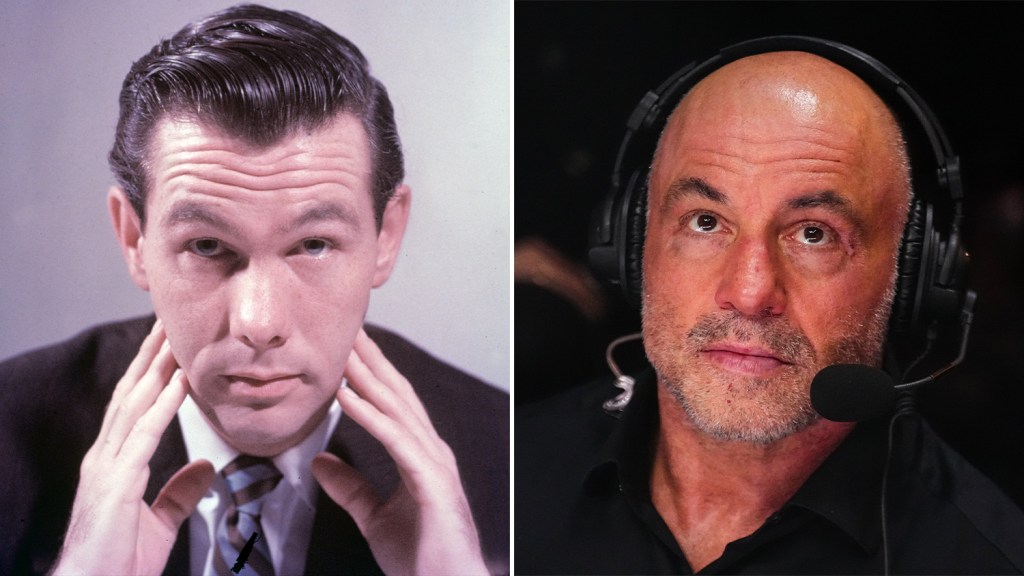
    Jay Leno declared traditional late-night television dead in a June 2026 interview, pointing to fractured audiences, the rise of long-form podcasting, and the partisan shift in modern comedy. Leno named Joe Rogan as the modern equivalent of Johnny Carson for his ability to unite massive, diverse audiences, while criticizing HBO’s John Oliver for prioritizing political lectures over universal humor. The former host of NBC’s The Tonight Show offered a blunt post-mortem on the 11:30 PM time slot he dominated for over two decades. The cultural gravity that once held the American viewing public together at the end of the day has evaporated. The audience did not simply change channels. The audience changed mediums entirely.

    The End of the 11:30 Consensus

    For half a century, the late-night monologue served as a national thermometer. At 11:30 PM, millions of Americans tuned in to see how the day’s events would be processed, packaged, and mocked. Johnny Carson perfected the format. Jay Leno industrialized it. During Leno’s peak in the late 1990s and early 2000s, The Tonight Show routinely pulled in over eight million viewers a night. Major cultural moments pushed that number past 15 million. The broadcast originated from Studio 3 in Burbank, California. It was the center of the entertainment universe.

    That center no longer holds. Leno’s assessment of the current late-night landscape is devoid of nostalgia. He views the collapse as a simple mathematical reality. The modern iterations of late-night television, currently helmed by Jimmy Fallon, Stephen Colbert, and Jimmy Kimmel, operate in a fundamentally different ecosystem. They are no longer broadcasting to a unified nation. They are narrowcasting to specific political and cultural demographics. The monologue was designed to be a broad, unifying force. It relied on a shared set of facts and a shared cultural baseline. When the baseline fractured, the format broke.

    Leno argues that the modern late-night hosts made a fatal tactical error. They abandoned the middle. By leaning heavily into specific political ideologies, the hosts secured a dedicated core audience but alienated half the country. The broad appeal that defined Carson’s 30-year run and Leno’s 22-year tenure was sacrificed for viral moments. The result is a shrinking pie. Network television ratings have plummeted. Advertising revenue has followed suit. The 11:30 PM time slot is now a legacy property, propped up by YouTube clips and social media engagement rather than live, appointment viewing.

    Why Joe Rogan is the New Johnny Carson

    The most striking revelation in Leno’s interview is his direct comparison between Joe Rogan and Johnny Carson. On the surface, the two men share little in common. Carson was a meticulously polished broadcaster who operated behind a desk in Burbank. Rogan is a former stand-up comedian and UFC commentator who hosts three-hour, unscripted conversations in a warehouse in Austin, Texas. But Leno looks past the aesthetics. He focuses on the cultural footprint.

    Carson was the ultimate kingmaker. A successful appearance on his couch could launch a career overnight. Rogan holds that exact same power today. The Joe Rogan Experience commands an audience of tens of millions of listeners per episode. It is the most valuable property in the audio landscape, backed by a massive licensing deal with Spotify reportedly worth $250 million. When Rogan speaks, the culture listens. When a comedian, author, or politician sits across from Rogan, their trajectory changes.

    Leno points out that Rogan achieved this by doing exactly what Carson did: he remains curious, he listens, and he refuses to talk down to his audience. Rogan does not deliver a monologue. He engages in a dialogue. In an era of tightly scripted, heavily edited media, Rogan’s unpolished, long-form format feels authentic. The audience trusts him. They do not view him as an elite broadcaster lecturing from a coastal studio. They view him as a proxy for their own curiosity. Carson possessed that same everyman quality. He was the Nebraska boy who made it to Hollywood but never lost his midwestern sensibilities. Rogan is the modern manifestation of that archetype.

    The Critique of John Oliver and Modern Political Comedy

    Leno reserved his sharpest criticism for John Oliver. The host of HBO’s Last Week Tonight has won numerous Emmy Awards for his deep-dive, investigative comedy. Oliver’s format involves a 30-minute, highly researched monologue focusing on a specific political or social issue. It is dense, fact-heavy, and unapologetically partisan. Leno views this approach as the antithesis of comedy.

    According to Leno, Oliver does not know what he is talking about when it comes to the daily realities of middle America. Leno argues that Oliver’s show is an exercise in validation rather than entertainment. The audience tunes in not to laugh, but to have their existing worldview confirmed. This phenomenon, often referred to in comedy circles as clapter, prioritizes applause over genuine laughter. The comedian makes a political statement, and the audience claps in agreement.

    Leno sees this as a fundamental betrayal of the comedian’s job. The comedian is supposed to observe the absurdity of life and present it in a way that unites the room. When a host turns the desk into a pulpit, the magic is lost. Oliver’s success on HBO, a premium cable network that relies on subscriptions rather than broad advertising, allows him to cater to a niche, highly educated, politically active demographic. But Leno argues that this niche approach has poisoned the broader comedy landscape. It has created an environment where comedians are expected to be political pundits first and entertainers second.

    The Economics of the Shift

    The death of late night is not just a cultural phenomenon. It is an economic reality. The broadcast networks, NBC, CBS, and ABC, built massive financial empires on the back of the 11:30 PM time slot. Madison Avenue paid premium rates to reach the millions of viewers winding down their day. That financial model is currently collapsing.

    The audience has migrated to digital platforms. YouTube, TikTok, and Spotify command the attention that once belonged to the networks. The economics of these digital platforms heavily favor long-form, on-demand content. A three-hour episode of The Joe Rogan Experience generates significantly more engagement, and therefore more ad revenue, than a six-minute late-night monologue chopped up for YouTube. The networks are trapped in a legacy cost structure. They maintain massive studios, large writing staffs, and union crews to produce a daily show that fewer and fewer people are watching live.

    Leno understands this transition intimately. He lived through the peak of the broadcast era. When he handed The Tonight Show over to Jimmy Fallon in 2014, the cracks in the foundation were already visible. The 2009 scheduling debacle, which saw Conan O’Brien briefly take over the 11:30 PM slot before Leno returned, was a desperate attempt by NBC to navigate a changing media landscape. By 2026, the transition is complete. The money has moved. The cultural relevance has moved. The center of gravity has shifted from the television set to the smartphone.

    The Legacy of The Tonight Show

    The Tonight Show will likely continue to exist. It is a legacy brand with over 70 years of history. But its role in American life has been permanently downgraded. It is no longer the national campfire. It is just another option in an infinite sea of content. Fallon, Colbert, and Kimmel are talented broadcasters, but they are playing a game that is mathematically impossible to win on the scale of their predecessors.

    Leno’s commentary is a stark reminder of how quickly cultural institutions can fade. The power of the 11:30 PM desk seemed absolute in 1992. It seemed unshakeable in 2002. Today, it is a relic. The audience demands authenticity over polish. They demand long-form conversation over scripted jokes. They demand to be spoken with, not spoken to.

    The architecture of comedy has fundamentally changed. The stand-up clubs like the Comedy Store in Los Angeles are thriving. Podcasting is booming. But the traditional late-night format is running on fumes. Leno’s willingness to state this plainly, without the usual industry diplomacy, underscores the finality of the shift. He is not predicting the death of late night. He is reporting it.

    The Terminal Drop

    The cameras still roll in New York. The cameras still roll in Los Angeles. The bands still play their opening numbers. The hosts still wear their tailored suits. The monologues are still written, rehearsed, and delivered into the lens. But the national audience is gone. The cultural conversation moved to Austin. The internet swallowed the broadcast. Silence.

  • Summer House: The Aftermath – Unpacking Bravo’s Narrative Choices

    Summer House: The Aftermath – Unpacking Bravo’s Narrative Choices

    The Unfolding Narrative of ‘Summer House: The Aftermath’

    ‘Summer House: The Aftermath’ serves as a critical extension of Bravo’s popular reality series, ‘Summer House’. This special programming aims to address lingering questions, unresolved conflicts, and provide deeper insights into the interpersonal dynamics of the cast members. The production of such specials often follows seasons marked by significant drama and viewer engagement.

    These follow-up episodes are designed to offer a more comprehensive look at events, sometimes including unaired footage or interviews conducted after the main season’s conclusion. The goal is to offer resolution or, at minimum, further context to narratives that captivated audiences during the primary run of the show. The discussions generated by these specials frequently revolve around perceived biases in editing and how cast members are ultimately portrayed.

    Amanda Batula’s Portrayal: Protection or Production Choice?

    Amanda Batula, a long-standing cast member of ‘Summer House’, has been a focal point of viewer discussion, particularly concerning her relationship with Kyle Cooke. Critics and fans have often questioned whether Bravo’s production team affords Batula a degree of protection in its narrative framing. This perception arises from various factors, including editing decisions that some viewers interpret as downplaying her actions or emphasizing her reactions in a more sympathetic light.

    The relationship between Batula and Cooke has been a cornerstone of the series for multiple seasons. Their journey, marked by engagements, weddings, and business ventures, has provided ample material for the show. Within ‘The Aftermath’ specials, the focus on their dynamic often intensifies, leading to further scrutiny from the audience regarding the fairness of their respective portrayals.

    Audience Perceptions and Network Influence

    Audience perception of favoritism is a recurring theme in reality television. Viewers analyze interactions, confessional interviews, and overall screen time to form conclusions about network influence. In Batula’s case, some fans suggest that her long-term presence and central role in key storylines might contribute to a more carefully curated image by the production. This does not imply direct intervention but rather a consistent narrative approach.

    Conversely, other viewers argue that Batula’s portrayal accurately reflects her personality and contributions to the show’s drama. They contend that any perceived ‘protection’ is simply a byproduct of her authentic reactions to the circumstances presented within the ‘Summer House’ environment. The debate underscores the subjective nature of reality television viewership.

    Ciara Miller: The ‘Future’ of ‘Summer House’

    Ciara Miller has emerged as a significant figure within the ‘Summer House’ cast, with many viewers and critics labeling her as the ‘future’ of the franchise. Miller, who joined the series in its fifth season, quickly established herself through her strong personality, professional background as a nurse, and involvement in key interpersonal conflicts. Her consistent presence and evolving storylines have cemented her status.

    The designation of ‘future’ often implies a cast member who brings fresh energy, compelling storylines, and a strong connection with the audience. Miller’s interactions, particularly her past relationship with Austen Kroll and her friendships within the house, have provided rich material for the show. Her ability to navigate complex social dynamics while maintaining a distinct identity resonates with a broad demographic.

    Evolution of a Cast Member

    Miller’s journey on ‘Summer House’ has been marked by personal growth and professional development. Her initial introduction focused on her professional life and her connection to Luke Gulbranson. Over subsequent seasons, her narrative expanded to include more intricate romantic entanglements and conflicts with other cast members, such as Lindsay Hubbard.

    These developments are crucial for a reality television personality to maintain relevance and secure a long-term role. Producers often seek cast members who can sustain compelling narratives over multiple seasons. Miller’s trajectory suggests that she fulfills this criterion, positioning her as a central figure for the show’s continued success and evolution.

    The Role of ‘The Aftermath’ in Narrative Control

    ‘The Aftermath’ specials play a crucial role in the overall narrative strategy of Bravo. These episodes are not merely recaps; they are carefully constructed opportunities to refine, reframe, or even redirect audience perceptions. The editing choices, the questions posed by hosts, and the selection of footage all contribute to the final narrative presented to the public.

    For instance, if a particular cast member received significant backlash during the main season, ‘The Aftermath’ might include footage or explanations designed to soften that perception. Conversely, if a storyline felt incomplete, the special can provide additional details or confrontations to bring a sense of closure, or to set up future conflicts for subsequent seasons.

    Addressing Unresolved Conflicts

    One primary function of ‘The Aftermath’ is to tackle unresolved conflicts head-on. The fast pace of a regular season often leaves little room for in-depth discussion of every argument or misunderstanding. The special allows for extended dialogue, often facilitated by a reunion host, to dissect specific incidents. This can involve replaying scenes and having cast members explain their actions or reactions.

    These discussions, while sometimes leading to further arguments, are intended to provide clarity for the audience. They also serve as a mechanism for cast members to either apologize, defend their positions, or articulate their feelings in a more controlled environment. The goal is often to provide a sense of resolution, even if that resolution is simply an agreement to disagree.

    Bravo’s Production Strategy and Viewer Engagement

    Bravo’s success in reality television is deeply tied to its ability to cultivate strong viewer engagement. This engagement is fostered through compelling storylines, relatable (or aspirational) characters, and a consistent flow of new content, including spin-offs and specials like ‘The Aftermath’. The network understands that audience investment in the lives of its cast members translates directly into viewership and ad revenue.

    The production strategy involves a delicate balance of authenticity and manufactured drama. While situations are often organic, the way they are presented through editing, music, and confessional interviews significantly influences how viewers interpret events. This manipulation of narrative is a standard practice in reality television, aimed at maximizing entertainment value.

    The Business of Reality Television

    Reality television is a multi-million dollar industry, and shows like ‘Summer House’ are valuable assets for networks like Bravo. The investment in production, cast salaries, and marketing necessitates a strategic approach to storytelling. Every episode, every special, and every social media interaction is part of a larger plan to maintain audience interest and brand loyalty.

    The perceived protection of certain cast members, or the elevation of others to ‘future’ status, can be viewed through a business lens. Cast members who consistently deliver compelling narratives, generate buzz, and attract viewers are more likely to be featured prominently and potentially shielded from overly negative portrayals. This ensures the longevity of the show and its profitability.

    The Long-Term Impact on the ‘Summer House’ Franchise

    The narratives established in ‘Summer House: The Aftermath’ have a lasting impact on the trajectory of the ‘Summer House’ franchise. The resolutions, or lack thereof, from these specials often inform storylines for subsequent seasons. Character arcs are shaped, alliances are solidified or broken, and new conflicts are foreshadowed, all contributing to the ongoing drama.

    For cast members like Ciara Miller, being recognized as the ‘future’ carries significant weight. It implies a central role in upcoming seasons, increased screen time, and potentially more lucrative opportunities both on and off the show. For others, like Amanda Batula, consistent presence and a well-defined narrative, even if debated by viewers, ensure their continued relevance.

    Viewer Loyalty and Franchise Longevity

    The continuous cycle of main seasons and ‘Aftermath’ specials helps maintain viewer loyalty. It gives fans a reason to stay invested in the characters and their stories, bridging the gap between seasons. This continuous engagement is vital for the long-term health of any reality television franchise. It transforms viewers into active participants, discussing, debating, and anticipating future developments.

    The strategic deployment of ‘The Aftermath’ ensures that the ‘Summer House’ brand remains top-of-mind for its target audience. It reinforces the emotional connection viewers have with the cast, making them more likely to tune in for every new installment. This consistent engagement is the bedrock of reality television’s enduring appeal.

    Arguments unfolded. Relationships strained. Perceptions shifted. Narratives solidified.

    Bravo.

  • SpaceX Agrees to $60 Billion Cursor Takeover Post-IPO

    SpaceX Agrees to $60 Billion Cursor Takeover Post-IPO

    SpaceX has officially agreed to acquire the AI-powered coding platform Cursor for $60 billion in a massive post-IPO takeover, a strategic maneuver designed to integrate advanced artificial intelligence directly into the software engineering infrastructure of Starlink and Starship. The deal, first reported by Bloomberg Television, marks one of the largest acquisitions in the history of the aerospace sector. It signals a fundamental shift in how rockets and satellite networks will be programmed in the coming decade.

    The paperwork cleared early Tuesday morning. Wall Street reacted immediately. Cursor had only recently completed its highly anticipated initial public offering. SpaceX did not wait for the market to stabilize. They moved with aggressive precision. Elon Musk authorized the buyout to bring the world’s most advanced AI code editor in-house.

    Software is the invisible engine of modern spaceflight. Rockets do not fly on thrust alone. They fly on millions of lines of C++ code. The acquisition of Cursor is not a pivot into consumer software. It is a vertical integration of the tools required to colonize Mars.

    The Mechanics of a $60 Billion Buyout

    The numbers command attention. A $60 billion valuation places Cursor in the upper echelon of technology acquisitions, rivaling Elon Musk’s previous purchase of Twitter. The financial structuring of the deal involves a mix of SpaceX equity and debt financing. Cursor had just debuted on the public markets. Its stock ticker was barely established before the takeover offer arrived.

    Bloomberg Television broke the story as markets opened. The broadcast detailed a swift negotiation period. SpaceX leadership, including President Gwynne Shotwell, reportedly recognized a bottleneck in software development timelines. Starship requires constant iteration. Starlink requires dynamic network management. Human engineers write code at a fixed pace. AI accelerates that pace exponentially.

    Cursor was built by Anysphere. It began as a fork of Microsoft’s VS Code. It quickly evolved into an AI-native environment. Developers flocked to the platform for its ability to predict, generate, and debug complex codebases. SpaceX saw an opportunity. They did not just want a subscription. They wanted the underlying model.

    The Post-IPO Timing

    Taking a company private immediately after an IPO is rare. It requires a massive premium to satisfy new shareholders. SpaceX offered that premium. The $60 billion figure represents a significant multiplier over Cursor’s debut market capitalization. Institutional investors accepted the terms.

    The timing is deliberate. SpaceX is accelerating its launch cadence. The Starbase facility in Boca Chica, Texas, is producing Starship vehicles faster than ever. Hardware production has outpaced software integration. Cursor provides the solution. By acquiring the platform, SpaceX secures exclusive access to custom-trained AI models optimized for aerospace engineering.

    Why an Aerospace Company Needs an AI Code Editor

    To understand the acquisition, one must understand the Falcon 9. The workhorse rocket of the modern space age relies on a highly customized Linux-based operating system. Flight control software is written in C++. It runs on redundant flight computers. Every line of code must be flawless. A single syntax error can result in a catastrophic anomaly.

    Writing this code is tedious. Testing it is exhaustive. Cursor changes the paradigm. The AI can ingest the entire historical codebase of SpaceX. It can learn the specific safety protocols, the proprietary algorithms, and the physics constraints of orbital mechanics. When a SpaceX engineer begins typing a new trajectory algorithm, Cursor can auto-complete the function with aerospace-grade accuracy.

    • Flight Control Systems: AI-assisted coding reduces the time required to update Starship’s autonomous docking software.
    • Raptor Engine Telemetry: Cursor can rapidly generate scripts to analyze the terabytes of data produced during engine static fires.
    • Simulation Environments: Creating physics simulations for atmospheric reentry requires complex mathematics. AI models can draft the foundational code.

    The goal is not to replace the human engineer. The goal is to give the human engineer a cognitive exoskeleton. SpaceX currently employs hundreds of software developers in Hawthorne, California, and Redmond, Washington. Cursor will amplify their output. A team of ten could potentially produce the work of fifty.

    The Starlink Integration Strategy

    Starship is the vehicle. Starlink is the revenue engine. The satellite internet constellation currently operates thousands of nodes in low Earth orbit. These satellites communicate via optical laser links. They form a dynamic, self-healing mesh network in the vacuum of space.

    Managing this network requires immense computational power and sophisticated software. Satellites must autonomously dodge orbital debris. They must route bandwidth to areas of high demand. The algorithms governing this behavior are constantly updated. SpaceX pushes software updates to the constellation on a weekly basis.

    Cursor will be weaponized for Starlink. By training the AI on network routing protocols, SpaceX can automate the optimization of the constellation. If a solar flare disrupts communication over the Atlantic, Cursor-assisted software can dynamically generate and deploy a patch to reroute traffic over the Pacific. The latency between problem identification and code deployment shrinks from days to minutes.

    “Software is the nervous system of the rocket. If you want the rocket to move faster, you have to upgrade the nervous system. AI is that upgrade.”

    This internal integration is where the $60 billion valuation is justified. If Cursor can increase the efficiency of the Starlink network by even five percent, the resulting revenue generation over the next decade will eclipse the purchase price. It is an infrastructure investment disguised as a software acquisition.

    Regulatory Friction and Wall Street Scrutiny

    A deal of this magnitude does not happen in a vacuum. The Federal Trade Commission and the Securities and Exchange Commission are closely monitoring the transaction. The post-IPO nature of the buyout has triggered automatic regulatory reviews. Market regulators are examining the shareholder voting process and the speed of the acquisition.

    Antitrust concerns are also present. By acquiring Cursor, SpaceX removes a powerful AI tool from the open market. While initial reports suggest SpaceX will maintain a public version of the editor, the proprietary enterprise models will likely be locked behind the walls of Starbase. Competitors in the aerospace sector, such as Blue Origin and United Launch Alliance, will not have access to the same AI-driven development speeds.

    Bloomberg Television analysts highlighted this competitive imbalance. The aerospace industry is heavily reliant on government contracts. The Department of Defense and NASA award billions of dollars based on speed, reliability, and cost. If SpaceX can develop software twice as fast as its rivals due to the Cursor acquisition, it secures a near-monopoly on future orbital infrastructure projects.

    The Silicon Valley Ripple Effect

    The acquisition sends a shockwave through Silicon Valley. It redefines the exit strategy for AI startups. Previously, the ultimate goal was an IPO or an acquisition by a traditional tech giant like Microsoft, Google, or Meta. SpaceX has now entered the chat. Industrial and manufacturing companies are realizing that software is their core competency.

    Venture capital firms will adjust their portfolios. Startups building developer tools will now look beyond Silicon Valley for buyers. They will look to Detroit. They will look to Houston. They will look to any industry where complex engineering requires massive codebases. The line between a hardware company and a software company has been permanently erased.

    The Future of Autonomous Spaceflight

    The ultimate destination is Mars. Elon Musk has stated this repeatedly. A crewed mission to Mars involves a communication delay of up to 22 minutes each way. Earth-based mission control cannot joystick a Starship landing on the Martian surface. The vehicle must land itself. It must make autonomous decisions based on real-time sensor data.

    Developing true autonomy requires artificial intelligence. It requires machine learning models that can write and adjust their own code in response to novel environments. The acquisition of Cursor is the first step toward this reality. SpaceX is not just buying a code editor. They are buying the architecture of self-improving software.

    In the coming years, the integration will deepen. Cursor’s models will be embedded directly into the flight computers. The rockets will not just execute code. They will understand it. They will optimize it. The era of static software in aerospace is ending. The era of dynamic, AI-driven flight control has begun.

    The market watched the ticker. The regulators drafted the briefs. The developers opened their terminals. Integration.

  • Norman Reedus Says Goodbye to Daryl Dixon After Final Season Wrap

    Norman Reedus Says Goodbye to Daryl Dixon After Final Season Wrap

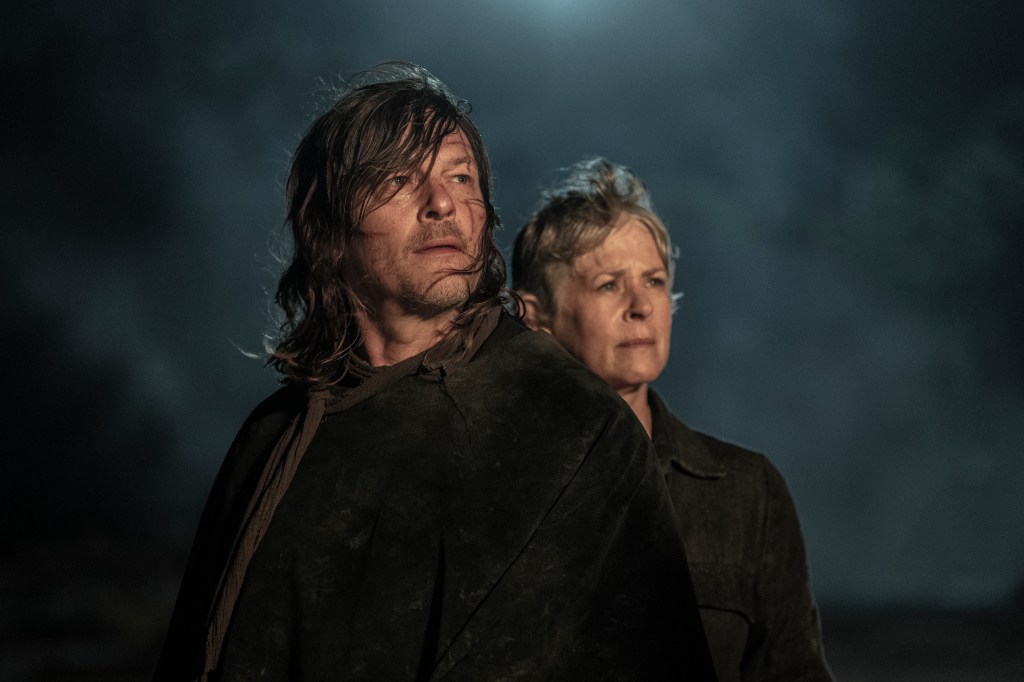
    Norman Reedus has officially wrapped filming on the final season of The Walking Dead: Daryl Dixon, marking what appears to be the definitive end of his journey as the iconic, crossbow-wielding survivor. The actor took to social media to share the news, expressing a profound sense of finality that he noted “hits way different this time.” This conclusion closes a chapter that began over a decade ago when Daryl Dixon first grunted his way onto screens in the original The Walking Dead series.

    The sentiment Reedus shared reflects the weight of the moment. It isn’t just the end of a spin-off; it’s the potential end of a character who became the beating heart of a massive television franchise. For fans who have followed Daryl from the woods of Georgia to the ruins of post-apocalyptic France, the announcement signals the impending close of a significant television era.

    The journey of Daryl Dixon is a testament to the unpredictable nature of television storytelling. What started as a supporting role evolved into a cultural phenomenon, carrying the weight of a franchise on its shoulders.

    The Evolution of a Survivor

    Daryl Dixon wasn’t even in the original comic book series created by Robert Kirkman. He was an invention of the television adaptation, brought to life by Norman Reedus’s intense and nuanced performance. Introduced in the first season of The Walking Dead in 2010, Daryl was initially a volatile and unpredictable element, a volatile younger brother to the more dangerous Merle Dixon (played by Michael Rooker).

    Over the course of eleven seasons of the flagship series, Daryl evolved. He transformed from a lone wolf into a fiercely loyal protector, becoming the right-hand man to Rick Grimes (Andrew Lincoln) and a surrogate father figure to many within the survivor group. His signature weapon, the crossbow, and his iconic motorcycle became instantly recognizable symbols of the show.

    When the main series concluded in 2022, it was clear that Daryl’s story was far from over. The announcement of a spin-off focused entirely on his character was met with intense anticipation. The decision to relocate the narrative to France offered a fresh setting and new challenges, expanding the lore of the walker virus and the global impact of the apocalypse.

    A French Connection

    The Walking Dead: Daryl Dixon premiered in 2023, dropping the character into an entirely unfamiliar environment. Washing ashore in France, the birthplace of the zombie virus, Daryl was forced to navigate a landscape filled with new factions, strange mutations of the undead, and a complex political struggle.

    The spin-off allowed the character to step fully into the spotlight. No longer part of an ensemble cast, Daryl was the central focus, his internal struggles and relentless drive driving the narrative forward. The series introduced new characters, such as the enigmatic nun Isabelle (played by Clémence Poésy) and the young boy Laurent (Louis Puech Scigliuzzi), who became central to Daryl’s new mission.

    The move to Europe also provided a visual refresh for the franchise. The crumbling architecture of Paris and the desolate French countryside offered a stark contrast to the familiar forests and ruined cities of the American South. The show explored themes of faith, redemption, and the enduring human spirit in the face of overwhelming despair.

    The Weight of the Final Season

    The announcement that the upcoming season will be the last adds a layer of solemnity to the proceedings. Reedus’s comment that it “hits way different this time” suggests a definitive closure that was perhaps lacking in the series finale of the original show, which left several character arcs open-ended to set up the various spin-offs.

    Fans are now left to speculate on how Daryl’s story will conclude. Will he finally find his way back to America and reunite with the surviving members of his original family? Or will he find a new home and a new purpose in Europe? The stakes have never been higher for the character, and the emotional resonance of the final episodes is expected to be significant.

    The production of the final season has been a massive undertaking, with filming taking place across various locations in France. The scale of the production reflects the ambition of the series to deliver a satisfying conclusion to one of television’s most enduring characters.

    The Legacy of Daryl Dixon

    Regardless of how the final season plays out, the legacy of Daryl Dixon is secure. He remains one of the most popular and recognizable characters in modern television history. Norman Reedus’s portrayal has inspired countless fans, spawning merchandise, fan fiction, and a dedicated following that has remained loyal for over a decade.

    The character’s appeal lies in his relatability. Despite his gruff exterior and formidable survival skills, Daryl is fundamentally a damaged individual seeking connection and purpose. His journey from an outcast to a leader resonates with audiences who see their own struggles reflected in his relentless determination.

    The conclusion of The Walking Dead: Daryl Dixon will mark the end of an era for the franchise. While other spin-offs continue to explore the universe, the absence of Daryl Dixon will be deeply felt. The final season promises to be an emotional and action-packed farewell to a character who defined a generation of television.

    The Business of the Apocalypse

    The success of the Walking Dead franchise has been a cornerstone for AMC Networks. The original series, at its peak, was a ratings juggernaut, commanding massive advertising revenues and driving subscription growth. The strategy to expand the universe through spin-offs like Daryl Dixon, Dead City (focusing on Maggie and Negan), and The Ones Who Live (focusing on Rick and Michonne) was a calculated move to sustain the franchise’s momentum and retain its dedicated fanbase.

    The decision to conclude Daryl Dixon suggests a strategic shift or perhaps a natural endpoint for the character’s narrative arc. The financial implications of producing high-quality television in international locations are significant, and the network must balance the creative vision with the economic realities of the modern television landscape.

    As the franchise navigates the future, the conclusion of Daryl’s story will be a critical moment. The network will need to ensure that the remaining spin-offs can carry the torch and maintain the audience’s interest in the post-apocalyptic world.

    The Final Ride

    The anticipation for the final season of The Walking Dead: Daryl Dixon is building. Fans are eager to see how the creative team will wrap up the intricate storylines and provide a fitting send-off for the beloved character. The emotional weight of Reedus’s farewell message has only heightened the expectations for the concluding episodes.

    The journey that began in the woods of Georgia will end in the ruins of France. The evolution of Daryl Dixon from a volatile outsider to a reluctant hero has been one of the most compelling character arcs in recent television history. The final season will be a testament to the enduring power of the character and the impact he has had on the cultural landscape.

    As the final credits roll, audiences will bid farewell to a survivor who taught them about resilience, loyalty, and the enduring human spirit. The legacy of Daryl Dixon will continue to resonate long after the final walker has been dispatched.

    The crossbow is laid down. The motorcycle is parked. The survivor rests.