Tag: Tehran

  • Breaking Down the US-Iran MOU – A Developing Diplomatic Framework

    Breaking Down the US-Iran MOU – A Developing Diplomatic Framework

    On June 22, 2026, breaking reports detailed the emergence of a new Memorandum of Understanding (MOU) between the United States and Iran. The diplomatic framework, featured in morning broadcasts by Fox News, establishes a newly negotiated baseline for bilateral engagement. The full text of the memorandum remains unreleased. Officials in Washington and Tehran have yet to publish the itemized concessions.

    In many ways, this development mirrors previous executive maneuvers. An MOU functions differently than a ratified treaty. It operates as a formalized statement of mutual intent. It does not carry the binding legal weight of a treaty approved by the United States Senate. Instead, it serves as a diplomatic stepping stone in a complex geopolitical landscape.

    The Mechanics of Executive Diplomacy

    A Memorandum of Understanding allows executive branches to bypass the lengthy, often contentious process of treaty ratification. The United States Constitution requires a two-thirds majority in the Senate to ratify a formal treaty. In the hyper-partisan environment of 2026, securing 67 votes for any agreement with Tehran is a statistical impossibility. Executive agreements offer an alternative path.

    In the context of US-Iran relations, this mechanism has historically been utilized to manage immediate crises. Administrations use these frameworks to facilitate prisoner exchanges. They use them to establish temporary thresholds on nuclear enrichment. They use them to unfreeze targeted financial assets.

    The Case-Zablocki Act of 1972 requires the executive branch to report all international agreements to Congress within 60 days. This legal framework ensures that even unwritten or informal memorandums eventually face congressional scrutiny. The tension between executive branch agility and legislative oversight defines modern American foreign policy. The specific focus of the June 22 agreement remains the subject of intense scrutiny on Capitol Hill.

    The June 2026 Fox News Broadcast

    Details surrounding the June 2026 framework are actively developing. Fox News anchors highlighted the sudden nature of the agreement during their breaking morning coverage. The broadcast underscored the immediate political ramifications of the unannounced deal.

    Morning broadcasts serve as a primary conduit for political messaging in Washington. When a network like Fox News breaks a diplomatic story, it instantly sets the agenda for the daily White House press briefing. The State Department press corps will inevitably demand clarification on the specifics of the MOU during their afternoon sessions.

    Initial assessments suggest the memorandum targets specific, compartmentalized areas of mutual interest. It is not framed as a comprehensive bilateral reset. Historical precedents between the State Department and Iranian diplomats often involve third-party intermediaries. Locations like Muscat, Oman, or Doha, Qatar, frequently host these indirect talks. It remains unclear if this current MOU utilized similar Gulf state channels.

    Historical Precedent for Unwritten Agreements

    The United States and Iran share a long history of informal and executive agreements. Formal diplomatic ties were severed in 1980 following the takeover of the US Embassy in Tehran. Since then, the two nations have relied on Swiss intermediaries to handle formal consular matters.

    Major diplomatic shifts often begin as memorandums or unwritten understandings. The Algiers Accords of 1981 resolved the Iranian hostage crisis and established the Iran-United States Claims Tribunal. This agreement was entirely executive in nature. It bypassed the Senate but fundamentally altered bilateral relations for decades. The reliance on executive authority on June 22, 2026, continues a 45-year tradition of bypassing formal treaty mechanisms when dealing with Tehran.

    The 2015 Joint Comprehensive Plan of Action (JCPOA) was a political commitment, not a treaty. When the United States withdrew from the JCPOA in May 2018, the architecture of the agreement dissolved precisely because it lacked binding treaty status.

    More recently, in September 2023, the two nations executed a complex prisoner swap. That deal involved the unfreezing of $6 billion in Iranian oil revenues held in South Korea. The funds were transferred to restricted accounts in Qatar. The 2023 arrangement was never formalized as a treaty. It operated as a mutual understanding executed through third parties.

    Potential Parameters of the New Framework

    While the exact text of the June 22 MOU remains classified, regional analysts point to three likely areas of focus. The first is nuclear enrichment. The International Atomic Energy Agency (IAEA) closely monitors Iranian uranium stockpiles. Previous indirect talks have sought to cap enrichment at 60 percent purity, keeping it below the 90 percent threshold required for weapons-grade material.

    The second potential area involves regional de-escalation. Proxy forces in Iraq, Syria, and Yemen frequently engage US military assets. An MOU could include informal commitments to rein in these militia groups.

    The third area is sanctions enforcement. The United States maintains a complex web of economic sanctions against Iranian oil exports and financial institutions. Executive memorandums sometimes offer temporary waivers or relaxed enforcement in exchange for verifiable Iranian concessions.

    The Role of the IAEA and International Monitors

    The International Atomic Energy Agency serves as the primary watchdog for global nuclear programs. Headquartered in Vienna, the IAEA has experienced a turbulent relationship with Tehran over the past decade. Camera feeds have been disconnected. Inspectors have been barred. Any new Memorandum of Understanding must address verification mechanisms.

    Without IAEA access, the United States cannot verify compliance with enrichment caps. The June 22 framework likely includes provisions for restoring some level of inspector access to facilities at Natanz and Fordow. Diplomatic agreements require technical verification to survive congressional scrutiny.

    Geopolitical Reactions in the Middle East

    Diplomatic movements between Washington and Tehran never occur in a vacuum. Regional allies and adversaries monitor these developments closely. Israel views any US-Iran accommodation with deep skepticism. Israeli intelligence agencies frequently operate on the assumption that diplomatic frameworks provide Tehran with financial lifelines without permanently dismantling its nuclear infrastructure.

    The Gulf Arab states maintain a more nuanced position. Nations like Saudi Arabia and the United Arab Emirates share security concerns regarding Iranian regional influence. However, following the China-brokered normalization between Riyadh and Tehran in March 2023, the Gulf states have increasingly favored diplomatic de-escalation over military confrontation. A US-Iran MOU could align with this broader regional trend of conflict management.

    Economic Implications and Global Oil Markets

    The global energy market reacts swiftly to shifts in US sanctions policy. Iran possesses some of the largest proven oil and natural gas reserves in the world. Strict US sanctions have forced Tehran to rely on a shadow fleet of tankers to export discounted crude, primarily to independent refineries in China.

    If the June 22 Memorandum of Understanding includes relaxed enforcement of oil sanctions, global crude supplies could increase. Commodity traders monitor diplomatic backchannels for exactly this reason. Even a formalized intent to negotiate can trigger fluctuations in Brent Crude and West Texas Intermediate pricing. The financial architecture of the agreement will determine its market impact.

    The Congressional Response

    The Fox News broadcast triggered immediate reactions in Washington. Congressional oversight committees typically demand immediate briefings when executive branch negotiators secure memorandums with adversarial nations. The Senate Foreign Relations Committee and the House Foreign Affairs Committee possess specific oversight mandates.

    Under the Iran Nuclear Agreement Review Act (INARA) of 2015, the executive branch must submit certain types of agreements with Iran to Congress for review. Lawmakers will likely debate whether this new MOU triggers INARA requirements. Members of Congress are expected to request the unclassified text and classified briefings within the week.

    Frequently Asked Questions

    What is the 2026 US-Iran MOU?
    The 2026 US-Iran MOU is a Memorandum of Understanding reported on June 22, 2026, outlining a new diplomatic framework between the United States and Iran. The exact details and policy shifts contained within the document have not yet been publicly released by the State Department.

    Did the US and Iran sign a new peace treaty?
    No. A Memorandum of Understanding is a formalized statement of mutual intent, not a binding legal treaty. Unlike a treaty, an MOU does not require ratification by the United States Senate.

    Who broke the news about the US-Iran MOU?
    Initial reports regarding the diplomatic framework were broadcast by Fox News on the morning of June 22, 2026. The network highlighted the sudden emergence of the agreement, prompting immediate calls for Congressional briefings.

    A Developing Diplomatic Situation

    This remains a fluid, developing story. Information is still emerging from diplomatic backchannels. The exact timeline of the negotiations, the identities of the primary signatories, and the specific policy shifts outlined in the document are not yet confirmed.

    The Natural Observer will update this briefing as the State Department releases official documentation. Until the text is public, the parameters of the agreement exist only as broadcast reports.

    State Department officials prepare the briefing. Congressional oversight committees schedule the hearings. International monitors await the text.

    Washington.

  • ‘Iran Gets All the Benefits’ – Cory Booker Condemns Trump Diplomatic Framework

    ‘Iran Gets All the Benefits’ – Cory Booker Condemns Trump Diplomatic Framework

    Senator Cory Booker (D-NJ) publicly condemned Donald Trump’s proposed diplomatic framework with Iran during a June 2026 Senate Foreign Relations Committee hearing, stating that “Iran gets all of the benefits” while the United States surrenders strategic leverage. Booker argued that the arrangement provides Tehran with immediate sanctions relief and access to billions in frozen international assets without imposing strict, verifiable limits on its uranium enrichment program or dismantling its regional proxy networks. The debate marks a critical inflection point in Washington’s ongoing struggle to contain the Islamic Republic’s nuclear ambitions.

    The Senate Floor Confrontation

    The Dirksen Senate Office Building served as the battleground on June 18, 2026. Lawmakers gathered to review the latest iteration of executive-branch diplomacy regarding the Persian Gulf. The room was tense. The stakes were absolute. Senator Cory Booker took the microphone and delivered a surgical dismantling of the proposed framework. He did not mince words. He targeted the financial mechanics of the deal. He targeted the verification protocols. He targeted the fundamental premise of trusting Tehran.

    “We are looking at a document where Iran gets all of the benefits up front,” Booker stated, leaning into the microphone. “The cash flows immediately. The sanctions lift immediately. But the inspections? The dismantling of the centrifuge cascades? Those are pushed down the road. We are trading hard currency for vague promises.”

    The critique struck at the heart of the ongoing negotiations. For months, back-channel discussions brokered through Oman and Qatar had hinted at a new understanding between Washington and Tehran. The goal was to de-escalate tensions in the Strait of Hormuz and cap Iran’s nuclear program. But the details leaked to the Senate Foreign Relations Committee painted a picture of asymmetric concessions. Booker’s vocal opposition signaled that the executive branch would face fierce, bipartisan resistance on Capitol Hill.

    Anatomy of the Disputed Framework

    To understand the outrage, one must look at the ledger. The proposed Trump diplomatic framework rests on a controversial exchange of capital for compliance. On the American side, the administration would issue waivers allowing foreign banks to unfreeze Iranian oil revenues. On the Iranian side, Tehran would agree to cap its uranium enrichment at 60 percent purity and halt attacks by its proxy forces against American personnel in Iraq and Syria.

    The Asset Unfreezing Mechanism

    The numbers are massive. Financial analysts estimate that Iran has approximately $15 billion locked in restricted accounts across South Korea, Iraq, and Japan. Under the 2026 framework, these funds would be transferred to central banks in Doha, Qatar, and Muscat, Oman. The stated rule is that Tehran can only draw on these funds for humanitarian purchases like food, medicine, and agricultural goods. Booker and his allies reject this premise entirely.

    Money is fungible. When a government receives billions for domestic necessities, it frees up billions in its sovereign budget for military expenditures. The United States Treasury Department has historically struggled to track every dollar moving through the Middle Eastern banking sector. The moment the funds hit Qatari accounts, American leverage vanishes. Tehran knows this. Washington knows this.

    Sanctions Relief vs. Nuclear Oversight

    The second pillar of the framework involves the International Atomic Energy Agency (IAEA). The United Nations nuclear watchdog, led by Director General Rafael Grossi, has faced unprecedented obstruction from Iranian officials over the past three years. Cameras at nuclear sites have been blinded. Inspectors have been denied visas. The new framework asks Iran to restore some monitoring equipment, but it stops short of the “anytime, anywhere” inspection mandates that defined earlier diplomatic efforts.

    Booker highlighted this discrepancy. He pointed out that allowing Iran to maintain enrichment at 60 percent, a short technical step away from the 90 percent purity required for a nuclear weapon, while restricting IAEA access is a recipe for disaster. The centrifuges keep spinning. The breakout time shrinks. The international community remains blind to the most critical aspects of the program.

    The Long Shadow of the 2015 JCPOA

    The current crisis cannot be understood without examining the wreckage of the past decade. The geopolitical architecture of the Middle East was fundamentally altered in 2015 when the Obama administration, alongside the P5+1 nations, signed the Joint Comprehensive Plan of Action (JCPOA). The original deal imposed severe limits on Iran’s nuclear infrastructure in exchange for sweeping sanctions relief. It was highly controversial. It was deeply polarizing.

    In May 2018, Donald Trump unilaterally withdrew the United States from the JCPOA. He instituted a “Maximum Pressure” campaign, reimposing crippling economic sanctions designed to force Tehran back to the negotiating table for a broader, more restrictive treaty. The Iranian economy cratered. The rial lost immense value. But the political outcome did not match the economic devastation. Supreme Leader Ayatollah Ali Khamenei refused to capitulate.

    Instead of folding, Iran accelerated. They breached the JCPOA limits. They installed advanced IR-6 centrifuges at the deeply buried Fordow facility. They expanded operations at Natanz. By the time indirect talks resumed in Vienna during the Biden administration, Iran was a threshold nuclear state. The 2026 framework is an attempt to manage this reality, but critics like Booker argue it rewards Tehran’s nuclear extortion.

    Tehran’s Economic Lifeline

    The economic reality inside Iran dictates their negotiating strategy. The Islamic Republic relies heavily on illicit oil exports to sustain its economy. A vast “ghost fleet” of tankers routinely bypasses American sanctions, delivering millions of barrels of crude oil to independent refineries in China. This dark economy provides a baseline of survival, but it is not enough to fund the state’s ambitious regional goals.

    The unfreezing of $15 billion represents a massive injection of capital. It equates to roughly a quarter of Iran’s annual government budget. For a nation grappling with hyperinflation, regular labor strikes, and widespread domestic unrest, this financial relief is a lifeline. Booker’s argument is that providing this lifeline removes the only pressure point the United States has left. If the regime is stabilized financially, they have no incentive to make permanent concessions on their nuclear program.

    Regional Proxies and the Security Vacuum

    The debate in the Senate extends far beyond uranium isotopes. Iran’s grand strategy relies on an “Axis of Resistance”, a network of heavily armed proxy militias funded, trained, and directed by the Islamic Revolutionary Guard Corps (IRGC) and its elite Quds Force. These groups operate across the sovereign borders of the Middle East, projecting Iranian power and destabilizing American allies.

    In Lebanon, Hezbollah possesses an arsenal of precision-guided munitions capable of striking anywhere in Israel. In Yemen, the Houthi movement has repeatedly disrupted global maritime trade in the Red Sea and the Bab el-Mandeb Strait, firing anti-ship ballistic missiles at commercial vessels. In Iraq and Syria, Shia militias routinely launch drone strikes against American military installations.

    Booker and his colleagues on the Foreign Relations Committee argue that any deal providing financial relief to Tehran directly subsidizes these proxy groups. The IRGC controls vast sectors of the Iranian economy. Financial firewalls designed to separate humanitarian aid from military funding are notoriously porous in a command economy controlled by the military elite. Every dollar unfrozen in Qatar is a dollar that can theoretically buy drones for the Houthis or rockets for Hezbollah.

    The Bipartisan Ripple Effect

    Booker is not a lone voice in the wilderness. His statements reflect a growing bipartisan consensus on Capitol Hill that executive-branch diplomacy regarding Iran requires strict legislative oversight. The scars of the 2015 JCPOA debate remain fresh in the Senate. Lawmakers from both parties are acutely aware of the political risks associated with perceived appeasement of the Islamic Republic.

    Republican senators, including Lindsey Graham and Ted Cruz, have long advocated for a hardline approach, demanding the complete dismantling of Iran’s nuclear infrastructure. They view the 2026 framework as a capitulation. The fact that a prominent Democrat like Cory Booker is echoing these concerns regarding the asymmetry of the deal signals significant trouble for the administration. It indicates that the framework lacks the political durability required to survive a change in congressional leadership.

    The Iran Nuclear Agreement Review Act (INARA) of 2015 theoretically gives Congress the right to review and potentially block sanctions relief. However, the executive branch has historically utilized national security waivers to bypass direct congressional approval for specific financial unfreezing mechanisms. Booker’s public condemnation is a warning shot. It is a demand that the Senate be given a vote on the final terms of any arrangement.

    The Geopolitics of Enrichment

    To grasp the gravity of Booker’s warning, one must understand the physics of uranium enrichment. Natural uranium contains about 0.7 percent of the fissile U-235 isotope. Power reactors require uranium enriched to about 3.5 to 5 percent. Medical research reactors use 20 percent. Weapons-grade uranium requires 90 percent purity.

    The jump from 20 percent to 60 percent is technically demanding. The jump from 60 percent to 90 percent is relatively simple. It requires far less time and fewer centrifuge cascades. By allowing Iran to maintain a stockpile of 60 percent enriched uranium, the proposed framework institutionalizes Iran’s status as a threshold nuclear state. They remain parked right on the edge of weaponization.

    Booker’s insistence that “Iran gets all of the benefits” is rooted in this timeline. The United States gives up its economic leverage permanently. The money leaves the restricted accounts. The sanctions architecture is dismantled. But Iran’s nuclear capability remains intact, merely paused. If Tehran decides to dash for a bomb in the future, the United States will have already spent its most potent non-military deterrent.

    The Enforcement Problem

    Even if the framework is signed, enforcement remains a critical vulnerability. The global financial system, heavily reliant on the SWIFT messaging network, is designed to track legitimate commerce. But Iran has spent decades building alternative financial networks. They utilize cryptocurrency, hawala money transfer systems, and front companies in the United Arab Emirates and Turkey to move capital.

    If the United States unfreezes billions, tracking that money becomes an intelligence nightmare. The Treasury Department’s Office of Foreign Assets Control (OFAC) is highly capable, but it is not omniscient. Booker’s skepticism is shared by intelligence professionals who understand the limits of financial surveillance. Once the capital is injected into the Iranian system, it becomes untraceable. The leverage is gone.

    The Terminal Drop

    The hearing room emptied. The microphones were cut. The memos circulated through the halls of the Dirksen building. The policy experts debated the physics of uranium and the mechanics of international banking. The executive branch defended its diplomacy. The senators drafted their opposition. The dollars waited in foreign vaults. Tehran watched.

  • Trump Issues Ultimatum to Iran – Breaking Developments in U.S. Foreign Policy

    Trump Issues Ultimatum to Iran – Breaking Developments in U.S. Foreign Policy

    On June 21, 2026, President Donald Trump issued a direct ultimatum to the Islamic Republic of Iran, signaling a sudden and severe shift in United States foreign policy. The declaration, amplified through a Fox News broadcast, places immediate pressure on Tehran. The exact consequences of non-compliance were not immediately detailed in the initial alert.

    The parameters of the ultimatum center on international relations, regional security, and the President’s hardened stance on Middle Eastern diplomacy. The exact timeline for Iranian compliance remains unconfirmed at this hour. Washington D.C. operates on high alert. Tehran has not yet issued a formal state response through its foreign ministry.

    This is a developing story. Official statements from the White House Press Office and the United States State Department are expected to follow in the coming hours. Information is currently limited to the initial broadcast parameters, and this report will be updated as confirmed facts emerge.

    The Diplomatic Stance

    The President’s ultimatum reflects a sharp departure from standard back-channel negotiations. It forces a binary choice onto Iranian leadership. By broadcasting the demand publicly, the administration bypasses traditional diplomatic intermediaries. It is a public drawing of a line in the sand.

    Historically, public ultimatums between Washington and Tehran trigger immediate geopolitical shockwaves. Global energy markets, particularly crude oil futures, are highly sensitive to friction in the Strait of Hormuz. Financial analysts are already monitoring the initial market reactions.

    What Happens Next

    Military and diplomatic analysts are currently dissecting the broadcast. The Pentagon and the State Department are preparing contingency frameworks. European allies and United Nations officials are awaiting further clarification from the Oval Office.

    The coming hours will define the scope of this diplomatic crisis. The administration has set the terms. The international community waits for the response.

    The globe watches. The clock starts. Tehran.

  • Lindsey Graham Predicts Iran Deal Failure: The Senate’s Foreign Policy Divide

    Lindsey Graham Predicts Iran Deal Failure: The Senate’s Foreign Policy Divide

    South Carolina Senator Lindsey Graham has publicly declared that renewed efforts to revive the Iran nuclear deal are destined to fail. This assessment, delivered amid ongoing diplomatic maneuvering in 2026, encapsulates the entrenched opposition within the United States Senate to the Biden administration’s approach to Tehran. Graham’s assertion is not merely a passing comment; it represents a hardline stance shared by many of his Republican colleagues, who view any return to the framework of the Joint Comprehensive Plan of Action (JCPOA) as fundamentally flawed. The prediction of failure underscores the immense political hurdles facing any potential agreement, highlighting a profound skepticism regarding Iran’s willingness to adhere to international constraints.

    The debate over the Iran deal is not a new phenomenon, but the context of 2026 adds layers of complexity. Years of sanctions, covert operations, and diplomatic stalemates have hardened positions on all sides. Graham’s public skepticism serves as a rallying point for those advocating a strategy of maximum pressure rather than negotiated compromise. The senator’s remarks signal a readiness to challenge the administration’s foreign policy agenda, utilizing congressional oversight as a tool to scrutinize and potentially derail diplomatic progress. This dynamic sets the stage for a protracted political battle over the future of U.S.-Iran relations.

    The Roots of Senate Skepticism

    To understand Graham’s prediction, one must examine the historical grievances held by opponents of the original 2015 agreement. The JCPOA, negotiated under the Obama administration, was heavily criticized by Republicans and some Democrats for its perceived shortcomings. The primary objection was the inclusion of “sunset clauses,” which allowed certain restrictions on Iran’s nuclear program to expire over time. Critics argued that this merely delayed, rather than eliminated, Iran’s path to a nuclear weapon. This foundational distrust continues to animate the opposition in 2026.

    Furthermore, the original deal was narrowly focused on nuclear enrichment, deliberately excluding other areas of concern. This omission remains a central point of contention. Opponents argue that any new agreement must be comprehensive, addressing not only the nuclear program but also Iran’s ballistic missile development and its financial and military support for proxy groups across the Middle East. Graham and his allies maintain that failing to address these issues renders any diplomatic agreement dangerously incomplete. They view the current negotiations as a repetition of past mistakes, offering sanctions relief without securing permanent, verifiable concessions from Tehran.

    The political landscape within the U.S. Senate further complicates the administration’s diplomatic efforts. The executive branch holds the authority to negotiate international agreements, but the Senate possesses significant power to influence, delay, or undermine those agreements. The Iran Nuclear Agreement Review Act (INARA) of 2015 requires the president to submit any new agreement related to Iran’s nuclear program to Congress for review. This legislative mechanism guarantees a contentious debate and provides opponents like Graham with a platform to challenge the administration’s strategy.

    The Demand for a Comprehensive Treaty

    A recurring theme in the opposition’s argument is the demand that any agreement with Iran be submitted to the Senate as a formal treaty. Treaties require a two-thirds supermajority for ratification, a nearly impossible threshold to meet in the deeply polarized political climate of 2026. By insisting on the treaty process, critics are essentially demanding a level of consensus that does not currently exist. This strategy is designed to expose the political vulnerability of the administration’s diplomatic approach.

    The administration, recognizing the impossibility of securing a two-thirds vote, has pursued executive agreements that do not require Senate ratification. However, this approach leaves the agreement vulnerable to reversal by subsequent administrations, as demonstrated by the U.S. withdrawal from the JCPOA in 2018. Graham’s prediction of failure reflects a belief that any agreement lacking broad bipartisan support is inherently fragile and ultimately unsustainable. The demand for a treaty is both a principled stance on congressional authority and a tactical maneuver to raise the political cost of diplomacy.

    The Geopolitical Reality of 2026

    The geopolitical context of 2026 further diminishes the prospects for a successful agreement. Iran’s nuclear program has advanced significantly since the collapse of the original deal. The International Atomic Energy Agency (IAEA) has reported that Iran is enriching uranium to levels far exceeding the limits set by the JCPOA, reducing the “breakout time” required to produce enough fissile material for a nuclear weapon. This accelerated progress increases the urgency of the negotiations while simultaneously raising the stakes for both sides.

    Simultaneously, Iran’s domestic political landscape has shifted. The government in Tehran has adopted a more hardline stance, demanding the lifting of all sanctions and guarantees that the U.S. will not withdraw from a future agreement. These demands are politically unpalatable in Washington, creating a significant gap between the negotiating positions of the two countries. Graham’s assessment that the deal is “going to fail” reflects a realistic appraisal of these seemingly intractable differences.

    The regional dynamics of the Middle East also play a crucial role. U.S. allies, particularly Israel and the Gulf states, remain deeply concerned about Iran’s regional ambitions and its advancing nuclear capabilities. These allies exert significant influence in Washington, often lobbying against any agreement that they perceive as overly conciliatory toward Tehran. Graham’s rhetoric often echoes the concerns of these regional partners, reinforcing the argument that a flawed deal would destabilize the region and threaten U.S. interests.

    The Alternative: Maximum Pressure

    If the diplomatic track fails, as Graham predicts, the alternative is a return to a strategy of maximum pressure. This approach relies on comprehensive economic sanctions, diplomatic isolation, and the credible threat of military force to compel Iran to change its behavior. Proponents of this strategy argue that it is the only effective way to counter Iran’s nuclear ambitions and regional aggression. They point to the economic damage inflicted on Iran by sanctions as evidence of the strategy’s efficacy.

    However, the maximum pressure campaign also carries significant risks. It increases the likelihood of military confrontation and incentivizes Iran to accelerate its nuclear program in defiance of international pressure. The debate between diplomacy and maximum pressure represents a fundamental disagreement over how best to manage the threat posed by Iran. Graham’s public dismissal of the negotiations signals a clear preference for a more confrontational approach, setting the stage for a continued clash over U.S. foreign policy.

    The Legislative Battle Ahead

    The battle over the Iran deal will ultimately be fought in the halls of Congress. If the administration succeeds in negotiating an agreement, it will face intense scrutiny and fierce opposition from lawmakers like Graham. Opponents will utilize every legislative tool at their disposal, including hearings, resolutions of disapproval, and attempts to attach restrictive amendments to must-pass legislation. The goal will be to highlight the perceived flaws of the agreement and build public pressure against it.

    The administration must navigate this complex political landscape carefully. It must attempt to build a coalition of support that includes both Democrats and moderate Republicans, a challenging task given the polarization surrounding the issue. The administration must also address the concerns of regional allies, assuring them that their security interests are being protected. The success or failure of the diplomatic effort will depend not only on the outcome of the negotiations in Vienna but also on the political maneuvering in Washington.

    Senator Graham’s prediction is a clear warning shot. It serves notice that any agreement will face a hostile reception in the Senate. The debate over the Iran deal is more than a disagreement over foreign policy; it is a test of the balance of power between the executive and legislative branches. The outcome will shape the trajectory of U.S.-Iran relations for years to come. The negotiations continue. The skepticism deepens. The political battle lines are drawn.

    A stalemate. A warning. A prediction of failure.

  • John Bolton Declares Iran Deal a ‘Real Defeat’ for the United States

    John Bolton Declares Iran Deal a ‘Real Defeat’ for the United States

    Former National Security Advisor John Bolton has unequivocally labeled the Iran nuclear agreement a “real defeat” for the United States, arguing that the diplomatic framework fundamentally compromises American national security. In a recent assessment of US foreign policy, Bolton asserted that the deal fails to permanently dismantle Tehran’s nuclear capabilities while simultaneously providing economic relief that emboldens the regime’s regional ambitions. This stark critique from a prominent foreign policy hawk underscores the enduring, deep-seated divisions in Washington regarding the most effective strategy for managing the complex geopolitical dynamics of the Middle East.

    The Architecture of a Defeat

    The core of Bolton’s argument rests on the premise that the agreement, formally known as the Joint Comprehensive Plan of Action (JCPOA), is structurally flawed. He contends that the framework relies on temporary restrictions rather than permanent dismantlement. The sunset clauses, which gradually lift restrictions on Iran’s nuclear activities over time, are a primary point of contention.

    Bolton views these clauses not as a pathway to stability, but as a countdown to a nuclear-armed Iran. The economic sanctions relief provided in exchange for these temporary concessions, he argues, serves only to finance the regime’s destabilizing activities across the region. The influx of capital, previously frozen in international accounts, provides Tehran with the resources to support proxy groups in Lebanon, Syria, and Yemen.

    This perspective represents a fundamental rejection of the diplomatic approach championed by the architects of the deal. Where proponents see a necessary compromise to halt immediate nuclear proliferation, Bolton sees a dangerous appeasement that sacrifices long-term security for short-term political gains.

    The Doctrine of Maximum Pressure

    Bolton’s critique is inextricably linked to the “maximum pressure” campaign, a strategy he championed during his tenure in the Trump administration. This approach relies on crippling economic sanctions and diplomatic isolation to force Tehran to capitulate to sweeping demands, including the complete cessation of uranium enrichment and a halt to its ballistic missile program.

    The return to a negotiated settlement, in Bolton’s view, abandons this leverage. He argues that re-entering an agreement similar to the JCPOA signals weakness and a lack of resolve. The maximum pressure doctrine operates on the belief that economic strangulation is the only effective mechanism for altering the behavior of the Iranian regime.

    This strategy, however, has drawn significant criticism from those who argue it has failed to curb Iran’s nuclear advancements and has instead increased regional tensions. Critics point to the accelerated pace of uranium enrichment following the US withdrawal from the JCPOA in 2018 as evidence of the campaign’s limitations.

    Regional Ramifications and the Balance of Power

    The implications of the Iran deal extend far beyond the bilateral relationship between Washington and Tehran. The agreement profoundly impacts the delicate balance of power in the Middle East, a region already fraught with sectarian conflict and proxy wars. Bolton’s assessment reflects the anxieties of key US allies in the region, particularly Israel and Saudi Arabia.

    For Israel, a nuclear-armed Iran is viewed as an existential threat. The Israeli government has consistently opposed the JCPOA, arguing that it fails to adequately address the regime’s nuclear ambitions or its support for militant groups like Hezbollah and Hamas. Bolton’s characterization of the deal as a “defeat” resonates strongly with this perspective.

    Similarly, Saudi Arabia and other Gulf states view Iran as a primary regional adversary. The prospect of an emboldened and economically resurgent Iran, fueled by sanctions relief, is a source of profound concern in Riyadh and Abu Dhabi. The geopolitical calculus in the Middle East is heavily influenced by the perceived strength and commitment of the United States.

    The Proxy War Theater

    The financial resources unlocked by sanctions relief are a central component of Bolton’s critique. He argues that these funds will inevitably be channeled toward Iran’s network of proxy forces. The Islamic Revolutionary Guard Corps (IRGC), a powerful military and economic entity within Iran, plays a central role in supporting these groups.

    • Hezbollah: The Lebanese militant group relies heavily on Iranian financial and military support.
    • Houthi Rebels: Iran provides significant assistance to the Houthi forces in Yemen, fueling a protracted and devastating conflict.
    • Shia Militias: Various militia groups in Iraq and Syria receive backing from Tehran, complicating efforts to stabilize these nations.

    Bolton contends that any agreement that provides economic relief without addressing these regional activities is fundamentally flawed. He views the nuclear issue and Iran’s regional behavior as inextricably linked, arguing that a comprehensive strategy must address both.

    The Domestic Political Divide

    The debate over the Iran deal is not merely a matter of foreign policy; it is deeply entrenched in the domestic political landscape of the United States. The agreement has become a partisan flashpoint, reflecting fundamentally different worldviews on the role of American power and the efficacy of international diplomacy.

    For many conservatives, the JCPOA is viewed as a capitulation, a symbol of a weak and indecisive foreign policy. Bolton’s characterization of the deal as a “real defeat” aligns perfectly with this narrative. The focus is on strength, leverage, and the assertion of American dominance.

    Conversely, proponents of the deal, largely aligned with the Democratic party, argue that diplomacy, however imperfect, is preferable to the alternative of military conflict or an unconstrained Iranian nuclear program. They emphasize the importance of international coalitions and the necessity of negotiated compromises.

    The Legacy of the JCPOA

    The legacy of the JCPOA is a subject of intense historical and political debate. The agreement, negotiated under the Obama administration, was heralded as a diplomatic breakthrough. The subsequent withdrawal by the Trump administration, a move strongly supported by Bolton, fractured the international consensus and initiated a period of heightened tensions.

    The ongoing efforts to revive or renegotiate the agreement are taking place in a significantly altered geopolitical environment. The trust between Washington and Tehran, never robust, has been severely degraded. The political capital required to reach a new consensus is immense.

    Bolton’s uncompromising stance highlights the difficulty of achieving a durable bipartisan consensus on foreign policy in an era of deep polarization. The debate over Iran is a microcosm of a broader struggle over the direction of American global engagement.

    The Future of American Leverage

    The central question raised by Bolton’s critique is the future of American leverage in the Middle East. If diplomatic agreements are viewed as defeats, and maximum pressure campaigns yield limited results, what is the viable path forward? The challenge lies in balancing the desire for absolute security with the realities of a complex and multipolar world.

    Bolton’s approach prioritizes hard power and unilateral action. He is skeptical of multilateral institutions and international agreements, viewing them as constraints on American freedom of maneuver. This perspective advocates for a robust military posture and a willingness to use force to protect national interests.

    The alternative approach emphasizes the importance of alliances, diplomatic engagement, and the use of economic statecraft in coordination with international partners. This strategy acknowledges the limitations of unilateral action and the necessity of managing, rather than resolving, intractable conflicts.

    The debate between these competing visions will continue to shape US foreign policy for the foreseeable future. The outcome of this debate will have profound implications for the stability of the Middle East and the security of the United States.

    The lines are drawn. The arguments are entrenched. The consequences are global.

    Washington.

  • Donald Trump Defends 2026 Iran Deal, Bashes Media, and Preemptively Blames JD Vance

    Donald Trump Defends 2026 Iran Deal, Bashes Media, and Preemptively Blames JD Vance

    In June 2026, Donald Trump publicly defended his administration’s new diplomatic agreement with Iran while simultaneously declaring that if the deal failed, he would place the blame entirely on Vice President JD Vance. The assertion occurred during a highly publicized press event where Trump fiercely criticized major media outlets for their coverage of the ongoing negotiations. The rhetoric highlighted a stark pivot from his 2018 withdrawal from the Joint Comprehensive Plan of Action (JCPOA), blending high-stakes international diplomacy with preemptive domestic scapegoating.

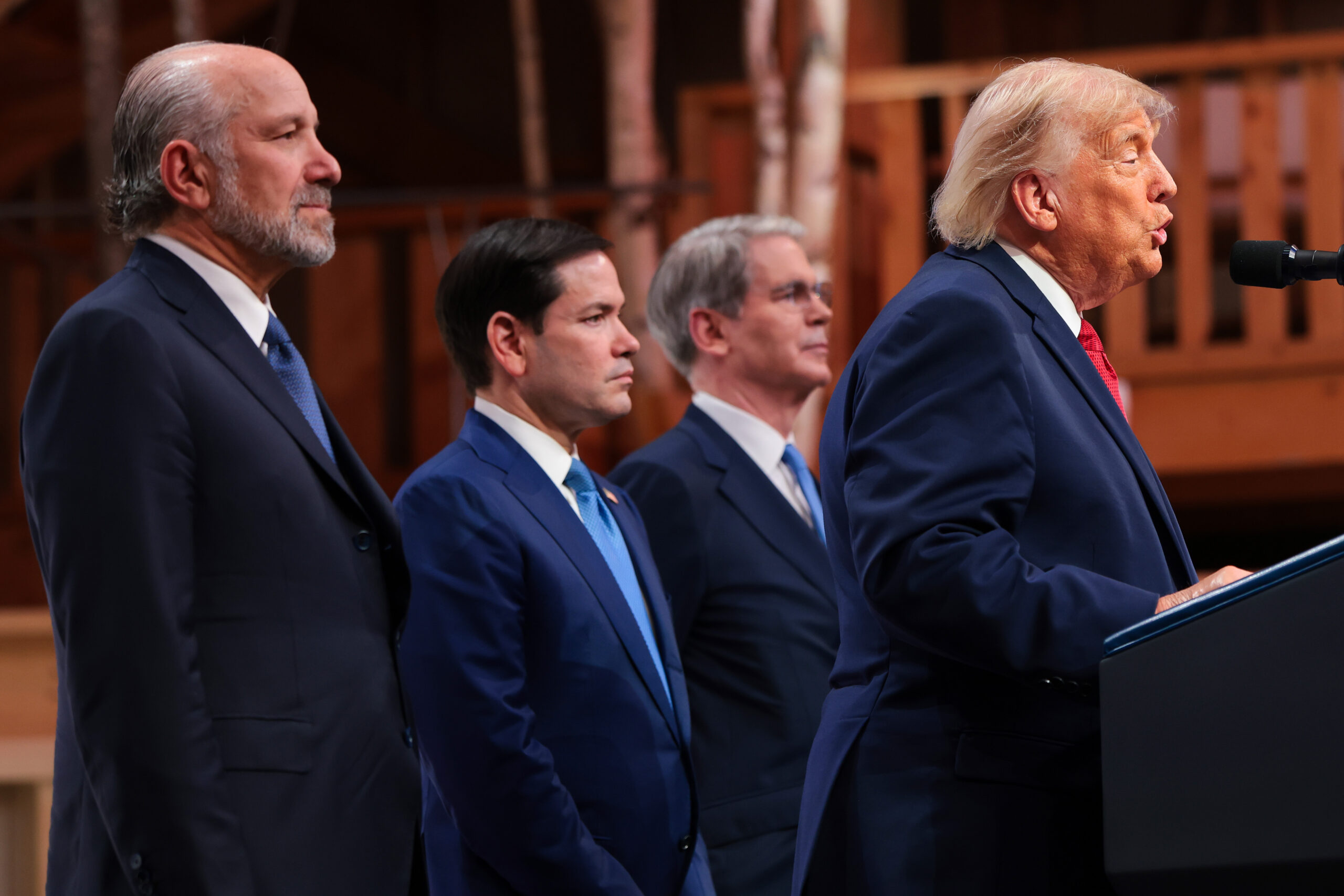
    The podium was set. The microphones were hot. The narrative was entirely controlled by a single voice. Trump leaned into the microphones and delivered a defense of what many considered an impossible diplomatic maneuver. He was negotiating with Tehran. He was defending the terms. And he was already mapping the exit strategy if the framework collapsed.

    The media questioned the viability of the pact. Trump fired back. He called the press the enemy of the deal. He accused them of wanting a Middle Eastern conflict to boost ratings. Then, in a moment of rhetorical whiplash that has defined his political career, he pivoted to his own Vice President.

    If the ayatollahs broke the terms, it would be JD Vance’s fault. If the centrifuges spun back up, the blame would fall on the Vice President. It was delivered as a riff. It landed as a directive. The base cheered. The press scrambled. The diplomatic corps held its collective breath.

    The Reversal in Tehran Policy

    History provides the necessary context for the June 2026 announcement. On May 8, 2018, during his first term, Donald Trump walked up to a podium in the Diplomatic Room of the White House and dismantled the legacy of his predecessor. He announced the United States would withdraw from the JCPOA, the 2015 nuclear agreement brokered by the Obama administration, John Kerry, and a coalition of European allies.

    Trump called the 2015 pact the worst deal ever negotiated. He cited the unfreezing of roughly $150 billion in Iranian assets. He implemented a policy of “maximum pressure.” Sanctions crushed the Iranian rial. Oil exports plummeted. Tensions peaked on January 3, 2020, when a U.S. drone strike in Baghdad killed Qasem Soleimani, the commander of the Quds Force.

    The geopolitical landscape of 2026 looks vastly different. The maximum pressure campaign altered the economic reality in Tehran, but uranium enrichment continued. By 2024, international watchdogs reported Iran was enriching uranium to 60 percent purity, a short technical step away from the 90 percent required for weapons-grade material. A new approach was required.

    Trump’s return to the negotiating table shocked the foreign policy establishment. Neoconservatives in Washington balked. The America First populist wing watched closely. Trump needed a deal that looked tougher than Obama’s, but he also needed to avoid a multi-trillion-dollar ground war in the Middle East.

    • The 2015 JCPOA: Lifted sanctions in exchange for strict, temporary limits on nuclear enrichment.
    • The 2018 Withdrawal: Reimposed crippling sanctions, targeting oil exports and banking.
    • The 2026 Framework: A newly proposed transactional agreement aimed at capping enrichment while offering highly conditional, heavily monitored economic relief.

    Defending this new framework required a masterclass in political framing. Trump could not appear soft. He had to appear pragmatic. He had to sell a compromise to a base that had been trained to view any negotiation with Tehran as capitulation.

    The Press as the Primary Adversary

    To sell the deal, Trump needed an enemy. The Ayatollah Ali Khamenei was the literal adversary across the negotiating table in Vienna and Oman, but the domestic adversary was the American press corps.

    During the June 2026 address, Trump spent as much time dismantling the media’s credibility as he did explaining the mechanics of the nuclear framework. He named CNN. He named MSNBC. He targeted the editorial board of The New York Times.

    “They loved it when John Kerry gave away the store. They cheered for it. Now we make a real deal, a strong deal, and suddenly they care about enforcement. They don’t care about enforcement. They care about ratings.”

    The strategy is a known commodity. By attacking the press, Trump forces his political base into a binary choice: side with the media establishment, or side with the administration. For the America First voter, the choice is automatic. The cultural defense mechanism activates.

    The media’s critiques of the 2026 deal focused on verification protocols. How would the International Atomic Energy Agency (IAEA) inspect military sites like Parchin? What were the exact dollar amounts of the sanctions relief? Trump dismissed the specifics as bureaucratic obsession. He framed the agreement as a victory of sheer willpower.

    The Hypocrisy Narrative

    Trump’s media bashing relies on the hypocrisy narrative. He routinely highlights the difference in tone between the coverage of the 2015 Obama-era negotiations and his own efforts. In 2015, the press largely framed the JCPOA as a triumph of diplomacy over war. In 2026, the press framed Trump’s efforts as a volatile gamble by an unpredictable leader.

    Trump uses this dichotomy as a shield. Whenever a reporter asks a technical question about centrifuge cascades or heavy water reactors, Trump pivots to media bias. It is a highly effective deflection tactic that keeps the focus on cultural grievances rather than diplomatic minutiae.

    The JD Vance Scapegoat Protocol

    The most striking moment of the June 2026 defense was the sudden inclusion of Vice President JD Vance. Mid-riff, while discussing the potential pitfalls of trusting the Iranian regime, Trump offered a preemptive contingency plan.

    If the deal fails, it will be Vance’s fault.

    The comment was delivered with a smirk, but in the ecosystem of Trump’s Washington, jokes carry operational weight. JD Vance, the author of Hillbilly Elegy and the junior Senator from Ohio before his elevation to the vice presidency, represents the intellectual core of the New Right. Vance is deeply skeptical of foreign entanglements. He has consistently argued against neoconservative interventionism. He is the avatar of the America First foreign policy doctrine.

    By tying Vance to the success or failure of the Iran deal, Trump accomplished three distinct political objectives simultaneously.

    First, he provided himself with a heat shield. Trump has a long history of utilizing subordinates to absorb political damage. From Rex Tillerson to John Bolton to Mike Pence, the Trump administration has always featured a rotating cast of lightning rods. If the Iran deal collapses, Vance absorbs the conservative backlash.

    Second, he forced Vance to actively defend the deal. As Vice President, Vance cannot distance himself from the administration’s signature foreign policy achievement. He must go on Sunday morning talk shows. He must face the cameras. He must sell a compromise with Tehran to the populist base that elevated him.

    Third, it tests the loyalty of the heir apparent. Vance is widely considered the future of the MAGA movement. Managing a volatile diplomatic crisis is the ultimate stress test. Trump is forcing Vance to prove his political utility in real-time.

    The Cultural Defense of Diplomacy

    The audience watching the June 2026 address did not care about the technical specifications of the Fordow Fuel Enrichment Plant. They cared about strength. They cared about dominance. They cared about cultural defense.

    Trump’s rhetoric is engineered for this exact frequency. He does not sell policy; he sells posture. The Iran deal is not presented as a complex web of sanctions relief and nuclear physics. It is presented as a transaction where America wins and the establishment loses.

    When Trump bashes the media, the audience feels validated. The press is viewed as a hostile entity, an elite class that looks down on the working-class voter. By attacking the reporters in the room, Trump signals to his voters that he is fighting their enemies.

    When Trump blames JD Vance, the audience feels a sense of inside-joke camaraderie. It is reality television mechanics applied to global diplomacy. The base understands the game. They know Trump takes the credit for victories and assigns blame for defeats. They accept this transaction because Trump serves as their ultimate cultural defender against an establishment they despise.

    The global oil markets reacted to the speech. Brent Crude hovered around $85 a barrel, fluctuating on the news of potential Iranian supply re-entering the market. European allies issued cautious statements of support from Brussels and Paris. Israeli leadership watched with deep skepticism from Jerusalem.

    But in the room, none of that mattered. What mattered was the performance. The defiance. The sheer audacity of reversing a legacy-defining policy while simultaneously attacking the people pointing out the reversal.

    Sanctions lift. Centrifuges spin. The media types. Trump speaks. Vance waits. Washington.