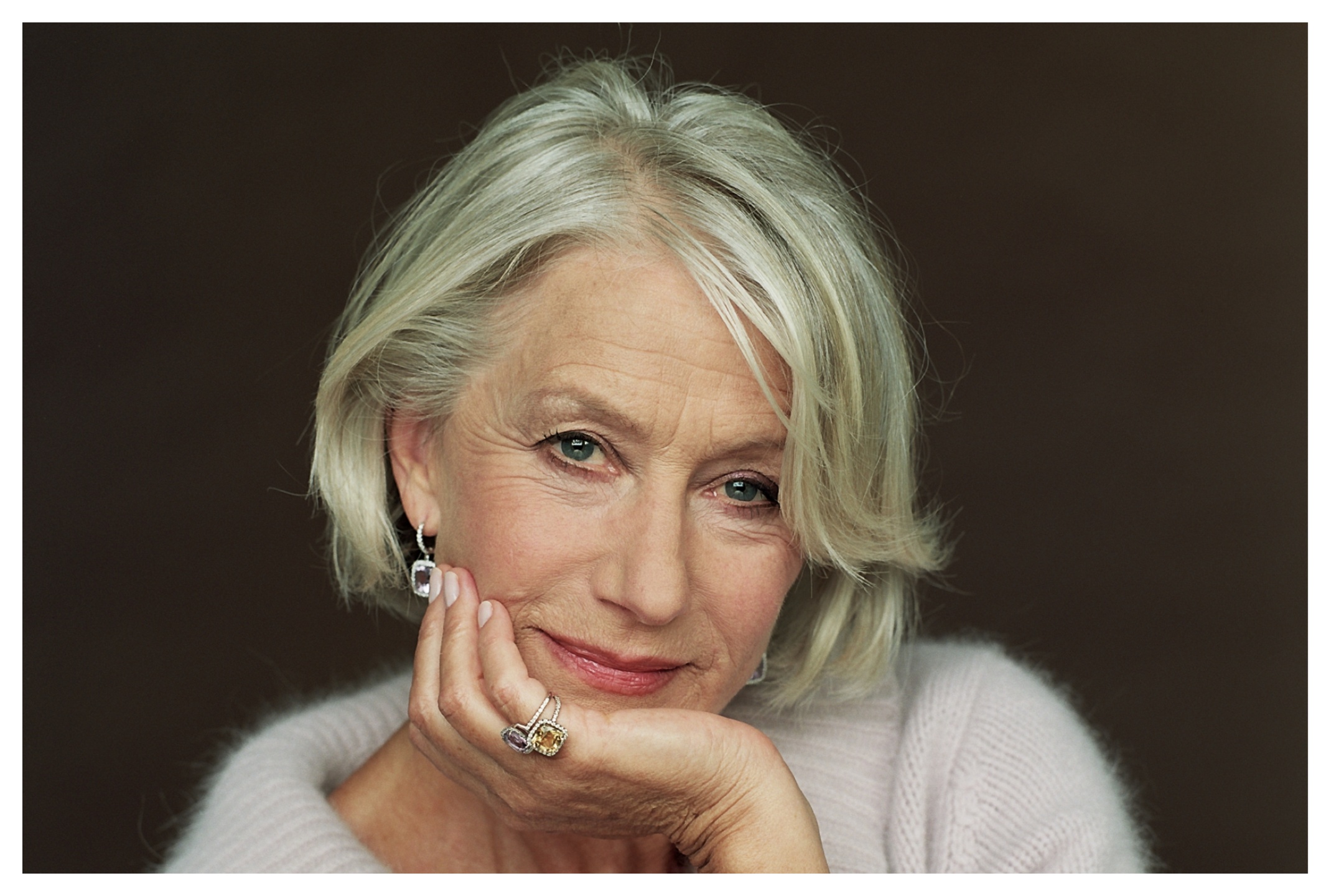
Helen Mirren accused Israel of committing “crimes against humanity” during a June 2026 press appearance at the Taormina Film Festival in Sicily, marking a stark reversal for an actress who previously spent decades defending the nation and recently portrayed Israeli Prime Minister Golda Meir. During the same event, Mirren pivoted to industry news, explicitly voicing her “genuine and heartfelt” support for actor Tom Hardy’s return to the MobLand franchise. The dual statements immediately fractured audiences, triggering a cultural defense mechanism across social media and political commentary spheres. What began as a standard film festival appearance quickly morphed into a defining moment in Hollywood’s ongoing geopolitical fracture.
The Taormina Declaration
The Teatro Antico di Taormina provides an ancient backdrop for modern cinema. In June 2026, the amphitheater hosted the annual Taormina Film Festival. Reporters gathered to discuss upcoming projects and European cinema. The conversation shifted toward global events. Helen Mirren took the microphone. The Academy Award winner did not use softened diplomatic language. She did not call for a vague peace. She explicitly accused the state of Israel of committing “crimes against humanity.”
The phrase carries specific legal and historical weight. It is not a casual descriptor. By invoking it, Mirren crossed a rhetorical Rubicon. The cameras flashed. The room quieted. The entertainment press, usually focused on distribution deals and red-carpet fashion, scrambled to record the exact phrasing. Mirren’s delivery was measured. Her tone was deliberate. She understood the gravity of the words.
The immediate reaction was polarization. Deadline reported that the comments provoked strong reactions and a deep sense of cultural defense. For audiences deeply invested in the Middle Eastern conflict, celebrity commentary acts as a proxy war. When a high-profile figure speaks, their words are weaponized by one side and condemned by the other. Mirren’s statement provided high-value ammunition for critics of Israeli military policy. Simultaneously, it triggered profound feelings of betrayal among pro-Israel advocates.
The Kibbutz and The Prime Minister
To understand the shockwave of Mirren’s 2026 statement, one must understand her history. Helen Mirren’s connection to Israel is not superficial. It is not a recent Hollywood trend. Her relationship with the nation spans more than half a century.
In 1967, following the Six-Day War, a young Helen Mirren traveled to Israel. She volunteered on a kibbutz in the Golan Heights with her Jewish boyfriend. She picked grapes. She lived the communal agricultural life. For decades, she spoke fondly of this experience. She publicly defended Israel’s right to exist. She pushed back against cultural boycotts aimed at the nation. She was viewed by many in the Jewish diaspora as a steadfast, reliable ally.
This relationship culminated in 2023. Mirren starred as Golda Meir in the biopic Golda, directed by Israeli filmmaker Guy Nattiv. The film focused on the 1973 Yom Kippur War. The casting sparked a fierce industry debate about “Jewface” and whether non-Jewish actors should play prominent Jewish historical figures. Mirren weathered the controversy. She defended her casting. She expressed deep admiration for Meir’s formidable leadership. She promoted the film globally, including at the Berlin International Film Festival.
The contrast is absolute. In 2023, she was the cinematic face of Israel’s most famous female leader, defending the nation’s historical survival. In 2026, she stood in Sicily and accused the same nation of crimes against humanity. The pivot is staggering. It illustrates the profound impact of the ongoing Gaza conflict on global public opinion. If a lifelong defender like Mirren could publicly flip, the cultural ground had fundamentally shifted.
The Mechanics of Cultural Defense
The concept of “cultural defense” explains the ferocity of the public response. Human beings tie their identities to geopolitical causes. When those causes are attacked, the reaction is not merely intellectual. It is visceral. It is defensive.
Celebrities serve as cultural avatars. Audiences project their own values onto actors, musicians, and directors. When an avatar aligns with an audience’s worldview, the audience feels validated. When the avatar breaks rank, the audience feels personally attacked. Mirren’s comments at Taormina forced audiences to engage. Silence was no longer an option. Pro-Palestinian advocates amplified her words, using her previous pro-Israel stance to validate the severity of their own criticisms. If even Golda Meir’s actress condemns the state, the argument goes, the state’s actions must be indefensible.
Conversely, pro-Israel organizations and advocates mobilized rapidly. They framed Mirren’s comments as a betrayal. Opinion pieces flooded traditional media. Social media algorithms rewarded the outrage. The discourse bypassed the nuance of military strategy or international law. It became a pure culture war. Mirren was either a brave truth-teller or a misguided traitor. The middle ground evaporated.
The MobLand Pivot and Tom Hardy
The Taormina press conference did not end with geopolitics. In a jarring transition typical of film festival media circuits, the conversation pivoted back to Hollywood commerce. Mirren shifted her focus to the gritty crime thriller franchise MobLand. Specifically, she addressed the swirling rumors regarding actor Tom Hardy.
The original MobLand, released in 2023 and starring John Travolta and Shiloh Fernandez, established a bleak cinematic universe centered on the Dixie Mafia and small-town desperation. The franchise has since sought expansion. Rumors of Tom Hardy entering the universe have circulated in industry trades for months. Hardy, known for his intense, brooding performances in Venom, Mad Max: Fury Road, and Peaky Blinders, represents a massive potential injection of star power.
Mirren did not merely acknowledge the rumors. She endorsed them. “My support of him is genuine and heartfelt,” she told the press. She signaled high hopes for Hardy’s return to the genre and his potential integration into the MobLand narrative framework.
The juxtaposition was jarring. In one breath, Mirren addressed the deaths of thousands and invoked international war crimes. In the next, she discussed casting logistics for an American crime thriller. This duality highlights the surreal nature of celebrity existence. Actors are expected to be moral philosophers and franchise promoters simultaneously. The media demands both. Mirren delivered both.
The Hollywood Fault Line
The fallout from Taormina extends beyond Helen Mirren. It exposes a widening fault line in the entertainment industry. For decades, Hollywood operated on a principle of broad appeal. Studios avoided alienating demographics. Actors were trained to give neutral, universally acceptable answers to political questions. The goal was ticket sales. Controversy was a liability.
That era is over. The modern media landscape demands authenticity, even when that authenticity is polarizing. Silence is now interpreted as complicity. Actors are forced to take stands. When they do, the studios must calculate the financial impact. Will Mirren’s comments hurt her box office draw in certain regions? Will they boost her profile among younger, more politically active demographics? Will the association with Mirren impact Tom Hardy’s negotiations for MobLand?
These are the new mathematics of Hollywood. Every statement is weighed. Every quote is parsed. The cultural defense mechanism ensures that no comment fades quietly. The internet archives everything. Mirren’s legacy is now permanently altered. She is no longer just the Academy Award-winning actress who played Queen Elizabeth II. She is no longer just the woman who played Golda Meir. She is the actress who stood in Sicily and drew a line in the sand.
The Ripple Effect of Taormina
The Taormina Film Festival will eventually pack up its red carpets. The Mediterranean sun will set on the Teatro Antico. But the words spoken there will continue to reverberate. They will be cited in political op-eds. They will be debated on cable news networks. They will be weaponized on social media platforms.
The story is no longer just about Helen Mirren. It is about how culture processes conflict. It is about how art and politics intersect in the modern age. It is about the impossibility of remaining neutral in a hyper-connected world. The lines have been drawn. The sides have been chosen. The cultural defense is active. The avatars have spoken.
Audiences reacted. Studios calculated. The press recorded. Taormina.