Tag: Talk Shows

  • Rosie O’Donnell Returns to The View for Season 30 – ‘I Will Go’ with All Past Cohosts

    Rosie O’Donnell Returns to The View for Season 30 – ‘I Will Go’ with All Past Cohosts

    Rosie O’Donnell is coming back.

    The View announced plans for a season 30 reunion featuring all former cohosts. O’Donnell confirmed she will participate.

    She said she would appear with ‘all’ past panelists. No exceptions. No conditions.

    The Milestone Season

    The View premiered August 11, 1997. Barbara Walters created it. The format was simple: five women, different generations, different politics, one table.

    Season 30 marks nearly three decades on air. ABC is treating it as a landmark. The network has not yet announced an air date for the reunion episode.

    O’Donnell’s return carries weight. She left twice before. Both exits were messy.

    The First Tenure – 2006 to 2007

    O’Donnell joined The View as moderator in September 2006. She replaced Meredith Vieira. The show needed star power. O’Donnell delivered ratings.

    She also delivered conflict.

    Her on-air feud with Elisabeth Hasselbeck in May 2007 became cable news fodder. The two argued about the Iraq War. The argument escalated. O’Donnell’s language became heated. Hasselbeck pushed back.

    O’Donnell announced her departure days later. She did not return for the remainder of her contract. ABC called it a mutual decision. Neither woman spoke positively about the other for years.

    The Second Tenure – 2014 to 2015

    O’Donnell returned in September 2014. She joined Whoopi Goldberg, Nicolle Wallace, and Rosie Perez at the table. The show was struggling in ratings. ABC hoped nostalgia would help.

    It did not last.

    O’Donnell left in February 2015. She cited personal family matters. Her departure was sudden. The network scrambled to fill her seat mid-season.

    In later interviews, O’Donnell described the experience as painful. She said the show had changed. The dynamics no longer worked for her.

    Why This Return Matters

    The View has cycled through dozens of cohosts since 1997. Star Jones. Joy Behar. Sherri Shepherd. Jenny McCarthy. Meghan McCain. Each brought a different edge. Each left under different circumstances.

    A full reunion has never happened.

    Logistically, it is complicated. Some cohosts left on bad terms. Some have moved to competing networks. Some have publicly feuded with each other after leaving the show.

    O’Donnell’s willingness to return signals something. Possibly reconciliation. Possibly a truce. Possibly just good television.

    The Cultural War Context

    O’Donnell remains a polarizing figure in American culture. Her politics are progressive. Her rhetoric is confrontational. Her feuds are legendary.

    She clashed publicly with Donald Trump beginning in 2006. The feud continued through his presidency. Trump called her names on Twitter. O’Donnell responded in interviews and on social media.

    Her presence on The View in 2006 and 2007 coincided with a national shift in daytime talk. The show became more political. The arguments became sharper. Viral clips replaced watercooler conversation.

    Critics accused The View of stoking division. Supporters said it reflected real conversations happening in American homes.

    O’Donnell was at the center of that shift.

    The Table That Changed Daytime

    Barbara Walters envisioned The View as generational dialogue. She wanted women of different ages debating the news. She did not want it sanitized.

    The show succeeded because it allowed disagreement. It let cohosts argue. It occasionally let them interrupt each other.

    O’Donnell embraced that chaos. She did not moderate conflict. She escalated it.

    That made her compelling television. It also made her a target.

    What Season 30 Represents

    A reunion of all past cohosts is not just nostalgia. It is a reckoning.

    It will put former enemies at the same table. It will force old grievances into the open or bury them under pleasantries. It will test whether time heals or whether certain wounds remain.

    O’Donnell’s presence guarantees attention. The question is whether the reunion becomes a celebration or a spectacle.

    ABC is betting on both.

    The Business of Daytime Conflict

    The View thrives on controversy. Viral clips drive social media engagement. Social media engagement drives ratings. Ratings drive ad revenue.

    O’Donnell is a proven content engine. Her segments generate headlines. Her quotes get shared. Her arguments become news stories.

    Season 30 will leverage that. The reunion episode will be promoted heavily. Clips will be teased across platforms. The cohosts will be asked about old feuds in promotional interviews.

    It is a calculated move. It is also good television strategy.

    The Voices That Will Gather

    The full cohost list spans nearly 30 years. Some names are household. Others are footnotes.

    Star Jones. Debbie Matenopoulos. Lisa Ling. Joy Behar. Elisabeth Hasselbeck. Sherri Shepherd. Jenny McCarthy. Nicolle Wallace. Rosie Perez. Michelle Collins. Candace Cameron Bure. Paula Faris. Jedediah Bila. Meghan McCain. Abby Huntsman. Ana Navarro. Alyssa Farah Griffin. Sara Haines. Sunny Hostin.

    Each brought a perspective. Each left a mark.

    Getting them all in one room will be a feat of scheduling and diplomacy.

    The Unanswered Questions

    ABC has not revealed the format of the reunion. Will it be a single episode or a week-long event? Will all cohosts appear simultaneously or in segments?

    Will there be ground rules? Will certain topics be off-limits?

    Will O’Donnell and Hasselbeck shake hands? Will Star Jones and Barbara Walters’ legacy be addressed? Will Meghan McCain and Whoopi Goldberg sit next to each other?

    These are not small questions. They determine whether the reunion succeeds.

    The Larger Television Moment

    Daytime talk shows are shrinking. Streaming services dominate attention. Younger audiences do not watch live television.

    The View endures because it remains relevant. It books sitting politicians. It breaks news. It creates moments that escape the daytime TV ghetto and enter the broader cultural conversation.

    Season 30 is an assertion. The show still matters. The cohosts still matter. The format still works.

    O’Donnell’s return amplifies that message.

    Cohosts gathered.

    Cameras rolled.

    The table.

    Frequently Asked Questions

    When did Rosie O’Donnell first appear on The View?

    Rosie O’Donnell first joined The View as moderator in September 2006, replacing Meredith Vieira. Her first tenure lasted until May 2007 when she departed following an on-air feud with Elisabeth Hasselbeck. She returned for a second stint from September 2014 to February 2015.

    Why did Rosie O’Donnell leave The View the first time?

    Rosie O’Donnell left The View in May 2007 following a heated on-air argument with cohost Elisabeth Hasselbeck about the Iraq War. The confrontation became a major media story. O’Donnell announced her departure days later and did not complete the remainder of her contract.

    When did The View first premiere?

    The View premiered on August 11, 1997. Barbara Walters created the show with the concept of five women from different generations and political perspectives discussing current events at one table. Season 30 marks nearly three decades on the air.

    Who are some of the past cohosts of The View?

    Past cohosts of The View include Star Jones, Joy Behar, Debbie Matenopoulos, Lisa Ling, Elisabeth Hasselbeck, Sherri Shepherd, Jenny McCarthy, Nicolle Wallace, Rosie Perez, Candace Cameron Bure, Meghan McCain, Sunny Hostin, Sara Haines, and Ana Navarro, among others. The show has cycled through dozens of cohosts since 1997.

    Why is Rosie O’Donnell considered a polarizing figure?

    Rosie O’Donnell is considered polarizing due to her confrontational political rhetoric, public feuds with figures like Donald Trump and Elisabeth Hasselbeck, and progressive activism. Her presence on The View coincided with the show becoming more political and divisive, with viral on-air arguments that drew both praise and criticism depending on viewers’ political leanings.
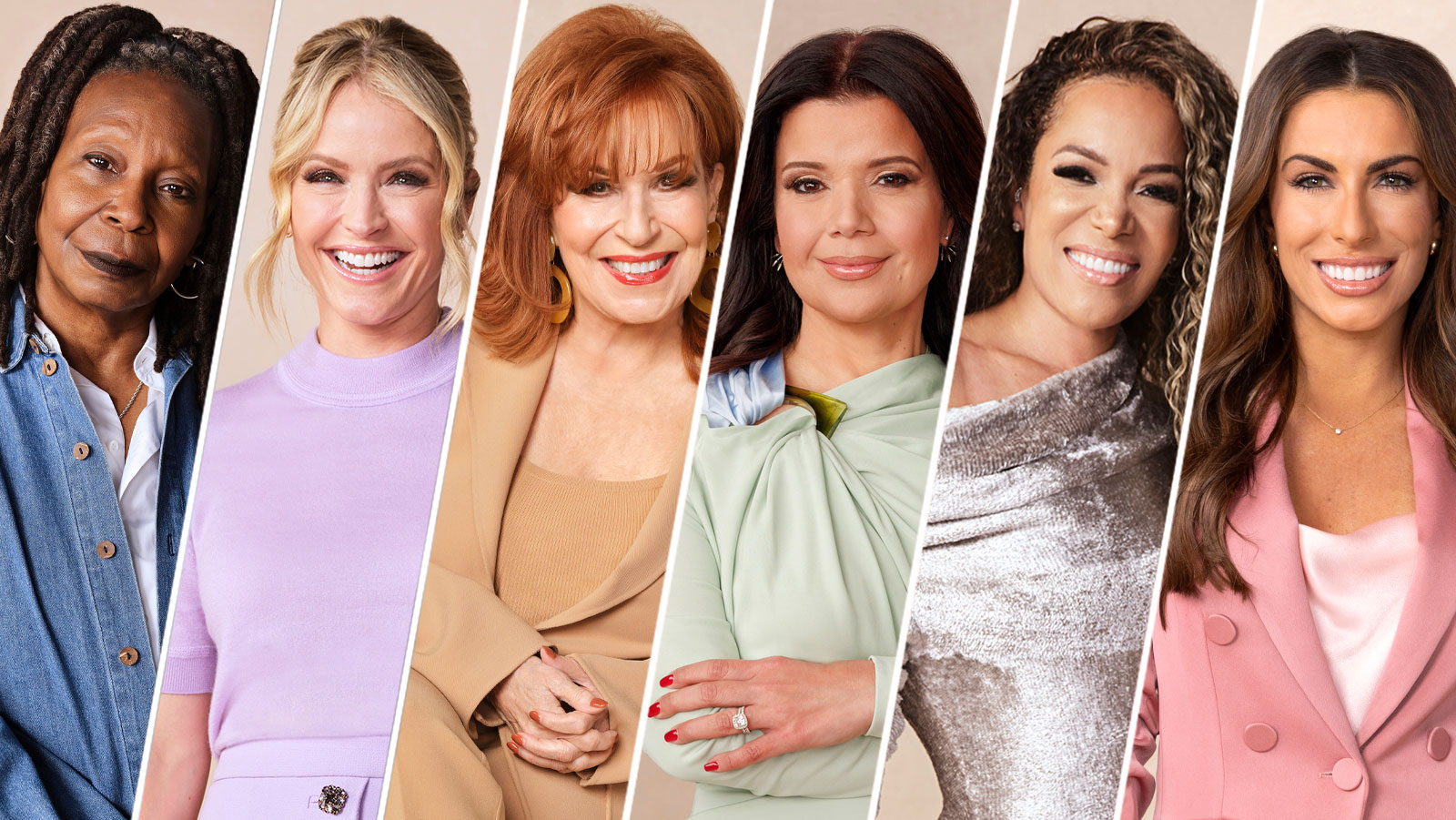
  • The View FCC Investigation – ABC Cites “Broad Consensus” in Defense

    The View FCC Investigation – ABC Cites “Broad Consensus” in Defense

    ABC has asserted a “broad and cross-ideological consensus” supports its daytime talk show ‘The View.’ This declaration comes amid an ongoing Federal Communications Commission (FCC) investigation into the program. The network’s defense aims to protect the show from regulatory action following complaints.

    The FCC inquiry focuses on specific content aired on ‘The View.’ ABC’s response highlights the show’s widespread appeal and its function as a forum for varied perspectives. The network seeks to demonstrate that the program adheres to broadcast standards through its public reception.

    The FCC’s Role in Broadcast Content

    The Federal Communications Commission (FCC) is an independent agency of the United States government. It regulates interstate and international communications by radio, television, wire, satellite, and cable. Its mandate includes ensuring that broadcast content serves the public interest.

    The FCC receives complaints from the public regarding broadcast material. These complaints can trigger investigations into potential violations of decency, fairness, or other broadcast standards. The agency holds the authority to issue warnings, impose fines, or even revoke broadcast licenses in severe cases.

    Historically, the FCC has acted on issues ranging from indecency during live broadcasts to political advertising regulations. Its oversight is a critical component of media accountability in the United States. The current investigation into ‘The View’ falls within this regulatory framework.

    Genesis of the Investigation into ‘The View’

    The specific catalysts for the FCC’s investigation into ‘The View’ remain under review. Public complaints typically initiate such inquiries. These complaints often allege violations of broadcast content rules or express concerns over perceived bias or inflammatory rhetoric.

    ‘The View,’ known for its panel discussions on current events and social issues, frequently generates strong reactions from viewers. Its hosts, including Whoopi Goldberg, Joy Behar, Sunny Hostin, Sara Haines, Alyssa Farah Griffin, and Ana Navarro, represent a spectrum of political and social viewpoints. This dynamic often leads to heated debates on air.

    Past controversies involving ‘The View’ have drawn significant public attention. These incidents sometimes result in calls for regulatory intervention or advertiser boycotts. The current FCC investigation represents a formal escalation of such public concerns.

    ABC’s Defense Strategy

    ABC’s defense filing to the FCC outlines a multifaceted argument. The core of its position rests on the claim of “broad and cross-ideological consensus.” This suggests that despite any controversy, a wide array of viewers, spanning different political and social leanings, supports ‘The View’.

    The network likely presented evidence of viewership numbers, demographic data, and positive audience feedback. Such data would aim to demonstrate the program’s popularity and its perceived value to a diverse audience. The argument implies that broad public acceptance mitigates isolated complaints.

    Furthermore, ABC’s defense likely emphasizes the nature of ‘The View’ as a live, unscripted talk show. This format inherently involves spontaneous discussion and the expression of personal opinions. The network may argue that such a format should be afforded a degree of latitude in expression, consistent with free speech principles.

    “Our program provides a vital platform for the exchange of diverse ideas, fostering robust public discourse,” ABC’s filing reportedly stated. “The support we receive from a wide spectrum of viewers underscores its importance to the broadcast landscape.”

    The defense also likely highlights the show’s long history. ‘The View’ first premiered in 1997. Its longevity suggests a sustained audience and a proven track record within the broadcast industry. This historical context could be used to argue against punitive action.

    The Concept of “Cross-Ideological Consensus”

    The term “cross-ideological consensus” is central to ABC’s defense. It refers to agreement or support that transcends traditional political or social divides. In the context of ‘The View,’ it suggests that the program’s appeal is not limited to one political faction.

    This argument is crucial because it counters potential claims of partisan bias. If a program is perceived as appealing only to one side of the political spectrum, it might be more vulnerable to complaints of unfairness. Demonstrating broad appeal strengthens the argument for its public interest value.

    Achieving cross-ideological consensus for a program like ‘The View’ can be challenging. The show often tackles highly polarizing topics, from national politics to social justice issues. The panel itself comprises hosts with differing political affiliations, which sometimes leads to internal disagreements on air.

    However, ABC’s assertion implies that even those who disagree with specific viewpoints expressed on the show still value its role as a forum. They may appreciate the open debate, the representation of various opinions, or simply the entertainment value derived from the discussions.

    Precedent and Impact on Broadcast Regulation

    The outcome of this FCC investigation could establish significant precedents. Decisions made by the FCC often influence how other broadcasters approach content moderation and audience engagement. A ruling against ‘The View’ could lead to increased scrutiny for other opinion-based programs.

    Conversely, if the FCC dismisses the complaints based on ABC’s defense, it could reinforce the idea that popular programs with broad appeal are less susceptible to regulatory action. This might empower broadcasters to continue with formats that encourage robust, sometimes controversial, discussions.

    The current media landscape is characterized by deep political polarization. Programs that navigate this environment often face intense public and political pressure. The FCC’s role in balancing free speech with public interest standards becomes increasingly complex in this context.

    Previous FCC rulings have set benchmarks for what constitutes ‘indecent’ or ‘obscene’ content. However, ‘The View’ investigation appears to center more on issues of perceived bias, fairness, or the general tone of political discourse. These areas are often more subjective and thus harder to regulate definitively.

    Public and Political Reactions

    The FCC investigation and ABC’s defense have generated public and political reactions. Advocates for media accountability often welcome FCC inquiries as a mechanism to ensure responsible broadcasting. Others view such investigations as potential threats to free speech and journalistic independence.

    Political figures and media watchdogs frequently weigh in on controversies surrounding programs like ‘The View.’ Their comments can influence public perception and pressure the FCC to take specific actions. The visibility of ‘The View’ ensures that any regulatory action will be closely watched.

    Social media platforms amplify these discussions, allowing for rapid dissemination of opinions and criticisms. Online campaigns, both for and against ‘The View,’ can quickly gain traction, adding another layer of complexity to the regulatory process.

    The debate often extends beyond the specific content of ‘The View’ to broader questions about the role of opinion in news and talk programming. Questions arise about whether such shows have a responsibility to present all sides equally or if they are primarily platforms for specific viewpoints.

    The Future of ‘The View’ and Broadcast Standards

    The FCC’s final decision will undoubtedly impact ‘The View.’ It could lead to directives for changes in content, format, or editorial policies. Alternatively, a favorable ruling for ABC would allow the show to continue its current approach without significant alterations.

    Beyond ‘The View’ itself, the investigation holds implications for broadcast standards across the industry. It could influence how other networks manage their talk shows and news commentary programs. The balance between entertaining and informing, while adhering to regulatory guidelines, is a constant challenge for broadcasters.

    The evolving nature of media consumption also plays a role. As more viewers turn to digital platforms and streaming services, the traditional role of the FCC in regulating linear television broadcasts faces new challenges. However, the principles of public interest and content responsibility remain relevant.

    The outcome will reflect the FCC’s interpretation of current broadcast laws in the context of contemporary media. It will indicate the agency’s willingness to intervene in content that sparks public debate, even when supported by a significant audience segment.

    Conclusion

    ABC’s defense of ‘The View’ against the FCC investigation rests on the assertion of a broad and cross-ideological consensus. The network argues that the program’s widespread support and its function as a platform for diverse discussion should shield it from regulatory action. This case highlights the ongoing tension between media freedom and public interest regulations.

    The FCC’s decision will shape future broadcast standards.

    Broadcasters await the verdict.

    Regulators weigh the evidence.

    The public observes.

    Consensus.