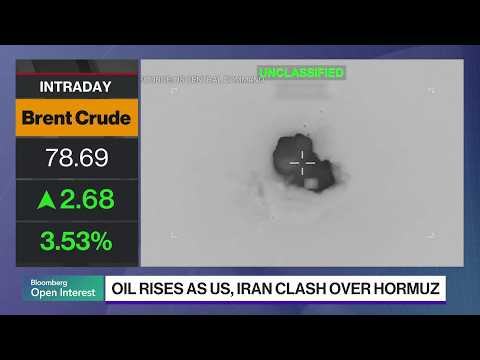
President Donald Trump recently declared that the United States intends to “keep the Strait.” This statement signals a firm and assertive stance on international maritime control. While not specifying a single location, the phrase broadly refers to critical global waterways such as the Strait of Hormuz and the Bab el-Mandeb Strait. The declaration, reported by Bloomberg Television, underscores the administration’s strategic focus on maintaining influence over these vital arteries of global trade and defense.
This position reflects a consistent theme within President Trump’s approach to international relations. It prioritizes the protection of American interests and the projection of national power on a global scale. The phrase “keep the Strait” implies a readiness to act decisively to ensure access and prevent disruption in strategically important maritime passages against any challenges.
The Geopolitical Imperative: What ‘The Strait’ Means
When President Trump refers to “the Strait,” he invokes a historical and strategic concept rather than a single geographical location. This phrase encapsulates any critical maritime choke point essential for global commerce, energy transportation, and military mobility. These include, but are not limited to, the Strait of Hormuz, the Bab el-Mandeb Strait, the Strait of Malacca, and the Suez Canal.
These narrow passages are inherently vulnerable to disruption. Their control or impedance by hostile actors could severely impact international trade, energy supplies, and military operations. The United States, as a global naval power, has historically committed to ensuring their openness.
The Strait of Hormuz: A Lifeline for Oil
The Strait of Hormuz is perhaps the most prominent example of a critical strait in current geopolitical discourse. Located at the mouth of the Persian Gulf, it connects the oil-rich Gulf states to the Arabian Sea and beyond. Approximately one-fifth of the world’s total oil consumption, and a significant portion of its liquefied natural gas (LNG), passes through this strait daily.
Iran has historically threatened to close the Strait of Hormuz in response to international pressures. Such an action would cause a catastrophic shock to global energy markets and the world economy. President Trump’s declaration serves as a direct message regarding the United States’ resolve to prevent such a closure.
The Bab el-Mandeb Strait: Gateway to the Suez Canal
Another crucial waterway is the Bab el-Mandeb Strait, situated between Yemen on the Arabian Peninsula and Djibouti and Eritrea on the Horn of Africa. This strait connects the Red Sea to the Gulf of Aden and the Indian Ocean. It is a vital artery for shipping heading to and from the Suez Canal, linking Europe and Asia.
Disruptions in the Bab el-Mandeb, often due to regional conflicts or piracy, can force shipping to take the much longer and more expensive route around the Cape of Good Hope. This significantly increases transit times and costs for global trade. The United States has maintained a naval presence in the region to counter these threats, particularly from state-sponsored and non-state actors.
Other Strategic Choke Points
Other significant straits include the Strait of Malacca, a primary shipping channel between the Indian Ocean and the Pacific Ocean, vital for trade between Asia and Europe. The Danish Straits control access to the Baltic Sea, while the Turkish Straits (Bosphorus and Dardanelles) are critical for Russia’s access to the Mediterranean Sea. Each of these represents a potential flashpoint where the principle of freedom of navigation could be challenged.
Historical Precedent for Maritime Dominance
The concept of controlling strategic waterways is deeply embedded in international diplomacy and military strategy. From ancient empires to modern superpowers, nations have always vied for influence over these critical choke points. Historically, control over such passages conferred immense economic and military advantages.
The British Empire, for instance, maintained its global dominance for centuries through its control of key maritime routes. The United States, particularly since the mid-20th century, has taken on a similar role, albeit under the banner of upholding freedom of navigation for all.
The Principle of Freedom of Navigation
The United States has largely championed the principle of freedom of navigation, which allows vessels of all nations to transit international waters unimpeded. This principle is enshrined in international law, notably the United Nations Convention on the Law of the Sea (UNCLOS), though the U.S. has not ratified the convention itself.
However, the interpretation and enforcement of this principle often involve complex geopolitical considerations and a robust military presence. The U.S. Navy conducts regular Freedom of Navigation Operations (FONOPs) in disputed waters to assert these rights and challenge excessive maritime claims by other nations.
The Role of the U.S. Navy in Enforcement
The U.S. Navy plays a central and indispensable role in upholding freedom of navigation and ensuring the security of international straits. Its global deployments, including aircraft carrier strike groups, expeditionary strike groups, and naval patrols, are designed to deter aggression and ensure open access to international waters.
This naval presence is particularly pronounced in regions surrounding key straits, where potential adversaries might seek to exert control or disrupt shipping. The Fifth Fleet, based in Bahrain, is responsible for operations in the Persian Gulf, Red Sea, Arabian Sea, and parts of the Indian Ocean, directly overseeing the Strait of Hormuz and Bab el-Mandeb.
Maintaining a Forward Presence
The U.S. Navy’s forward presence allows for rapid response to maritime threats. This includes anti-piracy operations, counter-terrorism efforts, and deterrence against state-sponsored aggression. The ability to project power from the sea is a cornerstone of American foreign policy and a critical component of global stability.
President Trump’s emphasis on “keeping the Strait” reinforces the importance of these naval capabilities. It suggests a willingness to use these assets decisively to protect maritime interests, potentially against challenges from state or non-state actors who seek to unilaterally control international waterways.
Geopolitical Implications and Strategic Messaging
President Trump’s statement carries significant geopolitical weight. It serves as a clear message to potential adversaries regarding the limits of their influence in critical maritime zones. The assertion reinforces the idea that the United States views the unrestricted passage through these straits as a non-negotiable aspect of international order.
This messaging is crucial in regions where nations like Iran or China have sought to assert greater control over adjacent waters. For example, in the South China Sea, China’s extensive territorial claims and construction of artificial islands challenge established international norms regarding freedom of navigation. The U.S. stance on “keeping the Strait” applies conceptually to such contested areas, signaling a broader commitment to open sea lanes.
Impact on Global Trade and Energy Security
Uninterrupted passage through these straits is paramount for global commerce. Any disruption, whether from conflict, piracy, terrorism, or political maneuvering, can have immediate and far-reaching economic consequences. Energy prices, global supply chains, and international markets are all highly sensitive to the stability of these maritime arteries.
The United States’ commitment to securing these passages therefore serves a dual purpose: protecting its own economic interests and ensuring the stability of the global trading system. This stability benefits allies and trading partners worldwide, as a significant portion of global trade relies on these waterways for the transport of raw materials, finished goods, and energy resources.
Alliances and International Partnerships in Maritime Security
The United States does not operate in isolation regarding maritime security. Its efforts are consistently bolstered by a robust network of alliances and international partnerships. Nations with significant maritime interests, such as Japan, South Korea, Australia, the United Kingdom, and other European powers, often collaborate with the U.S. to ensure freedom of navigation and maritime safety.
These partnerships involve joint naval exercises, intelligence sharing, and coordinated patrols. Organizations like NATO also play a role in collective maritime defense and security operations, particularly in the Atlantic and Mediterranean.
Reaffirming Leadership and Collective Security
President Trump’s assertion could be seen as a reaffirmation of these cooperative efforts, signaling that the U.S. remains a steadfast partner in maintaining global maritime order. However, it also implies a leadership role, with the U.S. prepared to take primary responsibility for decisive action when necessary to protect these vital international commons.
The message to allies is one of continued commitment and a strong deterrent against those who would seek to disrupt global trade. The message to potential adversaries is one of unwavering resolve and a clear red line against actions that threaten international maritime stability.
Challenges to Modern Maritime Security
Modern maritime security faces a complex array of challenges that extend beyond traditional naval power projection. These include:
- State-sponsored aggression: Attempts by certain nations to exert undue control over international waters, harass commercial shipping, or restrict legitimate passage through straits.
- Hybrid warfare tactics: The use of non-military means, such as cyberattacks on port infrastructure or GPS spoofing, to disrupt maritime operations.
- Piracy and armed robbery: Persistent threats in certain regions, particularly off the coast of Somalia, in the Gulf of Guinea, and in parts of Southeast Asia, targeting commercial vessels for ransom or cargo.
- Maritime terrorism: The potential for terrorist groups to target commercial vessels, cruise ships, or critical maritime infrastructure, causing mass casualties or economic disruption.
- Environmental concerns: The increasing volume of shipping and the risk of accidents, oil spills, and pollution, which can have devastating ecological and economic impacts on coastal communities.
- Illegal, Unreported, and Unregulated (IUU) Fishing: A significant threat to marine ecosystems and the economic livelihoods of coastal nations, often linked to organized crime.
The policy of “keeping the Strait” directly addresses the challenge of state-sponsored aggression and aims to mitigate the broader risks to maritime safety and security by ensuring a strong deterrent presence.
The Broader Trump Doctrine and Maritime Policy
President Trump’s statement aligns with what some analysts term the “Trump Doctrine” in foreign policy. This doctrine often emphasizes a transactional approach, a focus on national sovereignty, and a willingness to challenge established norms when perceived as not serving American interests. It also highlights a preference for strength, direct action, and a clear articulation of red lines.
The assertion regarding international straits fits this pattern by projecting American power and prioritizing the security of vital national and global assets. It underscores a belief that a strong and assertive America is essential for global stability, particularly in contested areas where rivals might seek to expand their influence.
Economic Nationalism and Global Interdependence
While often associated with economic nationalism and a focus on domestic industry, President Trump’s foreign policy also acknowledges the necessity of global trade. The unimpeded flow of goods, including critical energy resources, through international straits is indispensable for the American economy and global prosperity. Therefore, ensuring the security of these routes is a pragmatic extension of economic policy, safeguarding the arteries of global capitalism.
The administration views secure maritime passages as fundamental to national security and economic well-being. This perspective underpins the resolve to “keep the Strait” open and secure, demonstrating a commitment to protecting the global trading system from disruption.
Conclusion
President Trump’s declaration that the United States will “keep the Strait” reflects a core tenet of his administration’s foreign policy. It signals a firm commitment to maintaining freedom of navigation and securing vital international maritime choke points against any threats. This stance underscores the enduring importance of naval power, strategic alliances, and assertive diplomacy in safeguarding global trade and national interests. The implications resonate across geopolitical landscapes, from the oil fields of the Middle East to the bustling shipping lanes of Southeast Asia. The message is clear, the resolve is firm, the waterways remain open.