
Tag: Spotify

  • Dave Portnoy’s Sexual Harassment Claims Against ‘Call Her Daddy’ Co-Hosts

    Dave Portnoy’s Sexual Harassment Claims Against ‘Call Her Daddy’ Co-Hosts

    The Allegation Emerges

    Dave Portnoy, founder of Barstool Sports, made a significant public claim in 2020 regarding the co-hosts of the popular podcast ‘Call Her Daddy.’ Portnoy alleged that Alexandra Cooper and Sofia Franklyn had planned to accuse Barstool Sports of sexual harassment. This purported strategy was, according to Portnoy, designed to enable their departure from the company.

    The accusation surfaced during a period of intense contractual disagreement. The podcast, which had gained substantial traction since its launch, found itself at the center of a public business dispute. This dispute involved not only the hosts and Barstool Sports but also external management.

    The ‘Call Her Daddy’ Phenomenon

    ‘Call Her Daddy’ launched in 2018, quickly gaining a substantial following. The podcast, hosted by Alexandra Cooper and Sofia Franklyn, focused on candid discussions about sex, relationships, and daily life. Its raw and unfiltered approach resonated with a young audience, particularly women.

    Barstool Sports, known for its irreverent and often controversial content, provided the platform for the podcast’s initial growth. The show rapidly became one of Barstool’s most successful intellectual properties. It generated significant revenue through advertising, merchandise sales, and subscriptions.

    Early Success and Contractual Structures

    The podcast’s immediate success led to increased scrutiny of its financial arrangements. Cooper and Franklyn, as content creators, operated under contracts with Barstool Sports. These agreements typically outline revenue splits, intellectual property ownership, and duration of service.

    The exact terms of their initial contracts were not publicly disclosed. However, the rapid escalation of their popularity created leverage for renegotiation. This leverage became a central factor in the subsequent dispute.

    The 2020 Contract Dispute

    In early 2020, reports surfaced of a major rift between Cooper, Franklyn, and Barstool Sports. The co-hosts reportedly sought new terms for their contracts, including higher salaries and greater control over the podcast’s intellectual property. Negotiations stalled, leading to a temporary hiatus in new episodes.

    This period of silence fueled speculation among listeners and the media. The hosts’ absence from the airwaves suggested a significant internal conflict. Barstool Sports, accustomed to public disputes, found itself in a high-profile standoff with two of its most valuable talents.

    Portnoy’s Public Intervention

    Dave Portnoy, known for his direct and often confrontational communication style, addressed the situation publicly. He released a podcast episode titled ‘Daddy Speaks’ on May 17, 2020. In this episode, Portnoy detailed Barstool’s perspective on the dispute.

    Portnoy outlined the financial offers made to Cooper and Franklyn. He stated that Barstool had offered each host a base salary of $500,000, along with bonuses and intellectual property rights. He characterized these offers as generous, given the existing contractual obligations.

    The Sexual Harassment Allegation Claim

    It was during the ‘Daddy Speaks’ episode that Portnoy made the specific claim about the sexual harassment accusations. He stated that he had been informed of a plan by Cooper and Franklyn to allege sexual harassment against Barstool Sports. This tactic, he claimed, was intended to nullify their contracts and allow them to depart without legal repercussions.

    Portnoy did not specify the nature of the alleged harassment or the individuals involved. He presented the claim as a strategy employed by the hosts’ new management. This management team reportedly advised Cooper and Franklyn during their contract renegotiations.

    Reactions to the Claim

    The allegation by Portnoy generated immediate and widespread discussion. It added a serious dimension to what was already a high-stakes business negotiation. The claim cast a shadow over the motivations of the ‘Call Her Daddy’ co-hosts.

    Neither Alexandra Cooper nor Sofia Franklyn publicly confirmed or denied Portnoy’s specific claim about planning sexual harassment accusations. Their public statements at the time focused on issues of creative control, financial compensation, and their desire for a fair deal.

    “I knew that I was going to lose money but I knew that I had to do what was right for myself and for my future,” Sofia Franklyn stated in a 2020 Instagram video, referencing her decision to leave.

    The Resolution and Aftermath

    The dispute ultimately led to a split between the ‘Call Her Daddy’ co-hosts. Sofia Franklyn departed from the podcast and Barstool Sports. She subsequently launched her own podcast, ‘Sofia with an F,’ in 2020.

    Alexandra Cooper remained with Barstool Sports. She signed a new deal in 2020, taking over as the sole host of ‘Call Her Daddy.’ The podcast continued its success under her leadership, maintaining its strong listenership.

    Cooper’s New Ventures

    In 2021, Alexandra Cooper signed an exclusive deal with Spotify for ‘Call Her Daddy.’ The reported value of this deal was $60 million over three years. This move further solidified her position as a prominent figure in the podcasting industry. The Spotify deal marked a significant milestone for both Cooper and the podcast.

    The transition demonstrated the immense value of intellectual property in the digital content landscape. It also highlighted the evolving relationship between creators and media companies.

    The Broader Implications

    The ‘Call Her Daddy’ saga, including Portnoy’s sexual harassment claim, offered insights into modern media contracts. It showcased the complexities of talent retention, intellectual property rights, and revenue sharing in the podcasting world. The public nature of the dispute meant that many of these issues were debated openly.

    The incident also touched upon the serious implications of sexual harassment allegations. Such claims, whether made or merely alleged to be planned, carry significant weight. They can impact reputations, legal proceedings, and company valuations.

    Transparency in Content Creation

    The events of 2020 prompted discussions about transparency between content creators and their parent companies. The ‘Call Her Daddy’ situation became a case study in how quickly successful digital ventures can lead to high-stakes conflicts. It emphasized the importance of clear contractual terms and open communication.

    The entertainment industry continues to grapple with these issues. The rise of independent creators and the power of direct-to-consumer platforms contribute to a constantly shifting landscape. Barstool Sports, Dave Portnoy, Alexandra Cooper, and Sofia Franklyn all navigated this landscape, leaving a notable mark.

    Companies negotiate. Creators demand. Audiences watch.

    Barstool.

  • Alex Cooper Responds to ‘Unwell’ Claims – Navigating Industry Standards

    Alex Cooper Responds to ‘Unwell’ Claims – Navigating Industry Standards

    Alex Cooper Addresses ‘Unwell’ Workplace Allegations

    Alex Cooper, a prominent figure in podcasting, has publicly responded to allegations concerning a toxic work environment associated with her podcast, ‘Unwell.’ Cooper’s statement, reported by Deadline on 2026-06-25, emphasized the unique challenges faced by women in the entertainment industry, suggesting they are often held to a different, more stringent standard.

    This response from Cooper initiates a broader conversation about professional expectations and gender dynamics within high-pressure creative sectors. The allegations against ‘Unwell’ have brought renewed attention to workplace culture in digital media.

    The Context of the ‘Unwell’ Claims

    The specific nature of the toxic work environment claims against ‘Unwell’ has not been fully detailed in public reports. However, such allegations typically involve issues like poor communication, excessive demands, lack of support, or disrespectful behavior among staff members. The ‘Unwell’ podcast, while connected to Cooper’s broader media empire, operates as a distinct entity from her flagship ‘Call Her Daddy’ program.

    Reports of workplace discord are not uncommon in rapidly expanding media ventures. The intense pressure to produce consistent content and maintain audience engagement can sometimes lead to strained internal dynamics. Cooper’s decision to address these claims publicly indicates a recognition of their significance.

    Alex Cooper’s Defense: Gender and Industry Standards

    Cooper’s defense centered on the argument that being a woman in the entertainment industry presents particular difficulties. She stated, “Being a woman in this industry is extremely difficult, you’re held to a different standard.” This assertion points to a perceived double standard where female leaders and creators may face harsher scrutiny than their male counterparts.

    This perspective resonates with broader discussions regarding systemic biases in professional environments. Women in leadership roles frequently report encountering skepticism, having their authority questioned, or being judged more critically on their management style. The entertainment industry, in particular, has a documented history of gender inequality and disproportionate representation.

    The ‘Call Her Daddy’ Precedent and Public Scrutiny

    Alex Cooper first rose to prominence with the ‘Call Her Daddy’ podcast, which she co-created. The show quickly gained a massive following, particularly among young women. Its success led to a significant deal with Spotify, reportedly worth millions of dollars.

    The journey of ‘Call Her Daddy’ itself was not without public drama. An earlier dispute between Cooper and her former co-host, Sofia Franklyn, over contract negotiations and intellectual property rights played out publicly in 2020. This prior experience with public scrutiny may inform Cooper’s current approach to addressing controversies.

    The intense spotlight on successful female entrepreneurs in media means that their business practices and workplace cultures often come under close examination. This level of public interest can amplify internal issues.

    Workplace Culture in Digital Media

    The digital media landscape, characterized by rapid growth and constant innovation, often struggles with establishing stable and equitable workplace cultures. Start-up mentalities can sometimes prioritize speed and output over employee well-being and clear communication.

    Podcasting, a relatively new but booming sector, has seen an influx of talent and capital. As individual creators transition into building larger production teams, the challenges of management and fostering a positive environment become more pronounced. These challenges are not unique to Cooper’s ventures but are endemic across the industry.

    • Rapid Scaling: Many successful podcasts grow quickly, leading to rapid team expansion.
    • Creator-Centric Models: The focus on individual personalities can sometimes overshadow team contributions.
    • High Pressure: The demand for consistent, high-quality content creates intense production schedules.
    • Blurred Lines: In creative industries, the distinction between personal and professional can sometimes blur, affecting workplace dynamics.

    Impact on Reputation and Brand

    Allegations of a toxic work environment, regardless of their specific details, can have a significant impact on a public figure’s reputation and brand. For creators like Alex Cooper, whose brand is deeply intertwined with her personality and perceived authenticity, such claims can be particularly damaging.

    Maintaining public trust is crucial for podcasters who rely on a direct connection with their audience. How Cooper navigates these allegations and implements any necessary changes will be closely watched by her listeners and the broader industry.

    The incident also serves as a reminder for media companies to prioritize healthy workplace environments. Employee satisfaction and ethical business practices are increasingly important factors in public perception and long-term success.

    The Broader Dialogue on Women in Leadership

    Cooper’s comments contribute to an ongoing, global dialogue about the experiences of women in leadership roles. Studies consistently show that women leaders face unique obstacles, including unconscious bias, stereotype threat, and higher expectations regarding emotional labor.

    The phrase “different standard” encapsulates a sentiment expressed by many women who have broken through traditional barriers in male-dominated industries. This often includes being perceived as too aggressive if assertive, or too emotional if empathetic. The ‘tightrope’ walk of female leadership is a well-documented phenomenon.

    “Being a woman in this industry is extremely difficult, you’re held to a different standard.” – Alex Cooper, 2026-06-25

    These discussions extend beyond the entertainment industry to fields like technology, finance, and politics. The challenges highlight the need for continued advocacy for gender equity and inclusive workplace policies.

    Moving Forward: Transparency and Accountability

    In the wake of such allegations, the path forward for any organization typically involves a combination of transparency, internal review, and accountability. Public statements are often followed by internal actions to address concerns raised by employees.

    For Alex Cooper and her associated production companies, this may involve an independent investigation, implementation of new HR policies, or direct engagement with current and former staff members. The goal is to demonstrate a commitment to improving workplace conditions and fostering a supportive environment.

    The media’s role in reporting on these issues also plays a part. Responsible journalism focuses on factual reporting while acknowledging the complexities of workplace dynamics and the perspectives of all involved parties.

    Conclusion

    Alex Cooper’s response to the ‘Unwell’ toxic work environment claims highlights the intricate challenges faced by women leaders in the entertainment industry. It underscores the perpetual scrutiny, the unique expectations, and the different standards often applied to them. The discussion moves from specific allegations to the broader context of gender in professional life.

    Allegations surfaced. Responses were issued. Industry standards were questioned. The conversation continues.

    FAQ Section

    Q: What claims were made against Alex Cooper’s ‘Unwell’ podcast?
    A: Claims of a toxic work environment were made against Alex Cooper’s ‘Unwell’ podcast, though specific details of the allegations have not been widely publicized.

    Q: How did Alex Cooper respond to the toxic work environment allegations?
    A: Alex Cooper responded by stating that being a woman in the entertainment industry is particularly difficult, implying that women are held to a different, higher standard compared to men.

    Q: When did Alex Cooper make her statement regarding the ‘Unwell’ claims?
    A: Alex Cooper made her statement regarding the ‘Unwell’ claims on 2026-06-25, as reported by Deadline.

    Q: What is ‘Unwell’ in relation to Alex Cooper?
    A: ‘Unwell’ is a podcast associated with Alex Cooper, distinct from her more widely known ‘Call Her Daddy’ podcast, and is the subject of the recent workplace claims.

    Q: Why did Alex Cooper mention gender in her response to the allegations?
    A: Cooper mentioned gender to contextualize the challenges she believes women face in the entertainment industry, suggesting they endure greater scrutiny and different standards than male counterparts in similar positions.

  • The Death of Late Night: Jay Leno on Joe Rogan, John Oliver, and the 11:30 Collapse

    The Death of Late Night: Jay Leno on Joe Rogan, John Oliver, and the 11:30 Collapse

    Jay Leno declared traditional late-night television dead in a June 2026 interview, pointing to fractured audiences, the rise of long-form podcasting, and the partisan shift in modern comedy. Leno named Joe Rogan as the modern equivalent of Johnny Carson for his ability to unite massive, diverse audiences, while criticizing HBO’s John Oliver for prioritizing political lectures over universal humor. The former host of NBC’s The Tonight Show offered a blunt post-mortem on the 11:30 PM time slot he dominated for over two decades. The cultural gravity that once held the American viewing public together at the end of the day has evaporated. The audience did not simply change channels. The audience changed mediums entirely.

    The End of the 11:30 Consensus

    For half a century, the late-night monologue served as a national thermometer. At 11:30 PM, millions of Americans tuned in to see how the day’s events would be processed, packaged, and mocked. Johnny Carson perfected the format. Jay Leno industrialized it. During Leno’s peak in the late 1990s and early 2000s, The Tonight Show routinely pulled in over eight million viewers a night. Major cultural moments pushed that number past 15 million. The broadcast originated from Studio 3 in Burbank, California. It was the center of the entertainment universe.

    That center no longer holds. Leno’s assessment of the current late-night landscape is devoid of nostalgia. He views the collapse as a simple mathematical reality. The modern iterations of late-night television, currently helmed by Jimmy Fallon, Stephen Colbert, and Jimmy Kimmel, operate in a fundamentally different ecosystem. They are no longer broadcasting to a unified nation. They are narrowcasting to specific political and cultural demographics. The monologue was designed to be a broad, unifying force. It relied on a shared set of facts and a shared cultural baseline. When the baseline fractured, the format broke.

    Leno argues that the modern late-night hosts made a fatal tactical error. They abandoned the middle. By leaning heavily into specific political ideologies, the hosts secured a dedicated core audience but alienated half the country. The broad appeal that defined Carson’s 30-year run and Leno’s 22-year tenure was sacrificed for viral moments. The result is a shrinking pie. Network television ratings have plummeted. Advertising revenue has followed suit. The 11:30 PM time slot is now a legacy property, propped up by YouTube clips and social media engagement rather than live, appointment viewing.

    Why Joe Rogan is the New Johnny Carson

    The most striking revelation in Leno’s interview is his direct comparison between Joe Rogan and Johnny Carson. On the surface, the two men share little in common. Carson was a meticulously polished broadcaster who operated behind a desk in Burbank. Rogan is a former stand-up comedian and UFC commentator who hosts three-hour, unscripted conversations in a warehouse in Austin, Texas. But Leno looks past the aesthetics. He focuses on the cultural footprint.

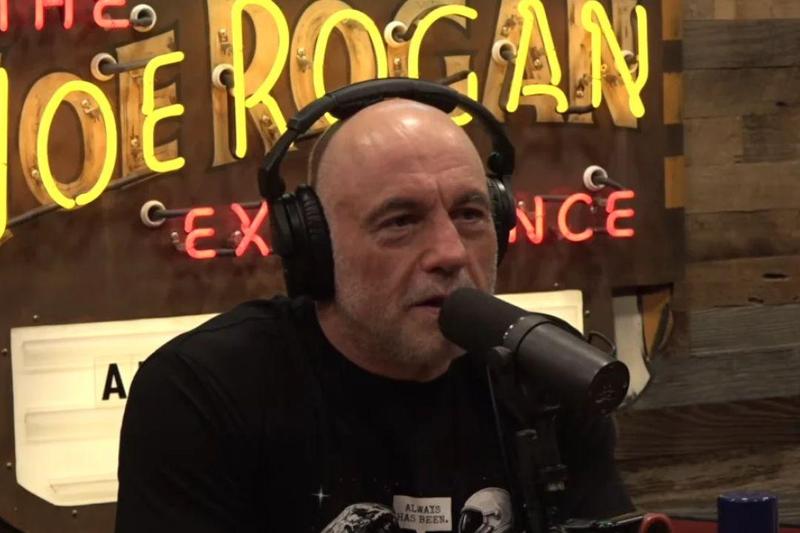
    Carson was the ultimate kingmaker. A successful appearance on his couch could launch a career overnight. Rogan holds that exact same power today. The Joe Rogan Experience commands an audience of tens of millions of listeners per episode. It is the most valuable property in the audio landscape, backed by a massive licensing deal with Spotify reportedly worth $250 million. When Rogan speaks, the culture listens. When a comedian, author, or politician sits across from Rogan, their trajectory changes.

    Leno points out that Rogan achieved this by doing exactly what Carson did: he remains curious, he listens, and he refuses to talk down to his audience. Rogan does not deliver a monologue. He engages in a dialogue. In an era of tightly scripted, heavily edited media, Rogan’s unpolished, long-form format feels authentic. The audience trusts him. They do not view him as an elite broadcaster lecturing from a coastal studio. They view him as a proxy for their own curiosity. Carson possessed that same everyman quality. He was the Nebraska boy who made it to Hollywood but never lost his midwestern sensibilities. Rogan is the modern manifestation of that archetype.

    The Critique of John Oliver and Modern Political Comedy

    Leno reserved his sharpest criticism for John Oliver. The host of HBO’s Last Week Tonight has won numerous Emmy Awards for his deep-dive, investigative comedy. Oliver’s format involves a 30-minute, highly researched monologue focusing on a specific political or social issue. It is dense, fact-heavy, and unapologetically partisan. Leno views this approach as the antithesis of comedy.

    According to Leno, Oliver does not know what he is talking about when it comes to the daily realities of middle America. Leno argues that Oliver’s show is an exercise in validation rather than entertainment. The audience tunes in not to laugh, but to have their existing worldview confirmed. This phenomenon, often referred to in comedy circles as clapter, prioritizes applause over genuine laughter. The comedian makes a political statement, and the audience claps in agreement.

    Leno sees this as a fundamental betrayal of the comedian’s job. The comedian is supposed to observe the absurdity of life and present it in a way that unites the room. When a host turns the desk into a pulpit, the magic is lost. Oliver’s success on HBO, a premium cable network that relies on subscriptions rather than broad advertising, allows him to cater to a niche, highly educated, politically active demographic. But Leno argues that this niche approach has poisoned the broader comedy landscape. It has created an environment where comedians are expected to be political pundits first and entertainers second.

    The Economics of the Shift

    The death of late night is not just a cultural phenomenon. It is an economic reality. The broadcast networks, NBC, CBS, and ABC, built massive financial empires on the back of the 11:30 PM time slot. Madison Avenue paid premium rates to reach the millions of viewers winding down their day. That financial model is currently collapsing.

    The audience has migrated to digital platforms. YouTube, TikTok, and Spotify command the attention that once belonged to the networks. The economics of these digital platforms heavily favor long-form, on-demand content. A three-hour episode of The Joe Rogan Experience generates significantly more engagement, and therefore more ad revenue, than a six-minute late-night monologue chopped up for YouTube. The networks are trapped in a legacy cost structure. They maintain massive studios, large writing staffs, and union crews to produce a daily show that fewer and fewer people are watching live.

    Leno understands this transition intimately. He lived through the peak of the broadcast era. When he handed The Tonight Show over to Jimmy Fallon in 2014, the cracks in the foundation were already visible. The 2009 scheduling debacle, which saw Conan O’Brien briefly take over the 11:30 PM slot before Leno returned, was a desperate attempt by NBC to navigate a changing media landscape. By 2026, the transition is complete. The money has moved. The cultural relevance has moved. The center of gravity has shifted from the television set to the smartphone.

    The Legacy of The Tonight Show

    The Tonight Show will likely continue to exist. It is a legacy brand with over 70 years of history. But its role in American life has been permanently downgraded. It is no longer the national campfire. It is just another option in an infinite sea of content. Fallon, Colbert, and Kimmel are talented broadcasters, but they are playing a game that is mathematically impossible to win on the scale of their predecessors.

    Leno’s commentary is a stark reminder of how quickly cultural institutions can fade. The power of the 11:30 PM desk seemed absolute in 1992. It seemed unshakeable in 2002. Today, it is a relic. The audience demands authenticity over polish. They demand long-form conversation over scripted jokes. They demand to be spoken with, not spoken to.

    The architecture of comedy has fundamentally changed. The stand-up clubs like the Comedy Store in Los Angeles are thriving. Podcasting is booming. But the traditional late-night format is running on fumes. Leno’s willingness to state this plainly, without the usual industry diplomacy, underscores the finality of the shift. He is not predicting the death of late night. He is reporting it.

    The Terminal Drop

    The cameras still roll in New York. The cameras still roll in Los Angeles. The bands still play their opening numbers. The hosts still wear their tailored suits. The monologues are still written, rehearsed, and delivered into the lens. But the national audience is gone. The cultural conversation moved to Austin. The internet swallowed the broadcast. Silence.