Tag: Skydance Media

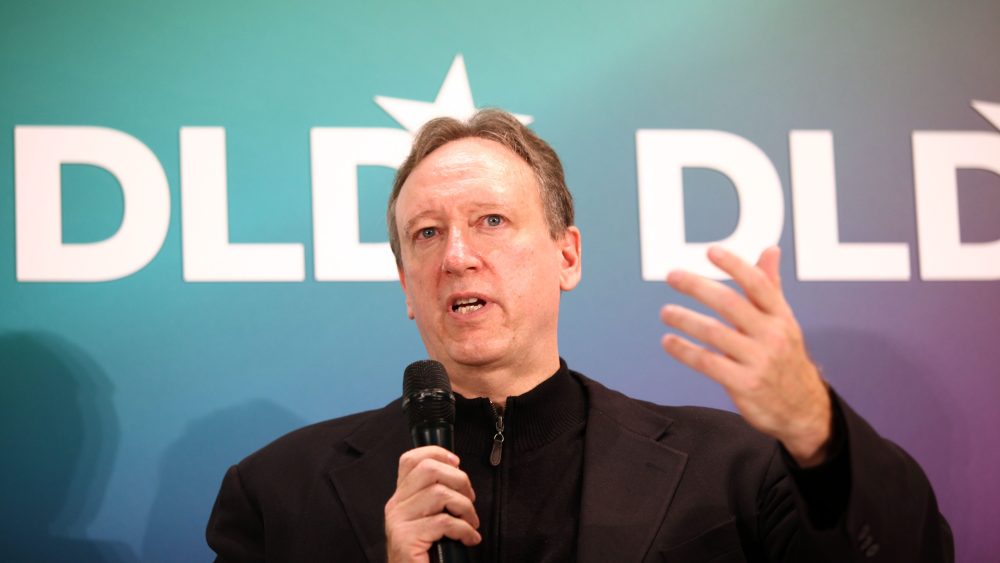
  • Jon Miller on Media Merger Mayhem: ‘Globalization Is Winning’

    Jon Miller on Media Merger Mayhem: ‘Globalization Is Winning’

    Industry executive Jon Miller has stated that globalization is a primary driver behind the current wave of media mergers and acquisitions. This observation underscores a fundamental shift in how global entertainment entities like Disney, Fox, Paramount, Skydance, and Warner Bros. operate and strategically align. The pursuit of larger scale and broader international reach often dictates these complex transactions.

    The media landscape is in constant flux. Companies are continually evaluating their positions within a globally interconnected market. This dynamic environment influences content creation, distribution strategies, and financial structures across the industry.

    The Global Imperative for Media Companies

    Globalization is not a new concept, but its impact on the media sector has intensified. Companies now strategize for audiences spanning continents, not just national borders. This necessitates a different approach to content production and market penetration.

    The drive to reach global audiences often means investing in content that transcends cultural specificities. It also involves acquiring companies with established international distribution networks or intellectual property that resonates worldwide. This push for global dominance influences every aspect of media operations.

    Jon Miller’s commentary highlights this overarching trend. He suggests that the competitive pressures of a globalized market compel media giants to seek consolidation. This is a survival mechanism as much as it is a growth strategy in the 2020s.

    Scale and Synergy in a Connected World

    Mergers are frequently justified by the promise of increased scale and operational synergies. For media companies, this can mean pooling resources for expensive productions, combining marketing efforts, or cross-promoting intellectual property across various platforms. A larger entity can theoretically negotiate better deals with advertisers, distributors, and talent.

    Consider the recent history of media mergers. Disney’s acquisition of 21st Century Fox assets in 2019 exemplified a move to consolidate intellectual property and expand streaming capabilities. This transaction brought iconic franchises like X-Men and The Simpsons under the Disney umbrella, significantly bolstering its content library for Disney+ and Hulu.

    Similarly, the Skydance Media’s acquisition of Paramount Global assets in 2025 reflects a desire to create a more robust and competitive media entity. Such moves are often framed as necessary to compete with tech giants and other large-scale content providers that have entered the entertainment space.

    Navigating a Complex Regulatory Environment

    Media mergers face intense scrutiny from regulatory bodies worldwide. Concerns often revolve around market concentration, potential monopolies, and the impact on consumer choice. Antitrust laws are designed to prevent single entities from dominating industries and stifling competition.

    In the United States, the Department of Justice and the Federal Trade Commission review major mergers. European Union regulators also play a significant role, especially when transactions involve companies with substantial European operations. These reviews can delay or even block proposed deals, adding another layer of complexity to the merger process.

    The regulatory landscape itself is globalized. A merger involving a U.S. company acquiring assets from a European firm, for example, would likely require approvals from both jurisdictions. This international coordination is a direct consequence of globalization’s influence on business.

    The Role of Technology in Globalization

    Technological advancements have accelerated globalization in media. The internet and digital distribution platforms have eliminated many geographical barriers to content consumption. Streaming services deliver films and television shows instantaneously to audiences across the globe.

    This technological shift has created new opportunities but also new challenges. Media companies must now compete not only with traditional rivals but also with a vast array of independent creators and international content producers. The demand for localized content that appeals to global tastes has also increased.

    Jon Miller’s perspective suggests that these technological forces are intertwined with the economic pressures driving mergers. Companies merge to gain the technological infrastructure, content libraries, and market access necessary to thrive in this digitally connected world.

    Cultural Defense and Media Consolidation

    The concept of ‘cultural defense’ emerges as a significant concern amid increasing media consolidation driven by globalization. As large, often Western-centric, media conglomerates expand their reach, there are fears of cultural homogenization. Local narratives, languages, and artistic expressions can be marginalized in favor of globally marketable content.

    This concern is particularly salient in countries with smaller media markets or distinct cultural identities. Governments and cultural institutions often implement policies to protect and promote local content. Quotas for local programming on television, subsidies for national film industries, and support for indigenous languages in media are common examples.

    The debate around cultural defense highlights a tension between economic efficiency and cultural preservation. While mergers may offer economic benefits, they can also raise questions about the diversity of voices and perspectives available to global audiences. Jon Miller’s comments indirectly touch upon these broader societal implications.

    The Future of Media Ownership

    The current trajectory suggests a continued trend towards consolidation in the media sector. The need for scale, technological adaptation, and global reach will likely remain paramount. This will lead to further strategic alliances and potential mergers among existing players.

    New entrants, particularly from the technology sector, may also continue to disrupt the traditional media landscape. Companies like Apple and Amazon have already made significant inroads into content production and distribution, adding another layer of competition and potential acquisition targets.

    The long-term impact on content diversity, employment within the industry, and the overall media ecosystem remains a subject of ongoing debate and analysis. The narrative of globalization ‘winning’ implies an unstoppable force reshaping fundamental industry structures.

    Impact on Content Creation and Distribution

    The consolidation of media entities fundamentally alters the landscape for content creators. Larger studios often have greater resources for big-budget productions, but they may also centralize decision-making, potentially leading to fewer diverse projects or a focus on proven, globally appealing formulas.

    Distribution models are also evolving rapidly. The shift from traditional broadcast and cable to direct-to-consumer streaming services has given media giants more direct control over how their content reaches audiences. This also allows for more personalized marketing and data collection, which can be leveraged for future content decisions.

    The competition for subscriber numbers in the streaming wars continues to drive investment in exclusive content. This environment further incentivizes mergers, as companies seek to acquire or produce the most compelling content to attract and retain subscribers globally.

    The Consumer Perspective on Mergers

    For consumers, media mergers present a mixed bag of outcomes. On one hand, consolidation can lead to greater access to a wider variety of content under a single subscription service or platform. Bundling services can also offer cost savings.

    On the other hand, increased market concentration could potentially lead to fewer choices in content, higher subscription prices if competition diminishes, or a homogenization of cultural narratives. The ability to access niche content or independent productions might also be affected.

    The ongoing dialogue around net neutrality and open internet access also plays a role. If a few large companies control most of the content and distribution channels, there are concerns about their ability to prioritize their own content or limit access to competitors’ offerings.

    The Inevitability of Global Integration

    Jon Miller’s assertion that ‘globalization is winning’ suggests an inevitable trajectory for the media industry. This perspective implies that resisting the forces of global integration is increasingly difficult for individual companies or even national markets.

    The interconnectedness of financial markets, technological infrastructure, and consumer preferences creates a powerful momentum. Companies that fail to adapt to this globalized reality risk being left behind or absorbed by larger, more internationally focused entities.

    This ‘winning’ narrative positions globalization not merely as an economic trend but as a transformative force. It reshapes not only business models but also cultural production and consumption patterns on a worldwide scale.

    Investors watch carefully. Executives strategize constantly. Audiences consume daily. Regulators review diligently. Globalization continues.

  • The Collision at CBS: Why FCC Chairman Brendan Carr Called Scott Pelley’s Firing Inevitable

    The Collision at CBS: Why FCC Chairman Brendan Carr Called Scott Pelley’s Firing Inevitable

    FCC Chairman Brendan Carr publicly rebuked former CBS News correspondent Scott Pelley, labeling the veteran broadcaster “completely out of touch” for claiming his termination from 60 Minutes was a sudden surprise. The exchange, which unfolded in early 2026, marks an unprecedented escalation between the head of the Federal Communications Commission and a prominent face of legacy broadcast journalism. When Pelley expressed shock at his dismissal from the network’s flagship newsmagazine, Carr did not mince words. He pointed to years of declining public trust, severe editorial controversies, and a shifting corporate landscape as clear warning signs that the era of untouchable broadcast anchors had ended.

    The Federal Communications Commission operates from 45 L Street NE in Washington. It regulates interstate communications by radio, television, wire, satellite, and cable. For decades, its chairmen avoided commenting on individual personnel decisions at major news networks. Brendan Carr shattered that precedent. His comments were not merely a critique of one journalist. They were a diagnostic assessment of an entire industry.

    To understand the friction, one must examine the timeline of CBS News over the preceding two years. The network had been operating under intense scrutiny, both from regulators and the public. Pelley’s departure was not an isolated corporate restructuring. It was the culmination of a long-brewing storm.

    The Anatomy of a Surprise

    Scott Pelley joined CBS News in 1989. He began contributing to 60 Minutes in 1999. By 2003, he was a full-time correspondent. For decades, he was a defining voice of the network. He anchored the CBS Evening News from 2011 to 2017. He interviewed presidents, dictators, and corporate titans. In the traditional architecture of broadcast journalism, figures with that level of tenure are rarely dismissed outright.

    When the news of his termination broke, Pelley released a statement indicating he was blindsided. He characterized the decision as sudden and unexpected. He suggested that the institutional memory of CBS News was being erased without warning.

    Brendan Carr viewed the situation differently. As the head of the FCC, Carr possessed a unique vantage point on the structural integrity of broadcast networks. He had spent years analyzing the relationship between public airwaves, network licenses, and audience trust.

    Carr’s response was swift and declarative. He stated that anyone claiming surprise at a major shakeup within CBS News was “completely out of touch” with the reality of the modern media landscape. He pointed to a profound disconnect between the journalists operating inside the CBS Broadcast Center in New York City and the audiences consuming their content across the American heartland.

    The Precedent of October 2024

    The animosity between Brendan Carr and CBS News did not begin with Scott Pelley. The foundation was laid in October 2024. The incident fundamentally altered how the FCC viewed the network’s editorial practices.

    During the 2024 presidential campaign, Vice President Kamala Harris sat for a high-profile interview on 60 Minutes. When the network aired a promotional clip on Face the Nation, it featured a specific, winding answer regarding the administration’s policy on Israel. When the full 60 Minutes broadcast aired the following night, that answer was gone. It had been replaced by a shorter, more direct statement from a different part of the interview.

    The editorial edit sparked an immediate backlash. Critics accused CBS News of deceptive editing. They argued the network was actively shielding a political candidate. CBS News cited standard time constraints and routine broadcast editing practices. They refused to release the full, unedited transcript of the interview.

    Brendan Carr intervened. He did not accept the network’s explanation. He formally accused CBS News of violating the FCC’s long-standing news distortion policy. The policy prohibits broadcast licensees from intentionally falsifying the news.

    Carr demanded the release of the full transcript. CBS News refused. The standoff escalated. Former President Donald Trump filed a $10 billion lawsuit against the network in federal court in Texas, citing the same editorial decisions. The incident left a permanent mark on the network’s reputation. It signaled to federal regulators that the internal mechanisms of 60 Minutes were broken.

    The Corporate Reality of CBS News

    Beyond editorial controversies, the financial and corporate structure of CBS was actively collapsing and reforming. The notion that any personnel decision could be a “surprise” ignored the massive tectonic shifts occurring at Paramount Global.

    In 2024, Paramount Global entered a grueling, months-long negotiation to sell itself. Shari Redstone, the controlling shareholder through National Amusements, eventually agreed to an $8 billion merger with Skydance Media, led by David Ellison. The deal was designed to salvage a legacy media conglomerate drowning in debt and declining linear television revenues.

    Skydance executives made their intentions clear early in the process. They planned to cut $2 billion in costs across the newly formed company. CBS News, with its high-priced anchor contracts and expensive production overhead, was an immediate target.

    Legacy anchors earning multi-million-dollar salaries suddenly found themselves justifying their value to a new regime of tech-focused, efficiency-minded executives. The old rules of broadcast tenure no longer applied. The Skydance leadership viewed news as a utility, not a sacred institution.

    When Scott Pelley expressed shock at his dismissal, he was speaking the language of the old CBS. Brendan Carr was speaking the language of the new reality. The business model that supported untouchable, legacy correspondents had evaporated. The balance sheets demanded cuts. The audience demanded accountability. The collision was inevitable.

    The Meaning of “Out of Touch”

    Brendan Carr’s use of the phrase “completely out of touch” struck a specific cultural nerve. It validated a long-standing grievance held by critics of legacy media. For years, audiences had complained that network news correspondents operated in an elite bubble.

    The traditional broadcast model relied on a one-way flow of information. Networks produced the news in New York and Washington. They beamed it into living rooms across the country. The audience had no mechanism for immediate feedback. The correspondents rarely interacted with the consequences of their editorial choices.

    The internet dismantled that model. Social media allowed audiences to fact-check broadcasts in real-time. Independent journalists on platforms like YouTube and Substack began outpacing legacy networks in trust metrics. When a network made an editorial error, the internet amplified it instantly.

    Carr’s critique suggested that figures like Pelley had failed to recognize this shift. They continued to operate as if the ticking stopwatch of 60 Minutes still commanded unquestioned authority. They believed their institutional prestige shielded them from the consequences of declining ratings and editorial scandals.

    The FCC Chairman’s comments were a stark reminder that prestige is not a substitute for trust. When trust erodes, the foundation of the broadcast license itself is threatened.

    The Regulatory Shadow

    The clash between Carr and Pelley also highlighted the unique regulatory pressure facing CBS. Broadcast networks do not own the airwaves. They lease them from the American public. The FCC manages those leases.

    Every broadcast station in the United States must periodically renew its license with the FCC. The renewal process requires stations to demonstrate that they are operating in the “public interest, convenience, and necessity.” Historically, this process was a rubber stamp. Networks submitted the paperwork. The FCC approved it.

    Under Carr’s leadership, the tone changed. The FCC began signaling a willingness to scrutinize the public interest requirement more closely. When a network faces allegations of news distortion, as CBS did in 2024, the license renewal process becomes a potential battleground.

    While the FCC cannot directly fire a news correspondent, the regulatory pressure it exerts forces corporate executives to make difficult decisions. A network facing intense federal scrutiny is less likely to tolerate internal liabilities. It is more likely to clean house, restructure its editorial boards, and dismiss figures associated with past controversies.

    Pelley’s departure was a symptom of this broader regulatory and corporate anxiety. The network needed to demonstrate a commitment to reform. Removing legacy figures is the fastest way a corporation can signal a change in direction to both regulators and shareholders.

    The Future of the Broadcast Newsroom

    The fallout from the Carr-Pelley exchange set a new baseline for the relationship between the government and the press in 2026. It proved that the era of polite distance was over. Regulators were now willing to publicly critique the internal mechanics of news organizations.

    For CBS News, the path forward required a complete reimagining of its flagship programs. 60 Minutes, created by Don Hewitt in 1968, had survived for over half a century by relying on the gravitas of its correspondents. Mike Wallace. Morley Safer. Ed Bradley. Scott Pelley was meant to be the continuation of that lineage.

    But the lineage broke. The audience fractured. The corporate parent was sold. The federal regulators demanded transparency.

    The new iteration of broadcast journalism will require a different kind of correspondent. It will require figures who understand that trust must be earned daily, not inherited from a corporate logo. It will require a willingness to release transcripts, explain editorial decisions, and operate with absolute transparency.

    The ticking clock of 60 Minutes continues to run. But the mechanism behind the dial has been permanently altered. The old guard is gone. The new rules are still being written.

    Network executives drafted statements. Regulators reviewed transcripts. Audiences changed the channel. Silence.