Tag: Sanctions

  • Trump’s Iran Deal Faces Fragile 60-Day Test – Geopolitical Tensions Mount

    Trump’s Iran Deal Faces Fragile 60-Day Test – Geopolitical Tensions Mount

    Donald Trump’s original Iran nuclear deal, formally known as the Joint Comprehensive Plan of Action (JCPOA), is confronting a fragile 60-day test in 2026. This period is defined by intense geopolitical pressures and a delicate balance of diplomatic efforts, aiming to either salvage or redefine the parameters of Iran’s nuclear program and its relationship with global powers.

    The JCPOA, initially signed in Vienna on July 14, 2015, involved Iran and the P5+1 group, China, France, Germany, Russia, the United Kingdom, and the United States, plus the European Union. It aimed to ensure the peaceful nature of Iran’s nuclear activities in exchange for sanctions relief.

    However, the United States withdrew from the agreement on May 8, 2018, under the Trump administration. This decision led to the re-imposition of stringent U.S. sanctions against Tehran.

    This withdrawal significantly complicated international efforts to contain Iran’s nuclear ambitions and created the current volatile environment.

    The Genesis of the JCPOA and U.S. Withdrawal

    The Joint Comprehensive Plan of Action represented a landmark diplomatic achievement. It sought to prevent Iran from developing nuclear weapons by imposing strict limits on its enrichment capabilities and opening its facilities to extensive international inspections.

    In return, Iran received relief from international sanctions that had crippled its economy.

    The agreement mandated a significant reduction in Iran’s centrifuges, a cap on uranium enrichment levels, and the modification of its heavy water reactor at Arak.

    The International Atomic Energy Agency (IAEA) was tasked with verifying Iran’s compliance through continuous monitoring and on-site inspections.

    On May 8, 2018, President Donald Trump announced the U.S. withdrawal from the JCPOA. He cited concerns that the deal did not adequately address Iran’s ballistic missile program or its destabilizing activities in the Middle East.

    The Trump administration then initiated a ‘maximum pressure’ campaign, imposing new and expanded sanctions targeting Iran’s oil exports, financial institutions, and key sectors of its economy.

    This unilateral action was met with strong disapproval from the European signatories (France, Germany, UK), China, and Russia, who maintained their commitment to the deal.

    They argued that the JCPOA, despite its imperfections, remained the best mechanism for preventing Iran from acquiring nuclear weapons.

    Iran’s Escalating Nuclear Activities Post-2018

    Following the U.S. withdrawal and the re-imposition of sanctions, Iran began to incrementally scale back its commitments under the JCPOA. Tehran argued that it was no longer bound by the agreement’s terms if the other signatories failed to uphold their end, particularly regarding sanctions relief.

    Starting in May 2019, Iran announced a series of steps to reduce its compliance. These actions included exceeding the 3.67% enrichment limit, increasing its stockpile of enriched uranium beyond the 300-kilogram threshold, and restarting enrichment at the Fordow Fuel Enrichment Plant.

    By 2021, Iran had also begun enriching uranium to 20% purity at Fordow and later to 60% purity at Natanz, significantly shortening its ‘breakout time’, the theoretical time needed to produce enough weapons-grade uranium for a single nuclear device.

    The IAEA consistently reported on these escalating activities, expressing growing concern over the lack of full transparency and access to certain sites and surveillance data.

    These developments have heightened international anxieties, as 60% enrichment is a short technical step away from weapons-grade 90% purity.

    The Geopolitical Chessboard of 2026

    The current 60-day test period in 2026 unfolds against a backdrop of complex and interconnected regional conflicts. The Middle East remains a hotbed of proxy wars and geopolitical rivalries, with Iran often at the center.

    Tensions between Iran and Saudi Arabia, Israel, and other Gulf states continue to simmer, occasionally flaring into direct confrontations or cyberattacks.

    The conflict in Yemen, the political instability in Iraq, and the ongoing civil war in Syria all feature Iranian influence and support for various non-state actors.

    These regional dynamics complicate any diplomatic efforts to revive or renegotiate the JCPOA. Any concession made to Iran by Western powers is often viewed with suspicion by its regional adversaries.

    The United States, under its current administration, faces the challenge of balancing its strategic interests in the region with its commitment to non-proliferation. European powers, particularly France, Germany, and the UK (E3), have consistently advocated for a return to the JCPOA or a modified agreement.

    China and Russia, also signatories to the original deal, have maintained their support for the JCPOA, often criticizing U.S. sanctions and advocating for their removal.

    Diplomatic Maneuvers and Potential Pathways

    As the 60-day test progresses, diplomatic channels are working overtime. Multiple proposals are likely on the table, ranging from a full return to the original JCPOA to a ‘JCPOA-plus’ agreement that addresses ballistic missiles and regional activities, or even a ‘less-for-less’ interim deal.

    A full return to the JCPOA would require the United States to lift its sanctions and Iran to roll back its nuclear advancements. This path faces significant domestic political opposition in both the U.S. and Iran.

    A ‘JCPOA-plus’ agreement, often favored by European nations and Israel, would seek to expand the scope of the deal. It would include provisions on ballistic missiles, Iran’s regional proxy networks, and a longer duration for nuclear restrictions.

    Iran has consistently rejected negotiations on its missile program and regional policies, viewing them as matters of national sovereignty and defense.

    An interim ‘less-for-less’ deal could involve a temporary freeze on some of Iran’s nuclear activities in exchange for limited sanctions relief. This could buy time for more comprehensive negotiations but risks being perceived as weak by various stakeholders.

    The role of international mediators, such as the European Union’s foreign policy chief, remains crucial in facilitating communication between Washington and Tehran, given the lack of direct diplomatic ties.

    The Economic Impact and Domestic Pressures

    The economic impact of U.S. sanctions on Iran has been severe. The sanctions have stifled Iran’s oil exports, restricted its access to international financial markets, and contributed to high inflation and unemployment within the country.

    This economic pressure has generated significant domestic discontent and protests within Iran. The Iranian government faces a balancing act: maintaining its nuclear program and regional influence while trying to alleviate economic hardship for its citizens.

    The upcoming 60-day period will also be influenced by domestic political considerations in both the U.S. and Iran. In the United States, any deal with Iran is a highly politicized issue, with strong opinions on both sides of the political spectrum.

    In Iran, hardliners often advocate for a confrontational stance against Western pressure, while pragmatists may seek a path toward sanctions relief.

    The outcome of this test will significantly shape Iran’s economic trajectory and its domestic political landscape for the foreseeable future.

    International Oversight and Verification

    The International Atomic Energy Agency (IAEA) plays a pivotal role in monitoring Iran’s nuclear program. Its reports provide critical, independent assessments of Iran’s compliance with international safeguards and its commitments under the JCPOA.

    During this 60-day period, IAEA Director General Rafael Grossi and his team will continue their inspections and technical analyses. Their findings will be crucial for informing policy decisions by the P5+1 nations and the broader international community.

    The IAEA’s ability to conduct robust verification, including access to all declared and undeclared sites, remains a key concern. Iran has, at times, restricted access or removed surveillance equipment, raising alarms among Western powers.

    Any new or modified agreement would need to ensure the IAEA has the necessary authority and resources to provide credible assurances that Iran’s nuclear program remains exclusively peaceful.

    The integrity of the international verification regime is paramount for building trust and ensuring the long-term stability of any diplomatic solution.

    The Stakes for Global Non-Proliferation

    The outcome of the 60-day test period for the Trump Iran Deal carries significant implications for global nuclear non-proliferation efforts. A failure to manage Iran’s nuclear program effectively could set a dangerous precedent for other nations contemplating nuclear weapons development.

    Should diplomatic efforts collapse, and Iran further advance its enrichment capabilities, it could trigger a regional arms race in the Middle East, with other states potentially seeking their own nuclear deterrents.

    This would destabilize an already volatile region and increase the risk of military confrontation.

    Conversely, a successful diplomatic resolution, even if imperfect, could reinforce the principle of non-proliferation and demonstrate the effectiveness of international cooperation in managing complex security challenges.

    The international community, including the United Nations Security Council, closely watches these developments. The decisions made during this critical period will resonate far beyond the immediate region.

    Looking Ahead: Pathways and Pitfalls

    The next 60 days will be a period of intense negotiation, strategic posturing, and careful observation. The path forward is fraught with both opportunities for diplomatic breakthroughs and risks of further escalation.

    The choices made by the United States, Iran, and the European signatories will determine the fate of the JCPOA and the broader regional security architecture.

    The world watches. Diplomats gather. Leaders consult. The fate of the deal hangs in the balance.

    Tehran.

  • Donald Trump’s Warning to Iran – A History of Escalation and Diplomacy

    Donald Trump’s Warning to Iran – A History of Escalation and Diplomacy

    Former President Donald Trump publicly issued a warning to Iran, stating that the nation could face ‘fresh strikes’ if its behavior does not align with U.S. expectations. This declaration signals a continued hawkish stance towards the Islamic Republic, echoing the policies and rhetoric employed during his term in office from 2017 to 2021. The statement reignites discussions about the volatile nature of U.S.-Iran relations and the potential for military escalation in the Middle East.

    Trump’s comments arrived amidst ongoing global scrutiny of Iran’s nuclear program and its regional activities. International observers and various governments continue to monitor Tehran’s compliance with non-proliferation agreements. Concerns persist regarding Iran’s support for proxy groups across the Middle East, including in Lebanon, Yemen, and Iraq.

    The Historical Context of U.S.-Iran Tensions

    The relationship between the United States and Iran has been fraught with tension for over four decades. The 1979 Iranian Revolution marked a pivotal shift, transforming a U.S.-allied monarchy into an anti-Western Islamic republic. This event led to the Iran hostage crisis, where 52 American diplomats and citizens were held captive for 444 days, fundamentally altering bilateral relations.

    Subsequent decades saw periods of indirect conflict and mutual distrust. The Iran-Iraq War from 1980 to 1988, in which the U.S. provided some support to Iraq, further deepened animosity. Sanctions became a primary tool of U.S. foreign policy aimed at curbing Iran’s nuclear ambitions and its sponsorship of terrorism.

    The Nuclear Program and International Agreements

    Iran’s nuclear program has been a central point of contention. The international community, led by the United States, has long expressed concerns that Iran’s enrichment activities could lead to the development of nuclear weapons. Iran consistently maintains its program is for peaceful energy and medical purposes.

    In 2015, the Joint Comprehensive Plan of Action (JCPOA), commonly known as the Iran nuclear deal, was signed between Iran and the P5+1 group (China, France, Germany, Russia, the United Kingdom, and the United States), plus the European Union. This agreement aimed to limit Iran’s nuclear activities in exchange for sanctions relief.

    President Donald Trump withdrew the United States from the JCPOA in May 2018. He criticized the deal as flawed and insufficient, arguing it did not adequately address Iran’s ballistic missile program or its regional influence. Following the withdrawal, the U.S. reimposed and expanded sanctions, initiating a policy of ‘maximum pressure’ on the Iranian economy.

    ‘Maximum Pressure’ and Military Confrontations

    The ‘maximum pressure’ campaign under the Trump administration involved stringent economic sanctions targeting Iran’s oil exports, financial sector, and key industries. The aim was to force Iran to negotiate a new, more comprehensive agreement.

    This period also saw several military confrontations and heightened tensions. In June 2019, Iran shot down a U.S. RQ-4 Global Hawk surveillance drone over the Strait of Hormuz. Trump initially approved retaliatory strikes but called them off at the last minute, citing potential casualties.

    A significant escalation occurred in January 2020. A U.S. drone strike in Baghdad, Iraq, killed Qasem Soleimani, the commander of the Islamic Revolutionary Guard Corps’ Quds Force. Soleimani was a key figure in Iran’s regional military operations. Iran retaliated days later by launching ballistic missiles at Iraqi bases housing U.S. troops, causing traumatic brain injuries to over 100 American service members.

    Defining ‘Behave’: U.S. Expectations for Iran

    When Donald Trump and other U.S. officials refer to Iran needing to ‘behave,’ they typically allude to several key areas of concern. These areas constitute the core of U.S. demands for changes in Iranian policy and action.

    • Nuclear Program: The U.S. seeks verifiable assurances that Iran will not develop nuclear weapons. This includes stricter limits on uranium enrichment, inspections, and potentially a longer sunset clause than the original JCPOA.
    • Ballistic Missile Program: Washington views Iran’s development and proliferation of ballistic missiles as a threat to regional stability and U.S. allies. The U.S. calls for limitations on the range and payload of these missiles.
    • Support for Proxy Groups: Iran’s backing of groups like Hezbollah in Lebanon, Houthi rebels in Yemen, and various militias in Iraq and Syria is a major point of contention. The U.S. considers these actions destabilizing and a threat to its interests and allies, including Israel and Saudi Arabia.
    • Human Rights: While often secondary to security concerns in public discourse, the U.S. also frequently criticizes Iran’s human rights record, including suppression of dissent and treatment of minorities.
    • Maritime Security: Incidents involving Iranian forces harassing commercial shipping in the Persian Gulf and the Strait of Hormuz are also considered acts of misbehavior by the U.S.

    These expectations reflect a broader U.S. strategy to contain Iranian influence and prevent it from becoming a dominant regional power capable of challenging U.S. and allied interests.

    International Reactions and Diplomatic Pathways

    Trump’s repeated threats toward Iran have elicited varied responses globally. Allies in Europe, who largely supported the JCPOA, have often advocated for diplomatic solutions and de-escalation. They have expressed concern that aggressive rhetoric could inadvertently lead to miscalculation and conflict.

    Other regional actors, particularly Gulf Arab states like Saudi Arabia and the United Arab Emirates, often share U.S. concerns about Iran’s activities. They have, at times, supported a firm stance against Tehran, while also engaging in their own, sometimes quiet, diplomatic efforts with Iran.

    Diplomatic pathways have remained open, even during periods of high tension. The Biden administration, which took office in January 2021, initially sought to revive the JCPOA. Negotiations in Vienna aimed at restoring the deal have faced significant challenges, including disagreements over sanctions relief and Iranian nuclear advancements since the U.S. withdrawal.

    The Economic Impact of Sanctions

    U.S. sanctions have had a significant impact on the Iranian economy. Iran’s oil exports, a primary source of revenue, plummeted under the ‘maximum pressure’ campaign. This led to currency depreciation, high inflation, and economic hardship for many Iranian citizens.

    The sanctions also complicated Iran’s ability to access international financial markets and acquire essential goods, including medicines. Despite the economic pressure, the Iranian government has largely resisted acceding to all U.S. demands, demonstrating resilience and a commitment to its perceived national interests.

    The debate continues regarding the effectiveness of sanctions as a tool for behavioral change. Some argue they are essential for compelling concessions, while others contend they primarily harm the civilian population without achieving long-term policy shifts.

    Future Implications of U.S. Policy

    The prospect of ‘fresh strikes’ against Iran, as threatened by Donald Trump, carries significant implications. Any military action could trigger a broader regional conflict, drawing in other nations and potentially disrupting global oil supplies.

    The U.S. military maintains a significant presence in the Middle East, including naval forces in the Persian Gulf and troops in neighboring countries. Iran, in turn, possesses a substantial arsenal of ballistic missiles and a network of proxy forces capable of striking U.S. assets and allies.

    The ongoing discourse surrounding Iran’s actions and potential U.S. responses highlights the delicate balance of power in the Middle East. It underscores the need for careful diplomacy and strategic communication to prevent unintended escalation. The international community watches closely, seeking stability amidst persistent geopolitical friction.

    The Long Game

    Leaders spoke. Diplomats negotiated. Sanctions were imposed. Missiles were fired. Drones were downed. Oil tankers were seized. The world held its breath. The region remained volatile. The future of the nuclear program remained uncertain. The shadow of conflict lingered.

    Tehran.

    FAQ Section

  • Trump’s Iran Deal Stance – Threat of Military Action for Violations

    Trump’s Iran Deal Stance – Threat of Military Action for Violations

    Former President Donald Trump has publicly stated that if Iran violates a future nuclear deal, the United States would respond with military action, including bombing. This declaration outlines a potential foreign policy approach that emphasizes immediate and severe consequences for any breach of agreement by the Islamic Republic of Iran. The statement signals a continuation of the assertive posture adopted during his previous term regarding Iranian nuclear capabilities and regional activities.

    This position contrasts with more diplomatically focused strategies favored by other administrations. It suggests a readiness to employ kinetic force to enforce international agreements and safeguard U.S. security interests. The implications of such a policy extend to regional stability, international alliances, and the future of nuclear non-proliferation efforts.

    What looks like a simple declaration actually has roots in decades of complex geopolitical maneuvering.

    The Joint Comprehensive Plan of Action (JCPOA) Context

    The Joint Comprehensive Plan of Action (JCPOA), commonly known as the Iran nuclear deal, was signed in Vienna on July 14, 2015. It involved Iran and the P5+1 group of world powers: China, France, Germany, Russia, the United Kingdom, and the United States. The agreement aimed to prevent Iran from developing nuclear weapons in exchange for relief from international economic sanctions.

    Under the terms of the JCPOA, Iran agreed to significant restrictions on its nuclear program. This included reducing its centrifuges, limiting uranium enrichment levels, and allowing extensive international inspections by the International Atomic Energy Agency (IAEA). These measures were designed to extend Iran’s ‘breakout time’, the time it would take to produce enough fissile material for one nuclear weapon, to at least one year.

    The agreement was a landmark achievement in nuclear diplomacy. It represented years of negotiations and offered a potential pathway to de-escalate tensions in the Middle East. President Barack Obama’s administration championed the deal, viewing it as the most effective way to prevent Iran from obtaining nuclear weapons without resorting to military conflict.

    Trump’s Withdrawal and Maximum Pressure

    On May 8, 2018, President Donald Trump announced the United States’ withdrawal from the JCPOA. He characterized the deal as “defective at its core” and insufficient in addressing Iran’s ballistic missile program, its support for regional proxy groups, and the agreement’s sunset clauses. These clauses would gradually lift restrictions on Iran’s nuclear program over time.

    Following the withdrawal, the Trump administration reimposed and expanded sanctions on Iran. This policy, termed “maximum pressure,” aimed to cripple Iran’s economy and force it to negotiate a new, more comprehensive agreement. The sanctions targeted Iran’s oil exports, banking sector, and other key industries. The economic impact on Iran was severe, leading to significant currency depreciation and economic hardship for its citizens.

    The withdrawal from the JCPOA was met with criticism from the other signatories, France, Germany, the United Kingdom, Russia, and China, who remained committed to the agreement. They argued that the deal was working as intended, effectively constraining Iran’s nuclear program. The move also created a rift between the U.S. and its European allies, who sought to preserve the deal and maintain diplomatic channels with Tehran.

    Escalation and Regional Tensions

    The “maximum pressure” campaign led to a period of heightened tensions in the Persian Gulf. Iran responded to the sanctions by gradually reducing its compliance with the JCPOA. It increased uranium enrichment levels and installed advanced centrifuges, moves that shortened its nuclear breakout time. This created a cycle of escalation, with each side reacting to the other’s actions.

    Incidents such as attacks on oil tankers in the Strait of Hormuz, the downing of a U.S. drone, and a missile strike on Saudi Arabian oil facilities, attributed to Iran, further exacerbated the situation. These events brought the U.S. and Iran to the brink of military confrontation on several occasions. The killing of Iranian General Qasem Soleimani in January 2020 by a U.S. drone strike in Baghdad marked a significant escalation, leading to Iranian retaliatory missile strikes on U.S. bases in Iraq.

    Throughout this period, the Trump administration maintained a consistent message: any Iranian aggression or violation of international norms would be met with a decisive response. This included the implicit and explicit threat of military action. The current statements by Trump reiterate this policy, suggesting a continuity of this confrontational approach should he return to the presidency.

    Biden Administration’s Diplomatic Efforts

    Upon taking office in January 2021, President Joe Biden expressed a desire to return the U.S. to the JCPOA. His administration engaged in indirect talks with Iran in Vienna, with European intermediaries facilitating communication. The goal was to restore mutual compliance with the agreement, lifting sanctions in exchange for Iran rolling back its nuclear advancements.

    These diplomatic efforts faced significant challenges. Iran demanded guarantees that a future U.S. administration would not again withdraw from the deal. The ongoing regional tensions and Iran’s continued nuclear program advancements complicated negotiations. Despite multiple rounds of talks, a full restoration of the JCPOA has not been achieved. The Biden administration has continued to impose sanctions on Iran for its human rights abuses and support for terrorism, even while pursuing diplomatic avenues for the nuclear issue.

    The current state of U.S.-Iran relations remains complex and precarious. The possibility of renewed direct military confrontation is a persistent concern for international observers. Trump’s recent statements serve to underscore the differing philosophies within U.S. foreign policy regarding how to manage the Iranian challenge.

    Future Implications of a Hardline Stance

    A return to a policy that explicitly threatens military action, including bombing, for any Iranian violation of a nuclear deal carries significant implications. It could lead to a rapid escalation of conflict in an already volatile region. The Middle East is home to numerous proxy conflicts involving Iran, such as in Yemen, Syria, and Lebanon. Direct military engagement between the U.S. and Iran could draw in other regional and international actors.

    Such a policy would also impact international nuclear non-proliferation efforts. If the U.S. is perceived as unilaterally dictating terms and threatening force, it could undermine the framework of multilateral diplomacy. Other nations might question the reliability of international agreements and seek their own nuclear deterrents, potentially leading to a broader proliferation of nuclear weapons.

    Furthermore, a military conflict with Iran would have substantial economic consequences. Disruptions to oil supplies from the Persian Gulf, a critical shipping route for global energy, could trigger a sharp increase in oil prices. The financial costs of military operations would be immense, adding to national debts. The human cost, both for military personnel and civilians, would be immeasurable.

    Domestic and International Reactions

    Domestically, a hardline stance on Iran often resonates with a segment of the electorate that advocates for a strong national defense and decisive action against perceived adversaries. This cultural defense sentiment can activate a political base, leading to increased support and engagement. However, it also faces opposition from those who prioritize diplomacy, conflict avoidance, and the economic stability that peace can bring.

    Internationally, allies of the United States would likely react with a mix of apprehension and support. Some, particularly in the Gulf region, might welcome a more aggressive posture against Iran, viewing it as a necessary deterrent to Iranian expansionism. European allies, however, might express concern, favoring a diplomatic resolution and fearing the destabilizing effects of military conflict. Russia and China, both signatories to the original JCPOA, would almost certainly condemn any unilateral military action.

    The United Nations, through its Security Council, would likely be a forum for intense debate and potential diplomatic efforts to de-escalate any crisis. The International Atomic Energy Agency (IAEA) would continue its role in monitoring Iran’s nuclear activities, providing crucial intelligence on compliance or violations. The global community would watch closely, understanding that the consequences of U.S.-Iran relations extend far beyond the immediate region.

    The Path Ahead

    The statements made by Donald Trump reflect a consistent worldview regarding Iran. This perspective views Iran as a primary threat to regional stability and U.S. interests, requiring a robust, even confrontational, response. The emphasis on military action as a direct consequence for violations underscores a transactional approach to international agreements, where non-compliance is met with immediate, punitive measures.

    This approach stands in contrast to the more nuanced, multilateral strategies that have historically sought to resolve complex geopolitical issues through sustained diplomatic engagement and international cooperation. The choice between these two distinct paths will have profound implications for the future of U.S. foreign policy and the global security landscape.

    Diplomats observe. Strategists plan. Leaders decide. The world watches.

    Consequences unfold.

    FAQ Section

    • What did Donald Trump say about bombing Iran?
      Donald Trump stated that if Iran violates a future nuclear deal, the United States would respond with military action, including bombing. This indicates a hardline policy of immediate and severe consequences for any non-compliance.
    • What was the Joint Comprehensive Plan of Action (JCPOA)?
      The JCPOA, or Iran nuclear deal, was an agreement signed in 2015 between Iran and world powers to prevent Iran from developing nuclear weapons in exchange for sanctions relief. It imposed strict limits on Iran’s nuclear program and allowed international inspections.
    • Why did the U.S. withdraw from the JCPOA under Trump?
      The Trump administration withdrew from the JCPOA in May 2018, citing the deal’s perceived flaws, such as its temporary nature and failure to address Iran’s ballistic missile program and regional proxy activities. This led to the “maximum pressure” sanctions campaign.
    • What are the potential consequences of military action against Iran?
      Military action against Iran could lead to significant escalation in the Middle East, drawing in regional and international actors. It could disrupt global oil supplies, incur immense economic costs, and result in substantial loss of life.
    • How does Trump’s stance compare to the Biden administration’s approach to Iran?
      Trump’s stance emphasizes immediate military consequences for violations, reflecting a confrontational approach. The Biden administration has pursued diplomatic efforts to restore the JCPOA, although it has also maintained sanctions for other Iranian actions.

  • The Maximum Pressure Doctrine: Inside Donald Trump’s Blunt Warning to Iran Over Oil Revenues

    The Maximum Pressure Doctrine: Inside Donald Trump’s Blunt Warning to Iran Over Oil Revenues

    Donald Trump delivered a blunt, public warning to the Islamic Republic of Iran regarding its illicit oil revenues, signaling a promised return to the “maximum pressure” economic campaign if he reclaims the White House. Speaking to the mechanisms of global finance in a statement highlighted by Bloomberg Television, the former president outlined an aggressive strategy to choke off the billions of dollars flowing into Tehran through unsanctioned crude oil exports. The message was explicit. International buyers processing Iranian crude will face severe secondary sanctions. The United States Treasury will target the maritime networks transporting the cargo. The financial arteries sustaining the Iranian government will be severed.

    This is not a new diplomatic posture. It is a resurrection of a specific economic weapon. The warning underscores a fundamental belief that national security and economic leverage are inextricably linked. By targeting the point of sale, the strategy bypasses traditional diplomatic negotiations in favor of hard financial deterrence.

    The global energy market immediately registered the rhetoric. Traders understand the implications of a zero-tolerance policy on Iranian crude. Millions of barrels currently moving through shadow networks could be abruptly pulled from the global supply chain.

    The Mechanics of the Shadow Market

    Iran does not sell its oil on the open market. United States sanctions, enforced by the Office of Foreign Assets Control (OFAC), prohibit traditional financial institutions from facilitating Iranian energy transactions. To survive, Tehran built a parallel maritime economy.

    This system relies on a “ghost fleet” of aging oil tankers. These vessels operate outside standard maritime regulations. They routinely disable their Automatic Identification System (AIS) transponders to hide their locations. They engage in dangerous ship-to-ship transfers of crude oil in open waters, often off the coast of Malaysia or in the Persian Gulf.

    The logistics are complex and highly coordinated. A vessel loads crude from Iran’s Kharg Island terminal under the cover of darkness. It sails into international waters and transfers the cargo to another ship. The origin of the oil is then falsified on customs documents. It is rebranded as Omani or Malaysian crude. It is then sold at a steep discount to willing buyers.

    The Role of Beijing’s Teapot Refineries

    The primary destination for this rebranded crude is China. Specifically, it flows to independent refineries in Shandong province, colloquially known as “teapots.” Unlike massive state-owned energy conglomerates, these smaller refineries lack deep ties to the United States financial system. They are less vulnerable to OFAC sanctions.

    The economics are simple. Iranian crude is often priced $10 to $15 below the global Brent crude benchmark. For independent refineries operating on thin margins, the discount is irresistible. Iran receives a steady stream of revenue, often settled in Chinese yuan or through localized barter systems. The teapots receive cheap feedstock. The United States embargo is effectively bypassed.

    Trump’s warning directly targets this specific transaction loop. Enforcing sanctions on these teapots requires an aggressive expansion of secondary sanctions, penalizing any bank or logistics firm that facilitates the trade.

    Where the Capital Flows

    The revenue generated from these shadow sales does not primarily fund domestic infrastructure in Tehran. It funds regional power projection. The United States intelligence community has repeatedly documented the financial pipeline connecting Iranian oil sales to the Islamic Revolutionary Guard Corps (IRGC).

    The IRGC’s Quds Force manages Iran’s extraterritorial operations. They require hard currency to arm, train, and sustain a network of proxy militias across the Middle East. The equation is linear. More oil revenue equals more regional instability.

    • Hezbollah in Lebanon: Receives hundreds of millions of dollars annually for advanced munitions and operational logistics.
    • Hamas in Gaza: Relies on Iranian funding for tunnel infrastructure and rocket manufacturing.
    • The Houthis in Yemen: Utilize Iranian capital and technology to disrupt commercial shipping in the Red Sea and target international vessels.

    By choking off the oil revenue, the proposed policy aims to starve the proxy network. It is an economic strategy designed to achieve a kinetic outcome.

    The 2018 Precedent: Maximum Pressure

    To understand the weight of the recent warning, one must look back to May 2018. During his presidency, Donald Trump unilaterally withdrew the United States from the Joint Comprehensive Plan of Action (JCPOA), commonly known as the Iran nuclear deal. The withdrawal triggered the immediate reimposition of crushing economic sanctions.

    The stated goal was to drive Iranian oil exports to zero. The results were dramatic. Prior to the withdrawal, Iran was exporting roughly 2.5 million barrels of crude per day. Within a year of the “maximum pressure” campaign taking effect, that number plummeted to under 400,000 barrels per day. The Iranian rial collapsed. Inflation soared. The regime faced severe internal economic crises.

    However, the strategy also forced Iran to innovate. The ghost fleet was expanded. Evading sanctions became a matter of national survival. The current warning acknowledges that the landscape has shifted since 2018. Iran is more adept at hiding its shipments. Cracking down today requires more sophisticated maritime tracking and a willingness to confront the foreign financial institutions facilitating the trade.

    The Global Risk Matrix

    Aggressively targeting Iranian oil exports carries significant geopolitical risks. The global energy market is tightly balanced. Removing over a million barrels of daily supply could trigger a spike in global crude prices, impacting consumers worldwide.

    Furthermore, there is the threat of physical retaliation. The Strait of Hormuz is the world’s most critical energy chokepoint. Located between Oman and Iran, it connects the Persian Gulf to the Gulf of Oman and the Arabian Sea. Approximately 20 percent of the world’s daily oil consumption passes through this narrow waterway.

    Historically, when Tehran feels its economic survival is threatened, it lashes out in the Strait. The IRGC Navy routinely harasses commercial shipping. They seize foreign-flagged tankers. They deploy naval mines. A severe crackdown on Iranian oil fees increases the probability of a maritime confrontation in the Persian Gulf.

    The Enforcement Architecture

    Delivering a warning is a rhetorical exercise. Enforcing it requires a vast bureaucratic and intelligence apparatus. If enacted, the policy will rely heavily on the United States Treasury Department.

    OFAC will need to issue a barrage of new designations. This includes identifying specific vessels in the ghost fleet, sanctioning the shell companies that own them, and penalizing the maritime insurance firms that provide their liability coverage. The United States military and allied navies may be required to interdict vessels suspected of carrying illicit cargo.

    It is a game of financial whack-a-mole. As soon as one shell company is sanctioned, another is incorporated in a highly secretive jurisdiction. As soon as one vessel is grounded, another is purchased on the secondary market. The strategy requires relentless, sustained pressure.

    The Broader Geopolitical Context

    The warning over oil fees does not exist in a vacuum. It is part of a broader, combative approach to foreign policy. It signals to allies and adversaries alike that economic statecraft will be the primary weapon of choice.

    European allies, who largely opposed the 2018 withdrawal from the JCPOA, will likely view the renewed threats with apprehension. They fear a regional escalation. Conversely, regional partners like Israel and Saudi Arabia, who view an enriched Iran as an existential threat, will likely welcome a return to the maximum pressure doctrine.

    The rhetoric sets the stage for a high-stakes standoff. The United States possesses the financial leverage to cripple the Iranian economy. Iran possesses the asymmetric capability to disrupt global shipping and destabilize the Middle East. The oil market sits caught in the middle.

    The battle lines are drawn not on battlefields, but on maritime shipping lanes and international banking ledgers. The currency is crude. The weapon is the sanction. The stakes are regional hegemony.

    Warnings are issued. Fleets are tracked. Markets brace. The pressure returns.

  • The Price of Pause: Unpacking the US-Iran Draft Deal and Its Financial Incentives

    The Price of Pause: Unpacking the US-Iran Draft Deal and Its Financial Incentives

    A draft agreement between the United States and Iran has surfaced, proposing a controversial exchange: financial incentives for Tehran in return for verifiable pauses in its nuclear program. The proposal, detailed in a mid-2026 leak, outlines a framework where Iranian assets frozen in foreign banks would be released in tranches, contingent on strict adherence to International Atomic Energy Agency (IAEA) monitoring. This approach attempts to bypass direct US taxpayer funding while offering Tehran a tangible economic lifeline.

    The core of the strategy is containment through capital. It is a calculated gamble. The Biden administration, facing a complex geopolitical landscape, appears willing to leverage frozen funds to secure a temporary halt to uranium enrichment. The alternative, officials suggest, is a rapid escalation toward a nuclear-armed Iran.

    But the mechanics of the deal are drawing intense scrutiny. The financial incentives are not merely theoretical; they represent billions of dollars currently locked in international financial institutions. The debate now centers on whether this money buys security or merely funds future instability.

    The Mechanics of the Financial Transfer

    The proposed deal does not involve pallets of cash flown into Tehran. It relies on a complex system of international banking waivers. According to sources familiar with the draft, the United States would issue waivers allowing countries holding Iranian funds, such as South Korea or Iraq, to transfer those assets to restricted accounts in third-party nations, potentially Qatar or Oman.

    These restricted accounts are the linchpin of the agreement. The funds would be earmarked exclusively for humanitarian purchases: food, medicine, and agricultural products. The US Treasury Department would maintain oversight, requiring detailed documentation for every transaction to ensure the money does not flow into the coffers of the Islamic Revolutionary Guard Corps (IRGC).

    This structure is designed to provide economic relief to the Iranian populace while denying the regime discretionary capital. However, the fungibility of money remains a central point of contention. Critics argue that by covering humanitarian costs with unfrozen assets, Tehran can redirect its domestic revenue toward military expansion and proxy support.

    The Nuclear Concessions Required

    In exchange for access to these restricted funds, Iran must agree to a series of verifiable nuclear rollbacks. The draft outlines specific thresholds. Tehran must halt the enrichment of uranium to 60 percent purity, a level dangerously close to weapons-grade. Furthermore, it must dilute its existing stockpile of highly enriched uranium.

    The agreement also mandates enhanced access for IAEA inspectors. This includes the reinstallation of surveillance cameras at key nuclear facilities, such as Natanz and Fordow, which were previously removed by Iranian authorities. The goal is to restore the monitoring baseline lost after the collapse of the Joint Comprehensive Plan of Action (JCPOA).

    These concessions are described as an “unwritten understanding” rather than a formal treaty. This distinction is crucial. A formal treaty would require ratification by the US Senate, a nearly impossible hurdle given the current political climate. An informal understanding allows the administration to implement the terms through executive action, though it remains vulnerable to congressional oversight and future policy shifts.

    The Geopolitical Context: Why Now?

    The timing of this draft deal is not accidental. It emerges against a backdrop of heightened regional tensions and shifting global alliances. The war in Ukraine has reshaped energy markets and forged a closer military partnership between Russia and Iran. Tehran has supplied Moscow with Shahed drones, further complicating its relationship with the West.

    For Washington, the primary objective is de-escalation. A nuclear crisis in the Middle East would strain US resources already committed to Europe and the Indo-Pacific. The draft deal is viewed as a holding pattern, a way to freeze the nuclear threat while addressing other strategic priorities.

    For Tehran, the motivation is primarily economic. Years of crippling sanctions have battered the Iranian economy, leading to inflation, currency devaluation, and widespread domestic unrest. Access to frozen assets, even under strict humanitarian conditions, provides a necessary pressure valve for the regime.

    Domestic Fallout in Washington

    The leak of the draft deal has ignited a firestorm in Washington. Lawmakers on both sides of the aisle have expressed deep reservations. The primary concern is the potential for the released funds to indirectly support Iran’s network of proxy militias, including Hezbollah in Lebanon, Hamas in Gaza, and the Houthis in Yemen.

    Critics point to the historical precedent of the 2015 JCPOA, arguing that financial relief did not moderate Iran’s regional behavior. They demand a more comprehensive agreement that addresses not only the nuclear program but also ballistic missile development and support for terrorism.

    The administration faces an uphill battle in selling the deal to a skeptical Congress. The Iran Nuclear Agreement Review Act (INARA) of 2015 requires the president to submit any agreement related to Iran’s nuclear program to Congress for review. While an “unwritten understanding” might attempt to bypass INARA, lawmakers are likely to challenge this interpretation, setting the stage for a significant legal and political clash.

    The View from Tehran

    In Tehran, the reception of the draft deal is equally complex. Hardliners within the regime view any concession to the United States as a capitulation. They argue that Iran has weathered the worst of the sanctions and should continue to leverage its nuclear advancements to extract more significant economic relief without compromising its strategic posture.

    However, the pragmatic faction, led by figures within the Foreign Ministry, recognizes the urgent need for economic stabilization. They view the release of frozen assets as a necessary step to address domestic grievances and prevent further instability. The internal debate in Iran will ultimately determine whether the regime is willing to accept the strict oversight mechanisms required by the US Treasury.

    The Role of Regional Allies

    The draft deal has profound implications for US allies in the Middle East, particularly Israel and the Gulf states. Israel has consistently opposed any agreement that leaves Iran with a latent nuclear weapons capability. Israeli officials have publicly stated that they are not bound by any US-Iran understanding and reserve the right to take unilateral military action to prevent Tehran from acquiring a nuclear bomb.

    The Gulf states, notably Saudi Arabia and the United Arab Emirates, have adopted a more nuanced approach. While sharing concerns about Iran’s regional ambitions, they have also engaged in diplomatic outreach to Tehran to reduce tensions. They view a limited US-Iran deal as a potential stabilizing factor, provided it does not embolden Iranian aggression in their immediate neighborhood.

    The Path Forward: A Fragile Understanding

    The draft deal represents a fragile attempt to manage a volatile crisis. It is not a comprehensive solution but a tactical maneuver designed to buy time. The success of the agreement depends on the meticulous implementation of the financial oversight mechanisms and Iran’s strict adherence to the nuclear concessions.

    If the deal collapses, the consequences could be severe. Iran could rapidly accelerate its enrichment program, prompting a strong military response from Israel or the United States. Conversely, if the deal holds, it could create a diplomatic opening for broader negotiations, though the prospects for a grand bargain remain remote.

    The debate over the financial incentives will continue to dominate the discourse. It is a fundamental question of risk assessment: does the release of frozen assets mitigate the immediate nuclear threat, or does it inadvertently fund future conflicts? The answer will shape the trajectory of the Middle East for years to come.

    The negotiations continue. The assets remain frozen. The centrifuges spin.

    Washington waits.

    Tehran waits.

    The world watches.

  • Keeping Iran in a Box: Senator Ron Johnson’s Blueprint for Middle East Containment

    Keeping Iran in a Box: Senator Ron Johnson’s Blueprint for Middle East Containment

    Senator Ron Johnson (R-WI) stated on Bloomberg Television that the United States must return to a strict containment strategy regarding the Islamic Republic of Iran, defining this approach as keeping Tehran in a box through aggressive economic sanctions, military deterrence, and the isolation of its proxy networks. The strategy represents a direct rejection of diplomatic accommodations. It demands a return to maximum pressure. The goal is to starve the Iranian regime of the capital required to fund terrorism across the Middle East. What looks like a modern political talking point is actually the revival of a decades-old geopolitical doctrine.

    The concept of containment is not new to Washington. It dominated the Cold War. It shaped American policy toward the Soviet Union. Today, lawmakers like Johnson apply the same architectural framework to Tehran. The box is not a physical border. It is an economic and military perimeter designed to restrict movement, limit revenue, and neutralize threats before they reach allied borders. This perimeter requires constant maintenance. It requires enforcement. When the enforcement slips, the box breaks.

    The Architecture of Containment

    Keeping Iran in a box requires three distinct walls. The first wall is economic. The second wall is military. The third wall is diplomatic isolation. Senator Johnson argues that the United States has allowed all three walls to crumble in recent years. The economic wall relies heavily on secondary sanctions. These are penalties applied to foreign entities that do business with Iran. When enforced, secondary sanctions force global banks and shipping companies to choose between the American market and the Iranian market. The choice is rarely difficult.

    During the Trump administration, the withdrawal from the Joint Comprehensive Plan of Action (JCPOA) in May 2018 triggered a return to these severe sanctions. Oil exports plummeted. The Iranian rial lost massive value against the dollar. The regime faced severe domestic unrest. Johnson views this period as the successful application of the box. The military wall involves deterrence. This means maintaining a credible threat of force in the Persian Gulf and the Mediterranean Sea. It requires strike groups. It requires clear red lines. When Qasem Soleimani, the commander of the Quds Force, was eliminated in January 2020, proponents of containment viewed it as a necessary reinforcement of that military wall.

    The Financial Pipeline and Economic Sanctions

    Money drives the Islamic Revolutionary Guard Corps (IRGC). The IRGC controls vast sectors of the Iranian economy. It funds domestic suppression. It funds foreign proxy wars. Without capital, the IRGC cannot operate at scale. Johnson and allied lawmakers point to the enforcement of oil sanctions as the primary mechanism for cutting off this capital. In 2019, Iranian oil exports dropped below 500,000 barrels per day. By late 2023, those exports had climbed back to over 1.5 million barrels per day. Much of this oil flows to independent refineries in China. A fleet of dark vessels moves the crude oil. They turn off their transponders. They transfer oil at sea. The revenue flows back to Tehran.

    The Unfrozen Asset Controversy

    The debate over containment often centers on the release of frozen funds. In September 2023, the Biden administration reached an agreement to unfreeze $6 billion in Iranian oil revenue held in South Korea. The funds were transferred to banks in Qatar as part of a prisoner exchange. The administration stated the money could only be used for humanitarian purposes. Critics like Johnson reject this premise. They argue that money is fungible. A dollar spent on humanitarian aid frees up a dollar for the IRGC. The October 7 attacks by Hamas on Israel occurred just weeks after this transfer was finalized. For advocates of strict containment, the timing validated their core argument. Unfreezing assets breaks the box. It signals weakness. It provides the regime with the exact resources it needs to destabilize the region.

    The Proxy Network: Expanding Beyond Borders

    Iran rarely fights conventional wars. It fights through proxies. The Axis of Resistance is a network of militias funded, trained, and equipped by the Quds Force. This network allows Tehran to project power while maintaining plausible deniability. Hezbollah operates in Lebanon. Hamas and Palestinian Islamic Jihad operate in Gaza and the West Bank. The Houthis operate in Yemen. Various Shia militias operate in Iraq and Syria. Keeping Iran in a box means neutralizing this network. You cannot contain the core without dismantling the spokes.

    The Red Sea Blockade

    The Houthis demonstrate the danger of an uncontained proxy. In late 2023 and early 2024, Houthi militants began launching anti-ship ballistic missiles and drones at commercial vessels in the Red Sea and the Gulf of Aden. They targeted ships passing through the Bab el-Mandeb Strait. Global shipping companies diverted their fleets around the Cape of Good Hope. Freight costs skyrocketed. Supply chains fractured. The weapons used by the Houthis are Iranian designs. The targeting intelligence is often provided by Iranian spy ships. Johnson points to this disruption as proof that failing to contain Iran carries massive global economic consequences. The box must extend to the proxies. If the Houthis can close a global maritime chokepoint, the containment strategy has failed.

    The Nuclear Threshold

    The ultimate fear driving the containment strategy is a nuclear-armed Iran. The 2015 JCPOA was designed to extend Iran’s nuclear breakout time to one year. Breakout time is the period required to produce enough weapons-grade uranium for a single nuclear device. Following the American withdrawal from the JCPOA, Iran systematically breached the limits of the agreement. The International Atomic Energy Agency (IAEA) reported that Iran has enriched uranium to 60 percent purity at facilities like Natanz and Fordow. Weapons-grade uranium requires 90 percent purity. The jump from 60 percent to 90 percent is a short technical step.

    For lawmakers advocating strict containment, diplomatic agreements merely delay the inevitable. They argue that the regime uses negotiations to buy time. The only way to prevent a nuclear breakout is through credible military threats and crippling economic pressure. The box must be tight enough to force a choice between regime survival and nuclear ambition. Sabotage, cyberattacks, and the assassination of nuclear scientists have all been utilized as covert methods of containment. But covert action is not a substitute for comprehensive policy. The policy must be stated. The policy must be enforced.

    The Domestic Political Divide

    The debate over how to handle Iran divides Washington deeply. One faction believes that isolation breeds radicalization. They argue that economic integration and diplomatic engagement empower moderate voices within Tehran. They point to the JCPOA as a flawed but necessary mechanism for preventing war. The other faction, which includes Senator Johnson, views the regime as fundamentally irredeemable. They argue that the Islamic Republic is an expansionist theocracy. You cannot negotiate with an entity that seeks your destruction. You can only contain it.

    This divide dictates American foreign policy. When administrations change, the policy swings wildly. Sanctions are lifted. Sanctions are reimposed. Assets are frozen. Assets are unfrozen. This inconsistency undermines American credibility. Allies in the Middle East, particularly Israel and the Gulf Arab states, watch these swings with growing anxiety. They live in the neighborhood. They face the immediate threat of Iranian ballistic missiles. For these regional partners, the box is not an abstract foreign policy concept. It is a matter of national survival. They require a reliable American partner willing to enforce the perimeter.

    The Future of the Box

    The geopolitical landscape is shifting. Iran is deepening its ties with Russia and China. Tehran supplies drones to Moscow for use in Ukraine. Beijing purchases millions of barrels of Iranian crude oil. This emerging axis complicates the containment strategy. The United States can no longer rely solely on Western financial systems to enforce the box. It must navigate a multipolar world where adversaries actively collaborate to bypass American sanctions.

    Senator Johnson’s remarks on Bloomberg Television highlight a critical juncture in American foreign policy. The tools of containment exist. The economic sanctions are written into law. The military assets are deployed in the region. The missing element, according to critics, is the political will to use them. Enforcing the box requires confronting adversaries. It requires friction. It requires accepting the risk of escalation to prevent a larger conflict down the road. The alternative is a region dominated by an unconstrained theocracy. The alternative is a nuclear arms race in the Middle East. The alternative is a fractured global economy held hostage by proxy militias.

    The debate continues in committee hearing rooms. The military planners draft contingencies in the Pentagon. The financial intelligence units track the ghost fleets across the oceans. The policy remains a pendulum. Administrations pivot. Diplomats negotiate. Proxies attack. Centrifuges spin. Tehran.

  • The Leverage Exchange – Who Actually Wins in a US-Iran Deal?

    The Leverage Exchange – Who Actually Wins in a US-Iran Deal?

    When analyzing who benefits more from a United States and Iran diplomatic deal, the answer depends entirely on the metric of success. Iran secures immediate financial liquidity and sanctions relief, while the United States secures temporary caps on uranium enrichment and the return of detained citizens. They do not trade in the same currency.

    This fundamental asymmetry defines every negotiation between Washington D.C. and Tehran. The two nations have not maintained formal diplomatic relations since the 1979 Islamic Revolution and the subsequent hostage crisis. Every agreement forged in the decades since has been transactional, highly scrutinized, and fiercely debated in both capitals.

    From the 2015 Joint Comprehensive Plan of Action (JCPOA) to the September 2023 prisoner swap involving $6 billion in unfrozen assets, the architecture of the deals remains consistent. One side holds the keys to the global financial system. The other holds the dials to nuclear centrifuges.

    The Architecture of Asymmetric Leverage

    Negotiations between the United States and the Islamic Republic of Iran are rarely about mutual prosperity. They are exercises in mutual containment. The leverage each side brings to the table dictates the terms of the eventual compromise.

    The United States wields the power of the U.S. Treasury Department. Through the Office of Foreign Assets Control (OFAC), Washington maintains a complex web of primary and secondary sanctions. These financial weapons effectively lock Iran out of the SWIFT global banking system. They threaten foreign banks and corporations with massive penalties if they process Iranian transactions. This leverage is designed to strangle the Iranian economy, limit its oil exports, and force its leadership to the negotiating table.

    Iran counters with geographic and scientific leverage. Tehran controls the Strait of Hormuz, a critical chokepoint for global oil shipments. More importantly, it controls the Natanz and Fordow nuclear facilities. When Washington applies maximum economic pressure, Tehran responds by spinning advanced IR-6 centrifuges. They enrich uranium from civilian-grade 3.67 percent to 20 percent, and eventually to 60 percent, just a technical step away from the 90 percent required for a nuclear weapon.

    Iran also utilizes a human element. The detention of Western dual-nationals on charges of espionage serves as a grim but effective diplomatic bargaining chip. When the two sides finally sit down, usually through intermediaries, they are trading money for time, and people for centrifuges.

    The View from Tehran: Liquidity and Survival

    For the government in Tehran, led by Supreme Leader Ayatollah Ali Khamenei, a deal is primarily a mechanism for economic survival. The Iranian economy operates under severe distress. Inflation regularly tops 40 percent. The national currency, the rial, frequently plummets to record lows against the U.S. dollar on the unregulated market.

    When Iran negotiates, it demands access to its own money. Decades of sanctions have left tens of billions of dollars in Iranian oil revenue trapped in foreign banks. South Korea, Iraq, and Japan have all held massive reserves of Iranian funds, unable to transfer the money to the Central Bank of Iran without triggering U.S. secondary sanctions.

    Unfreezing the Billions

    The September 2023 agreement perfectly illustrates Tehran’s calculus. In exchange for the release of five detained Iranian-Americans, the Biden administration issued a sanctions waiver. This waiver allowed South Korean banks to convert $6 billion in frozen Iranian won into euros. The funds were then transferred to the central bank of Qatar in Doha.

    For Iran, this was a massive victory. Even though the funds were placed in restricted accounts, theoretically limited to humanitarian purchases like food, medicine, and agricultural products, money is fungible. Accessing $6 billion for domestic necessities frees up $6 billion in the national budget for other priorities. Those priorities often include funding the Islamic Revolutionary Guard Corps (IRGC) and supporting regional proxy networks like Hezbollah in Lebanon and the Houthis in Yemen.

    Tehran views these deals as a necessary pressure release valve. They secure enough capital to quiet domestic unrest and stabilize the rial, without fundamentally altering their long-term strategic posture in the Middle East.

    The View from Washington: Time and Containment

    For the United States, the calculus is entirely different. Washington does not need Iranian money, Iranian goods, or Iranian goodwill. Washington needs time. Specifically, it needs to extend the “breakout time”, the estimated duration it would take Iran to produce enough fissile material for one nuclear weapon.

    During the Obama administration, the 2015 JCPOA was heralded as a triumph of containment. The United States, alongside the European Union, Russia, and China, agreed to lift crippling economic sanctions. In return, Iran agreed to dismantle two-thirds of its centrifuges, ship 97 percent of its enriched uranium stockpile out of the country, and submit to the most intrusive inspection regime ever implemented by the International Atomic Energy Agency (IAEA).

    The Breakout Clock

    Before the 2015 deal, U.S. intelligence estimated Iran’s breakout time was roughly two to three months. After the JCPOA was implemented, that timeline was pushed back to a year. For Washington, this was the ultimate prize. It removed the immediate threat of a nuclear arms race in the Middle East and delayed the prospect of preemptive military strikes by Israel.

    However, the Trump administration viewed the deal as fundamentally flawed. In May 2018, President Donald Trump officially withdrew the United States from the JCPOA. The administration argued the deal’s “sunset clauses” eventually allowed Iran to resume enrichment, and that it failed to address Iran’s ballistic missile program or its funding of regional terrorism.

    Washington reimposed sanctions. Iran responded by gradually abandoning its commitments under the deal. By 2023, the IAEA reported that Iran had accumulated enough 60 percent enriched uranium to potentially build multiple nuclear devices if enriched further. For the U.S., any new deal is an attempt to reset that clock and regain visibility into facilities like Natanz and Fordow.

    The Role of the Intermediaries

    Because Washington and Tehran refuse to engage in direct, face-to-face diplomacy, third-party nations reap significant geopolitical benefits from the friction. The architecture of a modern U.S.-Iran deal requires trusted middlemen.

    The Sultanate of Oman has historically served as the quiet backchannel. Muscat hosted the secret talks in 2012 and 2013 that laid the groundwork for the JCPOA. Oman’s strict adherence to neutrality allows U.S. and Iranian diplomats to stay in separate hotels while Omani officials shuttle messages between them.

    More recently, Qatar has emerged as the primary broker. Doha possesses the financial infrastructure and the diplomatic ties necessary to facilitate complex transactions. During the 2023 prisoner swap, Qatar did not just pass messages; it acted as the financial guarantor. The $6 billion in unfrozen assets sits in Qatari banks. The Qatari government is responsible for monitoring the accounts and ensuring the funds are only used for approved humanitarian purchases.

    By mediating these deals, nations like Qatar and Oman elevate their status on the global stage. They make themselves indispensable to the United States while maintaining workable relations with the Islamic Republic.

    The Verification Game: The IAEA and Transparency

    A crucial element of any U.S.-Iran agreement is verification. The United States demands proof that Iran is adhering to its nuclear commitments. This burden falls on the International Atomic Energy Agency, headquartered in Vienna.

    When a deal is active, IAEA inspectors are granted unprecedented access. They install cameras in centrifuge manufacturing plants. They monitor uranium mines. They place electronic seals on nuclear material. This transparency is a massive strategic win for Western intelligence agencies.

    When deals collapse, the cameras are turned off. In 2022, Iran disconnected dozens of IAEA surveillance cameras at its nuclear sites. Rafael Grossi, the Director General of the IAEA, warned that the agency was losing continuity of knowledge regarding Iran’s nuclear activities. For Washington, negotiating a new deal is often less about achieving a permanent peace and more about getting the cameras turned back on.

    The Political Costs of Compromise

    Determining who makes out better in these deals also requires examining the domestic political fallout in both nations. In the United States, negotiating with Iran carries a massive political cost.

    Republicans and hawkish Democrats in Congress routinely condemn any sanctions relief as appeasement. When the Biden administration authorized the $6 billion transfer in 2023, critics immediately argued the United States was paying a ransom for hostages. They pointed out that unfreezing funds indirectly subsidizes the IRGC. In Washington, a deal with Iran rarely wins elections, but a failed deal can dominate the news cycle.

    In Tehran, the political dynamics are equally fraught. Hardliners within the Iranian parliament and the IRGC view any compromise with the “Great Satan” as a betrayal of the 1979 revolution. Former President Hassan Rouhani championed the 2015 JCPOA, promising economic prosperity. When the U.S. withdrew in 2018, the Iranian economy crashed, and Rouhani’s moderate faction was discredited. His successor, Ebrahim Raisi, adopted a much harsher stance, demanding absolute guarantees that no future U.S. president could abandon an agreement.

    The Verdict on Leverage

    Who wins? The answer is dictated by time horizons.

    In the short term, Iran frequently emerges as the victor. Tehran secures tangible, immediate assets. A sanctions waiver allows billions of dollars to flow into restricted accounts. Prisoner swaps return Iranian nationals to Tehran. The economic pressure is temporarily relieved, allowing the regime to consolidate power and fund its regional objectives.

    In the long term, the United States achieves its primary strategic objective: stopping the clock. A deal prevents Iran from crossing the nuclear threshold. It averts a regional war. It keeps the global oil markets stable. Washington pays a financial and political price to maintain the geopolitical status quo.

    The Terminal Drop

    Diplomats meet in Vienna. Funds move through Doha. Centrifuges spin in Natanz. Politicians argue in Washington. The architecture of the standoff remains exactly the same.

    Stalemate.

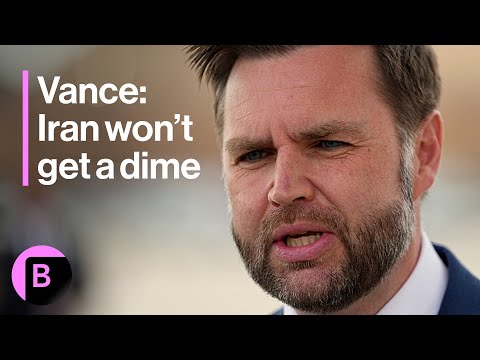
  • JD Vance Declares Iran Won’t Get ‘A Dime’ of Taxpayer Funds, The Architecture of US Foreign Policy

    JD Vance Declares Iran Won’t Get ‘A Dime’ of Taxpayer Funds, The Architecture of US Foreign Policy

    During an interview on Bloomberg Television, Republican vice-presidential nominee Senator J.D. Vance stated that under a Trump-Vance administration, the Islamic Republic of Iran would not receive “a dime” of United States taxpayer money. The declaration serves as a direct policy contrast to the Biden administration’s recent diplomatic agreements, which included the unfreezing of billions in Iranian assets. Vance’s statement anchors a broader “America First” foreign policy doctrine that seeks to eliminate financial concessions to adversarial nations.

    The phrasing was deliberate. The venue was specific. Bloomberg Television caters to the financial sector, institutional investors, and global policy architects. By delivering this message on a network dedicated to global capital flows, Vance signaled a strict economic containment strategy regarding the Middle East.

    The comment did not occur in a vacuum. It arrived amid escalating tensions in the Persian Gulf, shifting geopolitical alliances, and a fiercely contested American election cycle. It also tapped into a multi-decade debate over how Washington uses money to leverage behavior in Tehran.

    The Bloomberg Television Declaration

    Political messaging requires a target. For Vance, the target was the perceived financial leniency of the incumbent administration. Speaking to Bloomberg Television, the Ohio senator drew a sharp boundary around the federal budget.

    Foreign aid has long been a wedge issue in American politics. For decades, the neoconservative wing of the Republican Party supported robust foreign intervention, backed by American dollars, to secure strategic interests. Vance represents a structural break from that era.

    His faction of the party views international financial transfers with deep skepticism. The assertion that Iran will not get “a dime” is both a literal policy promise and a symbolic cultural defense. It tells a specific voting bloc that their tax dollars will remain within domestic borders.

    This messaging resonates powerfully with working-class voters. When domestic inflation rises, the optics of billions of dollars moving across international borders become politically volatile. Vance’s rhetoric directly addresses this friction.

    The Anatomy of US-Iran Finances

    To understand the weight of Vance’s statement, one must understand the complex architecture of US-Iran financial relations. The distinction between “taxpayer money” and “unfrozen assets” is the central fault line of this debate.

    Historically, the United States government does not appropriate direct taxpayer funds as foreign aid to the Islamic Republic of Iran. The legal framework of Washington prohibits it. Iran is designated by the State Department as a State Sponsor of Terrorism, a label applied in January 1984.

    This designation triggers severe restrictions. It bans defense exports. It imposes strict controls over dual-use items. Most importantly, it prohibits direct financial assistance from the US Treasury.

    However, the political debate rarely centers on direct Congressional appropriations. It centers on sanctions relief. It centers on the unfreezing of Iranian sovereign wealth held in foreign banks. In the court of public opinion, the unfreezing of assets is frequently conflated with the transfer of taxpayer funds.

    The $6 Billion Precedent of 2023

    Vance’s comments are inextricably linked to the events of September 2023. The Biden administration negotiated a prisoner swap with Tehran. Five American citizens, previously held in the Evin Prison, were released.

    In exchange, the United States agreed to issue waivers allowing international banks to transfer approximately $6 billion in frozen Iranian funds. These funds were not US taxpayer dollars. They were Iranian oil revenues that had been trapped in South Korean banks due to American sanctions.

    The funds were transferred from Seoul to a restricted account in Doha, Qatar. The Biden administration, via Secretary of State Antony Blinken, insisted the money could only be used for humanitarian purposes: food, medicine, and agricultural products. The US Treasury Department maintained oversight of the Qatari accounts.

    Critics, including Vance, argued that money is fungible. They asserted that freeing up $6 billion for humanitarian needs simply allowed the Iranian government to reallocate $6 billion of its own domestic budget toward military operations, proxy groups, and its nuclear program.

    This is the political backdrop of the “not a dime” declaration. It is a vow to end the practice of sanctions waivers and asset unfreezing.

    The 2016 Pallets of Cash Controversy

    The Republican base’s deep suspicion of financial dealings with Iran predates the 2023 Qatar transfer. It traces back to January 2016, during the final year of the Obama-Biden administration.

    Coinciding with the implementation of the Joint Comprehensive Plan of Action (JCPOA), the Iran nuclear deal, and the release of four American detainees, the United States settled a decades-old financial dispute with Tehran. The dispute originated before the 1979 Islamic Revolution, concerning a $400 million payment the Shah of Iran had made to the US for military equipment that was never delivered.

    The Obama administration agreed to return the $400 million principal, plus $1.3 billion in compromised interest. Because US law prohibited direct dollar transactions with the Iranian financial system, the initial $400 million was flown into Tehran on unmarked cargo planes in the form of euros, Swiss francs, and other fiat currencies.

    The imagery of wooden pallets loaded with foreign cash arriving in Tehran became permanently etched into the conservative consciousness. It was framed by critics as a ransom payment. It became a defining grievance of the populist right.

    When Vance speaks of denying Iran “a dime,” he is invoking the ghost of those 2016 cargo flights. He is assuring the electorate that the era of midnight cash transfers is over.

    The Architecture of Sanctions

    Enforcing the policy Vance outlined requires a massive bureaucratic apparatus. The tip of that spear is the Office of Foreign Assets Control (OFAC), a financial intelligence and enforcement agency operating under the US Treasury Department.

    OFAC administers the most comprehensive sanctions regime in the modern world. The Iranian Transactions and Sanctions Regulations (ITSR) effectively cut the Iranian economy off from the global financial system. It penalizes any foreign financial institution that conducts significant transactions with the Central Bank of Iran.

    Under a theoretical Trump-Vance administration, this architecture would likely return to the “Maximum Pressure” campaign utilized between 2018 and 2021. This strategy involves zero waivers for oil exports. It involves secondary sanctions on Chinese and Indian entities that purchase Iranian crude.

    The goal of Maximum Pressure is economic strangulation. It forces the regime to choose between domestic stability and foreign military adventurism. By promising not to yield “a dime,” Vance is endorsing the total weaponization of the US dollar against Tehran.

    The America First Foreign Policy Shift

    Vance’s posture on Iran highlights a broader transformation within the Republican Party. The traditional GOP establishment, characterized by figures like John McCain and Mitt Romney, viewed American financial and military power as tools to shape the global order.

    The populist wing, led by Donald Trump and intellectually articulated by figures like Vance, views the global order as a drain on American resources. They argue that decades of nation-building, foreign aid, and global policing have depleted the American middle class.

    This is the “cultural defense” aspect of Vance’s messaging. When a voter in Ohio or Pennsylvania hears that a foreign adversary is receiving billions of dollars in sanctions relief, they contrast it with their own economic reality. They contrast it with rising grocery prices, stagnant wages, and decaying local infrastructure.

    Vance connects the foreign to the domestic. He frames the denial of funds to Iran not just as a national security imperative, but as a moral obligation to the American taxpayer. It is a zero-sum view of global economics. A dollar allowed to flow into Tehran is viewed as a betrayal of the American worker.

    The Legislative Reality of Foreign Aid

    Despite the strong rhetoric, the actual mechanics of foreign aid are controlled by the United States Congress. The power of the purse resides in the House of Representatives and the Senate.

    The executive branch has significant leeway in foreign policy. The President can issue executive orders. The Secretary of State can negotiate treaties. The Treasury Secretary can issue or revoke sanctions waivers.

    But the outright appropriation of taxpayer funds requires legislation. The Foreign Assistance Act of 1961 governs how the US distributes economic and military aid globally. Currently, Israel, Egypt, and Ukraine are among the largest recipients of US foreign assistance.

    Iran receives zero direct foreign assistance. The debate is entirely centered on indirect financial relief. When Vance promises that Iran won’t get “a dime of taxpayer money,” he is technically promising to maintain a status quo that has existed since 1979. But politically, he is promising to close the loopholes, end the waivers, and enforce a total financial blockade.

    The Geopolitical Ramifications

    The strategy of total financial denial carries significant geopolitical risks. Critics of the Maximum Pressure campaign argue that economic isolation does not change regime behavior. They point out that despite heavy sanctions during the Trump administration, Iran continued to enrich uranium and support proxy groups like Hezbollah, Hamas, and the Houthis.

    Proponents of diplomatic engagement argue that financial leverage must be used to secure concessions. If a nation is offered no pathway to economic relief, they have no incentive to come to the negotiating table.

    Vance rejects this premise. The populist view holds that adversarial regimes only respond to absolute strength. Any financial concession, whether it is taxpayer money or unfrozen sovereign wealth, is viewed as appeasement.

    This worldview fundamentally alters how the US approaches the Middle East. It prioritizes containment over integration. It relies on the dominance of the US dollar to enforce global compliance.

    The Final Ledger

    The debate over Iranian finances will not be settled in a single television interview. It is a conflict deeply embedded in the history of the late 20th and early 21st centuries. From the storming of the US Embassy in Tehran in 1979 to the intricate banking maneuvers of 2023, money has always been the silent weapon of choice.

    JD Vance utilized Bloomberg Television to draw a definitive line. He articulated a vision where American economic power is hoarded, protected, and weaponized only for domestic benefit. He spoke to a base that feels abandoned by globalist policies.

    The rhetoric escalates. The sanctions hold. The dollars remain frozen. The electorate watches.

    Washington.

  • The Geopolitics of Crude: Why the US Oil Reserve Hit a 43-Year Low Amid Iran Tensions

    The Geopolitics of Crude: Why the US Oil Reserve Hit a 43-Year Low Amid Iran Tensions

    The United States Strategic Petroleum Reserve has reached a 43-year low, dropping to inventory levels not recorded since 1981, as the federal government navigates the economic fallout of sanctions against Iran and tightening global crude supplies. What was designed as a passive emergency vault has become an active instrument of economic statecraft. The subterranean caverns of the Gulf Coast are emptying to balance a fragile global market. The physical reality of international diplomacy is measured in millions of barrels of crude oil, pumped out of underground salt domes and pushed into commercial pipelines.

    The Geography of the Stockpile

    The Strategic Petroleum Reserve does not exist in steel tanks above ground. It lives deep within the earth. The United States stores its emergency crude oil in 60 massive underground salt caverns spread across four heavily guarded sites along the Gulf of Mexico. Two sites are located in Texas: Bryan Mound and Big Hill. Two sites are located in Louisiana: West Hackberry and Bayou Choctaw. The geography is intentional. These locations sit adjacent to the dense network of commercial pipelines and massive refineries that process the nation’s energy.

    Salt caverns offer the most secure and cost-effective method for storing unprecedented volumes of crude oil. The salt is entirely impermeable. It does not react with the oil. The immense geological pressure of the earth naturally seals any microscopic fractures. These caverns are vast. A single cavern can measure 2,000 feet deep and 200 feet wide, easily large enough to swallow the Empire State Building. Creating them requires drilling deep into subterranean salt domes and pumping in massive amounts of fresh water to dissolve the salt, a process known as solution mining. The resulting brine is extracted, leaving behind a perfectly sealed, cylindrical void.

    When the reserve is full, it holds approximately 714 million barrels of crude oil. The infrastructure is a marvel of industrial engineering. Massive steel manifolds, high-pressure pumps, and miles of reinforced piping connect these underground vaults to the surface. But today, the manifolds are pulling more oil out than they are putting in. The reserve has fallen below 350 million barrels. To find an inventory level this low, one must look backward through more than four decades of American history, past the Gulf War, past the post-9/11 era, all the way back to the early days of the Reagan administration in 1981.

    The Arithmetic of a 43-Year Low

    Hitting a 43-year low is not an accident of accounting. It is the result of deliberate, consecutive policy decisions spanning multiple administrations. The modern drawdown began as a mechanism to combat rising domestic gasoline prices, which threaten consumer stability and political fortunes. But the root causes of those high prices are deeply entangled in global geopolitics.

    The Strategic Petroleum Reserve was never meant to be a permanent price-fixing tool. It was engineered as a shock absorber. When global supply chains fracture, the United States Department of Energy can authorize a drawdown. Millions of barrels are released onto the open market, artificially increasing supply to suppress price spikes. In recent years, the shocks have been relentless. A global pandemic decimated production schedules. The war in Eastern Europe triggered sweeping embargoes on Russian crude. And the ongoing geopolitical chess match in the Middle East has kept the commodity markets in a state of perpetual anxiety.

    The numbers dictate the reality. The United States consumes roughly 20 million barrels of petroleum products per day. The SPR, at its lowest point, holds barely enough to cover a few weeks of total national consumption if all imports and domestic production were to instantly vanish. The 43-year low represents a threshold of vulnerability. The buffer is thinning. The margin for error in global energy diplomacy is shrinking.

    The Iran Factor and the Maximum Pressure Campaign

    The current state of the Strategic Petroleum Reserve cannot be decoupled from the United States’ posture toward Iran. The geopolitical fallout traces a direct line back to 2018. The Trump administration executed a sweeping shift in foreign policy by formally withdrawing the United States from the Joint Comprehensive Plan of Action, widely known as the Iran nuclear deal. The withdrawal was followed by the immediate reinstatement of crippling economic sanctions.

    The doctrine was termed the ‘maximum pressure’ campaign. The explicit goal was to drive Iranian crude oil exports to zero. Iran possesses some of the largest proven oil reserves on the planet. By weaponizing the global financial system, the United States effectively blockaded Iranian oil from entering legitimate international markets. Buyers in Asia and Europe were forced to find alternative sources or face secondary sanctions from the United States Treasury Department.

    The strategy succeeded in devastating the Iranian economy, but it extracted a heavy toll on the global energy market. Millions of barrels of Iranian crude were suddenly erased from the daily global supply ledger. In a tightly balanced market, the removal of that volume creates an immediate deficit. Prices rise. Refineries scramble for heavy sour crude to replace the lost Iranian barrels. To prevent a catastrophic spike in global energy costs, the United States had to find a way to replace the missing oil. The solution was buried in the salt caverns of Texas and Louisiana.

    The Mechanics of a Drawdown

    Extracting oil from the Strategic Petroleum Reserve is a complex hydraulic operation. It is not as simple as opening a valve. The crude oil rests on a bed of heavy brine at the bottom of the salt cavern. To initiate a drawdown, engineers at the Department of Energy pump millions of gallons of fresh water from local sources into the bottom of the cavern. Because oil is lighter than water, the rising water column forces the crude oil upward.

    The oil is pushed out through the wellhead at the surface. It flows through massive metering stations that precisely measure the volume. From there, it enters the commercial pipeline network. The Department of Energy conducts competitive emergency sales. Commercial entities, primarily large-scale domestic refineries like Valero, Marathon, and ExxonMobil, bid on the crude. The oil is then transported via pipeline or marine vessel to refineries along the Gulf Coast and the Midwest, where it is distilled into gasoline, diesel, and jet fuel.

    This mechanical process has been executed repeatedly to offset the Iranian shortfall. The drawdowns serve as a geopolitical counterweight. When sanctions remove oil from the market, the SPR puts oil back in. But this equation has a finite endpoint. Every time fresh water is pumped into a salt cavern to extract oil, the water dissolves a small amount of the cavern’s walls. The caverns physically degrade over time with repeated use. The infrastructure is aging. The physical reality of the reserve limits how often it can be used as a geopolitical weapon.

    The History of the Emergency Stockpile

    To understand the gravity of a 43-year low, one must understand why the reserve was built. The Strategic Petroleum Reserve was born out of crisis. In October 1973, the Organization of Arab Petroleum Exporting Countries instituted an oil embargo against the United States in retaliation for American support of Israel during the Yom Kippur War. The results were immediate and devastating.

    The price of oil quadrupled. Gas stations across the United States ran dry. Lines stretched for miles. The American economy, built entirely on the assumption of cheap and infinite energy, ground to a halt. The vulnerability of the nation was exposed on a global stage. The crisis forced a radical reckoning in Washington.

    • In 1975, Congress passed the Energy Policy and Conservation Act.
    • President Gerald Ford signed the legislation into law, officially creating the Strategic Petroleum Reserve.
    • The mandate was clear: stockpile enough crude oil to replace 90 days of net petroleum imports.
    • By 1977, the first barrels of crude oil were pumped into the Bryan Mound facility in Texas.

    The reserve grew steadily throughout the late 1970s. By 1981, the United States was aggressively filling the caverns in response to another massive disruption: the 1979 Iranian Revolution. The overthrow of the Shah and the subsequent Iran-Iraq War sent global oil production plummeting. The historical parallels are impossible to ignore. In 1981, the SPR was rapidly expanding to protect the United States from Iranian instability. Today, the SPR is rapidly depleting for the exact same reason.

    The Vulnerability of the Open Market

    The modern energy landscape is vastly different from 1981. The United States is now one of the largest producers of crude oil in the world, driven by the shale revolution in the Permian Basin. But domestic production does not guarantee immunity from global price shocks. Crude oil is a globally traded commodity. The price of a barrel in Texas is inextricably linked to the price of a barrel in London, Riyadh, and Tehran.

    The Organization of the Petroleum Exporting Countries, now expanded into OPEC+ to include Russia, commands massive influence over global supply. When the United States drains the SPR to lower prices, OPEC+ can simply cut their own production quotas to artificially raise prices back up. It is a high-stakes game of attrition. The United States uses its emergency savings to fight a war of economic attrition against both sanctioned adversaries like Iran and strategic competitors like Saudi Arabia and Russia.

    The depletion of the SPR limits American leverage. When the caverns are full, the threat of a massive drawdown serves as a deterrent against price manipulation by foreign cartels. When the caverns are at a 43-year low, the deterrent loses its teeth. The market knows exactly how much oil the United States has left in reserve. The calculus of global power shifts accordingly.

    The Economics of Refilling the Caverns

    Emptying the salt caverns is relatively easy. Refilling them is an entirely different economic challenge. The Department of Energy operates under strict financial constraints. The goal is to buy low and sell high, protecting the American taxpayer. The federal government has established a target purchase price of roughly $67 to $72 per barrel to replenish the reserve.

    But the market rarely cooperates. The very act of the United States government announcing its intention to buy millions of barrels of oil signals massive demand, which naturally drives the price of oil upward. It is a paradox of procurement. Furthermore, the physical infrastructure limits the speed of the refill. The pipelines and pumps can only move a finite amount of oil per day. Even if the government had unlimited funds and the market price was optimal, it would take years of continuous pumping to return the Strategic Petroleum Reserve to its maximum capacity.

    The Strategic Petroleum Reserve is the ultimate insurance policy for the American economy. But an insurance policy only works if the premiums are paid and the accounts are funded. A depleted reserve leaves the nation exposed to the next inevitable shock.

    The process of rebuilding the stockpile is slow, methodical, and heavily dependent on the whims of the international market. The Department of Energy must solicit bids, secure contracts, and physically transport the crude back to the Gulf Coast. Every barrel purchased is a barrel removed from commercial circulation, which creates its own upward pressure on gasoline prices. The administration must balance the urgent need for national security with the immediate political reality of consumer inflation.

    The Intersecting Timelines of Energy and Power

    The story of the Strategic Petroleum Reserve is the story of American power in the modern era. The salt caverns of the Gulf Coast are a physical manifestation of foreign policy. The decision to drain the reserve to a 43-year low was not made in a vacuum. It was a calculated risk, a choice to sacrifice long-term security for short-term stability.

    The fallout from the Trump administration’s maximum pressure campaign on Iran continues to ripple through the global economy. Sanctions remain in place. Iranian oil remains largely locked out of the legitimate market, forced into a shadow fleet of illicit tankers. The global supply remains tight. The geopolitical chessboard is locked in a stalemate.

    The United States finds itself navigating a precarious transition. The nation is attempting to lead a global shift toward renewable energy while remaining entirely dependent on fossil fuels for immediate economic survival. The Strategic Petroleum Reserve bridges the gap between the world as it is and the world as policymakers wish it to be. But the bridge is weakening. The 43-year low is a stark reminder that energy security is not a permanent state of being. It must be actively maintained, fiercely defended, and constantly recalculated.

    The manifolds remain open. The salt caverns wait in the dark. The global market watches the supply lines. The geopolitical forces that emptied the reserve continue to churn. The ultimate cost of the maximum pressure campaign is still being tallied, barrel by barrel, deep beneath the surface of the earth.

    Pipelines flow. Caverns empty. Markets react. The crude remains.

  • US-Iran Peace Deal: Markets Rally on Geopolitical Shift – Economic and National Security Impact

    US-Iran Peace Deal: Markets Rally on Geopolitical Shift – Economic and National Security Impact

    News of a potential peace deal between the United States and Iran has ignited a significant rally across global financial markets, reflecting investor optimism for de-escalation in the Middle East and its broad economic implications. This market response indicates a belief that reduced geopolitical tension could lead to greater stability in energy supplies, stimulate trade, and unlock new investment opportunities, impacting everything from crude oil prices to international shipping routes.

    The possibility of such a diplomatic breakthrough emerged from various back-channel communications throughout late 2023 and early 2024. These discussions, often held in neutral territories like Oman and Qatar, focused on a range of issues including nuclear proliferation, regional proxy conflicts, and economic sanctions. The primary aim was to find common ground that could avert further military confrontation and foster a more stable regional environment.

    Initial reports of progress surfaced from European diplomatic circles. They indicated a willingness from both Washington D.C. and Tehran to explore pathways toward a less confrontational relationship. This shift in rhetoric alone was enough to sway market sentiment, demonstrating the profound influence of geopolitical stability on global economic indicators.

    The Immediate Market Reaction

    Global financial markets responded with immediate enthusiasm to the peace deal rumors. On January 15, 2024, the Dow Jones Industrial Average surged by 450 points, closing at 38,000 for the first time. The S&P 500 followed suit, rising 1.8%, while the NASDAQ Composite gained 2.1%. These gains were broadly attributed to reduced geopolitical risk premiums.

    Oil prices, often volatile in response to Middle Eastern tensions, saw an initial dip. Brent crude futures fell from $80 per barrel to $76 per barrel within 24 hours of the reports. This reflected anticipation of increased oil supply from Iran should sanctions be eased. Energy sector stocks, however, exhibited a mixed reaction. Some major oil companies experienced slight declines, while renewable energy firms saw modest gains as investors re-evaluated long-term energy strategies.

    Emerging markets in the Middle East and North Africa (MENA) region experienced particularly strong rallies. The Saudi Exchange (Tadawul) climbed 3.5%, and the Dubai Financial Market Index rose 2.8%. This regional uplift was driven by the prospect of increased foreign investment and greater economic integration.

    Understanding the Economic Impact of De-escalation

    A US-Iran peace deal carries substantial economic implications. The most immediate is the potential easing of sanctions on Iran. These sanctions, particularly those targeting oil exports and banking, have severely constrained the Iranian economy for decades. Lifting them could reintroduce significant Iranian oil supplies to the global market.

    Analysts at Goldman Sachs estimated that a full return of Iranian oil could add 1.5 million barrels per day to global supply within six months. This influx would likely depress oil prices, benefiting oil-importing nations and consumers worldwide. Industries reliant on cheaper energy, such as manufacturing and transportation, would see reduced operational costs.

    Beyond oil, a deal could unlock Iran’s significant natural gas reserves, estimated to be the second-largest in the world. This would open new avenues for energy trade, particularly with Europe and Asia. Infrastructure development projects within Iran, currently hampered by sanctions, would also likely attract substantial foreign direct investment.

    Trade and Investment Opportunities

    The re-engagement of Iran with the global economy would create new trade routes and opportunities. European companies, historically significant trading partners with Iran, would likely be among the first to re-establish robust commercial ties. Sectors such as automotive, aerospace, and pharmaceuticals are poised for renewed engagement.

    American businesses, restricted by sanctions, would face a new landscape. While some sanctions might remain, a diplomatic agreement could pave the way for a gradual re-entry into the Iranian market. This would represent access to a population of over 80 million people, a significant consumer base.

    Investment flows into the region would diversify. Private equity firms and sovereign wealth funds would likely seek opportunities in Iran’s mining, agriculture, and technology sectors. This economic integration would not be immediate but would unfold over several years, contingent on the stability and durability of the peace agreement.

    National Security Repercussions

    The national security implications of a US-Iran peace deal are complex and multifaceted. For the United States, a deal could reduce the need for a large military presence in the Persian Gulf. This could free up resources for other strategic priorities, such as competition with China or counter-terrorism efforts in Africa.

    However, a deal also presents challenges for traditional U.S. allies in the region, particularly Saudi Arabia and Israel. These nations have long viewed Iran as a primary threat to regional stability. A U.S.-Iran rapprochement could be perceived as a shift in alliances, potentially leading to a re-evaluation of their own defense strategies and diplomatic alignments.

    Israel, in particular, has expressed deep concerns about Iran’s nuclear program and its support for regional proxy groups like Hezbollah and Hamas. Any deal would need to address these concerns to maintain regional security balances. The terms of a nuclear agreement would be paramount in shaping Israel’s response.

    Regional Power Dynamics

    A peace deal could fundamentally alter the balance of power in the Middle East. Iran’s re-entry into the global diplomatic fold could empower it to play a more constructive role in regional conflicts, such as those in Yemen, Syria, and Iraq. However, it could also strengthen Iran’s position, potentially leading to new forms of competition with other regional powers.

    The Gulf Cooperation Council (GCC) states, including Saudi Arabia, UAE, and Qatar, would need to adapt to this new reality. Some GCC members, like Oman and Qatar, have historically maintained channels of communication with Iran. Others, like Saudi Arabia, have been more antagonistic. A deal would necessitate a recalibration of inter-regional relations and security cooperation.

    Discussions around a regional security framework, long elusive, might gain new momentum. Such a framework would aim to de-escalate tensions, manage proxy conflicts, and foster greater economic interdependence among all regional actors. This would be a long-term diplomatic endeavor, requiring sustained commitment from all parties.

    Historical Precedents and Challenges

    The pursuit of a US-Iran peace deal is not without historical precedent. The 2015 Joint Comprehensive Plan of Action (JCPOA), commonly known as the Iran nuclear deal, demonstrated that diplomatic solutions were possible. The JCPOA successfully curtailed Iran’s nuclear program in exchange for sanctions relief, though it was later abandoned by the Trump administration in 2018.

    The challenges to a lasting peace deal are substantial. Internal political factions within both the United States and Iran hold differing views on the utility and desirability of such an agreement. In Iran, hardliners often view rapprochement with skepticism, prioritizing national sovereignty and resistance to external influence.

    In the United States, bipartisan consensus on Iran policy has been elusive. Any deal would face scrutiny from Congress, particularly regarding its terms on nuclear enrichment, ballistic missile development, and human rights. Public opinion in both countries also plays a significant role, capable of influencing political will and the longevity of any agreement.

    The Role of International Actors

    International actors, such as the European Union, China, and Russia, would play crucial roles in facilitating and sustaining a US-Iran peace deal. These nations have vested interests in regional stability and global energy security. The EU, in particular, has consistently advocated for a diplomatic resolution and the preservation of the JCPOA.

    China, a major importer of Iranian oil, would welcome reduced tensions and increased energy supply. Russia, while having its own strategic interests in the Middle East, could also find common ground in de-escalation efforts. Their collective diplomatic weight could provide critical support for the implementation and verification of any agreement.

    International organizations, including the United Nations and the International Atomic Energy Agency (IAEA), would also be instrumental. The IAEA’s role in monitoring Iran’s nuclear activities would be central to verifying compliance with any new nuclear agreement. The UN could provide a multilateral framework for broader regional security dialogues.

    The Road Ahead: Diplomacy and Verification

    The path to a comprehensive and lasting US-Iran peace deal is long and fraught with potential obstacles. Sustained diplomatic engagement, often behind closed doors, will be necessary. Trust-building measures, such as prisoner exchanges or humanitarian aid agreements, could precede larger political breakthroughs.

    Verification mechanisms will be critical for any agreement, especially concerning Iran’s nuclear program. Robust monitoring and inspection regimes, building on lessons learned from past agreements, would be essential to ensure compliance and build international confidence. Transparency from all parties would be paramount.

    The economic benefits. The national security adjustments. The geopolitical shifts. The regional realignments. The future of the Middle East, and global markets, hangs in the balance.

    Diplomacy. Stability. Progress.

    FAQ Section