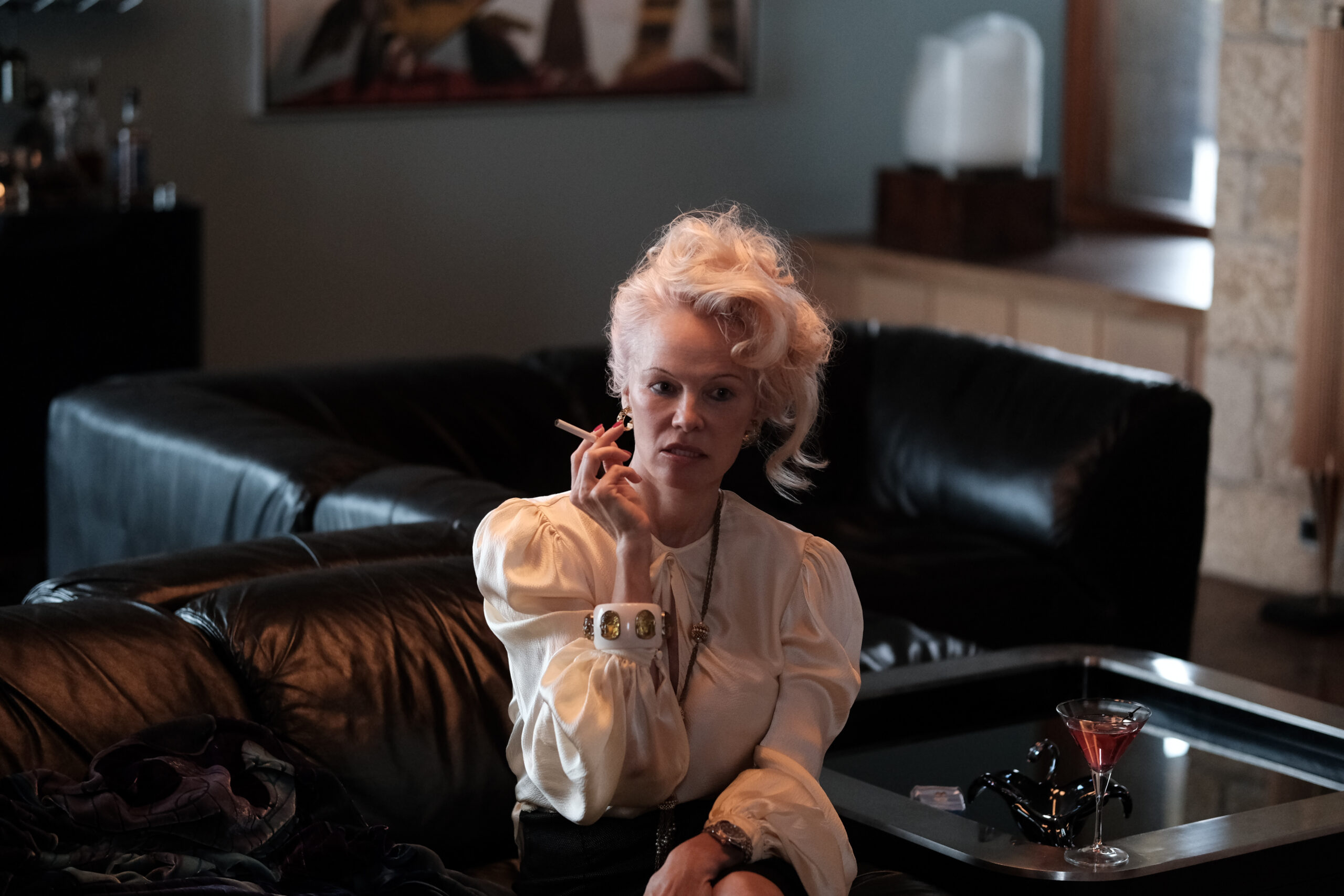
Pamela Anderson ignited a significant cultural discussion by publicly describing her 2026 film, ‘Rosebush Pruning,’ as ‘twisted.’ This characterization immediately drew widespread attention from media outlets and the public. Anderson’s additional comment, ‘I like stirring it up,’ clarified her intent, indicating a deliberate choice to engage with provocative material and stimulate dialogue around her work.
This candid assessment positioned ‘Rosebush Pruning’ as one of the most talked-about films of 2026 even before its full release. Public and critical anticipation heightened, focusing on the film’s undisclosed themes and Anderson’s performance within a narrative she herself labeled as unconventional. The controversy centers on the film’s perceived challenging content and its potential impact on cultural norms.
Pamela Anderson’s Evolving Career Trajectory
Pamela Anderson’s career spans several decades, marked by diverse roles and significant public presence. She first achieved international fame in the 1990s, becoming a prominent cultural figure. Her early work often involved high-profile television series such as ‘Baywatch’ and extensive modeling.
Over the years, Anderson has explored various artistic avenues beyond her initial public image. She has appeared in numerous films, television shows, and theatrical productions. Her public persona has also evolved, transitioning from initial sensationalism to embracing activism and more reflective, autobiographical projects, including her 2023 documentary ‘Pamela, a Love Story’ and her 2023 memoir ‘Love, Pamela.’
The decision to star in ‘Rosebush Pruning’ signals a continuation of this deliberate career evolution. It suggests a willingness to tackle challenging material that deviates from mainstream expectations. This choice aligns with a pattern of selecting roles designed to prompt conversation and introspection, solidifying her status as an artist unafraid of controversy.
Defining Moments and Public Perception
Anderson’s career has been punctuated by moments that have redefined her public image. Her advocacy for animal rights, her public battle with Hepatitis C, and her candid discussions about her personal life have all contributed to a more complex public understanding of her identity. These experiences have informed her artistic choices, leading to projects that often reflect deeper personal or societal issues.
Her participation in ‘Rosebush Pruning’ is seen by many as another such defining moment. It allows her to leverage her established public platform to draw attention to potentially uncomfortable or challenging narratives. This strategic move aims to engage audiences on a more intellectual or emotional level, moving beyond superficial interpretations of her work.
The Enigma of ‘Rosebush Pruning’: Unpacking the ‘Twisted’ Label
Specific plot details surrounding ‘Rosebush Pruning’ remain largely undisclosed to the public as of 2026. However, Anderson’s description of the film as ‘twisted’ offers a potent glimpse into its potential nature. This label suggests a narrative that significantly deviates from conventional storytelling structures or themes. It could imply complex moral dilemmas, profound psychological depth, or a focus on controversial subject matter that challenges societal norms.
The phrase ‘stirring it up,’ used by Anderson, further implies that the film is intentionally designed to provoke. It aims to challenge audience expectations and potentially entrenched societal beliefs. This approach aligns with a long-standing tradition in cinema where filmmakers use provocative themes to push boundaries and stimulate critical thought.
Filmmakers frequently employ challenging narratives to explore deeper human truths and societal anxieties. Such films can spark important dialogues about ethics, relationships, power dynamics, and the human condition. Given Anderson’s comments, ‘Rosebush Pruning’ appears positioned to contribute to this genre, aiming for artistic impact beyond mere entertainment.
Speculation on Themes and Narrative Structure
Without specific plot points, speculation about ‘Rosebush Pruning’ naturally gravitates towards its potential thematic content. A ‘twisted’ narrative often encompasses several key elements:
- Unconventional Character Relationships: Portrayals of relationships that defy traditional romantic, familial, or social constructs.
- Exploration of Taboos: Direct engagement with subjects considered forbidden or highly sensitive in mainstream society.
- Morally Ambiguous Scenarios: Situations where traditional notions of right and wrong are blurred, forcing audiences to grapple with complex ethical questions.
- Psychological Depth: A focus on the internal lives of characters, often delving into trauma, mental states, or existential crises.
- Non-Linear Storytelling: Narrative structures that eschew chronological order, using flashbacks, multiple perspectives, or fragmented timelines to enhance the sense of unease or mystery.
The film’s title itself, ‘Rosebush Pruning,’ carries symbolic weight. Pruning a rosebush involves careful, sometimes severe, cutting to promote healthier growth and shape. This botanical act could metaphorically represent painful decisions, necessary sacrifices for personal evolution, or the often-harsh process of shaping one’s identity through difficult experiences. Such metaphors provide fertile ground for critical analysis and public discussion, suggesting a film rich in subtext and open to interpretation.
Anderson’s Intentional Artistic Approach
Pamela Anderson’s explicit statement, ‘I like stirring it up,’ reveals a highly intentional and strategic approach to her acting choices. This is not a passive acceptance of a role for commercial gain. It is an active embrace of a project’s potential impact, its capacity for controversy, and its ability to generate meaningful dialogue.
This attitude reflects a performer confident in her ability to handle challenging material and manage public reaction. It suggests an artist who values the discourse her work can generate, prioritizing artistic provocation and social commentary over universal approval. This stance aligns with a growing trend among established actors to seek out roles that offer more than just entertainment.
Actors often seek roles that push their personal and professional boundaries. They look for characters and narratives that allow them to explore new facets of their talent and engage with deeper societal issues. For Anderson, ‘Rosebush Pruning’ appears to represent precisely such an opportunity, allowing her to further define her artistic identity in 2026.
Impact on Anderson’s Public Image
A leading role in a film described as ‘twisted’ and intended to ‘stir things up’ can significantly alter an actor’s public perception. For Pamela Anderson, this could mean a definitive repositioning within the industry and among audiences, moving her towards more dramatic, complex, and critically acclaimed roles.
This strategic move could solidify her status as a serious dramatic actress, demonstrating a profound willingness to move beyond her established public image. Such roles frequently earn critical acclaim and generate new career opportunities, broadening an actor’s range and influence. It challenges pre-conceived notions about her capabilities and artistic ambitions.
The public’s reaction to ‘Rosebush Pruning’ will be crucial in shaping this narrative. Will audiences embrace this new, more challenging direction? Or will the controversial nature of the film overshadow its artistic intent, leading to polarized opinions? The discourse surrounding ‘Rosebush Pruning’ is poised to shape Anderson’s career trajectory and public narrative for years to come.
The Broader Landscape of Provocative Cinema in 2026
Provocative cinema possesses a long and distinguished history, often serving as a mirror or a catalyst for societal change. Films that challenge norms, question authority, or explore uncomfortable truths frequently become cultural touchstones. They compel society to confront difficult realities or re-evaluate established beliefs, pushing the boundaries of what is acceptable or discussable.
From early avant-garde movements to contemporary independent and mainstream productions, directors and actors have consistently utilized cinema as a powerful medium for social commentary and artistic expression. They have explored themes that might be considered too sensitive or controversial for other forms of public discourse, leveraging the visual and emotional power of film.
The cultural landscape for such films in 2026 is complex and dynamic. Audiences are increasingly diverse in their tastes, sensitivities, and expectations regarding media content. What one person finds thought-provoking and artistically valuable, another might find gratuitously offensive or morally reprehensible. This divergence often fuels the very controversies that films like ‘Rosebush Pruning’ are designed to provoke.
The Dual Nature of Controversy in Film
Controversy can be a remarkably powerful tool for filmmakers. It generates buzz, attracts media attention, and draws audiences who are curious to witness what has caused such a stir. More importantly, it can spark vital conversations and critical analyses, prompting viewers to engage with the film’s themes on a deeper level.
However, controversy also carries inherent risks. Films perceived as overly contentious can face significant backlash, potentially struggling with distribution, critical reception, and even public protests. The delicate line between thought-provoking and gratuitously offensive is often subjective, culturally dependent, and intensely debated. Filmmakers must carefully navigate this terrain to ensure their artistic intentions are understood.
For ‘Rosebush Pruning,’ the challenge will be to skillfully navigate this complex landscape. The film must deliver a compelling and artistically sound narrative that justifies its ‘twisted’ nature. It must strive for substance, depth, and genuine artistic merit over mere shock value, ensuring its provocative elements serve a larger thematic purpose rather than existing for their own sake.
Anticipation and Potential Impact of ‘Rosebush Pruning’
The release of ‘Rosebush Pruning’ is highly anticipated, largely due to Pamela Anderson’s provocative remarks. Film critics, industry insiders, and the general public are all closely watching. They are keen to assess how the film lives up to its controversial billing and how it positions itself within the current cinematic discourse of 2026.
Early reviews and audience reactions will be crucial in shaping the film’s narrative and its long-term impact. A strong critical reception could significantly elevate the film’s standing, validating Anderson’s decision to take on such a challenging project and affirming its artistic merit. This could position ‘Rosebush Pruning’ as a benchmark for contemporary provocative cinema.
Conversely, a polarized or negative response could lead to further intense debate, intensifying discussions about the boundaries of artistic expression, censorship, and audience responsibility. Regardless of its reception, ‘Rosebush Pruning’ is poised to be a significant talking point in the cultural discourse of 2026, contributing to ongoing conversations about art, controversy, and celebrity.
Influence on Future Film Trends
‘Rosebush Pruning’ has the potential to influence future filmmaking trends. If it achieves critical or commercial success by effectively navigating its controversial themes, it could encourage more filmmakers to explore challenging narratives. This could lead to a broader acceptance of unconventional storytelling and a greater willingness to tackle difficult subjects in mainstream cinema.
The film’s reception will also provide valuable insights into audience appetite for provocative content in 2026. It will indicate how far contemporary viewers are willing to be pushed and what constitutes compelling, rather than merely shocking, artistic expression. This feedback loop between creators and audience continually shapes the evolution of the film industry.
Pamela Anderson’s involvement, coupled with her candid commentary, ensures ‘Rosebush Pruning’ will not be an easily ignored film. It is set to spark conversations, provoke thought, and challenge perceptions.
The industry watches. Critics prepare. Audiences engage.
Controversy.