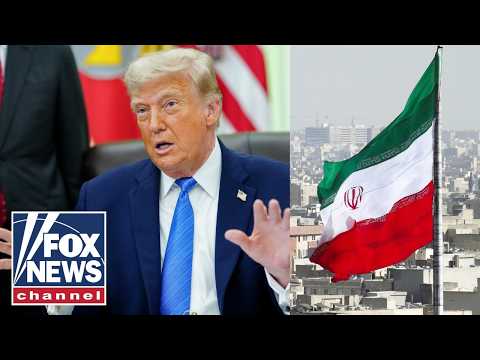
President Trump issued an urgent plea to the nation following an Iranian attack that resulted in the deaths of US troops, emphasizing the critical need for national unity and a decisive response to protect American interests and personnel abroad. The attack marks a serious escalation in the long-standing tensions between the United States and Iran, drawing immediate international attention and raising concerns about regional stability.
The plea delivered by President Trump on July 19, 2026, underscored the severity of the incident. It called for solidarity in the face of aggression. This event has initiated a period of heightened alert and strategic re-evaluation within the White House and the Pentagon.
The Attack and Immediate Aftermath
Details surrounding the Iranian attack remain under investigation. Initial reports confirm that US service members were killed in a targeted strike. The exact location of the attack has not been publicly disclosed, but it occurred in a region where US forces are regularly deployed for various operations, including counter-terrorism and regional security missions.
The Pentagon confirmed the casualties shortly before President Trump’s address. Secretary of Defense Pete Hegseth stated that all necessary measures were being taken to assess the situation and ensure the safety of remaining personnel. Vice President JD Vance also issued a statement condemning the attack, reiterating the administration’s commitment to protecting American lives.
Emergency meetings were convened at the White House. National Security Advisor Michael R. Chen, Secretary of State Marco Rubio, and Chairman of the Joint Chiefs of Staff General Dan Caine were present. Discussions focused on potential retaliatory actions and diplomatic strategies to de-escalate the broader conflict while addressing the immediate threat.
President Trump’s Urgent Plea
President Trump’s plea was broadcast from the Oval Office. He addressed the nation directly, expressing condolences to the families of the fallen service members. His tone was resolute, balancing grief with a clear message of determination.
The President emphasized the unprovoked nature of the attack. He vowed that those responsible would be held accountable. He called upon all Americans to unite in support of the military and the nation’s values.
Key themes of his address included national resolve, the defense of American sovereignty, and the protection of personnel deployed overseas. He highlighted the ongoing challenges posed by state-sponsored terrorism and regional instability, specifically referencing Iran’s role.
“Today, our nation mourns the loss of brave Americans who made the ultimate sacrifice,” President Trump stated. “This act of aggression will not go unanswered. We will defend our people, our interests, and our allies with every fiber of our being.”
The plea also touched upon the importance of international cooperation. President Trump indicated that he had been in contact with leaders of allied nations. These discussions aimed to forge a united front against such acts of aggression.
Historical Context of US-Iran Tensions
The relationship between the United States and Iran has been fraught with tension for decades. The 1979 Iranian Revolution and the subsequent hostage crisis marked a significant turning point. Since then, periods of diplomatic engagement have often been overshadowed by geopolitical rivalries and proxy conflicts.
Under previous administrations, efforts to contain Iran’s nuclear program and its regional influence have been central to US foreign policy. The 2015 Joint Comprehensive Plan of Action (JCPOA), commonly known as the Iran nuclear deal, was a landmark agreement aimed at preventing Iran from developing nuclear weapons in exchange for sanctions relief.
President Trump withdrew the United States from the JCPOA in 2018 during his first term. This decision led to the re-imposition of stringent economic sanctions on Iran. Iran, in turn, began to incrementally violate the terms of the agreement, increasing its uranium enrichment activities.
The period following the US withdrawal saw a series of escalations. These included attacks on oil tankers in the Persian Gulf, drone incidents, and rocket attacks on facilities housing US personnel in Iraq. The killing of Iranian General Qasem Soleimani in January 2020 by a US drone strike further intensified hostilities.
Throughout 2025 and into 2026, intelligence reports consistently warned of increased Iranian activity in the region. This included support for various proxy groups and continued development of ballistic missile capabilities. These actions have been viewed by the US and its allies as destabilizing.
Geopolitical Implications and Regional Stability
The recent attack and President Trump’s subsequent plea have immediate and far-reaching geopolitical implications. The Middle East remains a volatile region, with numerous ongoing conflicts and power struggles.
One primary concern is the potential for a broader regional conflict. Iran’s network of proxy groups, including Hezbollah in Lebanon, various militias in Iraq and Syria, and the Houthi movement in Yemen, could be activated in response to any US retaliation. This could draw other regional powers, such as Saudi Arabia and Israel, into direct confrontation.
Oil markets reacted immediately to the news. Global crude oil prices saw a significant spike, reflecting investor concerns about supply disruptions in the Persian Gulf, a critical chokepoint for international energy trade. This economic impact further complicates the situation.
Diplomatic efforts are underway to prevent an uncontrolled escalation. United Nations Secretary-General António Guterres called for restraint from all parties. He urged a peaceful resolution to the crisis. European leaders, including French President Emmanuel Macron and German Chancellor Friedrich Merz, have also expressed deep concern and offered mediation.
National Security Posture and Domestic Response
Domestically, the attack has galvanized public opinion. Calls for a strong response are balanced by concerns about the potential for prolonged military engagement. The incident has reignited debates about US foreign policy in the Middle East and the deployment of American troops abroad.
The Department of Homeland Security has increased its alert levels. While no specific threats to the US homeland were immediately identified, precautionary measures were enacted. These measures aim to enhance security at critical infrastructure and public venues.
Congressional leaders from both parties expressed bipartisan condemnation of the attack. Senate Majority Leader John Thune and House Speaker Mark Jefferson issued joint statements. They pledged support for the President’s efforts to protect American forces and respond decisively.
Veteran organizations and military families have voiced their sorrow and anger. They demand justice for the fallen. Protests and vigils are being organized in several major US cities, highlighting the human cost of international conflicts.
Future Outlook and Potential Responses
The coming days and weeks will be crucial in determining the trajectory of US-Iran relations. The Trump administration faces complex choices. These choices range from targeted military strikes to intensified diplomatic pressure and economic sanctions.
One potential response involves a direct military reprisal against Iranian military assets or those of its proxy groups deemed responsible for the attack. Such actions carry the risk of further escalation, potentially leading to a full-scale conflict.
Another option involves a coordinated international response, leveraging diplomatic and economic pressure from a coalition of allies. This approach would aim to isolate Iran further and compel it to cease its aggressive actions without resorting to direct military confrontation.
The administration’s strategy will likely involve a combination of these elements. The objective will be to deter future attacks while minimizing the risk of a wider war. The ultimate goal is to restore a measure of stability to the region.
The situation remains fluid. The international community watches closely. The American public awaits further developments. President Trump’s urgent plea reflects the gravity of the moment.
Families mourn. Politicians strategize. The world watches.
Washington.