Tag: Red Sea

  • President Trump’s Warning to Houthis – Escalating Tensions in the Red Sea

    President Trump’s Warning to Houthis – Escalating Tensions in the Red Sea

    President Donald Trump issued a pointed warning to the Houthi movement on July 26, 2026, indicating that continued attacks on commercial shipping in the Red Sea could trigger significant U.S. actions targeting Iran. This statement reflects a heightened level of concern within the U.S. administration regarding the stability of global maritime trade and the broader regional security landscape. The President’s remarks were made during a press briefing at the White House, emphasizing the gravity with which Washington views the ongoing Houthi aggression.

    The Houthi movement, officially known as Ansar Allah, has been launching missile and drone attacks on vessels traversing the Bab al-Mandab Strait and the Red Sea since late 2023. These actions, which the Houthis claim are in solidarity with Palestinians amid the ongoing conflict in Gaza, have severely impacted international shipping, rerouting supply chains and increasing transit costs. The United States and its allies have consistently identified Iran as the principal state sponsor providing military and financial support to the Houthis.

    The Escalation of Red Sea Tensions

    The Red Sea crisis began to intensify significantly in October and November 2023. Following the October 7, 2023, attacks in Israel and the subsequent conflict in Gaza, the Houthis declared their support for Hamas and began targeting ships they asserted had links to Israel or were bound for Israeli ports. This initial targeting soon expanded to include a wider range of commercial vessels, regardless of their direct affiliation, creating a volatile and dangerous shipping environment.

    Major shipping companies, including Maersk and Hapag-Lloyd, began diverting their vessels away from the Suez Canal route, opting for the longer, more expensive journey around the Cape of Good Hope. This rerouting adds approximately 10 to 14 days to transit times between Asia and Europe, significantly increasing fuel consumption, insurance premiums, and operational costs. The economic impact has been felt globally, affecting supply chains for goods ranging from consumer electronics to energy resources.

    The Bab al-Mandab Strait, a narrow waterway connecting the Red Sea to the Gulf of Aden, is one of the world’s most critical maritime chokepoints. An estimated 12% of global trade and 30% of global container traffic passes through this route annually. Disruptions here have immediate and far-reaching consequences for global commerce and energy markets.

    International Response: Operation Prosperity Guardian

    In response to the escalating Houthi attacks, the United States initiated Operation Prosperity Guardian in December 2023. This multinational maritime security initiative aims to protect commercial shipping in the Red Sea and Gulf of Aden. The operation involves naval forces from several countries, including the United Kingdom, France, Germany, Canada, Australia, and others.

    The primary objective of Operation Prosperity Guardian is to provide a defensive shield for commercial vessels and to deter further Houthi aggression. Warships involved in the operation have intercepted numerous Houthi missiles and drones targeting merchant ships and naval assets. These defensive actions have prevented many potential attacks from reaching their targets, but have not fully stopped the Houthi campaign.

    Despite the presence of international naval forces, the Houthis have demonstrated a continued capability and willingness to launch attacks. Their arsenal includes anti-ship ballistic missiles, cruise missiles, and unmanned aerial vehicles (UAVs). Many of these weapons systems are believed to be supplied or facilitated by Iran, a claim consistently denied by Tehran but supported by U.S. intelligence assessments.

    Allied Contributions and Challenges

    The United Kingdom has been a key partner in Operation Prosperity Guardian, with Royal Navy vessels actively participating in defensive operations and joint strikes against Houthi military sites in Yemen. Other nations have contributed in various capacities, including intelligence sharing, logistical support, and the deployment of naval assets to the region.

    One of the primary challenges for the coalition has been the difficulty in completely neutralizing the Houthi threat without risking a broader regional conflict. Houthi launch sites are often mobile or located in civilian areas, complicating targeting efforts. Furthermore, the Houthis operate within a complex Yemeni civil war context, where their actions are intertwined with internal political dynamics.

    President Trump’s Direct Warning

    President Trump’s warning on July 26, 2026, marks a significant rhetorical escalation. His statement directly links the Houthis’ actions to Iran and suggests that the U.S. is prepared to move beyond defensive measures against the Houthis themselves. The President’s language indicated that if the Red Sea attacks do not cease, the United States would consider “major moves” against Iran.

    This phrasing implies a range of potential responses, from intensified sanctions on Iran’s oil exports and financial institutions to more direct military pressure. The U.S. has maintained a robust sanctions regime against Iran for years, particularly after the Trump administration withdrew from the Joint Comprehensive Plan of Action (JCPOA) in May 2018. Any new measures would likely build upon or significantly expand these existing economic pressures.

    The U.S. administration’s position is that Iran provides the Houthis with the training, intelligence, and advanced weaponry necessary to carry out their sophisticated attacks. By targeting Iran, the U.S. aims to cut off the source of this support and compel Tehran to exert control over its proxy forces in the region. This strategy aligns with a long-standing U.S. foreign policy approach of holding state sponsors accountable for the actions of non-state actors they support.

    Historical Precedents and Future Implications

    The U.S. has a history of responding to threats from Iranian-backed groups. In the early 2020s, there were several instances of U.S. military action against Iranian-backed militias in Iraq and Syria in response to attacks on U.S. personnel or interests. These actions, while localized, demonstrated a willingness to use force to deter and punish hostile acts orchestrated by Tehran or its allies.

    A major move against Iran could have wide-ranging implications for global energy markets, regional stability, and international diplomacy. The Strait of Hormuz, another critical chokepoint through which much of the world’s oil transits, could become a flashpoint. Any significant escalation could also draw in other regional powers, potentially leading to a broader conflict in the Middle East.

    Diplomatic efforts to de-escalate tensions have been ongoing but have yielded limited success in curbing Houthi attacks. Various international bodies and individual nations have called for a cessation of hostilities and a return to diplomatic solutions for the Yemeni conflict, which has been ongoing since 2014. The Houthi movement’s current actions are deeply intertwined with their broader political objectives within Yemen and their regional alignment.

    The Houthi Perspective and Regional Dynamics

    From the Houthi perspective, their actions in the Red Sea are a legitimate response to what they perceive as Western and Israeli aggression. They frame their attacks as a defense of Palestinian rights and an assertion of their growing regional influence. The Houthis have demonstrated resilience throughout the Yemeni civil war, maintaining control over significant portions of northern Yemen, including the capital Sana’a.

    Their military capabilities have been enhanced significantly over the past decade, with a focus on asymmetric warfare tactics, including drone and missile technology. The support from Iran has been crucial in developing these capabilities, allowing the Houthis to project power far beyond Yemen’s borders, notably into key international shipping lanes.

    The broader regional dynamics also play a role. Saudi Arabia, a long-time adversary of the Houthis, has been engaged in a protracted conflict in Yemen. While there have been recent attempts at de-escalation between Saudi Arabia and Iran, the Red Sea crisis complicates these efforts and keeps regional tensions high. The U.S. warning to Iran could be interpreted by some regional actors as a reaffirmation of U.S. commitment to countering Iranian influence.

    Economic and Geopolitical Impact

    The prolonged disruption of Red Sea shipping has already led to increased costs for consumers through higher freight rates and extended delivery times. Insurance costs for vessels transiting the region have soared, sometimes by hundreds of percentage points. This economic pressure adds to inflationary concerns in many economies already grappling with post-pandemic recovery and other geopolitical shocks.

    Geopolitically, the crisis highlights the vulnerability of global trade routes to non-state actors armed with advanced weaponry. It also tests the resolve of international coalitions to protect shared economic interests. President Trump’s strong stance signals a potential shift in strategy, suggesting that the U.S. may be prepared to take more assertive action to safeguard these interests, even if it risks further regional destabilization.

    The coming weeks will likely see intense diplomatic activity and possibly further military maneuvers. The U.S. administration will weigh the risks and benefits of any escalated action against Iran, considering potential retaliatory measures and the impact on broader U.S. foreign policy objectives in the Middle East. The precise nature of the “major moves” remains unspecified, keeping all parties in a state of anticipation.

    Governments gathered. Shipping executives gathered. Military strategists gathered. Washington.


  • Houthi Attack on Saudi Tankers, Oil Prices Jump After Red Sea Incident

    Houthi Attack on Saudi Tankers, Oil Prices Jump After Red Sea Incident

    On July 23, 2026, Houthi forces launched an attack on two Saudi oil tankers in the Red Sea, an event that immediately caused global oil prices to surge and intensified concerns regarding maritime security and the stability of global energy supplies.

    The incident marks a significant escalation in the ongoing conflict in Yemen and its spillover effects on regional and international commerce. The Red Sea, a vital conduit for crude oil and refined petroleum products, remains a flashpoint for such disruptions.

    The Attack Unfolds

    The assault occurred in the southern Red Sea, a strategic waterway connecting the Indian Ocean to the Mediterranean Sea via the Suez Canal. Specific details regarding the type of vessels, the extent of damage, or potential casualties were not immediately released.

    Initial reports from Bloomberg Television’s ‘Horizons Middle East & Africa’ feed confirmed the attack. This news quickly reverberated through international financial markets.

    The targeted tankers were reportedly en route through the Bab el-Mandeb strait, a narrow passage less than 20 miles wide. This chokepoint is critical for a substantial portion of the world’s seaborne oil trade.

    Houthi military spokespersons have not yet issued a formal statement claiming responsibility or detailing their operational objectives for this specific incident. However, previous Houthi actions have often targeted Saudi and Emirati interests in response to the ongoing Saudi-led intervention in Yemen.

    Global Oil Markets React

    Following news of the attack, crude oil futures experienced a sharp upward trajectory. Brent crude, the international benchmark, saw its price per barrel climb significantly within hours of the announcement.

    West Texas Intermediate (WTI), the U.S. benchmark, also registered a notable increase. This immediate market reaction reflects the sensitivity of global oil supplies to disruptions in the Red Sea.

    Analysts from major financial institutions began reassessing risk premiums for oil shipments through the region. The cost of marine insurance for vessels transiting the Red Sea is expected to rise, further impacting shipping expenses.

    Energy economists cited the attack as a stark reminder of the geopolitical risks embedded in the global oil supply chain. The incident highlights the vulnerability of critical maritime routes to regional conflicts.

    Impact on Supply Lines

    The Red Sea is one of the world’s busiest shipping lanes. An estimated 12% of global trade, including a substantial volume of oil and liquefied natural gas (LNG), passes through the Bab el-Mandeb strait annually.

    Any sustained threat to navigation in this area can force shippers to reroute vessels. The alternative route around the Cape of Good Hope adds weeks to transit times and significantly increases fuel costs.

    Such rerouting would not only impact oil deliveries but also a wide array of consumer goods. This would create ripple effects throughout global supply chains.

    The incident could prompt oil companies to explore alternative sourcing strategies or increase their reliance on strategic petroleum reserves. These measures are designed to mitigate immediate supply shocks.

    A History of Tensions in the Red Sea

    The Red Sea has been a focal point of geopolitical tensions for several years. The conflict in Yemen, which began in 2014, has frequently spilled over into maritime activities.

    Houthi forces have previously targeted Saudi and Emirati vessels, as well as commercial shipping, using missiles and remote-controlled explosive boats. These actions have consistently raised international alarms.

    In 2018, Saudi Arabia temporarily suspended oil shipments through the Bab el-Mandeb strait after similar Houthi attacks on two of its oil tankers. That suspension lasted for several weeks, demonstrating the economic impact of such security threats.

    Naval patrols by international forces, including those from the United States and its allies, operate in the region to safeguard maritime commerce. Despite these efforts, the vastness of the sea and the nature of asymmetric threats pose persistent challenges.

    Regional Actors and Interests

    Saudi Arabia, a major oil producer and exporter, relies heavily on the secure passage of its oil through the Red Sea to European and North American markets. Disruptions directly threaten its economic interests.

    Yemen’s Houthi movement, backed by Iran, views these attacks as part of its broader resistance against the Saudi-led coalition. The Houthis seek to exert pressure on the coalition to end its military campaign in Yemen.

    Iran, while denying direct involvement in Houthi attacks, benefits from any instability that raises oil prices. Such instability also challenges the strategic interests of its regional rivals.

    Egypt, which controls the Suez Canal, also has a significant stake in Red Sea security. Any prolonged disruption to shipping could reduce canal revenues, a crucial source of foreign currency for the nation.

    International Response and Diplomatic Efforts

    The international community typically condemns such acts of aggression against commercial shipping. Calls for de-escalation and adherence to international maritime law are common following such incidents.

    The United Nations has repeatedly urged all parties in the Yemen conflict to respect international humanitarian law and cease attacks on civilian infrastructure and commercial shipping.

    Diplomatic efforts to resolve the Yemen conflict have been ongoing but have yielded limited success. The latest attack underscores the urgent need for a political solution to the protracted war.

    The United States, a key ally of Saudi Arabia, has a vested interest in maintaining freedom of navigation in the Red Sea. Its naval presence in the region is a deterrent to further aggression.

    Economic Repercussions Beyond Oil

    Beyond the immediate impact on oil prices, the incident has broader economic implications. Increased shipping costs and insurance premiums affect all goods transiting the Red Sea.

    Global inflation could see additional upward pressure if energy prices remain elevated. This would affect consumer purchasing power in economies worldwide.

    Businesses reliant on just-in-time supply chains may face delays and increased operational costs. This can lead to higher prices for a range of imported goods.

    Investor confidence in regional stability may also be eroded. This could deter foreign direct investment in countries bordering the Red Sea.

    The Future of Red Sea Security

    The Red Sea remains a critical artery for global trade and energy supply. Ensuring its security is a priority for maritime nations and international organizations.

    Technological advancements in maritime surveillance and defense systems are continuously being deployed. These aim to counter evolving threats from non-state actors.

    Enhanced international cooperation and intelligence sharing are essential. These measures help to identify and neutralize threats before they materialize.

    Ultimately, a lasting resolution to the conflict in Yemen is paramount. This would remove the underlying causes of many of the maritime security challenges in the Red Sea.

    Governments convened. Shipping companies convened. Energy traders convened. Prices rose.


  • The Shadow War Surfaces – US Military Confirms Renewed Strikes on Iranian Assets

    The Shadow War Surfaces – US Military Confirms Renewed Strikes on Iranian Assets

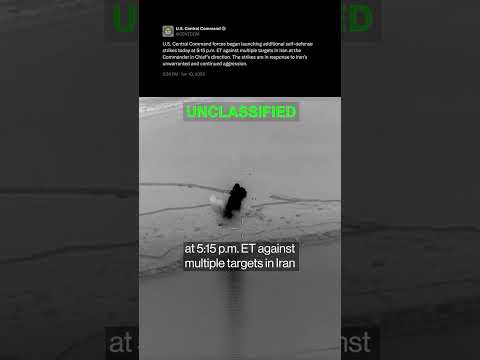
    The United States military has officially confirmed the commencement of renewed strike operations targeting Iranian-backed military infrastructure and Islamic Revolutionary Guard Corps (IRGC) assets across the Middle East. Statements originating from US Central Command (CENTCOM) indicate a definitive shift from passive deterrence to active kinetic engagement. The target matrix includes command and control centers, munitions supply chains, and intelligence facilities operated by the IRGC Quds Force. This marks a definitive escalation in a shadow war that has simmered across the region for decades. The strategic ambiguity is gone. The strikes have begun.

    For years, the conflict between Washington and Tehran played out through intermediaries. Iran utilized a vast network of proxy militias to project power without triggering direct retaliation. The United States relied on economic sanctions and isolated proportional responses. That paradigm has fractured. Recent reports confirm that the Pentagon has authorized sustained military campaigns against facilities directly linked to Iranian military intelligence and logistics. The theater of operations spans multiple sovereign borders. The objective is degradation of capability, not merely sending a message.

    The Architecture of the Shadow War

    To understand the current military strikes, one must understand the architecture of Iranian power projection. The Islamic Revolutionary Guard Corps is not a standard national army. It is a parallel military structure. Within the IRGC exists the Quds Force, an elite division dedicated exclusively to extraterritorial operations. The Quds Force does not typically fight on the front lines. It trains, equips, and directs local militias across the Middle East.

    This proxy network is extensive. In Yemen, the Houthi movement controls the capital, Sanaa, and the western coastline. In Lebanon, Hezbollah maintains an arsenal of over 100,000 rockets. In Iraq and Syria, groups like Kata’ib Hezbollah and Harakat al-Nujaba operate out of fortified desert bases. The Quds Force supplies these groups with advanced weaponry. This includes Shahed-136 loitering munitions, Fateh-110 short-range ballistic missiles, and sophisticated anti-ship cruise missiles.

    The US military is not fighting a localized insurgency. It is fighting a decentralized, well-funded coalition. The renewed strikes target the connective tissue of this coalition. CENTCOM planners focus on the logistics nodes. They target the warehouses where drone components are assembled. They target the command bunkers where IRGC liaison officers coordinate with local militia commanders. Severing the head from the body is impossible in a decentralized network. The strategy is to destroy the nervous system.

    A Geography of Escalation

    The geography of this conflict dictates the strategy. The Middle East is defined by its maritime chokepoints and porous desert borders. US military operations are currently concentrated in three distinct geographic zones. Each zone presents unique tactical challenges and requires specific weapon systems.

    The Red Sea and the Bab el-Mandeb Strait

    The Bab el-Mandeb Strait connects the Red Sea to the Gulf of Aden. Nearly 12 percent of global trade passes through this narrow waterway. Iranian-backed Houthi forces in Yemen have repeatedly targeted commercial shipping vessels navigating this corridor. They utilize anti-ship ballistic missiles and explosive surface drones. The US Navy’s response relies heavily on the Carrier Strike Group deployed to the region.

    Vessels like the USS Dwight D. Eisenhower serve as floating sovereign territory. F/A-18 Super Hornets launch daily to intercept incoming Houthi drones. Arleigh Burke-class guided-missile destroyers, such as the USS Gravely and the USS Carney, utilize SM-2 and SM-6 interceptor missiles to shoot down ballistic threats. The renewed strikes involve offensive actions against Houthi launch sites inside Yemen. Radar installations are destroyed before they can paint commercial targets. Missile storage facilities are leveled before the munitions can be mounted on mobile launchers.

    The Mesopotamian Forward Bases

    The second theater of operations encompasses the border regions of Iraq and Syria. US forces maintain a presence at installations like Al Asad Airbase in western Iraq and the Tower 22 logistics hub in Jordan. These bases serve as critical nodes for the ongoing mission to defeat the remnants of the Islamic State. However, they are frequently targeted by Iranian-backed militias using one-way attack drones and 107mm rockets.

    Retaliatory strikes in this zone are precise and punitive. When US service members are threatened, CENTCOM authorizes strikes on militia training camps and weapons depots in eastern Syria and western Iraq. These operations often utilize MQ-9 Reaper drones and F-15E Strike Eagles. The goal is to enforce a red line. The message delivered by high-explosive ordnance is that attacks on American personnel carry an immediate and disproportionate cost.

    The Arsenal of Retaliation

    Modern deterrence requires overwhelming technological superiority. The US military employs a specific arsenal to execute these renewed strikes. The weapon systems chosen reflect the need for precision, standoff distance, and massive payload delivery.

    • B-1B Lancer Strategic Bombers: Flown directly from bases in the continental United States, such as Dyess Air Force Base in Texas. These supersonic bombers can carry massive payloads of precision-guided munitions. Their deployment signals global reach. They can strike dozens of targets simultaneously across a wide geographic area.
    • Tomahawk Land Attack Missiles (TLAMs): Fired from naval vessels and submarines stationed in the Red Sea and the Mediterranean. Tomahawks provide a standoff capability. They can travel over 1,000 miles at low altitudes, evading radar detection before striking high-value targets with pinpoint accuracy.
    • AGM-114 Hellfire Missiles: Deployed from MQ-9 Reaper drones. These missiles are used for targeted strikes against specific vehicles or individuals. The R9X variant, known as the “Ninja bomb,” uses deploying blades instead of an explosive warhead to eliminate targets with zero collateral damage.
    • Joint Direct Attack Munitions (JDAMs): GPS-guided tail kits attached to unguided bombs. Dropped by fighter aircraft, JDAMs turn “dumb” bombs into precision weapons capable of penetrating fortified bunkers and collapsing underground storage facilities.

    The application of this arsenal is methodical. Target sets are developed over months by intelligence analysts at the Pentagon and CENTCOM headquarters in Tampa, Florida. When the order is given, the execution is rapid. A strike package can destroy a dozen facilities in a matter of minutes.

    Historical Echoes in the Persian Gulf

    The current escalation is not without precedent. The waters of the Persian Gulf and the deserts of the Middle East hold a long memory of US-Iran military engagements. Understanding the present requires acknowledging the past.

    In April 1988, the US Navy launched Operation Praying Mantis. This was a direct response to the Iranian mining of the Persian Gulf, which had severely damaged the USS Samuel B. Roberts. In a single day of combat, US forces destroyed two Iranian oil platforms used for military surveillance and sank multiple Iranian naval vessels. It was the largest surface naval engagement for the United States since World War II. Operation Praying Mantis established a clear boundary. It demonstrated the US willingness to use overwhelming force to protect freedom of navigation.

    More recently, the January 2020 drone strike that killed Qasem Soleimani fundamentally altered the geopolitical landscape. Soleimani was the architect of the IRGC Quds Force. He was the mastermind behind the proxy network. His elimination outside Baghdad International Airport was a shock to the Iranian system. The subsequent Iranian ballistic missile attack on Al Asad Airbase resulted in traumatic brain injuries for over 100 US service members, though no fatalities occurred. The current strikes operate in the shadow of these events. Both sides understand the threshold for open war. Both sides continuously test the limits of that threshold.

    The Economics of Asymmetric Warfare

    Military engagements are ultimately exercises in economics. The financial cost of the renewed strikes is staggering. The asymmetry of the conflict places a heavy financial burden on the defending force.

    “Deterrence is not just about firepower. It is about the sustainable application of capital to enforce political will.”

    Consider the mathematics of air defense in the Red Sea. An Iranian-designed Shahed-136 drone costs approximately $20,000 to manufacture. It is cheap, mass-produced, and expendable. To shoot down that drone, a US Navy destroyer often fires a Standard Missile-2 (SM-2). The cost of a single SM-2 interceptor is roughly $2.1 million. The cost exchange ratio is heavily skewed in favor of the proxy militias.

    This economic reality forces a shift in strategy. The US military cannot simply play defense indefinitely. Intercepting cheap drones with expensive missiles is financially unsustainable. Therefore, the strategy must pivot to offense. It is far more cost-effective to drop a $30,000 JDAM on a warehouse containing fifty drones before they are launched. The renewed strikes on Iranian assets are driven as much by economic necessity as they are by tactical deterrence. Destroy the bow, and you do not have to worry about the arrows.

    The Geopolitical Chessboard

    The strikes do not occur in a vacuum. They ripple across global markets and diplomatic channels. The price of Brent crude oil fluctuates with every reported explosion in the Red Sea. Shipping conglomerates reroute vessels around the Cape of Good Hope, adding weeks to transit times and millions in fuel costs. The global supply chain is intimately tied to the security of Middle Eastern waterways.

    Diplomatically, the United States must navigate a complex web of alliances. Arab nations in the Gulf, such as Saudi Arabia and the United Arab Emirates, view Iranian expansionism as an existential threat. However, they also fear a regional war that could devastate their economies. They support US deterrence efforts quietly, providing airspace and intelligence, but often distance themselves publicly to avoid Iranian retaliation.

    The Pentagon must calibrate its strikes precisely. Too weak, and the deterrence fails. The proxy attacks multiply. Too strong, and the conflict spirals into a regional conflagration involving mainland Iran. The current operational tempo reflects this delicate balance. It is a slow, methodical degradation of enemy capabilities. It is the application of friction to the Iranian war machine.

    The military reports confirm the reality on the ground. The passive posture has ended. The active degradation has begun. The assets are in place. The targets are locked. The orders are executed.

    Radars sweep. Missiles launch. Targets burn. Deterrence.