
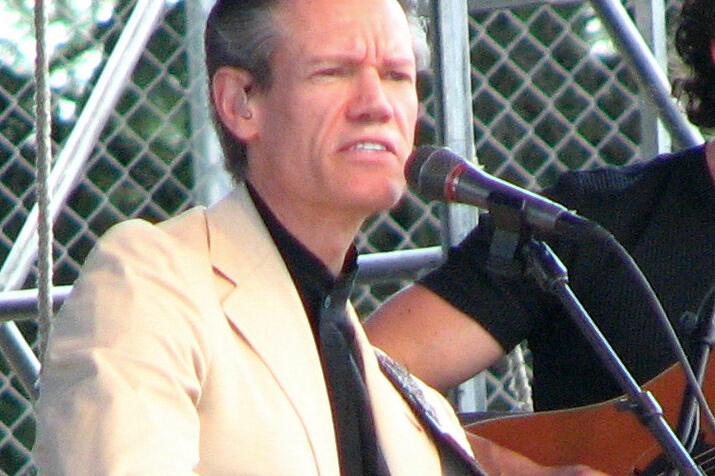
Tag: Randy Travis

  • The Day the Row Went Quiet, Country Music Mourns a Nashville Legend

    The Day the Row Went Quiet, Country Music Mourns a Nashville Legend

    The country music industry, led by generational voices like Randy Travis and Dierks Bentley, recently united to mourn the heartbreaking death of a foundational Nashville music legend, marking a profound loss for Music Row and the end of an era for the genre’s old guard. The news moved quickly down 16th Avenue South. No press releases were needed. In the recording studios and publishing houses of Nashville, word of a titan’s passing travels through a whisper network older than the city’s modern skyline. Guitars went into their cases. Session players stepped out of the tracking rooms. A foundational architect of the Nashville sound was gone.

    In many ways, the story of this loss is the story of country music itself. What looks like a modern, multi-billion-dollar global entertainment industry actually started a century ago in small, humid rooms with acoustic instruments and a microphone. The legends who built the bridge between those two eras are rapidly fading. When one falls, the entire ecosystem feels the tremor. The mourning spans generations. It reaches back to the neo-traditional pioneers of the 1980s. It extends forward to the stadium headliners of the 2020s. The grief is universal because the impact was universal.

    The Echoes on 16th Avenue South

    Music Row is not just a geographic location. It is an industrial engine. Bounded roughly by Demonbreun Street to the north and Wedgewood Avenue to the south, this tight grid of streets has historically served as the factory floor for American storytelling. The legends of Nashville did not just write songs here. They engineered careers. They built publishing empires. They shaped the sonic landscape of the radio dial.

    When a figure of this magnitude passes, the physical geography of Nashville mourns. The historic RCA Studio B stands as a monument to the thousands of hours these pioneers spent behind the glass. The Bluebird Cafe on Hillsboro Pike holds the echoes of their late-night guitar pulls. Tootsie’s Orchid Lounge remembers the deals struck over cold beer and crumpled napkins. The architecture of the city is inextricably linked to the architecture of the music.

    Today, corporate high-rises are replacing the old bungalows on Music Row. The physical evidence of the 20th-century country music boom is slowly being erased by developers. But the cultural foundation remains immovable. The legends who operated out of those bungalows established a business model that still governs the town. They championed the concept of the professional songwriter. They formalized the mechanical royalty system. They turned three chords and the truth into a globally exportable commodity.

    Randy Travis and the Neo-Traditional Anchor

    Randy Travis understands the weight of this history better than most. When Travis arrived in Nashville in the early 1980s, the genre was suffering an identity crisis. The Urban Cowboy movement had faded. Pop-crossover production had diluted the traditional sound. Travis was washing dishes and cooking at The Nashville Palace, waiting for a town that seemed entirely uninterested in his deep, North Carolina baritone.

    It took the vision of Nashville’s established legends to recognize what Travis represented. When Warner Bros. Records finally released “Storms of Life” in 1986, it did not just launch a career. It launched a rescue mission for traditional country music. That album sold over three million copies. It proved that fiddles and steel guitars were still commercially viable. It proved that authenticity had a market.

    Travis’s mourning of a Nashville legend is the mourning of a peer. The figures who populated the industry during his ascent were the ones who protected the genre’s roots. They were the producers who stripped away the string sections. They were the executives who took a chance on a kid from Marshville. When Travis pays tribute to a fallen architect of the Nashville sound, he is paying tribute to the very ecosystem that allowed his voice to be heard.

    Dierks Bentley and the Bridge to Modern Country

    Dierks Bentley represents a different era, but the reverence remains identical. Bentley arrived in Nashville in the late 1990s. He did not start in the corporate boardrooms. He started at The Station Inn. He immersed himself in the bluegrass community. He studied the legends. He understood that to push the genre forward, a modern artist first had to anchor themselves to the past.

    Bentley’s 2003 self-titled debut album was a bridge between the neo-traditionalism of the 1980s and the high-energy arena country of the 2000s. The hit single “What Was I Thinkin’” featured a prominent dobro lick. It was a deliberate nod to the acoustic roots of the genre, packaged for a modern radio audience. That synthesis was only possible because the old guard of Nashville was still around to provide the blueprint.

    For Bentley, mourning a Nashville legend is an acknowledgment of lineage. The modern country artists who fill football stadiums today are standing on the shoulders of the managers, producers, and songwriters who built the infrastructure. Bentley’s public grief underscores a fundamental truth about country music. It is a genre obsessed with its own ancestry. The new class never forgets the old class.

    The Anatomy of a Nashville Legend

    What exactly defines a Nashville music legend? It is rarely just about chart positions. It is about influence. The true legends of Music Row operate with a specific kind of gravity. They are the individuals who can make a career with a single phone call. They are the ones who can identify a hit song from a rough acoustic work tape.

    • The Song whisperers: They know how to fix a broken bridge. They know when a chorus needs to hit.
    • The Talent scouts: They spend their nights in smoky dive bars looking for the next undeniable voice.
    • The Deal makers: They navigate the complex web of publishing rights, mechanical royalties, and 360 deals.
    • The Protectors: They shield young artists from the grinding machinery of the music business.

    These legends were often members of the Country Music Association (CMA) or the Academy of Country Music (ACM) boards. They shaped policy. They determined how the genre was marketed to the rest of the world. They were the diplomats of Music Row. They traveled to New York and Los Angeles to convince skeptical executives that country music was a dominant cultural force. They brought the money back to Tennessee.

    The Business of Three Chords and the Truth

    The mourning is not just sentimental. It is deeply tied to the economic realities of Nashville. The legends passing away today are the ones who built the modern financial structure of the town. They understood the power of a copyright. They understood that while an artist might have a ten-year run on the radio, a great song generates revenue for a century.

    Organizations like ASCAP and BMI have buildings in Nashville because of the sheer volume of wealth generated by these legendary figures. A single hit song in the 1990s could generate millions of dollars in mechanical royalties, radio performance royalties, and synchronization licenses. The legends managed this wealth. They built publishing companies that functioned like banks. They employed hundreds of staff writers, pluggers, and administrators.

    The shift from physical album sales to digital streaming has fundamentally altered this landscape. The economics are leaner now. The margins are tighter. The passing of a 20th-century Nashville legend is a stark reminder of an era of unprecedented abundance. It was a time when a platinum record meant a million physical compact discs sold in big-box retail stores. The old guard mastered that system. The new generation is still trying to replicate its scale.

    A Changing of the Guard

    The heartbreak felt by Randy Travis, Dierks Bentley, and the rest of the country music community is compounded by the frequency of these losses. The 2020s have been a brutal decade for the founders of the modern Nashville sound. Time is an undefeated opponent. The session players who comprised the legendary A-Team are mostly gone. The rogue outlaws of the 1970s are fading. The corporate titans of the 1980s and 1990s are reaching the end of their lives.

    This generational shift forces a reckoning. The Country Music Hall of Fame and Museum in downtown Nashville serves as the vault for this history. Behind its massive windows, the artifacts of these legends are preserved behind glass. The nudie suits. The scuffed Martin acoustic guitars. The handwritten lyric sheets. But a museum, no matter how grand, cannot replace a living, breathing mentor.

    The responsibility now falls to artists like Bentley, and to the surviving icons like Travis, to carry the institutional knowledge forward. They must teach the next wave of songwriters how to conduct themselves in a writing room. They must teach the next wave of producers how to let a song breathe. They must ensure that the foundational principles of the Nashville sound survive the transition into the digital age.

    The Final Track

    The news eventually settles. The tributes are posted. The memorial services are held at the Ryman Auditorium or the CMA Theater. The industry pauses, reflects, and then does the only thing it knows how to do. It goes back to work.

    New writers arrive on Music Row every day. They park their cars on Demonbreun Street. They walk into publishing houses with acoustic guitars strapped to their backs. They are chasing the exact same ghost that the legends chased fifty years ago. The pursuit of the perfect song.

    The studio lights flickered back on. The session players tuned their instruments. The microphones were positioned. The vocalists stepped up to the glass. The old guard faded. The new guard played on. Nashville.