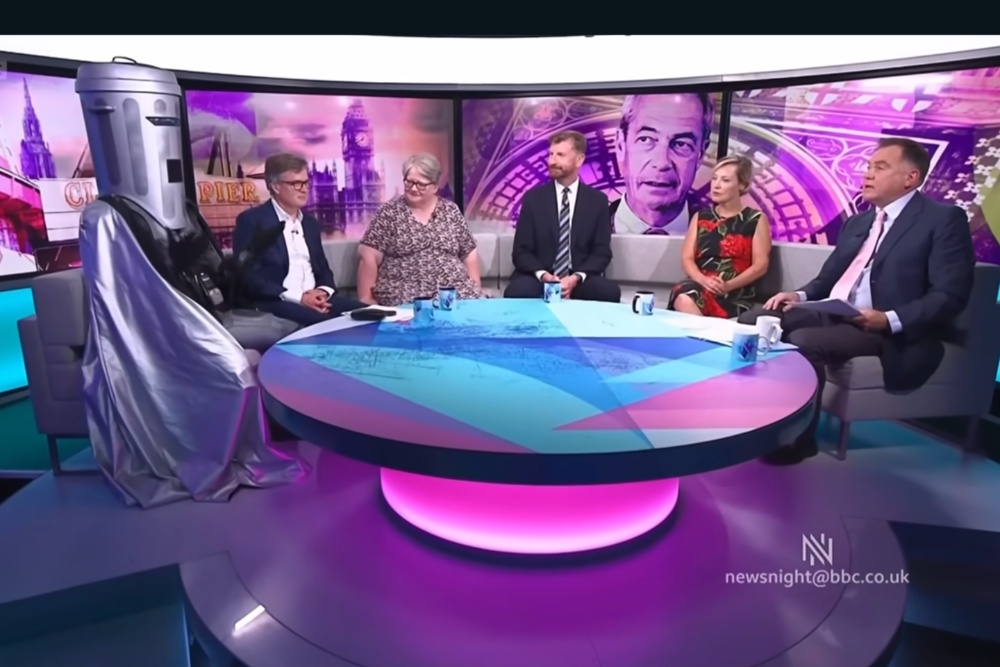
Count Binface is a masked comedian and political satirist who is challenging Nigel Farage in the Clacton by-election, scheduled for 2026. His campaign, characterized by anti-establishment humor and surreal policy proposals, has garnered significant public attention. This unconventional approach positions him as a unique challenger to Farage’s established political presence.
The by-election in Clacton is shaping up to be a pivotal moment in UK politics. It not only features high-profile candidates but also reflects broader voter dissatisfaction with traditional political structures. Binface’s rise underscores a trend where comedic and protest candidates can gain unexpected traction, influencing electoral outcomes.
The Persona of Count Binface: Satire as a Political Tool
Count Binface is the creation of comedian Jonathan Harvey. The character is instantly recognizable for wearing a dustbin on his head and campaigning on deliberately absurd, yet often pointed, policy platforms. This persona allows for sharp political satire, often highlighting perceived absurdities within mainstream politics.
His campaigns are not simply comedic stunts. They often contain incisive critiques of government policies and political figures. The humor serves as a vehicle for expressing genuine public frustration and a desire for systemic change. This blend of comedy and commentary distinguishes his political activism.
Binface’s appeal lies in his ability to articulate discontent in a way that resonates with voters who feel unrepresented by conventional politicians. His direct, often outlandish, proposals cut through typical political rhetoric, offering a refreshing alternative to traditional political discourse.
A History of High-Profile Challenges
Count Binface is no stranger to high-stakes electoral contests. He first gained national prominence during the 2017 general election. In that election, he ran against then-Prime Minister Theresa May in the Maidenhead constituency. This initial foray established his brand as a satirical disruptor in national politics.
During the 2019 general election, Binface stood against then-Prime Minister Boris Johnson in Uxbridge and South Ruislip. Despite not securing a victory, he garnered a notable number of votes. This demonstrated a consistent, albeit niche, appeal among a segment of the electorate, building a foundation for his current challenge in Clacton.
Each election provided Binface with a larger platform. He honed his public image and refined his satirical approach through these contests. His consistent presence in high-profile races has cemented his status as a recognizable figure in UK political commentary and a symbol of protest.
Nigel Farage and the Clacton By-Election: A Political Barometer
Nigel Farage is a significant figure in British politics. He is known for his leadership of the UK Independence Party (UKIP) and subsequently the Brexit Party. Farage has been a vocal proponent of Euroscepticism and national sovereignty for decades, shaping much of the UK’s political conversation on these topics.
Farage’s decision to contest the Clacton by-election marks a significant moment in his enduring political career. Clacton, a constituency located in Essex, has a history of supporting Eurosceptic candidates. It is widely considered a stronghold for right-wing populist sentiment, making it a strategic choice for his campaign.
The by-election arises from a recent vacancy, drawing national attention due to Farage’s involvement and his past influence in the area. His campaign focuses on core issues such as immigration, national identity, and perceived failures of the current government, echoing themes that have defined his political career.
Why Clacton Matters in the Political Landscape
Clacton holds considerable symbolic importance within UK politics. It was the first constituency to elect a UKIP Member of Parliament in 2014. That by-election victory signaled a significant shift in the national political landscape and the rise of populist movements. This history makes it a natural battleground for Farage and his political ideology.
The outcome in Clacton will be widely interpreted as a barometer of public opinion. It will indicate sentiment regarding Farage’s brand of politics and the broader direction of the country. A strong showing for Farage could reassert his influence, while a robust challenge from Binface could significantly complicate this narrative, drawing attention away from a clear Farage victory.
For Count Binface, Clacton offers another crucial opportunity to demonstrate the viability of anti-establishment candidacies. It provides a prominent stage to amplify his message to a national audience, directly confronting a figure synonymous with populist movements. This direct confrontation highlights the evolving nature of political discourse.
The Dynamics of the Challenge: Satire Meets Populism
The clash between Count Binface and Nigel Farage represents a collision of distinct political styles and ideologies. Farage embodies a serious, albeit often controversial, political movement focused on traditional policy concerns. Binface, conversely, operates within the realm of satire and protest, using humor to make political points.
Binface’s strategy involves using humor to expose what he perceives as the flaws and hypocrisies of mainstream politics. His policy proposals, such as moving the Houses of Parliament to Doncaster or bringing back Ceefax, are designed to provoke both thought and laughter simultaneously. These proposals, while humorous, often highlight real-world issues through exaggeration.
This approach can be profoundly disarming to traditional political campaigns. Voters, often weary of conventional political debates and rhetoric, may find Binface’s candid and comedic style refreshing. His ability to connect with voters on an emotional level, through shared frustration and humor, could prove to be a significant and unexpected asset in the by-election.
The Undercurrent of Anti-Establishment Sentiment
The rise of candidates like Count Binface is indicative of a deep-seated anti-establishment sentiment among a significant portion of the electorate. Many voters express feeling disconnected from political elites and disillusioned with the offerings of traditional political parties. This sentiment creates fertile ground for unconventional candidacies.
Binface skillfully capitalizes on this widespread sentiment. He presents himself as an undeniable outsider, unburdened by party loyalty or conventional political ambition. His very appearance, with a bin for a head, serves as a powerful visual symbol of a rejection of the political status quo and its perceived failings.
This anti-establishment appeal has the potential to draw votes from various segments of the population. This includes those who are politically disengaged, those who feel ignored by mainstream politicians, and those who simply wish to register a protest vote against the existing system. His candidacy becomes a vehicle for expressing broader discontent.
Could Binface Actually Win? Assessing the Odds
While the prospect of Count Binface winning a parliamentary seat might seem improbable to many political observers, his past performances suggest he can attract a significant protest vote. In the 2019 general election, for example, he secured 69 votes against Boris Johnson. This was a respectable showing for a satirical candidate in a high-profile constituency, demonstrating a baseline of support.
The Clacton by-election presents a unique set of circumstances. Its specific local dynamics, combined with the high-profile nature of Farage’s candidacy, could create an environment where a protest vote for Binface gains unusual momentum. The intense media focus on Farage might inadvertently create space for other candidates to capture public imagination and support.
A victory for Binface would be unprecedented in UK political history and would undoubtedly send shockwaves through the entire political system. Even a strong second or third-place finish would be a significant achievement. Such an outcome would solidify his status as a serious satirical force within British politics, proving the power of unconventional campaigns.
The Amplifying Role of Media and Social Media
The media, both traditional and social, plays a critical role in amplifying the campaigns of unconventional candidates like Count Binface. His unique visual identity and humorous policy proposals are inherently newsworthy, attracting coverage that more conventional candidates might struggle to obtain. This media attention provides invaluable exposure.
Social media platforms are particularly crucial for Binface’s strategy. They allow his satirical messages to spread rapidly, reaching a younger, often more politically disengaged audience. Viral memes, humorous videos, and direct interactions with followers help to build a community around his candidacy, translating online engagement into real-world awareness.
This widespread media and social media presence ensures that Binface’s challenge to Farage is not easily dismissed. It elevates his candidacy from a fringe protest to a significant talking point, influencing public discourse and potentially swaying voters who are looking for an alternative to traditional political figures.
Looking Ahead: The Impact of the Clacton By-Election
The Clacton by-election in 2026 will be more than just a contest for a parliamentary seat. It will serve as a bellwether for several key trends in British politics. The performance of Nigel Farage will indicate the continued strength of populist movements and his personal political influence. His campaign will test the resonance of his core messages with the electorate.
Equally important will be the performance of Count Binface. His vote share will provide a measure of the electorate’s appetite for protest votes and satirical political challenges. A strong showing for Binface could encourage other unconventional candidates and influence how traditional parties approach future elections, forcing them to address underlying discontent.
Regardless of the outcome, the Clacton by-election will be a compelling study in modern political campaigning. It will showcase the enduring power of established political figures alongside the disruptive potential of satirical, anti-establishment candidacies. The eyes of the nation will be on Clacton.
Voters will head to the polls. Candidates will make their final appeals. The results will be tallied.
Clacton will speak.