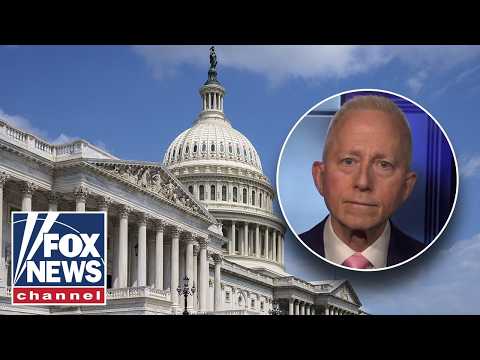
A recent segment on Fox News featured an individual identified as a ‘Dem defector,’ who delivered a ‘dire warning’ regarding the current state of political affairs. This warning was characterized as a ‘really big deal,’ emphasizing the perceived gravity of ongoing political shifts and their potential impact on the national discourse.
This particular phrasing is designed to resonate with an audience primed for political activation. It appeals to a sense of cultural defense and defiance, framing specific political developments as critical threats or opportunities that demand immediate attention.
The Language of Political Defection
The term ‘Dem defector’ itself carries significant weight. It describes an individual who has formally or ideologically departed from the Democratic Party. Such figures are often presented as credible internal critics, offering insights from a previously aligned perspective.
Their narratives frequently highlight disillusionment with their former party’s direction. This can involve policy stances, ideological shifts, or perceived failures in leadership. The act of defection is presented as a principled stand.
For media outlets like Fox News, featuring a ‘defector’ serves multiple purposes. It validates existing criticisms of the Democratic Party from an unexpected source. It also provides a narrative of political courage and conviction.
The ‘Dire Warning’ Framework
The concept of a ‘dire warning’ is a rhetorical device used to elevate the perceived stakes of a situation. It suggests impending negative consequences if current trajectories are not altered. This framework aims to instill a sense of urgency among the audience.
Warnings of this nature often touch upon core values, national security, economic stability, or cultural identity. They are crafted to provoke a strong emotional response and encourage active engagement from the audience.
When combined with the credibility of a ‘defector,’ the ‘dire warning’ becomes a powerful tool. It suggests that even those who once stood with the opposition now recognize the severity of the situation. This can be particularly effective in swaying undecided individuals or reinforcing the convictions of the already aligned.
‘A Really Big Deal’: Escalating Significance
The phrase ‘a really big deal’ functions as an intensifier. It takes the general alarm of a ‘dire warning’ and grounds it in a relatable, emphatic statement. This colloquialism makes the complex political issue feel more immediate and personally relevant.
It implies that the issues being discussed are not merely academic or partisan squabbles. Instead, they are fundamental shifts with far-reaching consequences. This framing encourages the audience to view the situation with heightened concern.
This kind of language is a hallmark of political communication designed for impact. It simplifies complex issues into easily digestible, emotionally resonant phrases. The goal is to cut through the noise and capture attention.
Political Activators and Cultural Defense
The report explicitly states that the warning appeals to ‘political activators’ and a ‘sense of defiance.’ Political activators are individuals or groups highly engaged in political processes. They are often opinion leaders within their communities.
A ‘sense of defiance’ refers to a readiness to resist perceived threats or opposition. This sentiment is often cultivated in political messaging to mobilize a base. It encourages a proactive stance against perceived adversaries or undesirable outcomes.
In the context of the ‘Dem defector,’ this defiance is directed towards the policies or ideologies of the former party. It positions the audience as defenders of a particular set of values or a way of life. This creates a strong in-group/out-group dynamic.
Historical Parallels of Political Defection
Political defections are not new to American history. Throughout various eras, individuals have switched party allegiances, often signaling significant political realignments or ideological shifts. Figures like Ronald Reagan, who began his political career as a Democrat before becoming a Republican icon, exemplify this phenomenon.
Reagan’s journey from New Deal Democrat to conservative standard-bearer was marked by his vocal critiques of the Democratic Party’s evolving direction. His ‘A Time for Choosing’ speech in 1964 is a classic example of a ‘defector’s warning,’ articulating a stark choice for the nation.
More recently, figures like Tulsi Gabbard, a former Democratic Congresswoman, have garnered attention for their critiques of the Democratic Party and their subsequent departure. These individuals often become prominent voices in conservative media, amplifying their warnings and perspectives.
The Role of Media in Amplifying Defector Narratives
News organizations play a crucial role in amplifying the narratives of political defectors. For outlets like Fox News, featuring a ‘Dem defector’ provides a powerful testimonial. It suggests that even members of the opposing camp recognize the validity of their criticisms.
This amplification serves to legitimize certain viewpoints and can influence public opinion. The defector’s story is often framed as a journey of enlightenment or a courageous stand against prevailing orthodoxy. This narrative can be highly persuasive.
The media platform provides a megaphone for these warnings, ensuring they reach a broad audience. The choice of language and framing by the media outlet further shapes how these messages are received and interpreted by the public.
Implications for the 2026 Political Landscape
As of 2026, such ‘dire warnings’ from ‘defectors’ contribute to an already polarized political environment. They reinforce existing divisions and can exacerbate partisan tensions. The focus on ‘cultural defense’ suggests a battle over fundamental societal values.
These narratives can influence voter behavior, particularly among those who feel disenfranchised by traditional party politics. They offer an alternative perspective, often portraying the ‘defector’ as a truth-teller unafraid to challenge established norms.
The effectiveness of such warnings will be measured by their ability to mobilize voters, shift public opinion, and contribute to broader political realignments. The 2026 midterm elections and beyond will test the resonance of these messages.
The Broader Context of Political Polarization
The phenomenon of a ‘Dem defector’ issuing a ‘dire warning’ is situated within a broader context of increasing political polarization in the United States. This polarization is characterized by widening ideological gaps between the two major parties and a growing intolerance for opposing viewpoints.
Such warnings often capitalize on this environment, presenting stark choices and clear adversaries. They contribute to a narrative where compromise is difficult and fundamental differences are highlighted. This can make political reconciliation more challenging.
The emphasis on ‘defiance’ further underscores this polarization. It suggests that the appropriate response to perceived threats is not negotiation but steadfast opposition. This dynamic shapes both political rhetoric and policy debates.
Measuring the Impact of Defector Statements
Assessing the true impact of a ‘defector’s warning’ requires careful analysis. While such statements generate media attention, their long-term effect on voter behavior or party platforms can vary. The individual’s prominence, the timing of their defection, and the specific issues they highlight all play a role.
Sometimes, defector statements can spark internal debates within parties, forcing them to re-evaluate their positions. Other times, they may simply reinforce existing partisan divides without significantly altering the political landscape.
The ongoing media coverage and public reception will ultimately determine the lasting legacy of this particular ‘dire warning.’ Its resonance will be tested against the backdrop of current events and evolving political narratives.
Defectors speak. Warnings are issued. Audiences are called to action. The political landscape shifts.
A ‘really big deal.’