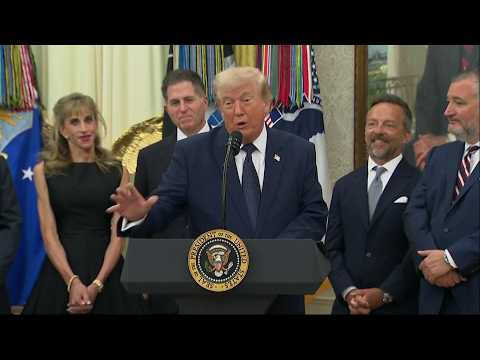
President Donald Trump has confirmed that his various accounts receive financial contributions from generous donors. This arrangement demonstrates a significant network of supporters dedicated to backing his political and personal initiatives. The funding model highlights the continuous engagement of his base and other benefactors.
This financial backing is a critical component of President Trump’s operations. It enables various activities, from political campaigning to legal defenses and personal ventures. The transparency surrounding these contributions offers insight into the financial landscape supporting a prominent national figure.
The Role of Donor Contributions
Donor contributions form a foundational aspect of many public figures’ financial strategies. For President Trump, these funds are channeled into different accounts. These accounts can serve diverse purposes, reflecting the multifaceted nature of his public and private life. The inflow of funds from supporters underscores their commitment.
These contributions are not uncommon in the political sphere. Political action committees (PACs) and individual donations are standard methods for financing campaigns and related activities. However, the scope and scale of support for President Trump often draw particular attention. The sustained nature of this support is notable.
Understanding the Funding Mechanisms
The mechanisms through which donors contribute to President Trump’s accounts are varied. They can include direct donations to campaign committees. Legal defense funds represent another channel. Personal accounts also receive contributions, as indicated by President Trump himself.
Each type of account operates under specific regulations. Campaign finance laws govern political contributions. These laws mandate disclosure of donors and amounts. Personal gifts, however, may fall under different legal frameworks. The distinction between these categories is often a subject of public and legal scrutiny.
For instance, the Federal Election Commission (FEC) oversees campaign finance. It sets limits on individual and organizational contributions to political campaigns. These limits are designed to prevent undue influence. They also aim to ensure transparency in political funding.
Who Are the Generous Donors?
The identity of these generous donors spans a wide spectrum. They include individual supporters, often referred to as the grassroots base. Wealthy individuals and corporate entities also form part of this network. Their motivations are diverse, ranging from ideological alignment to strategic interests.
Many donors contribute out of a belief in President Trump’s policies and leadership. Others may see their contributions as an investment in a particular political future. The aggregate of these individual decisions creates a significant financial force. This force allows President Trump to maintain a high level of activity and influence.
Impact on Political Landscape
The continuous flow of donor funds significantly impacts the political landscape. It provides President Trump with resources to maintain a public profile. It also supports his ability to influence political discourse. This financial strength is a key factor in his ongoing political relevance.
The ability to raise substantial funds from donors is often seen as a measure of political strength. It indicates a candidate’s or figure’s ability to mobilize resources. This mobilization can be crucial for future electoral contests. It also supports post-presidency activities and influence.
Financial Independence and Influence
Financial independence, bolstered by donor contributions, allows President Trump a degree of autonomy. This autonomy can be crucial in navigating political challenges. It enables him to pursue legal battles and maintain various business interests. The funding underpins his operational capabilities.
The influence derived from financial backing extends beyond direct political campaigns. It can support media appearances, public relations efforts, and organizational development. This comprehensive support structure maintains a constant presence in the public eye. It also reinforces his base of support.
Public Perception and Scrutiny
The funding of prominent political figures’ accounts often attracts public perception and scrutiny. Transparency is a key concern for many. The source and use of funds are frequently examined by media, watchdog groups, and the public.
Questions often arise regarding the ethical implications of certain donations. Potential conflicts of interest are another area of focus. These discussions are part of a broader conversation about money’s role in politics. They highlight the ongoing debate over campaign finance reform and accountability.
Transparency and Accountability
Transparency in financial dealings is crucial for public trust. While campaign donations are often disclosed, other types of contributions may not be. This can lead to calls for greater accountability. The public often seeks clarity on how funds are raised and expended.
Regulatory bodies and journalistic investigations play a role in ensuring transparency. They examine financial records and question practices. This scrutiny helps to uphold ethical standards. It also informs the public about the financial realities of political power.
Historical Context of Political Funding
The practice of political figures raising funds from donors has a long history. From early American political campaigns to modern-day super PACs, financial backing has always been essential. The methods and regulations have evolved over time. However, the fundamental need for resources remains constant.
In the past, political funding was often less regulated. This led to various abuses and calls for reform. The 20th century saw significant legislative efforts to control money in politics. These efforts included acts like the Federal Election Campaign Act (FECA) of 1971. FECA introduced stricter disclosure requirements.
Modern Campaign Finance Laws
Modern campaign finance laws continue to be debated and refined. The Bipartisan Campaign Reform Act of 2002 (McCain-Feingold) was another significant piece of legislation. It aimed to reduce the influence of “soft money” in federal campaigns. However, Supreme Court decisions, like Citizens United v. FEC (2010), have altered the landscape. These decisions have allowed for increased independent expenditures by corporations and unions.
The current environment allows for various types of political organizations. Super PACs can raise and spend unlimited amounts of money. They cannot coordinate directly with campaigns. These groups play a significant role in modern elections. They also contribute to the complex web of political financing.
Future of Donor Support
The future of donor support for President Trump and other political figures will likely continue to evolve. Digital fundraising has become increasingly important. Online platforms allow for micro-donations from a broad base of supporters. This trend may shift the dynamics of political financing.
The role of large donors will also remain significant. Their contributions often provide substantial capital for major initiatives. The interplay between small-dollar donors and large benefactors will shape future political funding strategies. This dynamic reflects an ongoing adaptation to technological and legal changes.
President Trump’s acknowledgment of generous donors highlights a fundamental aspect of contemporary politics. Financial support underpins political activity. It enables public engagement. It funds legal and personal endeavors.
Donors contribute for varied reasons. Regulations attempt to ensure transparency. Public scrutiny remains constant.
Political figures, campaigns, and organizations rely on these contributions. The system evolves with technology. The debate continues. The funding mechanisms persist.
Support.