Elon Musk’s artificial intelligence startup, xAI, and his aerospace manufacturer, SpaceX, are facing a federal lawsuit filed by residents of Southaven, Mississippi, over pervasive and inescapable noise pollution generated by natural gas turbines powering the Colossus supercomputer facility just across the state line in Memphis, Tennessee. The legal action centers on a fundamental bottleneck in the modern technology sector. Artificial intelligence requires massive computational power. Computational power requires massive electrical power. When the existing civic grid cannot provide that power, technology companies are forced to build their own infrastructure. In Memphis, that infrastructure took the form of heavy industrial generators. For the residents living nearby, the result has been a relentless, low-frequency hum that vibrates through the walls of their homes.
The story of this lawsuit does not begin in a courtroom. It begins with a race for computational supremacy. In the highly competitive landscape of generative artificial intelligence, processing capability is the ultimate currency. Companies like OpenAI, Google, and Meta are spending billions to secure hardware. Musk launched xAI to compete directly in this arena. To do so, the company required a supercomputer of unprecedented scale. They called the project Colossus.
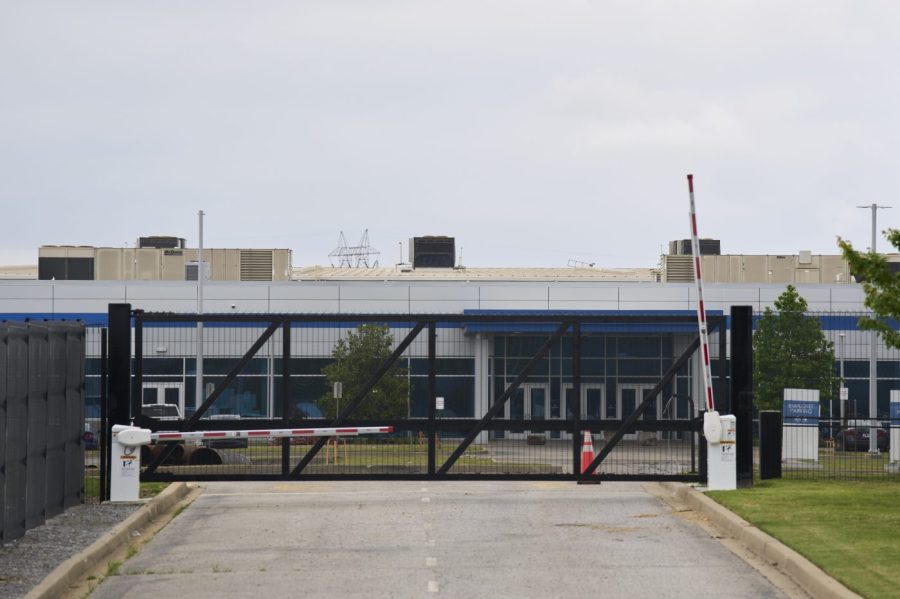
Finding a location for a machine of this magnitude is a logistical puzzle. The site required vast square footage, heavy industrial zoning, access to immense water resources for cooling, and proximity to major power transmission lines. In June 2024, the Greater Memphis Chamber announced that xAI had selected a massive, 785,000-square-foot manufacturing facility in southwest Memphis. The building, located at 3231 Paul R. Lowry Road, was previously occupied by appliance manufacturer Electrolux. It sits in an industrial corridor near the Mississippi River, bordered by the Boxtown neighborhood in Memphis to the north and the city of Southaven, Mississippi, to the south.
The Arrival of the Memphis Supercomputer
The speed of the Colossus deployment was unprecedented in the technology sector. Traditional data center construction can take years of planning, permitting, and construction. xAI moved into the former Electrolux plant and began installing hardware in a matter of months. The initial phase of the project involved networking 100,000 Nvidia H100 graphics processing units (GPUs). These chips are the engine of modern artificial intelligence, capable of processing massive datasets to train large language models like xAI’s Grok.
But 100,000 Nvidia H100 GPUs generate extreme heat and consume staggering amounts of electricity. The facility’s power requirements were estimated at 150 megawatts. To put this in perspective, 150 megawatts is enough electricity to power roughly 100,000 homes simultaneously. The local utility provider, Memphis Light, Gas and Water (MLGW), operates under the umbrella of the Tennessee Valley Authority (TVA). While MLGW is one of the largest municipal utilities in the nation, modern electrical grids are not designed to accommodate an instantaneous, localized draw of 150 megawatts without extensive infrastructure upgrades. Substations must be built. High-capacity lines must be routed. This process takes years.
xAI did not have years. The artificial intelligence arms race operates on a timeline measured in weeks. To bridge the gap between their immediate power needs and the eventual capacity of the MLGW grid, the company implemented a temporary, brute-force solution. They brought the power plant to the servers.
The Power Problem and the Turbine Solution
To operate Colossus while waiting for permanent grid upgrades, xAI deployed a fleet of mobile natural gas turbines at the Memphis site. These industrial generators are essentially jet engines bolted to the ground, designed to burn natural gas to generate electricity. They are highly effective at producing reliable, continuous power. They are also highly effective at producing noise.
The initial deployment included at least 18 natural gas turbines, with plans indicating a potential expansion to two dozen or more. These units were positioned outside the main facility, operating around the clock to keep the servers online and the cooling systems running. Because the facility operates continuously, the turbines operate continuously. There are no quiet hours. There are no downtime cycles. The combustion of natural gas and the mechanical rotation of the turbines generate a constant, heavy drone.
The deployment of these turbines immediately raised alarms among local environmental groups, including the Southern Environmental Law Center (SELC). Concerns were initially focused on air quality. Southwest Memphis already bears a heavy industrial burden, and the addition of dozens of gas-burning generators introduced new sources of nitrogen oxides and volatile organic compounds into the local atmosphere. The Shelby County Health Department became involved, navigating the complex regulatory framework of temporary emission sources. But while regulators focused on the invisible emissions in the air, the residents nearby were overwhelmed by something they could feel.
Across the State Line: Southaven Hears the Hum
Sound does not respect municipal boundaries. It does not respect state lines. The xAI facility sits in the extreme southwest corner of Tennessee. Just a few thousand feet to the south lies DeSoto County, Mississippi, and the city of Southaven. Southaven is a sprawling suburban community, characterized by quiet residential neighborhoods, parks, and schools. For decades, the border between the industrial zones of Memphis and the residential zones of Southaven was buffered by distance and tree lines.
The natural gas turbines shattered that buffer. The noise generated by industrial turbines is distinct from typical urban noise. It is not the sharp, transient sound of a passing siren or a commercial jet overhead. It is a continuous, low-frequency hum. Low-frequency sound waves have long wavelengths. These waves are incredibly resilient. They pass easily through the air over long distances, and more importantly, they penetrate solid objects. They pass through tree lines. They pass through exterior walls. They pass through double-pane windows.
Residents in Southaven began reporting a pervasive, inescapable vibration inside their homes. It was described as a physical sensation as much as an auditory one. It is the feeling of a heavy diesel truck idling permanently in the driveway. The constant drone disrupts sleep patterns. It causes headaches. It creates a baseline of psychological stress that cannot be mitigated by closing doors or wearing standard earplugs. For the residents of Southaven, their homes ceased to be places of rest.
The Legal Challenge Takes Shape
Faced with a sudden, drastic decline in their quality of life, the residents of Southaven sought legal recourse. The resulting federal lawsuit names both xAI and SpaceX as defendants. The inclusion of SpaceX in the litigation highlights the deeply intertwined nature of Elon Musk’s corporate empire. While xAI is the primary operator of the Colossus supercomputer, resources, personnel, and logistical support frequently cross over between Musk’s various entities. The lawsuit alleges that equipment and operational support tied to the turbine deployment involve SpaceX infrastructure.
The core of the legal complaint is rooted in the doctrine of nuisance. In property law, a private nuisance occurs when an entity engages in an activity that significantly and unreasonably interferes with the use and enjoyment of another person’s land. The plaintiffs argue that the continuous, high-decibel, low-frequency noise from the un-enclosed natural gas turbines constitutes a textbook definition of a private nuisance. The noise is pervasive. It is inescapable. It has fundamentally altered the character of their neighborhood.
The lawsuit seeks immediate injunctive relief. The plaintiffs are asking the federal court to intervene and halt the operation of the turbines until adequate sound mitigation measures are implemented. This could involve constructing massive acoustic enclosures around the generators, installing heavy sound-dampening baffles, or reducing the operational hours of the equipment. Furthermore, the plaintiffs are seeking compensatory damages for the physical and psychological distress caused by the noise, as well as the anticipated depreciation of their property values. A home located directly in the path of continuous industrial noise is inherently less valuable on the real estate market.
The Physics of Low-Frequency Noise
To understand the severity of the Southaven lawsuit, one must understand the biology and physics of low-frequency noise pollution. Human hearing is typically measured in decibels (dB), but the pitch or frequency of the sound, measured in Hertz (Hz), dictates how the sound interacts with the environment and the human body. High-frequency sounds are easily blocked by physical barriers. A simple wall or a thick curtain can absorb them. Low-frequency sounds, typically below 100 Hz, behave differently.
When the natural gas turbines at the xAI facility operate, they generate massive acoustic energy at the low end of the frequency spectrum. These long waves travel outward, largely unaffected by the topography or vegetation between the Memphis industrial park and the Southaven neighborhoods. When these waves encounter a house, they do not bounce off. They cause the structure itself to resonate. The walls, the floors, and the windows vibrate in sympathy with the sound waves. This transforms the entire house into an acoustic amplifier.
Medical research on prolonged exposure to low-frequency noise paints a grim picture. It is recognized as a significant environmental stressor. Chronic exposure leads to severe sleep disruption. The body never fully enters deep REM sleep because the auditory system is constantly registering a threat or anomaly. This chronic sleep deprivation cascades into other health issues, including elevated blood pressure, chronic fatigue, anxiety, and cognitive impairment. The plaintiffs in the Southaven lawsuit are not merely complaining about an annoyance. They are detailing a systematic degradation of their physical and mental health.
The Broader Implications for AI Infrastructure
The legal battle unfolding between the residents of Southaven and Elon Musk’s technology companies is not an isolated incident. It is a bellwether. It represents the leading edge of a conflict that will define the next decade of civic planning and technological development in the United States. The cloud is not an abstract concept floating in the sky. The cloud is physical. It is made of steel, silicon, copper, and concrete. It requires land. It requires water. Above all, it requires massive amounts of electricity.
As artificial intelligence models grow exponentially more complex, their energy demands scale concurrently. The existing electrical grid in the United States, built largely in the mid-20th century, is entirely unequipped to handle the sudden emergence of hyper-scale data centers demanding hundreds of megawatts of localized power. Utility companies cannot build transmission lines fast enough. Planners cannot approve substations fast enough.
Technology companies, driven by intense market competition and the promise of trillion-dollar valuations, will not wait for the grid to catch up. They will continue to seek alternative, immediate power solutions. Natural gas turbines, diesel generators, and eventually small modular nuclear reactors will be deployed to feed the servers. These deployments will inevitably clash with local communities. The Southaven lawsuit is the blueprint for these future conflicts. It tests the boundaries of corporate expansion against the fundamental rights of citizens to inhabit their homes in peace.
The Jurisdictional Complexity
Adding to the complexity of the Colossus lawsuit is the jurisdictional friction. The xAI facility operates in Memphis, Tennessee. It is subject to the zoning laws, environmental regulations, and political oversight of Shelby County and the state of Tennessee. The plaintiffs, however, reside in Southaven, Mississippi. They vote in DeSoto County. They pay taxes in Mississippi. They have no political representation in the municipality that permitted the facility causing their distress.
This cross-border dynamic complicates regulatory enforcement. If a facility in Memphis pollutes the air or the acoustic environment of Southaven, the local government in Mississippi has limited direct authority to intervene. They cannot send inspectors to shut down the plant. They cannot revoke operating permits. This regulatory vacuum forces the affected citizens to bypass local government entirely and seek relief in the federal court system. It transforms a local zoning dispute into a federal legal battle involving one of the wealthiest men on the planet.
The outcome of this lawsuit will set critical precedents. If the federal court grants injunctive relief and forces xAI to shut down or heavily mitigate the turbines, it will send a clear message to the technology sector. It will establish that the speed of AI development cannot supersede fundamental environmental and nuisance laws. It will force companies to factor extreme sound mitigation and community impact into their deployment timelines. If, however, the court sides with the corporations, it will signal that the economic imperative of technological dominance outweighs the acoustic sovereignty of local neighborhoods.
The Wait for Silence
For now, the servers in Memphis continue to process data. The Nvidia chips continue to train the next generation of artificial intelligence. To keep those chips cool and operational, the natural gas turbines continue to burn fuel. They continue to spin. They continue to generate power.
And across the state line, the sound waves continue to travel. They cross the industrial yards. They cross the empty fields. They cross the Mississippi border. They penetrate the walls of the homes in DeSoto County. The legal filings accumulate in federal court. The lawyers prepare their arguments. The technology sector watches closely to see where the boundaries of expansion will be drawn. The servers hum. The turbines roar. The residents wait. Southaven.