Tag: Nbc

  • Second Note Sent to Media Claims Nancy Guthrie is Dead

    Second Note Sent to Media Claims Nancy Guthrie is Dead

    On June 23, 2026, national media outlets received a second anonymous note claiming that Nancy Guthrie, the mother of NBC Today co-anchor Savannah Guthrie, has died. The correspondence arrived at entertainment and hard news desks, escalating a quiet internal inquiry into a widespread verification effort. Neither Savannah Guthrie, her personal representatives, nor NBC Universal have issued a public statement confirming or denying the contents of the messages. The situation remains an active, unverified newsroom inquiry.

    Unsolicited tips reach newsrooms daily. Repeated, targeted correspondence regarding the immediate family member of a sitting network anchor represents a distinct anomaly. The situation immediately triggered standard journalistic protocols across New York City and Los Angeles media hubs. Editors are currently working to establish contact with primary sources to confirm the status of the Guthrie family matriarch.

    The Arrival of the Second Note

    The contents of the second note reinforce the initial claim regarding Nancy Guthrie. Details regarding the exact delivery method, the specific outlets targeted, and the sender’s identity remain shielded by the receiving organizations. Law enforcement and media organizations routinely withhold specific details of unverified correspondence to prevent copycat behavior or interference with potential investigations.

    The timeline of the correspondence forms the center of the current media inquiry. The arrival of a second note suggests a coordinated effort by the sender to force publication. Major outlets, including Variety and The Hollywood Reporter, operate dedicated tip lines. Escalating claims typically trigger internal legal and editorial reviews before any public reporting occurs. The presence of a second message forces desk editors to allocate resources to verify the claim, rather than dismissing it as a singular prank.

    The Guthrie Family Dynamics and Tucson Roots

    Savannah Guthrie has anchored the Today show from Studio 1A at Rockefeller Center since 2012. Her relationship with her mother, Nancy, is well-documented on the broadcast. Nancy Guthrie has occasionally appeared in public segments. These appearances frequently occur during Mother’s Day programming and family-focused culinary segments.

    The Guthrie family history is rooted in Tucson, Arizona. Savannah was born in Melbourne, Australia, in 1971. The family relocated to the United States shortly after her birth. Nancy Guthrie raised Savannah and her siblings, Annie and Camron, in Arizona. The family established deep ties to the local community.

    The family faced a significant tragedy in 1988. Charles Guthrie, Savannah’s father, died suddenly of a heart attack when Savannah was 16 years old. Following his death, Nancy Guthrie returned to the workforce to support her three children. She secured a position in public relations at the University of Arizona.

    This background frequently surfaces in Savannah Guthrie’s public discussions about resilience and family. The close bond between mother and daughter makes the current unverified correspondence particularly sensitive for NBC News personnel and broadcast colleagues. The personal history elevates the urgency of the verification process.

    Journalistic Protocols for Death Verification

    Newsrooms operate under strict verification protocols when handling claims of a high-profile death. The Associated Press, Reuters, and major broadcast networks do not publish obituaries or confirm deaths based solely on anonymous or unsolicited correspondence. The rules of journalism require concrete proof.

    The standard protocol requires direct confirmation from a primary source. Acceptable primary sources include immediate family members, official public relations representatives, a county medical examiner, or local law enforcement agencies. Until one of these sources provides on-the-record confirmation, the notes remain an unverified anomaly.

    Publishing a death notice without primary confirmation carries significant editorial and legal risks. The rush to publish based on secondary or anonymous sources has historically resulted in high-profile retractions. Consequently, editors at major desks place a hard hold on any reporting until the verification chain is complete. The burden of proof rests entirely on the news organization.

    The Bottleneck at 30 Rockefeller Plaza

    The situation places NBC Universal in a delicate position. As the employer of Savannah Guthrie, the network must balance its role as a newsgathering organization with its responsibilities to its anchor. NBC News maintains its own rigorous standards and practices division to handle sensitive reporting.

    Currently, representatives for NBC News and the Today show have declined to comment on the notes. This silence is standard operating procedure. Corporate communications departments rarely address unverified rumors regarding the personal lives of their on-air talent unless a formal statement has been authorized by the family.

    Inside 30 Rockefeller Plaza, producers and desk editors continue their daily operations. The morning broadcast schedule remains intact. Any deviation from this schedule, or any formal acknowledgment on the Today show, would only occur after absolute verification and with Savannah Guthrie’s explicit consent. The network defers to the family.

    The Role of Entertainment Media

    Trade publications and entertainment news outlets often serve as the first point of contact for unsolicited industry tips. Outlets like TMZ, Variety, and Deadline monitor dedicated inboxes for breaking news. These desks process thousands of claims weekly.

    When a tip involves a private citizen, the editorial calculus changes. Nancy Guthrie is not a public figure in the traditional sense, despite her occasional television appearances. The privacy rights of non-public figures dictate a higher threshold for reporting. This legal and ethical distinction further slows any potential publication of the claims made in the notes.

    Savannah Guthrie’s Journalistic Background

    The current situation intersects with Savannah Guthrie’s own professional background. She joined NBC News in 2007. She served as a White House correspondent and chief legal correspondent. She holds a Juris Doctor from Georgetown University Law Center.

    Her rigorous training in evidence and fact-checking defines her career. She understands the mechanics of newsroom verification better than most public figures. This makes the circulation of unverified notes about her own family deeply ironic. The very protocols she utilizes daily as a journalist are currently being applied to her personal life by her peers in the media.

    Tracking the Source of the Correspondence

    While newsrooms attempt to verify the claim, parallel efforts often focus on the source of the notes. Digital correspondence leaves metadata trails, including IP addresses and routing information. Physical notes carry postmarks and forensic markers.

    Media organizations do not act as law enforcement. However, their IT and security departments routinely screen incoming anonymous tips for credible threats or coordinated harassment campaigns. If the notes are deemed part of a targeted harassment effort against the Guthrie family or NBC Universal, the network’s corporate security division would likely involve federal or local authorities.

    As of June 23, 2026, no such escalation has been publicly announced. The focus remains entirely on the factual verification of the claims. The identity of the sender remains a secondary concern to the validity of the message.

    The Impact on Morning Television Audiences

    Morning television relies heavily on the parasocial relationships between anchors and viewers. The Today show audience knows Savannah Guthrie’s children, Vale and Charley. They know her husband, Michael Feldman. They know her mother, Nancy.

    When an anchor shares their life on air, the audience feels a sense of ownership or connection. This connection drives the intense public interest in the unverified notes. Viewers track the personal milestones of morning anchors with the same attention they give to hard news. The network understands this dynamic and navigates it carefully during moments of potential family crisis.

    Next Steps for the Press

    Reporters assigned to this tip are currently executing standard skip-tracing and verification techniques. This involves checking public death registries in New York, where Savannah lives, and Arizona, where Nancy has historical ties. It involves contacting local medical examiner offices. It involves reaching out to the NBC Universal press office.

    Every inquiry must be handled with extreme tact. Calling a family member to verify a death based on an anonymous note is one of the most difficult tasks in journalism. Desks weigh the news value of the claim against the potential harm of the inquiry. In this case, the high profile of the anchor necessitates the inquiry, but dictates a highly sensitive approach.

    The Waiting Period

    The current situation exemplifies the tension between the speed of modern information and the deliberate pace of traditional journalism. The existence of the notes is a verifiable fact. The claims within the notes remain entirely unverified.

    Media organizations will continue to monitor official channels. County records, statements from the University of Arizona community, and official releases from NBC Universal represent the likely avenues for eventual confirmation or denial. Until that time, the correspondence sits in a holding pattern. The claims cannot be ignored, but they cannot be published as fact.

    Frequently Asked Questions

    Did Nancy Guthrie die?

    As of June 23, 2026, media outlets have received anonymous notes claiming Nancy Guthrie has died. This information remains unconfirmed by her family, NBC Universal, or official authorities. It is currently an active, unverified newsroom inquiry.

    Who is Nancy Guthrie?

    Nancy Guthrie is the mother of Savannah Guthrie, the prominent co-anchor of NBC’s Today show. She raised Savannah in Tucson, Arizona, and has occasionally appeared on the morning broadcast for family-focused segments.

    What did the second note say about Savannah Guthrie’s mother?

    The second note sent to media outlets reiterated the claim that Nancy Guthrie is dead. The sender, the delivery method, and the factual authenticity of the note are currently unverified by any primary journalistic source.

    Why hasn’t NBC News reported on the notes?

    Major news organizations, including NBC News, do not publish obituaries based on anonymous correspondence. Standard journalistic protocol requires confirmation from a primary source, such as a family representative or medical examiner, before reporting a death.

    Desks log the correspondence. Editors check the official wires. The verification process continues. Pending.

  • Bill Lawrence Talks Scrubs, Apple TV+, and His Firing From Friends

    Bill Lawrence Talks Scrubs, Apple TV+, and His Firing From Friends

    Bill Lawrence built a television empire following an early, high-profile career setback. Speaking at the Napa Valley StreamFest in June 2026, the prolific showrunner detailed how being fired from the writing staff of NBC’s Friends during its inaugural 1994 season forced a creative pivot that ultimately led to the creation of Scrubs, Ted Lasso, and his current Apple TV+ Emmy contenders, Shrinking and Rooster. The admission came during a live recording of The Hollywood Reporter’s Awards Chatter podcast. It offered a look at the mechanics of Hollywood career longevity. Success in television requires constant adaptation. For Lawrence, the path was defined by network shifts, writer strikes, and the realization that his voice did not align with the established tone of someone else’s writers’ room.

    The television landscape of 2026 operates differently than the broadcast model of 1994. Yet the fundamental currency of the industry remains unchanged. Writers must generate pages. Showrunners must manage productions. Networks, and now streamers, must capture subscriber attention. Lawrence has navigated multiple iterations of this ecosystem. His appearance in Napa Valley served as both a retrospective of a three-decade career and a strategic push for the upcoming Emmy voting window.

    The Napa Valley StreamFest Appearance

    The Napa Valley StreamFest gathered industry executives, creators, and talent in June 2026 to discuss the economics of digital distribution. Amid panels on algorithmic engagement and subscriber retention, Lawrence spoke extensively about narrative development and production resilience. He sat across from podcast host Scott Feinberg. The venue was packed. The subject matter spanned thirty years of television history, focusing on specific production challenges and network negotiations.

    Lawrence attended the festival to promote his current roster of Apple TV+ comedies. Shrinking continues to anchor the streamer’s comedy block, while Rooster has emerged as a major focus for the platform in the 2026 television season. To explain the development of his current series, Lawrence detailed the moments when his career faced significant obstacles. He pointed directly to early failures as the catalyst for his later structural approach to running a television show.

    Showrunners are often expected to project continuous success. Lawrence detailed his early failures, using them to contextualize the production strategies he employs on his current work. The strategy framed his 2026 Emmy contenders not as inevitable successes, but as the result of decades of learning how to manage writers’ rooms and network expectations, a process that began when he lost his job on the biggest sitcom in the world.

    Leaving Central Perk in 1994

    In the fall of 1994, NBC premiered a multi-camera sitcom about six twenty-somethings living in New York City. Friends became a defining cultural property. Bill Lawrence was on staff for the beginning. He was twenty-six years old. He had previously written for Boy Meets World and The Nanny. He secured a position on the writing staff under creators Marta Kauffman and David Crane.

    The position was highly sought after. However, Lawrence lasted exactly one season. He was fired by the showrunners.

    At the Napa Valley StreamFest, Lawrence discussed the dismissal. He did not blame Kauffman or Crane. He stated that his inability to assimilate into the specific rhythm of the show led to his exit. Friends required a unified comedic voice. Lawrence pitched his own distinct sensibilities. He was writing to his own comedic preferences, rather than matching the established voices of Ross, Rachel, or Chandler.

    The firing forced a career reassessment. In the mid-1990s, being let go from a hit NBC sitcom was a significant setback. Warner Bros. Television, the studio behind the show, maintained its relationship with him. The failure forced Lawrence to evaluate his foundational skills as a writer. Recognizing he could not easily adapt to someone else’s vision, he focused on creating his own material.

    Two years later, he co-created Spin City with Gary David Goldberg. The Michael J. Fox vehicle ran for six seasons on ABC. Lawrence established his ability to run a show. The lessons of the Friends writers’ room influenced his management style. He learned how to manage a staff. He learned how to protect a premise. He learned that a showrunner must shield their writers from network pressure.

    The Long Survival of ‘Scrubs’

    If Spin City proved Lawrence could run a traditional multi-camera sitcom, Scrubs proved he could develop a distinct single-camera format. Premiering on October 2, 2001, the medical comedy abandoned the live studio audience. It abandoned the laugh track. It utilized a single-camera setup, rapid-fire fantasy sequences, and an emotional structure that shifted between slapstick comedy and dramatic medical storylines.

    Lawrence detailed the production history of Scrubs during the Awards Chatter recording. The show was produced by Touchstone Television (now ABC Signature) but aired on NBC. This corporate structure meant Scrubs was frequently facing cancellation. NBC owned its other major comedies, like The Office and Will & Grace, meaning those shows generated more backend revenue for the network. Scrubs was a licensed property. It was perpetually on the bubble.

    The production filmed in an actual abandoned hospital, the North Hollywood Medical Center. The setting isolated the cast and crew from the traditional studio lot. Zach Braff, Donald Faison, Sarah Chalke, and John C. McGinley formed the core ensemble. Lawrence operated as showrunner, negotiating with NBC executives over tone, music licensing budgets, and serialized storylines.

    The 2007 Writers’ Strike and the Network Jump

    A major production challenge arrived during the 2007-2008 Writers Guild of America strike. Scrubs was in its seventh season. The strike halted production entirely. Lawrence supported the WGA and production ceased. The seventh season was truncated. NBC opted not to renew the series for an eighth season, seemingly ending the show.

    Lawrence orchestrated an unusual industry maneuver. Because Scrubs was produced by ABC’s sister studio, Touchstone, he pitched the eighth season directly to ABC. The network picked up the series. The move from NBC to ABC allowed Lawrence to conclude the narrative on his own terms. He negotiated a final season that provided closure for the main characters, culminating in the critically acclaimed season eight finale, “My Finale.”

    The survival of Scrubs demonstrated Lawrence’s ability to navigate corporate media structures. He learned how to leverage studio ownership against network ambivalence. He learned how to maintain cast morale during periods of extreme uncertainty. These skills became the foundation of his later production company, Doozer Productions.

    The Apple TV+ Era: ‘Shrinking’ and ‘Rooster’

    In 2026, Bill Lawrence is one of the primary comedic architects for Apple TV+. Following the massive global success of Ted Lasso, Lawrence secured a highly lucrative overall deal with Warner Bros. Television. This deal allows him to develop projects for various platforms, but his most prominent current work resides on Apple’s streaming service.

    During the Napa Valley StreamFest, Lawrence focused heavily on his two current Emmy contenders. Shrinking, co-created with Brett Goldstein and Jason Segel, stars Segel as a grieving therapist who begins telling his clients exactly what he thinks. The series also stars Harrison Ford in a rare comedic television role. Lawrence discussed the challenge of balancing the show’s exploration of grief with its required comedic beats.

    He also detailed the development of Rooster, his newest Apple TV+ project. While specific plot details remain tightly controlled by Apple, the industry buzz surrounding the series has positioned it as a major contender in the 2026 awards cycle. Lawrence emphasized that both Shrinking and Rooster utilize the same structural DNA he developed on Scrubs: a fast-paced comedic surface masking a deep, often melancholic emotional core.

    The production demands of streaming television differ vastly from the 22-episode broadcast seasons of the early 2000s. Streamers order fewer episodes. Budgets are higher. The production schedules resemble feature films. Yet, Lawrence insists the core requirement remains identical. A showrunner must deliver scripts on time, manage the cast, and protect the original vision from executive interference.

    The Legacy of the Writers’ Room

    Bill Lawrence’s career trajectory maps the evolution of modern television. He started in the multi-camera broadcast era of the 1990s. He pioneered the single-camera comedy boom of the 2000s. He now operates at the highest levels of the premium streaming ecosystem in 2026. Through every transition, his core methodology has remained consistent.

    He hires writers who share his specific tonal sensibilities. He prioritizes cast chemistry over individual star power. He structures his shows to allow for rapid shifts between comedy and drama. And he never forgets the lesson of the Friends writers’ room: a distinct voice is only valuable if it serves the specific needs of the show being produced.

    At the Napa Valley StreamFest, Lawrence did not present himself as a visionary. He presented himself as a survivor. He detailed the mechanics of television production. He explained the economics of network licensing. He discussed the emotional toll of running a writers’ room. He offered a clear, unromanticized view of the industry.

    The audience listened. The executives took notes. The Emmy voters watched. Hollywood respects longevity. Hollywood respects a hit. Hollywood respects Bill Lawrence.

  • The Anchor Behind the Anchor – Why Savannah Guthrie Named Michael Feldman Her Father’s Day Hero

    The Anchor Behind the Anchor – Why Savannah Guthrie Named Michael Feldman Her Father’s Day Hero

    Savannah Guthrie named her husband, Michael Feldman, her hero on Father’s Day. The date was June 21, 2026. The reason was specific. It was not a generic tribute to his parenting skills. It was a public acknowledgment of private crisis management. During the recent, frightening disappearance of Guthrie’s mother, Nancy Guthrie, Feldman became the stabilizing force for their family. He absorbed the shock. He managed the logistics. He allowed his wife to maintain her position on national television while their personal world fractured behind the scenes.

    Public figures often project an illusion of effortless balance. Morning television anchors, in particular, are paid to be a steady presence in the living rooms of millions. But private crises reveal the actual architecture of a high-profile marriage. On Father’s Day, Guthrie broke the fourth wall of celebrity social media. She bypassed the standard holiday platitudes. She offered a raw glimpse into a recent trauma, elevating Feldman not just as a father to their two children, but as the operational anchor of their lives.

    The story of this Father’s Day tribute is not just about a single Instagram post. It is about the intense pressure of live broadcast journalism. It is about a political operative translating his professional crisis skills into his own home. And it is about the profound, unbreakable bond between a mother and a daughter.

    The June 21 Declaration

    The tribute arrived on a Sunday. June 21, 2026. Father’s Day across the United States. Guthrie utilized her platform to address Feldman directly. The message was clear, declarative, and heavy with recent context. She called him a “hero.”

    The word was chosen carefully. Guthrie is a lawyer by training and a journalist by trade. She understands the weight of language. The “hero” designation was explicitly tied to Feldman’s actions during her mother’s disappearance. While the exact timeline and granular details of Nancy Guthrie’s brief disappearance remained closely guarded by the family, the emotional toll was evident.

    Guthrie shared images of Feldman with their daughter, Vale, born in 2014, and their son, Charles, born in 2016. The visual narrative was one of safety. The textual narrative was one of profound gratitude. Guthrie noted that when the family was plunged into uncertainty, Feldman stepped into the void. He shielded the children from the panic. He coordinated with authorities. He allowed Guthrie the space to process the terror of a missing parent without the added burden of managing a household in freefall.

    “He is my hero this Father’s Day. When my mother disappeared, he held our world together so it didn’t fall apart.”

    This level of transparency is rare. It violates the unwritten rules of celebrity public relations, which typically demand polished, conflict-free holiday messaging. But Guthrie has spent over a decade surviving the grueling landscape of morning television by leaning into authenticity. The Father’s Day post was an extension of that survival strategy.

    The Crisis: Nancy Guthrie’s Disappearance

    To understand the weight of the Father’s Day tribute, one must understand the relationship between Savannah and Nancy Guthrie. It is the defining relationship of the anchor’s life.

    Savannah Guthrie was born in Melbourne, Australia, but raised in Tucson, Arizona. Her father, Charles Guthrie, died of a heart attack when Savannah was just 16 years old. That sudden, devastating loss forged an ironclad bond between Savannah and her mother. Nancy Guthrie, a stay-at-home mother who suddenly found herself a widow, returned to work and raised her children with fierce determination. She became Savannah’s primary emotional anchor.

    When Nancy Guthrie disappeared in early June 2026, it was not merely a logistical emergency. It was a psychological earthquake. For Savannah, the prospect of losing her mother echoed the sudden, traumatic loss of her father decades earlier. The stakes could not have been higher.

    During this period, Guthrie was still expected to appear in Studio 1A at Rockefeller Center. The Today show is a multi-million dollar enterprise. It demands a cheerful, informed, and steady presence from its anchors. Guthrie had to sit under the studio lights. She had to interview politicians. She had to transition seamlessly from hard news to cooking segments. She had to smile.

    Behind the camera, the reality was bleak. The search for Nancy Guthrie required constant communication with local law enforcement. It required monitoring updates. It required managing the anxiety of extended family members. Guthrie could not do both simultaneously. She could not anchor a national broadcast and run a search operation. This is where Michael Feldman intervened.

    The Political Fixer at Home

    Michael Feldman understands how to manage a crisis. He built a lucrative career on it. Long before he was known to the public as Savannah Guthrie’s husband, Feldman was a formidable force in Washington, D.C.

    Feldman is a former Democratic political adviser. His most notable role came during the intensely contested 2000 presidential election. He served as the traveling chief of staff for Vice President Al Gore. He managed the daily logistics of a national campaign. He navigated the unprecedented chaos of the Florida recount. He learned how to operate in environments where the stakes were absolute and the pressure was unrelenting.

    Following his time in politics, Feldman co-founded the Glover Park Group. The firm became one of the most powerful strategic communications and consulting agencies in Washington. It eventually merged to become part of FGS Global. Feldman’s daily professional life involves advising corporations and high-profile individuals on how to navigate public relations disasters, legislative hurdles, and existential threats to their brands.

    In June 2026, those professional skills were deployed domestically. When Nancy Guthrie disappeared, Feldman treated the situation with the precision of a campaign manager.

    • Information Control: He managed the flow of information, ensuring Guthrie only received necessary updates while she was on the air.
    • Logistical Coordination: He liaised with law enforcement and private investigators, allowing Guthrie to focus on her immediate broadcast duties.
    • Household Stabilization: He maintained a strict routine for Vale and Charles, insulating the children from the adults’ panic.

    Guthrie’s Father’s Day tribute was an acknowledgment of this specific skillset. Feldman did not just offer emotional support. He offered tactical execution. He took control of the crisis so his wife could survive it.

    The Evolution of the Morning Anchor

    The public reaction to Guthrie’s Father’s Day post highlights a broader shift in broadcast journalism. The era of the untouchable, omniscient news anchor is over. The modern audience demands a parasocial relationship. They do not just want the news. They want to know the person delivering it.

    Guthrie ascended to the co-anchor chair of the Today show in 2012. The transition was historically fraught. She replaced Ann Curry, whose tearful departure severely damaged the brand’s reputation. Guthrie inherited a fractured audience and a hostile media environment. She survived by slowly, methodically opening up her life to the viewers.

    She announced her engagement to Feldman on the air in 2013. She broadcast her wedding in March 2014. She shared her struggles and triumphs with late-in-life pregnancies, giving birth to Vale at age 42 and Charles at age 44. She authored children’s books. She discussed her faith openly.

    By 2026, Guthrie had successfully transformed from a strict legal correspondent into a relatable matriarch figure for the NBC audience. The Father’s Day post regarding her mother’s disappearance fits perfectly into this established dynamic. It is deeply personal. It is vulnerable. It invites the audience to empathize with a situation that transcends wealth and celebrity status.

    A missing parent is a universal terror. A supportive spouse is a universal desire. By framing Feldman as a hero in this specific context, Guthrie reinforced her own relatability. She reminded her audience that despite the designer wardrobe and the multi-million dollar contract, she is still a daughter terrified of losing her mother.

    The Architecture of a Modern Marriage

    The Guthrie-Feldman marriage operates at the intersection of media and politics. It is an alliance of two highly driven, highly successful professionals. They maintain residences in lower Manhattan and upstate New York. Their lives are dictated by strict schedules, early alarms, and relentless public scrutiny.

    Maintaining a marriage under these conditions requires a specific type of architecture. It requires a clear division of labor. It requires mutual respect for each other’s demanding careers. But above all, it requires a willingness to absorb the other’s burdens when the foundation cracks.

    In early June 2026, the foundation cracked. Nancy Guthrie’s disappearance threatened to derail everything. Savannah Guthrie was forced to confront her deepest childhood trauma while maintaining her position at the pinnacle of morning television.

    Feldman recognized the threat. He stepped forward. He absorbed the impact. He allowed his wife to keep standing.

    The Father’s Day tribute was not just a social media post. It was a public record of a private rescue. It was a testament to the mechanics of a partnership tested by fire. It was proof that when the cameras turn off, the real work begins.

    The broadcast ends. The studio lights fade. The teleprompter goes dark. The anchor.

  • The Architect of Stage 24 – How the Cast of ‘Friends’ Remembered James Burrows

    The Architect of Stage 24 – How the Cast of ‘Friends’ Remembered James Burrows

    In June 2026, the surviving cast members of the hit 1990s sitcom Friends, Jennifer Aniston, Courteney Cox, Lisa Kudrow, Matt LeBlanc, and David Schwimmer, publicly paid tribute to legendary television director James Burrows. Reacting to the profound loss of the industry titan, the actors described Burrows as a “father figure” who “spoiled us rotten” during the crucial early days of their careers. Their statements echoed across social media and entertainment news broadcasts, highlighting the invisible hand that guided one of the most successful shows in television history.

    For the millions of viewers who tuned into NBC on Thursday nights, the magic of Friends seemed to spring effortlessly from the chemistry of its six stars. The coffee house banter felt natural. The physical comedy felt spontaneous. The emotional beats landed with precision.

    But the story does not begin with spontaneous chemistry. What looks modern and effortless actually started with a veteran director implementing a rigid, century-old theatrical discipline on a soundstage in Burbank, California. James Burrows did not just direct the pilot of Friends. He engineered the ecosystem that allowed six unknown actors to conquer global television.

    The Architect of Must See TV

    By the time James Burrows arrived on Stage 24 at Warner Bros. Studios in the summer of 1994, he was already television royalty. Born in December 1940, Burrows had spent the previous two decades defining the American sitcom. He co-created Cheers. He directed defining episodes of Taxi, The Mary Tyler Moore Show, and Frasier. Network executives trusted him implicitly. If Burrows was behind the camera, a pilot had a fighting chance.

    Creators Marta Kauffman and David Crane had a script titled Six of One. The premise was simple: young people living in New York City, navigating life and love. The risk was enormous. Most sitcoms of the era relied on a central star, a comedian like Jerry Seinfeld, Roseanne Barr, or Tim Allen. Friends was a true ensemble. There was no lead. If the balance tipped, the show would fail.

    Burrows understood ensemble dynamics better than anyone in Hollywood. He took the script, which would eventually be renamed Friends, and began the meticulous work of blocking, pacing, and character building. He directed the pilot episode, “The One Where Monica Gets a Roommate,” establishing the visual language of Central Perk and Monica Geller’s apartment. He would go on to direct 15 episodes of the series, including foundational chapters like “The One with the Blackout” and “The One Where Ross and Rachel… You Know.”

    But his most important work happened when the cameras were turned off.

    The Poker Game That Forged an Alliance

    Burrows recognized early on that the six actors needed to bond if the show was going to survive. Jennifer Aniston, Courteney Cox, Lisa Kudrow, Matt LeBlanc, Matthew Perry, and David Schwimmer were a mix of struggling actors, commercial veterans, and failed pilot survivors. They were anxious. They were competitive.

    Burrows eliminated the competition. He lent the cast his large dressing room on the Warner Bros. lot. He encouraged them to play poker together between scenes. This was not just a way to kill time. It was a calculated psychological exercise.

    Around that poker table, the actors learned how to read each other. They learned the timing of Matthew Perry’s sarcastic deflections. They learned the rhythm of Jennifer Aniston’s reactive expressions. The poker games became so central to their early dynamic that it inspired the season one episode, “The One with All the Poker,” which Burrows naturally directed.

    More importantly, the dressing room culture established a unified front. Burrows repeatedly told the cast that they were equal parts of a single machine. When it came time to negotiate contracts ahead of the third season in 1996, the cast remembered this lesson. Instead of negotiating individually, they formed a mini-union, demanding equal pay for all six members. By 2002, that collective bargaining strategy secured them an unprecedented $1 million per episode. The financial empire of Friends was born at a poker table facilitated by James Burrows.

    The Final Taste of Anonymity at Caesars Palace

    Of all the stories shared during the June 2026 tributes, one specific memory dominated the conversation. It is a story that has become Hollywood mythology.

    In early 1994, after the pilot had been shot but before it aired on NBC, Burrows chartered a private plane. He loaded the six actors on board and flew them to Las Vegas. He took them to dinner at Spago inside Caesars Palace. The actors had no idea why they were there.

    During the dinner, Burrows handed each of them a $20 bill. He told them to take the money and gamble. He looked at the six young faces and delivered a prophecy: “This is your last shot at anonymity. Once the show comes on the air, you guys will never be able to go anywhere without being hounded.”

    The actors laughed it off. They were practically broke. Matt LeBlanc had famously bought a hot meal with his last few dollars before booking the role. They took Burrows’ money, played a few hands of blackjack, and enjoyed the free trip. Weeks later, Friends premiered to 22 million viewers. Within a year, they were on the cover of Rolling Stone. Within a decade, they were the most famous faces on the planet.

    Burrows had seen it happen before with the cast of Cheers. He knew the psychological toll that sudden, massive fame could take. The Vegas trip was his way of giving them a final moment of peace, a shared memory they could hold onto when the paparazzi descended.

    “He Spoiled Us Rotten”

    When Jennifer Aniston and Courteney Cox released their coordinated statements in June 2026, the phrase “spoiled us rotten” stood out. In the context of 1990s television production, directors were often taskmasters. Network television was a grueling grind of 24-episode seasons, late-night rewrites, and constant network interference.

    Burrows shielded the cast from that interference. If a network executive from NBC had a note about a joke, Burrows took the meeting. If a writer wanted an actor to deliver a line that felt out of character, Burrows mediated the dispute. He created a protective bubble on Stage 24.

    He also treated them with deep respect. He did not talk down to them. He listened to Lisa Kudrow’s instincts about Phoebe’s eccentricity. He encouraged David Schwimmer to lean into his background in physical theater, resulting in iconic moments of slapstick comedy. He spoiled them by giving them the creative freedom that most young actors spend decades fighting to achieve.

    This protective nature earned him the title of “father figure.” For a cast navigating the treacherous waters of instant celebrity, Burrows was the anchor. He demanded professionalism, but he offered unconditional creative support in return.

    The Shadow of 2023 and the Missing Friend

    The June 2026 tributes carried an undeniable undercurrent of sorrow. The Friends family had already suffered a catastrophic loss. In October 2023, Matthew Perry, who brought the brilliant, neurotic Chandler Bing to life, died suddenly at his home in Los Angeles at the age of 54.

    Perry’s absence hung heavily over the Burrows tributes. During the 2016 NBC special honoring Burrows for directing his 1,000th episode of television, all six cast members had participated, though Perry had to join via satellite from London where he was performing in a play. Now, a decade later, the circle was permanently broken.

    In her 2026 statement, Aniston specifically referenced the early days on set with Perry, noting how Burrows knew exactly how to capture Perry’s unique comedic cadence. Burrows had been one of the first directors to realize that Perry didn’t just tell jokes; he fundamentally altered the rhythm of the English language to force a laugh. The tribute to Burrows became, inadvertently, a secondary mourning period for the magic of the original six.

    The Blueprint of Modern Comedy

    The legacy of James Burrows extends far beyond Central Perk. He went on to direct every single episode of the original run of Will & Grace. He directed pilots for The Big Bang Theory, Two and a Half Men, and Mike & Molly. His name is attached to over 1,000 episodes of television.

    His technical mastery of the multi-camera format remains the gold standard. Burrows knew exactly when to cut to a wide shot to capture physical comedy. He knew how to ride the wave of a live studio audience’s laughter, holding an actor’s next line just long enough to let the joke breathe, but not so long that the energy died.

    Today, the multi-camera sitcom shot in front of a live audience is becoming a lost art. Streaming platforms favor single-camera comedies without laugh tracks. The industry has shifted. The economics have changed. The 24-episode season is a relic of the past.

    But the blueprint remains. Every time a new ensemble comedy attempts to capture the cultural zeitgeist, they are chasing the ghost of Stage 24. They are trying to recreate the lightning that James Burrows trapped in a bottle in the summer of 1994.

    He did not just direct a television show. He built a cultural institution. He took six young, anxious actors and gave them the tools to become global icons. He handed them twenty dollars in Las Vegas and told them their lives were about to change. He was right.

    Actors learned their marks. Writers found their rhythms. Networks built their empires. Burrows.

  • The Death of Late Night: Jay Leno on Joe Rogan, John Oliver, and the 11:30 Collapse

    The Death of Late Night: Jay Leno on Joe Rogan, John Oliver, and the 11:30 Collapse

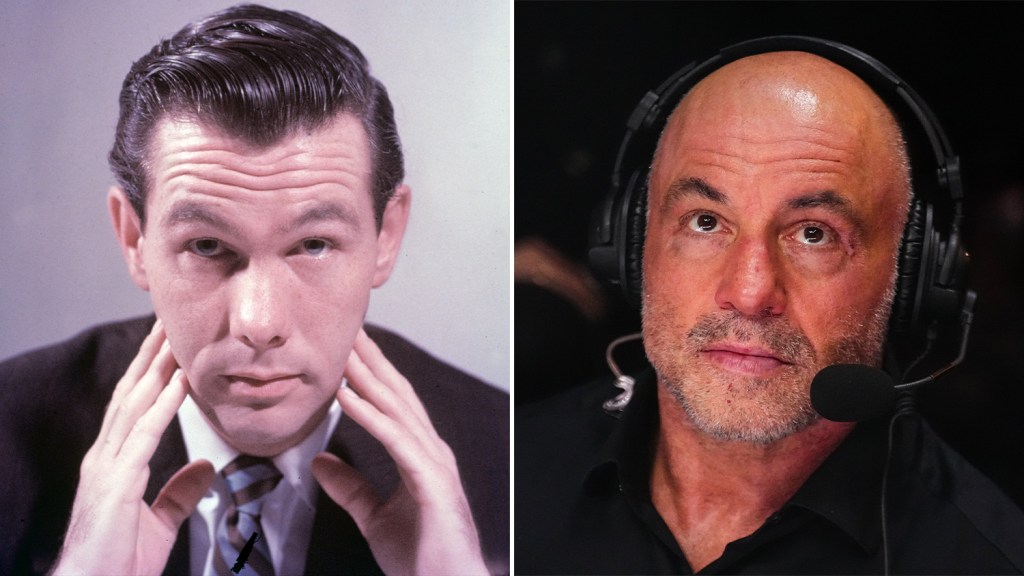
    Jay Leno declared traditional late-night television dead in a June 2026 interview, pointing to fractured audiences, the rise of long-form podcasting, and the partisan shift in modern comedy. Leno named Joe Rogan as the modern equivalent of Johnny Carson for his ability to unite massive, diverse audiences, while criticizing HBO’s John Oliver for prioritizing political lectures over universal humor. The former host of NBC’s The Tonight Show offered a blunt post-mortem on the 11:30 PM time slot he dominated for over two decades. The cultural gravity that once held the American viewing public together at the end of the day has evaporated. The audience did not simply change channels. The audience changed mediums entirely.

    The End of the 11:30 Consensus

    For half a century, the late-night monologue served as a national thermometer. At 11:30 PM, millions of Americans tuned in to see how the day’s events would be processed, packaged, and mocked. Johnny Carson perfected the format. Jay Leno industrialized it. During Leno’s peak in the late 1990s and early 2000s, The Tonight Show routinely pulled in over eight million viewers a night. Major cultural moments pushed that number past 15 million. The broadcast originated from Studio 3 in Burbank, California. It was the center of the entertainment universe.

    That center no longer holds. Leno’s assessment of the current late-night landscape is devoid of nostalgia. He views the collapse as a simple mathematical reality. The modern iterations of late-night television, currently helmed by Jimmy Fallon, Stephen Colbert, and Jimmy Kimmel, operate in a fundamentally different ecosystem. They are no longer broadcasting to a unified nation. They are narrowcasting to specific political and cultural demographics. The monologue was designed to be a broad, unifying force. It relied on a shared set of facts and a shared cultural baseline. When the baseline fractured, the format broke.

    Leno argues that the modern late-night hosts made a fatal tactical error. They abandoned the middle. By leaning heavily into specific political ideologies, the hosts secured a dedicated core audience but alienated half the country. The broad appeal that defined Carson’s 30-year run and Leno’s 22-year tenure was sacrificed for viral moments. The result is a shrinking pie. Network television ratings have plummeted. Advertising revenue has followed suit. The 11:30 PM time slot is now a legacy property, propped up by YouTube clips and social media engagement rather than live, appointment viewing.

    Why Joe Rogan is the New Johnny Carson

    The most striking revelation in Leno’s interview is his direct comparison between Joe Rogan and Johnny Carson. On the surface, the two men share little in common. Carson was a meticulously polished broadcaster who operated behind a desk in Burbank. Rogan is a former stand-up comedian and UFC commentator who hosts three-hour, unscripted conversations in a warehouse in Austin, Texas. But Leno looks past the aesthetics. He focuses on the cultural footprint.

    Carson was the ultimate kingmaker. A successful appearance on his couch could launch a career overnight. Rogan holds that exact same power today. The Joe Rogan Experience commands an audience of tens of millions of listeners per episode. It is the most valuable property in the audio landscape, backed by a massive licensing deal with Spotify reportedly worth $250 million. When Rogan speaks, the culture listens. When a comedian, author, or politician sits across from Rogan, their trajectory changes.

    Leno points out that Rogan achieved this by doing exactly what Carson did: he remains curious, he listens, and he refuses to talk down to his audience. Rogan does not deliver a monologue. He engages in a dialogue. In an era of tightly scripted, heavily edited media, Rogan’s unpolished, long-form format feels authentic. The audience trusts him. They do not view him as an elite broadcaster lecturing from a coastal studio. They view him as a proxy for their own curiosity. Carson possessed that same everyman quality. He was the Nebraska boy who made it to Hollywood but never lost his midwestern sensibilities. Rogan is the modern manifestation of that archetype.

    The Critique of John Oliver and Modern Political Comedy

    Leno reserved his sharpest criticism for John Oliver. The host of HBO’s Last Week Tonight has won numerous Emmy Awards for his deep-dive, investigative comedy. Oliver’s format involves a 30-minute, highly researched monologue focusing on a specific political or social issue. It is dense, fact-heavy, and unapologetically partisan. Leno views this approach as the antithesis of comedy.

    According to Leno, Oliver does not know what he is talking about when it comes to the daily realities of middle America. Leno argues that Oliver’s show is an exercise in validation rather than entertainment. The audience tunes in not to laugh, but to have their existing worldview confirmed. This phenomenon, often referred to in comedy circles as clapter, prioritizes applause over genuine laughter. The comedian makes a political statement, and the audience claps in agreement.

    Leno sees this as a fundamental betrayal of the comedian’s job. The comedian is supposed to observe the absurdity of life and present it in a way that unites the room. When a host turns the desk into a pulpit, the magic is lost. Oliver’s success on HBO, a premium cable network that relies on subscriptions rather than broad advertising, allows him to cater to a niche, highly educated, politically active demographic. But Leno argues that this niche approach has poisoned the broader comedy landscape. It has created an environment where comedians are expected to be political pundits first and entertainers second.

    The Economics of the Shift

    The death of late night is not just a cultural phenomenon. It is an economic reality. The broadcast networks, NBC, CBS, and ABC, built massive financial empires on the back of the 11:30 PM time slot. Madison Avenue paid premium rates to reach the millions of viewers winding down their day. That financial model is currently collapsing.

    The audience has migrated to digital platforms. YouTube, TikTok, and Spotify command the attention that once belonged to the networks. The economics of these digital platforms heavily favor long-form, on-demand content. A three-hour episode of The Joe Rogan Experience generates significantly more engagement, and therefore more ad revenue, than a six-minute late-night monologue chopped up for YouTube. The networks are trapped in a legacy cost structure. They maintain massive studios, large writing staffs, and union crews to produce a daily show that fewer and fewer people are watching live.

    Leno understands this transition intimately. He lived through the peak of the broadcast era. When he handed The Tonight Show over to Jimmy Fallon in 2014, the cracks in the foundation were already visible. The 2009 scheduling debacle, which saw Conan O’Brien briefly take over the 11:30 PM slot before Leno returned, was a desperate attempt by NBC to navigate a changing media landscape. By 2026, the transition is complete. The money has moved. The cultural relevance has moved. The center of gravity has shifted from the television set to the smartphone.

    The Legacy of The Tonight Show

    The Tonight Show will likely continue to exist. It is a legacy brand with over 70 years of history. But its role in American life has been permanently downgraded. It is no longer the national campfire. It is just another option in an infinite sea of content. Fallon, Colbert, and Kimmel are talented broadcasters, but they are playing a game that is mathematically impossible to win on the scale of their predecessors.

    Leno’s commentary is a stark reminder of how quickly cultural institutions can fade. The power of the 11:30 PM desk seemed absolute in 1992. It seemed unshakeable in 2002. Today, it is a relic. The audience demands authenticity over polish. They demand long-form conversation over scripted jokes. They demand to be spoken with, not spoken to.

    The architecture of comedy has fundamentally changed. The stand-up clubs like the Comedy Store in Los Angeles are thriving. Podcasting is booming. But the traditional late-night format is running on fumes. Leno’s willingness to state this plainly, without the usual industry diplomacy, underscores the finality of the shift. He is not predicting the death of late night. He is reporting it.

    The Terminal Drop

    The cameras still roll in New York. The cameras still roll in Los Angeles. The bands still play their opening numbers. The hosts still wear their tailored suits. The monologues are still written, rehearsed, and delivered into the lens. But the national audience is gone. The cultural conversation moved to Austin. The internet swallowed the broadcast. Silence.

  • Kelsey Grammer to Host ‘The Great American Journey’ on NBC – A New Chapter for the Emmy Winner

    Kelsey Grammer to Host ‘The Great American Journey’ on NBC – A New Chapter for the Emmy Winner

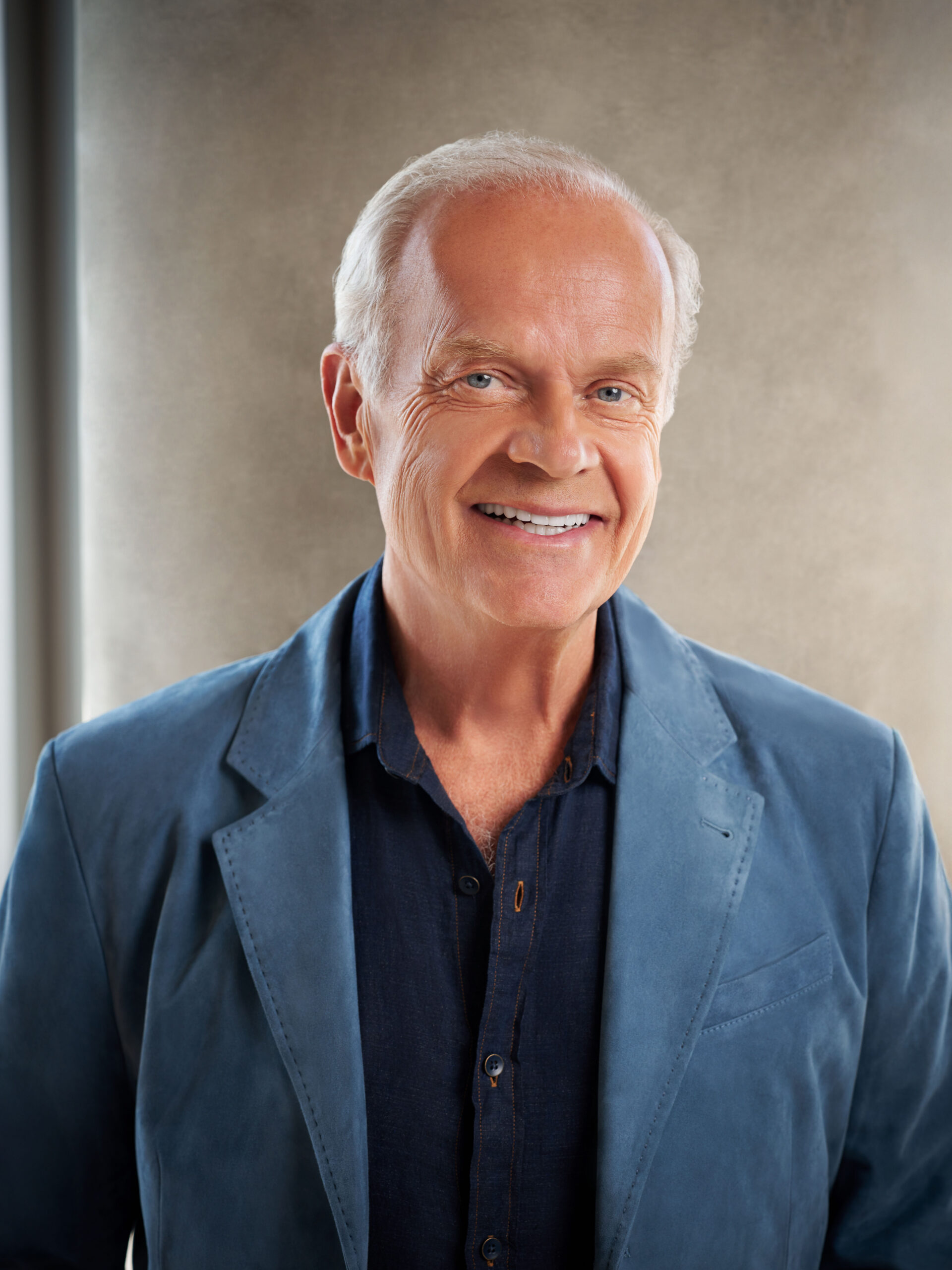
    Kelsey Grammer, the acclaimed actor known globally for his portrayal of Dr. Frasier Crane, will host ‘The Great American Journey,’ a new series set to air on NBC. This program, produced by Hearst Television, will embark on an exploration of American historical landmarks, cultural phenomena, and significant national stories.

    The announcement positions Grammer, a veteran of stage and screen, in a central role for a project focused on national heritage. His distinctive voice and commanding presence are expected to guide viewers through various narratives spanning the breadth of U.S. history. The series aims to deliver both educational value and compelling entertainment.

    What looks like a straightforward hosting gig actually represents a continuation of Grammer’s diverse career. His involvement brings a recognizable and respected figure to a program dedicated to exploring the intricacies of the American experience.

    Grammer’s Enduring Legacy: From ‘Cheers’ to ‘Frasier’

    Kelsey Grammer’s career is marked by iconic television roles that have garnered critical acclaim and widespread popularity. Born on February 21, 1955, in Saint Thomas, U.S. Virgin Islands, Grammer developed an early interest in acting. He attended the Juilliard School but left to pursue professional opportunities.

    His breakthrough came in 1984 with the role of Dr. Frasier Crane on the NBC sitcom ‘Cheers.’ What began as a recurring character quickly evolved into a central figure. Frasier Crane was a highly educated, somewhat pompous, but ultimately endearing psychiatrist.

    The character’s popularity led to a spin-off series, ‘Frasier,’ which premiered in 1993. This show, also on NBC, followed Dr. Crane’s return to his hometown of Seattle. There, he became a radio psychiatrist and navigated a complex relationship with his father and brother.

    ‘Frasier’ ran for 11 seasons, concluding in 2004. The series earned Grammer four Emmy Awards for Outstanding Lead Actor in a Comedy Series. This achievement tied him with Carroll O’Connor for the most Emmys won for playing the same character.

    Beyond ‘Frasier,’ Grammer has lent his voice to numerous animated characters, including Sideshow Bob on ‘The Simpsons.’ He has also appeared in films such as ‘Down Periscope’ (1996) and ‘X-Men: The Last Stand’ (2006), where he played Beast.

    Grammer’s stage career is equally distinguished. He has performed in various Broadway productions, earning a Tony Award nomination for his role in ‘La Cage aux Folles’ in 2010. His versatility across different mediums underscores his enduring appeal in the entertainment industry.

    ‘The Great American Journey’: A Hearst Television Production

    ‘The Great American Journey’ is a Hearst Television production. Hearst Television is a prominent American broadcasting company. It owns and operates 35 television stations and two radio stations across 27 media markets.

    The company is known for its local news and investigative journalism. It also produces syndicated programming. Its stations reach approximately 21% of U.S. households.

    The partnership with NBC for ‘The Great American Journey’ signifies a strategic move. It aims to bring high-quality, nationally relevant content to a broad audience. Hearst’s production capabilities will be central to the series’ visual and narrative quality.

    The series will leverage Hearst’s extensive network and resources. This includes potential access to local historical archives and community insights. Such resources can enrich the storytelling of ‘The Great American Journey.’

    What Will ‘The Great American Journey’ Explore?

    The series is designed to be an immersive exploration of American history and culture. It will likely feature visits to iconic landmarks. These could include national parks, historical battlefields, and significant urban centers.

    Beyond geographical locations, the show is expected to delve into specific historical events. It may examine the American Revolution, the Civil Rights Movement, or the westward expansion. The narratives will aim to illuminate the people and ideas that shaped the nation.

    Cultural elements will also be a focus. This might include regional traditions, music, art, and culinary heritage. The goal is to present a multifaceted view of American identity.

    Grammer’s role as host will involve guiding viewers through these explorations. His commentary and interviews with historians, experts, and local residents will provide context. The series intends to make history accessible and engaging for all demographics.

    “America’s story is one of constant evolution, marked by both triumphs and challenges. This series offers a chance to reflect on our shared past and understand its impact on our present.” – A representative from Hearst Television.

    The program’s format will likely blend documentary-style footage with Grammer’s on-location narratives. This approach seeks to create a personal connection between the host, the history, and the audience.

    The Appeal of Nostalgia and New Ventures

    Kelsey Grammer’s continued presence on television taps into a powerful sense of nostalgia for many viewers. His roles as Frasier Crane are deeply ingrained in popular culture. This familiarity provides a built-in audience for his new endeavors.

    For fans of ‘Cheers’ and ‘Frasier,’ seeing Grammer in a new, substantive role offers a comforting continuity. It also presents an opportunity to see a beloved actor explore new creative territory.

    ‘The Great American Journey’ represents a departure from his comedic and dramatic acting roles. As a host, Grammer will rely on his intellectual curiosity and ability to connect with an audience. These qualities were evident in his previous character portrayals.

    The show’s theme of American history aligns with a broader public interest in national identity and heritage. This confluence of a respected host and a resonant topic creates significant anticipation for the series.

    This venture also reflects a trend in television. Established actors are increasingly taking on hosting and documentary roles. This allows them to engage with different subject matters while maintaining a public profile.

    Grammer’s Political Engagements and Public Persona

    Kelsey Grammer has also been publicly vocal about his political views. A registered Republican, he has expressed conservative stances on various issues. This aspect of his public persona has occasionally generated discussion.

    His political engagements include supporting Republican candidates and causes. He has appeared at events and shared his opinions in interviews. This openness about his political leanings distinguishes him from some peers in Hollywood.

    Despite his political affiliations, Grammer’s professional reputation as an actor has largely transcended partisan divides. His performances are widely recognized for their quality, regardless of his personal beliefs.

    For ‘The Great American Journey,’ his role as host will likely emphasize a neutral, inquisitive approach to historical topics. The focus will remain on the narratives of the past, rather than contemporary political discourse.

    His ability to maintain a respected professional standing while holding strong personal convictions speaks to his broad appeal. It also highlights the distinction between an artist’s work and their private life.

    The Future of Historical Programming on Network Television

    ‘The Great American Journey’ joins a landscape of increasing interest in historical and educational programming. Streaming services and cable channels have seen success with similar content. NBC’s entry into this space with a prominent host signifies a network commitment.

    The series has the potential to attract viewers who seek both entertainment and knowledge. It can serve as a counterpoint to reality television and scripted dramas. It offers a different kind of engagement with the screen.

    The success of this program could pave the way for more historical and documentary series on major networks. It could demonstrate the viability of such content in prime-time slots.

    Hearst Television’s production quality, combined with Grammer’s hosting, positions the series for broad appeal. It aims to inspire curiosity and foster a deeper understanding of the United States’ complex past.

    The program represents an investment in educational content. It acknowledges that a significant segment of the audience values learning through television. This move could influence future programming decisions across the industry.

    A Journey Begins

    Anticipation builds for the premiere of ‘The Great American Journey.’ Viewers await the insights. Historians await the narratives. The nation awaits the reflection. Kelsey Grammer embarks.

    America.

    FAQ

  • A Keepsake Passed Down: David Boreanaz, The Rockford Files, and a Gift from James Garner’s Daughter

    A Keepsake Passed Down: David Boreanaz, The Rockford Files, and a Gift from James Garner’s Daughter

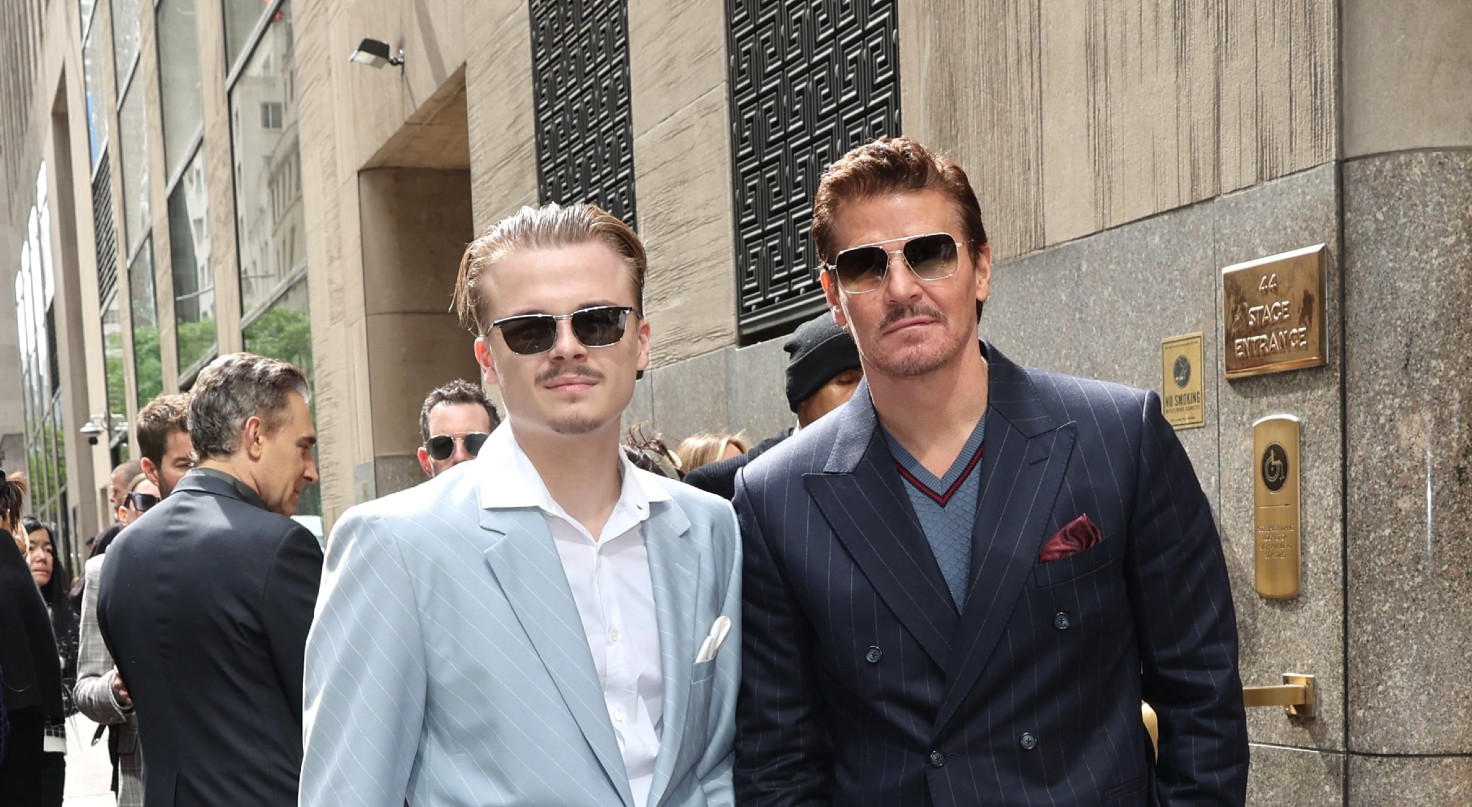
    When David Boreanaz’s son, Jaden, secured a role in the pilot for a reboot of The Rockford Files, the moment represented a collision of television generations. The original series, anchored by the legendary James Garner, defined the 1970s private investigator genre. But the story took a deeper, more personal turn behind the scenes. During the production process, Gigi Garner, daughter of the late James Garner, reached out to David Boreanaz. She presented him with a specific keepsake that belonged to her father, a tangible passing of the torch from one era of television leading men to another.

    The gesture was not merely a polite Hollywood exchange. It was an acknowledgment of legacy. James Garner’s portrayal of Jim Rockford left an indelible mark on television history. For the Boreanaz family, stepping into that orbit carried significant weight.

    This is how television history is preserved. Not just in archives or streaming catalogs, but in quiet moments off-camera. The artifacts matter. The lineage matters.

    The Long Shadow of Jim Rockford

    The Rockford Files premiered on NBC on September 13, 1974. It ran for six seasons, concluding on January 10, 1980. The show was a stark departure from the polished, infallible detectives of previous decades. Jim Rockford lived in a dilapidated mobile home parked at 29 Cove Road in Malibu, California. He drove a gold Pontiac Firebird Esprit. He often found himself on the losing end of a fistfight.

    James Garner built the character with a specific, weary charm. Rockford was an ex-convict, pardoned after serving time in San Quentin for a crime he didn’t commit. He charged $200 a day plus expenses. He kept a gun in a cookie jar but rarely used it.

    The series, created by Roy Huggins and Stephen J. Cannell, earned Garner an Emmy Award for Outstanding Lead Actor in a Drama Series in 1977. It established a template for the reluctant hero that influenced decades of television.

    When Hollywood attempts to revive a property with that level of cultural footprint, the stakes are inherently high. The casting of Jaden Boreanaz in the pilot signaled a fresh attempt to capture the essence of the original while introducing it to a new demographic.

    The Boreanaz Television Lineage

    David Boreanaz understands the demands of long-running television. He has been a fixture on network and cable television for nearly three decades. His career trajectory is a study in sustained leading-man status.

    He first gained prominence as the brooding vampire Angel on Buffy the Vampire Slayer (1997–1999), before anchoring his own successful spin-off, Angel (1999–2004). He immediately transitioned to the Fox procedural Bones, playing FBI Special Agent Seeley Booth for 12 seasons (2005–2017). Following Bones, he stepped into the role of Jason Hayes on the CBS/Paramount+ military drama SEAL Team.

    This sustained success requires a specific type of work ethic and an understanding of the medium. Boreanaz has navigated the shifting landscape of television from the late-90s boom through the streaming era.

    For his son, Jaden, to enter the industry via a project connected to The Rockford Files creates a fascinating parallel. Jaden is stepping into an arena where his father has long been established, but doing so within the framework of a classic property.

    The Keepsake: A Tangible Connection

    The most compelling element of this narrative is the interaction between the Garner family and the Boreanaz family. Gigi Garner has been fiercely protective of her father’s legacy since his passing on July 19, 2014, at the age of 86.

    When news of the reboot pilot circulated, Gigi Garner initiated contact. The presentation of a keepsake, an item directly connected to James Garner, to David Boreanaz was a significant gesture. It moved the reboot from a corporate intellectual property exercise to a personal handover.

    Items belonging to iconic actors carry a distinct provenance. They are artifacts of a specific era of production. Whether it was a piece of wardrobe, a script, or a personal item Garner kept in his trailer, the gift serves as an anchor. It reminds the current production of the human element that made the original series resonate.

    David Boreanaz, having spent decades on sets, recognizes the value of such artifacts. They provide a grounding force. They are a reminder of the standard set by those who previously occupied the space.

    The Challenge of the Reboot Era

    The attempt to revive The Rockford Files is part of a broader industry trend. Networks and streaming platforms frequently mine existing intellectual property. The strategy is built on the premise of built-in audience awareness.

    However, the execution is often fraught with difficulty. A successful reboot must balance nostalgia with contemporary storytelling. It must honor the original without becoming a mere imitation.

    Previous attempts to revive the Rockford character have faced significant hurdles. In 2010, NBC ordered a pilot for a reboot starring Dermot Mulroney as Jim Rockford, with Peter Berg directing. Despite the high-profile talent involved, the project did not move forward to series.

    The character of Jim Rockford is intricately tied to James Garner’s specific persona. Garner’s effortless charisma, his comedic timing, and his ability to project a world-weary cynicism were unique. Replicating that alchemy is a formidable challenge for any actor or production team.

    The Mechanics of a Pilot Production

    A television pilot is essentially a prototype. It is a costly experiment designed to test a concept, the chemistry of the cast, and the viability of the narrative engine.

    The casting process for a pilot is rigorous. Network executives, studio heads, showrunners, and casting directors scrutinize every decision. The inclusion of Jaden Boreanaz in the ensemble indicates that he navigated this gauntlet.

    During pilot production, the atmosphere is a mix of high anxiety and creative energy. Every scene is calibrated to hook the viewer and convince the network to order a full season. The presence of a legacy property like The Rockford Files amplifies the pressure. The production is not just competing against other pilots; it is competing against the memory of the original series.

    The Cultural Footprint of the 1970s Detective

    To understand the significance of The Rockford Files, one must examine the context of 1970s television. The decade was defined by a specific breed of detective shows. Kojak, Columbo, Baretta, and The Streets of San Francisco dominated the ratings.

    These shows reflected a post-Watergate, post-Vietnam cynicism. The protagonists were often flawed, operating outside the strict confines of the establishment. Jim Rockford was the epitome of this archetype. He was a man who had been wronged by the system, yet he continued to seek justice for those who could afford his $200-a-day fee.

    The aesthetic of the show, the sun-drenched streets of Los Angeles, the specific fashion, the iconic Mike Post and Pete Carpenter theme song, became ingrained in the cultural consciousness. The theme song alone, featuring a prominent Moog synthesizer and a bluesy harmonica, reached number 10 on the Billboard Hot 100 in 1975.

    Reviving The Rockford Files requires navigating this cultural footprint. It requires deciding which elements to retain and which to update for a modern audience.

    The Enduring Appeal of the Reluctant Hero

    The core of The Rockford Files’ appeal lies in the character of the reluctant hero. Rockford didn’t want to be involved in dangerous situations. He wanted to go fishing. He wanted to avoid his father, Joseph “Rocky” Rockford (played by Noah Beery Jr.), who constantly urged him to find a safer profession.

    This reluctance made him relatable. He wasn’t a superhero. He was a guy trying to make a living, often getting punched in the face in the process. He relied on his wits, his network of contacts (including the perpetually exasperated LAPD Sergeant Dennis Becker, played by Joe Santos), and his ability to talk his way out of trouble.

    This archetype remains potent. Audiences continue to respond to characters who are flawed, pragmatic, and ultimately decent. If the new iteration of The Rockford Files can capture this dynamic, it has a chance to succeed.

    The Intersection of Hollywood Families

    The story of the Boreanaz family and the Garner family intersecting highlights the insular nature of the entertainment industry. Hollywood is a company town. Lineages and connections often span generations.

    David Boreanaz’s own father, Dave Roberts, was a prominent television presence as a weatherman for WPVI-TV in Philadelphia. The understanding of the medium has been passed down.

    When Gigi Garner presented the keepsake to David Boreanaz, she was acknowledging this shared experience. She was recognizing the unique pressures and responsibilities that come with being part of a television legacy. It was a gesture of solidarity between families who understand the specific demands of the industry.

    The Future of the Franchise

    The fate of the new Rockford Files pilot remains to be seen. The television landscape is vastly different from the 1970s. The proliferation of streaming services, the fragmentation of audiences, and the shift in viewing habits present significant challenges.

    However, the core elements of the original series, a compelling protagonist, sharp dialogue, and engaging mysteries, are timeless. If the new production can harness these elements while establishing its own identity, it may find an audience.

    Regardless of the pilot’s outcome, the exchange between Gigi Garner and David Boreanaz remains a poignant moment. It serves as a reminder that behind the corporate strategies and intellectual property management, there are human connections. There are individuals who care deeply about the legacy of the work.

    The artifacts remain. The stories continue. The lineage holds.

    A pilot was shot. A keepsake was given. A legacy was honored.

    Hollywood.

  • ‘ALF’ Star Anne Schedeen Dies at 77 – Family Highlights Political Defiance in Memorial

    ‘ALF’ Star Anne Schedeen Dies at 77 – Family Highlights Political Defiance in Memorial

    Anne Schedeen, the actress best known for playing matriarch Kate Tanner on the 1980s NBC sitcom “ALF,” died in 2026 at the age of 77. While her death marked the passing of a beloved television icon, her family’s public statement captured national attention by explicitly highlighting her “burning hatred for Donald Trump” as a defining aspect of her final years. The posthumous revelation transformed a standard Hollywood obituary into a viral cultural flashpoint.

    For four years, Schedeen anchored one of the most surreal and technically demanding sitcoms on network television. She played the straight woman to an extraterrestrial puppet. She represented the quintessential, unflappable American mother to millions of viewers.

    But the woman behind the character was not a television trope. She was a Portland-born acting veteran who eventually walked away from Hollywood entirely. And in her final act, her family ensured her true voice outlived her most famous role.

    The Statement That Broke the Nostalgia Barrier

    Celebrity passings typically follow a rigid public relations script. Representatives issue statements. Co-stars post archival photos. The media highlights the deceased’s most famous roles.

    Schedeen’s family discarded the script. In confirming her death to Variety, they included a blunt, uncompromising detail about her political convictions. They made it clear that her opposition to the former president was not a casual opinion, but a fierce, defining characteristic of her later life.

    This decision immediately bifurcated the public reaction. On social media platforms, the news of her passing was quickly overshadowed by partisan debate. For some, the statement was a validation of their own political exhaustion. For others, it was an intrusion of modern polarization into a space usually reserved for nostalgic mourning.

    The phrasing was intentional. It was not a polite “in lieu of flowers, please vote.” It was a declaration of “burning hatred.”

    It signaled a shift in how public figures, even those who have been out of the spotlight for decades, choose to be remembered. The obituary is no longer just a biographical summary. It is the final word.

    From Portland to Primetime

    Long before she navigated the bizarre landscape of “ALF,” she was Luanne Ruth Schedeen. Born on January 8, 1949, in Portland, Oregon, she grew up far removed from the machinery of Los Angeles.

    She studied acting under Lurene Tuttle, a prolific character actress who understood the grueling reality of the business. Schedeen did not become an overnight star. She built a career through relentless episodic television work in the 1970s and early 1980s.

    She signed a contract with Universal Studios. She became a reliable presence on network television. She appeared in “Emergency!,” “Marcus Welby, M.D.,” and “The Bionic Woman.”

    She understood the rhythm of the multi-camera sitcom and the hour-long drama alike. She guest-starred on “Three’s Company.” She took a recurring role on “Simon & Simon.” She appeared on “Cheers.”

    By the time 1986 arrived, Schedeen was a seasoned professional. She knew how to hit a mark, how to deliver a punchline, and how to anchor a scene. She would need all of those skills for the project NBC was about to greenlight.

    The Architecture of a 1980s Sitcom

    On September 22, 1986, “ALF” premiered on NBC. The premise was absurd. An Alien Life Form crashes into the garage of a suburban family in the San Fernando Valley. The family hides him from the government. Chaos ensues.

    Schedeen was cast as Kate Tanner, the pragmatic mother trying to maintain order in a household harboring a sarcastic, cat-eating alien. Max Wright played her husband, Willie. Andrea Elson and Benji Gregory played their children.

    On screen, the show was a lighthearted, massive commercial success. It spawned lunchboxes, trading cards, and an animated spin-off. It generated millions in merchandising revenue.

    Off screen, the production was a technical nightmare. The set was built on a raised platform heavily modified with trapdoors. Creator and puppeteer Paul Fusco required these trenches to operate the ALF puppet from below while remaining out of the camera’s view.

    The actors had to navigate a dangerous set. They had to deliver their lines to a lifeless piece of fabric while Fusco provided the voice and movement from underneath the floorboards. A standard 22-minute sitcom episode usually takes a few hours to film in front of a live studio audience. “ALF” took days.

    Fourteen-hour shoots were common. The tension on set was palpable. The human actors were often relegated to playing second fiddle to a demanding mechanical prop. Schedeen, a classically trained actress, spent four years reacting to a puppet.

    Despite the grueling conditions, she delivered. She grounded the show. Without her deadpan reactions and maternal authority, the absurdity of the premise would have collapsed. She made the unbelievable seem routine.

    A Quiet Exit from Hollywood

    “ALF” was abruptly canceled in 1990 after four seasons and 99 episodes. The network did not allow for a proper series finale, leaving the characters in a cliffhanger that frustrated fans for decades.

    For Schedeen, the end of the show was a release. She continued to act sporadically throughout the 1990s. She appeared in television movies and took a recurring role on the CBS drama “Judging Amy” in 2001.

    And then, she stopped.

    Unlike many actors who chase the camera until the end, Schedeen made a deliberate choice to walk away. She transitioned into a completely different life. She became an interior decorator and an antiques dealer in Los Angeles.

    She found success in design. She mentored younger actors, teaching comedy classes part-time. She lived quietly, far removed from the syndication royalties and the nostalgic conventions that many of her peers relied upon.

    She did not participate in the endless cycle of reality television or reboot rumors. She left Kate Tanner in the 1980s. She built a life defined by her own aesthetic choices, not by a script.

    The Politicization of the American Death Notice

    The family’s decision to include Schedeen’s political views in her death announcement is part of a broader cultural shift. The American obituary has changed.

    For decades, obituaries were standardized texts. They listed birthdates, surviving relatives, career milestones, and funeral arrangements. They were polite. They were neutral.

    In recent years, that neutrality has eroded. Families have begun using death notices to make final, unassailable statements about the deceased’s worldview. The trend accelerated significantly around 2016.

    Some obituaries request that mourners vote for a specific candidate in lieu of flowers. Others explicitly blame politicians for systemic failures. In Schedeen’s case, the family used the moment of maximum public attention to cement her political legacy.

    The mechanics of modern media guarantee that these statements go viral. A local obituary is digitized. A national outlet like Variety picks up the celebrity angle. Social media algorithms amplify the outrage and the applause. Within hours, a 77-year-old retired actress becomes the center of a national political argument.

    This is the new reality of public mourning. The personal is no longer just political. The personal is broadcast.

    The Collision of Two Eras

    The reaction to Schedeen’s death highlights a unique modern friction. Fans want their childhood memories preserved in amber. They want the actors who played their favorite characters to remain frozen in time, eternally wholesome and politically ambiguous.

    But the actors are real people. They live through the same turbulent decades as their audience. They age. They form fierce opinions. They watch the news.

    Anne Schedeen was not Kate Tanner. She was a woman who navigated the ruthless Hollywood studio system of the 1970s. She was a professional who endured the grueling, trapdoor-laden set of a 1980s sitcom. She was a businesswoman who built a second career in Los Angeles design.

    And she was a citizen who harbored strong, uncompromising views about the direction of her country. Her family refused to let the sitcom character overwrite the actual woman.

    They ensured her final headline was not just about an alien in a garage. It was about her.

    Networks broadcast the reruns. Audiences debated the politics. A family honored a mother who refused to leave quietly.

    Schedeen.

  • Gene Shalit, Iconic ‘Today Show’ Film Critic, Dies at 100

    Gene Shalit, Iconic ‘Today Show’ Film Critic, Dies at 100

    Gene Shalit, the unmistakable face of film criticism on NBC’s Today show for nearly four decades, has died at the age of 100. News of his death was reported across multiple outlets, including Variety. For millions of Americans, his voice was the final word on whether a weekend movie ticket was worth the price of admission. But his cultural footprint extended far beyond simple reviews.

    A Fixture of Morning Television

    Shalit joined the Today show in 1973. He remained a staple of the morning broadcast until his retirement in November 2010. Over 37 years, he reviewed thousands of films, interviewed Hollywood’s biggest stars, and became a television icon in his own right.

    Born in New York on March 25, 1926, and raised in New Jersey, Shalit wrote for magazines like Look and Ladies’ Home Journal before finding his permanent home on camera. He did not look like a traditional broadcast newsman. He wore vibrant, oversized bowties. His hair was famously wild. A thick handlebar mustache dominated his face.

    This visual signature made him instantly recognizable. His delivery made him unforgettable.

    The Art of the Pun

    Shalit built his “Critic’s Corner” segments on wordplay. He favored rapid-fire puns and heavy alliteration. He did not write academic film theory. He wrote for the morning commuter, the parent packing lunches, the casual viewer.

    He championed independent films alongside massive studio blockbusters. He was rarely cruel, even when panning a cinematic failure. His enthusiasm for the medium was evident in every broadcast.

    A Developing Story

    Shalit recently reached the centenarian milestone. At this time, specific details regarding the exact location and cause of death remain unconfirmed. This is a developing story.

    Further information will be added to this report as representatives for the Shalit family or NBC News release official statements. The network has yet to announce formal broadcast tributes.

    He shaped morning television. He shaped popular criticism. He left an indelible mark on NBC. Shalit.

  • The Mechanics of Mockery – How Alec Baldwin and Dana Carvey Built SNL’s Commanders-in-Chief

    The Mechanics of Mockery – How Alec Baldwin and Dana Carvey Built SNL’s Commanders-in-Chief

    The Anatomy of a Presidential Caricature

    Alec Baldwin and Dana Carvey recently convened to deconstruct the exact mechanics of impersonating American presidents, revealing how Carvey built his rhythmic versions of George H.W. Bush and Joe Biden, while Baldwin engineered his Emmy-winning, aggressively mean and nasty portrayal of Donald Trump for NBC’s Saturday Night Live. The exchange offered a rare masterclass in political satire. It detailed how comedians isolate vocal cadences, physical tics, and psychological profiles to turn sitting executives into late-night caricatures. The conversation bridged two distinct eras of Studio 8H. Carvey dominated the late 1980s and early 1990s. Baldwin defined the late 2010s. Together, they mapped the evolution of the presidential impression.

    It is no longer just about looking the part. It is about capturing the cultural anxiety surrounding the Oval Office. For forty-nine years, Lorne Michaels has used the cold open of Saturday Night Live as a national pressure valve. The actor chosen to play the commander-in-chief holds a unique power. They do not just mock the president. Often, they replace the president in the public memory.

    Baldwin and Carvey approach this responsibility from entirely different theatrical disciplines. Carvey is a technical mimic. He looks for the musicality in a politician’s voice. He searches for the physical rhythm. Baldwin is a dramatic actor. He looks for the psychological weight. He searches for the underlying intent. When these two methodologies collide, the result is a comprehensive blueprint for how television dismantles power.

    Dana Carvey and the Rhythmic Deconstruction of George H.W. Bush

    The modern era of the SNL presidential impression began in 1988. Dana Carvey was tasked with playing Vice President George H.W. Bush. The real Bush was patrician, measured, and notoriously difficult to parody. He lacked the booming theatricality of Ronald Reagan. He lacked the tragic physical comedy of Gerald Ford. Carvey had to invent a hook.

    He found it in the rhythm. Carvey noticed that Bush spoke in halting, staccato bursts. The vice president would start a sentence, pause, and pivot. Carvey exaggerated this cadence until it became a bizarre, almost musical rhythm. He introduced choppy, rigid hand gestures. He weaponized the phrase “thousand points of light.” He manufactured catchphrases that the real Bush never actually said, most notably the nasal, dismissive “Na ga da” (not going to do it) and “Wouldn’t be prudent.”

    The Affectionate Satire

    Carvey’s Bush was fundamentally affectionate. It was a caricature, not an assassination. The impression was so popular, and so devoid of genuine malice, that the real George H.W. Bush eventually embraced it. Following his defeat in the 1992 presidential election, Bush invited Carvey to the White House. The comedian performed the impression for the outgoing president’s staff. It was a moment of shared cultural levity. The satire was viewed as part of the political game.

    This era of late-night comedy relied on a shared national reality. The audience, the comedian, and the politician all understood the boundaries of the joke. Carvey’s Bush was a goofy, out-of-touch, but ultimately well-meaning patriarch. It was a reflection of a political climate that, while contentious, still valued institutional decorum.

    Alec Baldwin and the Heavy Armor of Donald Trump

    By the time Alec Baldwin stepped onto the stage of Studio 8H on October 1, 2016, the rules of political satire had shattered. Donald Trump was the Republican nominee. The political climate was entirely fractured. Lorne Michaels needed a Trump who could match the unprecedented volume of the 2016 election. He called Baldwin.

    Baldwin initially resisted. He did not want to spend his Saturday nights buried in orange makeup and a blonde wig. Michaels persisted. When Baldwin finally agreed, he made a distinct creative choice. He would not play Trump for lighthearted laughs. He would play him as a menace. Baldwin explicitly engineered his impression to be “mean and nasty.”

    The mechanics of Baldwin’s Trump were heavy. He pushed his lower jaw forward. He pursed his lips into a permanent, aggressive pout. He dropped his voice into a raspy, breathy register, emphasizing the sharp consonants. Unlike Carvey’s bouncy, kinetic Bush, Baldwin’s Trump was static. He stood rigidly at the podium, projecting a wall of immovable ego.

    The Psychological Toll and the Twitter War

    The impact was immediate. Baldwin’s debut as Trump shattered SNL ratings records. The show enjoyed its most-watched season in twenty-three years. Baldwin won a Primetime Emmy Award for Outstanding Supporting Actor in a Comedy Series in 2017. He was paid a nominal fee of $1,400 per episode, but the cultural capital he generated was immeasurable.

    However, the affectionate dynamic of the Carvey-Bush era was entirely gone. The real Donald Trump did not invite Baldwin to the White House. Instead, Trump attacked Baldwin on Twitter. The President of the United States routinely criticized the late-night sketch show, calling it unwatchable and biased. Baldwin and Trump entered a bizarre, real-time feud.

    Baldwin later admitted the psychological toll of the role. Playing a figure he fundamentally opposed, week after week, became exhausting. The comedy felt less like a pressure valve and more like trench warfare. The “mean and nasty” approach was highly effective, but it was also heavy armor to wear on live television.

    The Joe Biden Puzzle: Finding the Hook in 2024

    The conversation between the two comedians naturally drifted to the current occupant of the Oval Office. Joe Biden presents a unique challenge for late-night mimics. Over the years, several actors have attempted to capture Biden on SNL. Jason Sudeikis played him as a grinning, aviator-wearing uncle. Woody Harrelson played him with a manic, toothy energy. Jim Carrey played him with aggressive, almost unhinged intensity.

    Dana Carvey’s approach to Biden is entirely mechanical. He views the current president as a man operating with two distinct, malfunctioning gears. Carvey breaks the impression down into a sudden, jarring contrast of volume.

    The Whisper and the Shout

    First, Carvey establishes the whisper. He leans into the microphone, drops his voice to a raspy, intimate level, and delivers nonsensical, folksy anecdotes. He squints his eyes. He projects an image of fragile, quiet contemplation. Then, without warning, Carvey violently shifts gears. He snaps his head back, opens his eyes wide, and shouts a completely unrelated phrase. “No joke!” “Come on, man!”

    This aggressive oscillation between the whisper and the shout is the core of Carvey’s Biden. It captures the public’s perception of a politician struggling to maintain a consistent narrative rhythm. It is less mean-spirited than Baldwin’s Trump, but more pointed than Carvey’s own Bush. It sits precisely in the middle of the modern satirical spectrum.

    When Satire Becomes the Political Record

    The exchange between Baldwin and Carvey underscores a massive shift in American media. Late-night television is no longer just a reflection of the political news cycle. It is an active participant in it. Millions of voters consume their political reality through the filter of Studio 8H. The caricatures built by comedians often become more recognizable than the politicians themselves.

    When Carvey created George H.W. Bush, he was building a cartoon. When Baldwin created Donald Trump, he was building an indictment. The mechanics of the impersonation changed because the mechanics of American politics changed. The stakes are higher. The audience is fractured. The comedians are forced to adapt.

    The wigs are styled. The prosthetics are applied. The cue cards are written. The cameras roll. The audience laughs. The politicians react. The comedians reset.

    History.

    Next in the Series: The Economics of Late-Night Politics

    We will examine the exact financial windfall NBC experienced during the 2016 election cycle, detailing the ad revenue surges tied directly to Alec Baldwin’s political cold opens.