The Meeting in the Mountains
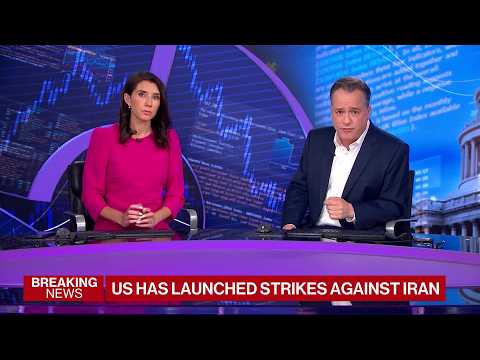
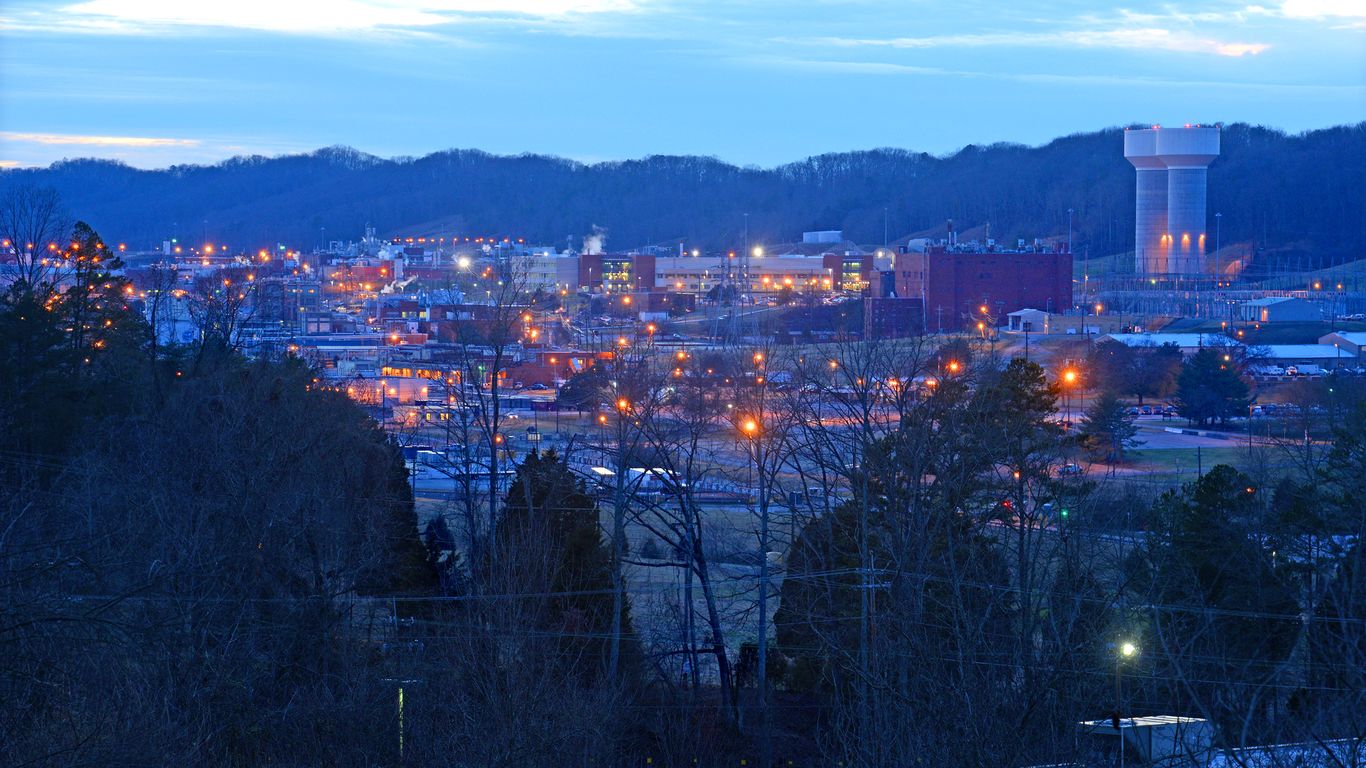
In early June 2026, Trump administration envoys Jared Kushner and Steven Witkoff quietly convened a summit of America’s top nuclear physicists in Oak Ridge, Tennessee, to assess the exact timeline of Iran’s nuclear weapon breakout capabilities. The meeting did not happen in Washington, D.C. It did not take place in the secure briefing rooms of the Pentagon or the basement of the State Department. It happened in the shadow of the Smoky Mountains.
The location was deliberate. Oak Ridge National Laboratory and the adjacent Y-12 National Security Complex hold the institutional memory of American atomic power. When policymakers need to understand the physics of destruction, they go to Tennessee.
Kushner and Witkoff arrived with a specific mandate. The second Trump administration faced a shrinking window in the Middle East. Iran’s uranium enrichment had advanced. The White House needed unvarnished technical truths. They needed to know exactly how long it would take Tehran to bridge the gap between highly enriched uranium and a functional nuclear warhead.
The physicists provided the math. The envoys took the notes. The geopolitical calculus of the entire Middle East hinged on the numbers discussed in those windowless rooms.
The Architecture of American Atomic Power
To understand why the envoys traveled to Tennessee, one must understand the history of the valley. Oak Ridge was built in secret in 1943. It was the engine of the Manhattan Project. The Clinton Engineer Works, as it was known then, was tasked with a single, monumental objective: enriching uranium for the first atomic bomb.
Today, the Y-12 National Security Complex remains the premier facility for handling highly enriched uranium in the United States. It stores the bulk of the nation’s weapons-grade material. It dismantles old warheads. It evaluates foreign nuclear threats. The scientists working inside its perimeter fences understand the precise engineering required to turn uranium hexafluoride gas into a weapon core.
They know the challenges of metallurgy. They know the difficulties of explosive lensing. They know exactly what obstacles Iranian scientists face in their underground laboratories.
Diplomats read intelligence reports. The scientists at Oak Ridge read the physics. The envoys needed the latter to validate the former.
The Envoys and the Assignment
Jared Kushner and Steven Witkoff operate outside the traditional foreign policy establishment. They are not career diplomats. They are dealmakers rooted in the world of high-stakes real estate. This background defines their approach to international relations.
During the first Trump administration, Kushner bypassed traditional State Department channels to broker the Abraham Accords in 2020. That agreement normalized relations between Israel and several Arab nations, fundamentally altering the diplomatic architecture of the Middle East. Witkoff, a trusted confidant of the President, brings a similar transactional pragmatism to the table.
Their appointment as envoys for the Iran portfolio signals a specific White House strategy. The administration views the Iranian nuclear program not just as a security threat, but as a point of leverage. To negotiate effectively, or to authorize military action confidently, the envoys required an indisputable baseline of facts.
They needed to know what was a bluff and what was a bomb.
The Physics of Breakout
The core of the Oak Ridge briefings centered on a concept known as “breakout time.” This is the duration required for a state to produce enough weapons-grade uranium for one nuclear device.
Uranium found in nature consists mostly of the isotope U-238. Less than one percent is the fissile isotope U-235. To fuel a commercial nuclear reactor, uranium must be enriched to about 3 to 5 percent U-235. To build a nuclear bomb, it must be enriched to roughly 90 percent.
The process is exponential, not linear. Enriching uranium from natural levels to 20 percent takes immense time and energy. Going from 20 percent to 60 percent is faster. The jump from 60 percent to 90 percent weapons-grade material requires very little time.
By 2026, the International Atomic Energy Agency (IAEA) had repeatedly documented Iran enriching uranium to 60 percent purity. The math presented at Oak Ridge was stark. The breakout time was no longer measured in years or months. It was measured in days.
The Fortresses of Natanz and Fordow
The envoys reviewed satellite imagery and structural intelligence regarding Iran’s primary enrichment facilities. The geography of the Iranian nuclear program is designed for survival.
The Natanz facility is the heart of the program. It houses thousands of advanced centrifuges, specifically the IR-6 models, which spin at supersonic speeds to separate uranium isotopes. While parts of Natanz have been vulnerable to sabotage in the past, Iran has continually moved operations deeper underground.
The Fordow Fuel Enrichment Plant presents a more severe challenge. Fordow is built deep inside a mountain near the holy city of Qom. It is heavily fortified. It is protected by layers of rock, reinforced concrete, and advanced air defense systems.
The Oak Ridge scientists analyzed the operational capacity of these facilities. They calculated the output of the IR-6 cascades. They mapped the subterranean architecture. The envoys needed to know if these fortresses were impenetrable.
The Ghost of the JCPOA
The strategic environment of 2026 is haunted by the Joint Comprehensive Plan of Action (JCPOA). Brokered in 2015, the agreement placed strict limits on Iran’s nuclear program in exchange for sanctions relief. In May 2018, the first Trump administration unilaterally withdrew from the deal, initiating a “maximum pressure” campaign.
The maximum pressure strategy crippled the Iranian economy. It severely restricted Tehran’s ability to export oil. But it did not stop the centrifuges. In response to the U.S. withdrawal, Iran systematically breached the limits of the JCPOA, installing faster centrifuges and stockpiling highly enriched uranium.
The Oak Ridge summit was an acknowledgment of this new reality. The old frameworks were dead. The envoys were not looking backward at the JCPOA. They were looking forward at a binary choice: a new, comprehensive diplomatic settlement, or a kinetic military strike.
The Regional Chessboard
The intelligence reviewed in Tennessee did not exist in a vacuum. It was directly tied to the security postures of American allies in the Middle East.
Israel considers a nuclear-armed Iran an existential threat. The leadership in Tel Aviv has consistently maintained that they will not allow Tehran to cross the nuclear threshold. Israeli intelligence agencies, notably the Mossad, conduct continuous covert operations aimed at disrupting the Iranian program.
Saudi Arabia, a key rival of Iran, watches the enrichment levels closely. Riyadh has signaled that if Iran acquires a nuclear weapon, the Kingdom will seek to develop its own deterrent. The specter of a nuclear arms race in the Middle East loomed over the Oak Ridge briefings.
Kushner and Witkoff understood that any U.S. policy decision would trigger a cascade of reactions from Tel Aviv to Riyadh. The technical baseline established in Tennessee would dictate the diplomatic messaging to these allies.
The Military Contingency
Diplomacy requires the credible threat of force. The envoys were briefed on the military options available to the Commander-in-Chief.
Striking the Iranian nuclear facilities is a monumental logistical and tactical challenge. Standard munitions cannot penetrate the rock above Fordow. The United States Air Force maintains a specialized weapon for this exact scenario: the GBU-57 Massive Ordnance Penetrator (MOP).
The MOP is a 30,000-pound precision-guided bunker buster. It is designed to drill through hundreds of feet of earth and reinforced concrete before detonating. It is carried exclusively by the B-2 Spirit stealth bomber.
The Oak Ridge scientists understand the explosive yield required to collapse a subterranean centrifuge hall. They provided the damage assessments. But the envoys also understood the geopolitical fallout. A military strike would not happen in isolation. It would likely ignite a regional war, drawing in the Islamic Revolutionary Guard Corps (IRGC) and proxy forces like Hezbollah in Lebanon. It would threaten global shipping in the Strait of Hormuz.
The Diplomatic Backchannel
The alternative to war is a deal. While public rhetoric remains hostile, the mechanics of international relations often rely on quiet backchannels.
Nations like Oman and Qatar frequently serve as intermediaries between Washington and Tehran. Messages are passed. Red lines are communicated. The envoys needed the Oak Ridge data to define those red lines with absolute precision.
You cannot negotiate limits if you do not understand the physics. You cannot demand the removal of specific centrifuge cascades if you do not know their output capacity. The scientists provided the technical vocabulary required for any future backchannel negotiation. They defined what concessions were meaningful and what concessions were merely cosmetic.
The Weight of the Information
The briefings concluded. The classified documents were secured. The envoys prepared to return to Washington.
They left Tennessee with a clear, unambiguous picture of the threat. The ambiguity of intelligence estimates was replaced by the cold, hard mathematics of nuclear physics. The timeline was set. The capabilities were known.
The decisions that would follow would shape the stability of the Middle East for a generation. The centrifuges in Natanz continued to spin. The diplomats in Vienna continued to talk. The strategists in Washington continued to plan.