Tag: Middle East

  • State Department Issues Worldwide Caution Amid Rising Middle East Tensions

    State Department Issues Worldwide Caution Amid Rising Middle East Tensions

    The United States State Department issued a worldwide caution alert on 2026-07-18, advising U.S. citizens traveling or residing abroad to exercise increased vigilance. This advisory stems from escalating tensions in the Middle East, prompting a broad recommendation for enhanced situational awareness.

    Such alerts are standard protocols. They serve to inform and protect American citizens in an unpredictable global environment. The current caution reflects a perceived elevation of risk across various regions.

    Understanding Worldwide Caution Alerts

    A worldwide caution alert is a comprehensive travel advisory. It is issued by the U.S. Department of State. Its purpose is to inform U.S. citizens about global events or trends that could affect their safety and security abroad.

    These alerts differ from country-specific travel advisories. While country-specific advisories focus on particular nations or regions, a worldwide caution indicates a more generalized, elevated threat landscape.

    The State Department regularly assesses global security conditions. This assessment includes geopolitical developments, potential for civil unrest, and specific threats from various actors. The current alert is a direct outcome of these ongoing evaluations.

    What Triggers a Worldwide Caution?

    Worldwide cautions are typically triggered by significant geopolitical shifts. They can also be prompted by broad patterns of extremist activity or large-scale humanitarian crises. The current situation in the Middle East is cited as the primary driver.

    Escalations in regional conflicts, increases in terrorist threats, or widespread demonstrations can all contribute to such an issuance. The goal is to provide a proactive warning to American travelers and residents.

    These alerts are not meant to deter all international travel. Instead, they encourage informed decision-making and heightened personal security measures. They are a tool for risk mitigation.

    The Current Middle East Landscape

    Tensions in the Middle East have been a consistent feature of international relations. Recent developments have led to a re-evaluation of the risk profile for U.S. citizens in the region and globally.

    Specific incidents are not detailed in the general alert. However, the cumulative effect of various ongoing situations contributes to the overall assessment of increased risk. This includes political instability, potential for conflict expansion, and extremist group activities.

    Regional dynamics involve multiple state and non-state actors. The interactions among these entities can quickly escalate. This creates an environment of uncertainty that necessitates caution.

    Implications for Travel and Residency

    For U.S. citizens abroad, the worldwide caution means a need for increased vigilance. This includes being aware of surroundings, avoiding large gatherings, and monitoring local news.

    The State Department advises enrolling in the Smart Traveler Enrollment Program (STEP). This free service allows U.S. citizens to receive important information from the Embassy or Consulate about safety conditions in their destination country.

    STEP also makes it easier for the U.S. Embassy or Consulate to contact citizens in an emergency. This can include natural disasters, civil unrest, or family emergencies.

    Previous Worldwide Caution Alerts

    Worldwide caution alerts are not unprecedented. The U.S. State Department has issued similar advisories in response to various global events throughout history.

    For instance, significant alerts were issued following major terrorist attacks or during periods of widespread geopolitical instability. Each alert is tailored to the specific circumstances of the time.

    Reviewing past alerts reveals a pattern of responsiveness. The State Department aims to keep its citizens informed of evolving threats. This historical context underscores the gravity of the current advisory.

    Historical Context of U.S. Travel Advisories

    The system of travel advisories has evolved over decades. It began with simpler warnings and has grown into a multi-tiered system. This system includes four levels of advisories, from ‘Exercise Normal Precautions’ to ‘Do Not Travel.’

    Worldwide cautions fit into this framework as a special type of alert. They signal a broad, rather than localized, concern. This distinguishes them from country-specific warnings.

    The modern system prioritizes clarity and actionable advice. It provides granular information whenever possible. This helps travelers and residents make informed decisions about their safety.

    Official Guidance and Resources

    The State Department’s official website is the primary source for current travel advisories. It provides detailed information and updates for every country. U.S. citizens are encouraged to consult this resource regularly.

    Travelers should also review the country-specific travel advisories for their planned destinations. These may contain more specific guidance relevant to their exact location.

    Consular services remain available for U.S. citizens in need. Embassies and consulates provide assistance with emergencies, passport services, and general welfare inquiries.

    Personal Security Planning

    Developing a personal security plan is crucial in response to such alerts. This involves identifying safe areas, understanding local emergency procedures, and maintaining communication with family and friends.

    Travelers should also keep copies of important documents. These include passports, visas, and identification. Digital copies stored securely are also recommended.

    Maintaining a low profile and avoiding predictable routines can also enhance personal safety. These are general recommendations applicable in any elevated risk environment.

    The Role of National Security

    The issuance of a worldwide caution alert highlights the broader concerns of national security. The safety of U.S. citizens abroad is a paramount concern for the government.

    These advisories are part of a larger strategy. This strategy involves intelligence gathering, diplomatic efforts, and, when necessary, security operations. The goal is to protect American interests and lives globally.

    The alert also serves as a signal to other government agencies. It prompts them to review their own protocols and preparedness. This ensures a coordinated response to global threats.

    Government Response to Global Tensions

    President Donald Trump’s administration continually monitors international developments. The State Department, under its current leadership, is responsible for issuing these public advisories.

    The Vice President, JD Vance, also plays a role in national security discussions. These discussions inform the decisions made regarding travel advisories and broader foreign policy.

    Diplomatic efforts are ongoing to de-escalate tensions in the Middle East. These efforts involve engaging with regional partners and international organizations. The aim is to find peaceful resolutions to conflicts.

    Public and Media Reaction

    News of a worldwide caution alert typically generates significant media attention. Outlets like Fox News amplify these advisories, reaching a broad audience.

    The public reaction often involves heightened concern and discussions about national security. Social media platforms become forums for sharing information and personal perspectives.

    Such alerts often prompt individuals to re-evaluate travel plans. They also encourage greater awareness of global events. The impact extends beyond those directly affected by international travel.

    Disinformation and Misinformation

    In times of heightened tension, the spread of disinformation and misinformation can increase. It is crucial for citizens to rely on official sources for accurate information.

    The State Department’s website and official social media channels are reliable. These platforms provide verified updates and guidance. Misinformation can create unnecessary panic or lead to unsafe decisions.

    Citizens are advised to cross-reference information from multiple credible sources. This practice helps to filter out inaccurate or misleading content.

    Looking Ahead

    The worldwide caution alert will remain in effect until rescinded or updated. The State Department will continue to monitor the global security environment closely.

    Updates will be provided as circumstances evolve. U.S. citizens abroad should regularly check official channels for the latest information.

    The focus remains on ensuring the safety and security of American citizens. This is a constant priority in a complex and interconnected world.

    Governments conferred. Diplomats dialogued. Citizens cautioned.

    Vigilance.
  • US and Iran Escalate Attacks: Fears of Full War Return in 2026

    US and Iran Escalate Attacks: Fears of Full War Return in 2026

    Tensions between the United States and Iran have escalated significantly in July 2026, leading to widespread fears of a return to a full-scale war. Recent reports indicate an increase in military engagements and hostile rhetoric, marking a dangerous shift in the long-standing geopolitical rivalry. This current escalation is rooted in decades of complex relations, marked by sanctions, proxy conflicts, and strategic competition for influence in the Middle East.

    But the story doesn’t begin there. The current climate of apprehension is a culmination of historical grievances and recent provocations that have pushed both nations closer to direct confrontation.

    Historical Context of US-Iran Relations

    The relationship between the United States and Iran has been fraught with tension for decades. The 1979 Iranian Revolution marked a pivotal turning point, transforming a key US ally into an adversary. The subsequent hostage crisis at the US Embassy in Tehran solidified this animosity.

    Throughout the 1980s and 1990s, relations remained strained. Iran’s pursuit of nuclear technology became a central point of contention in the early 21st century. The international community, led by the United States, imposed stringent sanctions aimed at curbing Iran’s nuclear program.

    The Joint Comprehensive Plan of Action (JCPOA), signed in 2015, offered a temporary reprieve. This agreement, involving Iran, the P5+1 nations (China, France, Germany, Russia, the United Kingdom, and the United States), and the European Union, aimed to limit Iran’s nuclear activities in exchange for sanctions relief.

    However, the United States withdrew from the JCPOA in May 2018 under the Trump administration. This withdrawal reimposed and expanded sanctions, leading to a renewed period of heightened tension and economic pressure on Iran. Iran responded by gradually reducing its compliance with the nuclear deal’s terms.

    Recent Escalation of Attacks in 2026

    The current escalation in July 2026 follows a series of incidents that began earlier in the year. Specific details of the recent attacks remain sensitive, but reports from Bloomberg Television and other international news outlets confirm an uptick in military actions.

    These actions include:

    • Reported drone strikes targeting infrastructure in the region.
    • Naval confrontations in the Persian Gulf and the Strait of Hormuz.
    • Cyberattacks attributed to both sides, disrupting critical systems.
    • Increased military deployments by both the United States and Iran in strategic areas.

    The nature of these attacks suggests a move beyond proxy warfare towards more direct engagements. This shift raises alarms among international observers and allied nations.

    The Strait of Hormuz: A Critical Flashpoint

    The Strait of Hormuz, a narrow waterway connecting the Persian Gulf to the open ocean, remains a critical flashpoint. Approximately 20% of the world’s petroleum and other liquids consumption passes through this strait daily.

    Any disruption to shipping in the Strait of Hormuz has immediate and significant global economic consequences. Both the United States and Iran have historically demonstrated their capacity to project power in this vital maritime corridor. Recent naval maneuvers and reported incidents near the Strait underscore its strategic importance in the ongoing tensions.

    Geopolitical Implications and International Response

    The escalating conflict carries significant geopolitical implications for the entire Middle East and beyond. Regional allies of the United States, such as Saudi Arabia and the United Arab Emirates, are closely monitoring the situation. These nations have their own complex relationships with Iran and stand to be directly impacted by a full-scale war.

    International bodies, including the United Nations, have issued strong calls for de-escalation. UN Secretary-General António Guterres urged both parties to exercise maximum restraint and engage in diplomatic dialogue. European Union leaders have also expressed deep concern, advocating for a return to negotiations and the revival of the JCPOA.

    The Role of Allied Nations

    Key US allies in Europe and Asia are navigating a delicate balance. While expressing solidarity with the United States, many also advocate for diplomatic solutions to avoid a protracted and costly conflict. The economic fallout from a war in the Middle East, particularly its impact on global energy markets, is a major concern for these nations.

    Conversely, some regional actors may view the escalation as an opportunity to further their own agendas. The involvement of non-state actors and proxy groups adds another layer of complexity to the conflict dynamics.

    Economic Impact of Renewed Hostilities

    A full-scale war between the United States and Iran would have severe global economic repercussions. The immediate impact would be felt in oil markets, with crude oil prices likely to surge. This would lead to higher energy costs for consumers and businesses worldwide, potentially triggering a global economic downturn.

    Beyond energy, supply chains already strained by other global events would face further disruption. International trade routes, particularly those reliant on the Suez Canal and the Strait of Hormuz, would be at risk. Investment confidence would decline, leading to market volatility and uncertainty.

    Humanitarian Concerns

    The human cost of conflict is always paramount. A war in the region would inevitably lead to a humanitarian crisis, displacing populations and increasing the need for international aid. Civilian casualties, infrastructure damage, and long-term instability are direct consequences.

    Organizations like the International Committee of the Red Cross (ICRC) and Doctors Without Borders are already preparing for potential worst-case scenarios. The focus remains on protecting civilian lives and ensuring access to essential services.

    Diplomatic Pathways and Future Prospects

    Despite the current escalation, diplomatic pathways remain a crucial, albeit challenging, avenue for de-escalation. Efforts to revive the JCPOA or initiate new talks are ongoing, though progress has been slow.

    Mediators from various countries and international organizations continue to engage with both Washington D.C. and Tehran. These efforts aim to establish channels for communication and identify common ground for reducing tensions.

    Statements from Key Leaders

    President Trump has consistently maintained a firm stance on Iran, emphasizing national security interests and the need to counter Iranian influence. His administration has reiterated its commitment to protecting US personnel and assets in the region.

    Iranian leadership, including Supreme Leader Ali Khamenei and President Masoud Pezeshkian, has denounced US actions as provocative and asserted Iran’s right to defend its sovereignty. They have called for the removal of sanctions as a precondition for meaningful dialogue.

    The path forward is uncertain. Diplomacy requires trust and a willingness to compromise, both of which are in short supply. The international community watches, hopes, and prepares.

    The Stakes for Global Security

    The current situation carries immense stakes for global security. A war between the United States and Iran would not only destabilize the Middle East but also have ripple effects across the globe. It could draw in other regional powers, leading to a wider conflict with unpredictable outcomes.

    Nuclear proliferation concerns would also intensify, as both sides might feel compelled to enhance their strategic capabilities. The global non-proliferation regime could be severely tested.

    The world waits. Leaders deliberate. Diplomats engage.

    Fear.

  • The Deterrence Doctrine: Why Trump Demands a Direct Response to Iran’s Helicopter Attack

    The Deterrence Doctrine: Why Trump Demands a Direct Response to Iran’s Helicopter Attack

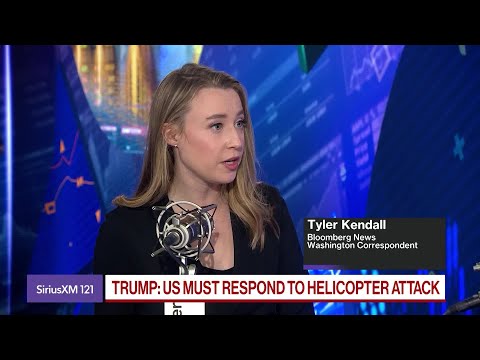
    Former President Donald Trump stated in a Bloomberg Television interview that the United States must launch a direct, proportional military response against Iran following an attack on a U.S. helicopter. Speaking to the necessity of global deterrence, Trump argued that failing to retaliate against Tehran directly projects a fatal weakness that emboldens hostile state actors and endangers American service members deployed across the Middle East.

    The statement cuts to the core of American foreign policy. It forces a conversation about where the lines of engagement are drawn. It demands an answer to a decades-old question.

    When a proxy fires a weapon, who pays the price?

    The Bloomberg Television Declaration

    The interview aired on Bloomberg Television. The setting was formal. The rhetoric was uncompromising. Trump addressed the attack on the U.S. helicopter not as an isolated skirmish, but as a symptom of a collapsing global deterrence architecture.

    He pointed the finger directly at Tehran. He bypassed the local militia groups entirely.

    This is a calculated rhetorical strategy. For decades, the Islamic Republic of Iran has utilized a network of proxy forces to harass Western assets. This provides plausible deniability. Trump’s stated doctrine strips that deniability away. If a weapon is financed by Iranian rials, smuggled by the Quds Force, and fired at an American aircraft, Trump’s framework treats the attack as an official act of the Iranian state.

    His demand for a response activates a specific cultural defense mechanism. It signals patriotism. It signals a refusal to accept American casualties as the cost of doing business in the Middle East.

    The Vulnerability of Rotary-Wing Aircraft

    Helicopters are inherently vulnerable. They do not fly at thirty thousand feet. They do not break the sound barrier. They operate low and slow, navigating complex terrain where threats can emerge from a single rooftop or a desert ridge.

    The U.S. military relies heavily on rotary-wing aircraft in the Middle East. The AH-64 Apache provides close air support. The MH-60 Black Hawk handles troop transport and medical evacuations. These machines are the lifeblood of U.S. Central Command (CENTCOM) operations.

    They are also prime targets.

    Iran has spent years flooding the region with man-portable air-defense systems (MANPADS). These shoulder-fired missiles are cheap. They are easy to smuggle. They are highly effective against helicopters. When an Iran-backed militia targets a U.S. helicopter, they are attacking the logistical foundation of the American military presence in the region.

    An attack on a helicopter is not a warning shot. It is an attempt to inflict catastrophic casualties.

    The Architecture of Maximum Pressure

    Trump’s demand for retaliation is not theoretical. It is anchored in his established track record. During his presidency, he implemented a strategy known as Maximum Pressure.

    The strategy began with economics. In May 2018, the United States withdrew from the Joint Comprehensive Plan of Action (JCPOA). Sanctions were reimposed. The goal was to choke off the financial pipelines that funded the Islamic Revolutionary Guard Corps (IRGC).

    But the strategy also included kinetic action.

    On January 3, 2020, a U.S. drone strike at Baghdad International Airport killed Qasem Soleimani. Soleimani was the commander of the IRGC’s Quds Force. He was the architect of Iran’s proxy network. The strike was a massive escalation. It was a direct message that the United States would no longer tolerate proxy attacks without targeting the Iranian leadership orchestrating them.

    Trump’s recent comments on Bloomberg Television echo this exact philosophy. Deterrence is not achieved through proportional responses against low-level militants. Deterrence is achieved by making the cost of aggression unimaginably high for the state sponsoring it.

    The Proxy War Apparatus

    Understanding the helicopter attack requires understanding the IRGC. The IRGC operates parallel to the traditional Iranian military. Its mandate is to export the Islamic Revolution.

    It achieves this through the Quds Force. The Quds Force funds, trains, and equips militias across the Middle East. The Houthis in Yemen. Hezbollah in Lebanon. Kataib Hezbollah in Iraq. These groups provide Tehran with a strategic buffer.

    When the Houthis fire anti-ship ballistic missiles in the Red Sea, they do so with Iranian intelligence. When militias in Iraq launch drones at U.S. bases, they do so with Iranian hardware.

    This dynamic creates a complex problem for the Pentagon. Striking the proxies is akin to treating the symptoms of a disease while ignoring the cause. The militants are replaceable. The hardware is easily restocked. Trump’s doctrine argues that the only way to stop the attacks is to strike the source.

    Washington’s Political Calculus

    National security is a dominant force in American politics. As the 2024 election cycle accelerates, foreign policy has become a central battleground.

    The attack on the helicopter forces lawmakers to take a stance. It highlights the tension between isolationism and interventionism. Trump’s base responds strongly to a posture of strength. The concept of cultural defense is deeply tied to the image of an untouchable American military.

    When American service members are attacked, the public expects a response. Hesitation is viewed as weakness. Weakness is viewed as a national embarrassment.

    Trump leverages this sentiment effectively. By demanding a direct response to Iran, he positions himself as the defender of American prestige. He draws a sharp contrast with diplomatic approaches that prioritize de-escalation over retaliation.

    The Mechanics of Retaliation

    What does a direct response look like? The Pentagon maintains extensive target packages for Iranian assets.

    A retaliatory strike would likely involve a combination of naval and air assets. The USS Dwight D. Eisenhower Carrier Strike Group operates in the region. Arleigh Burke-class destroyers carry Tomahawk cruise missiles capable of striking targets deep inside Iranian territory with pinpoint accuracy.

    Air Force assets would also play a role. B-1B Lancer bombers, flying from Al Udeid Air Base in Qatar or directly from the continental United States, can deliver massive payloads. F-35 Lightning II stealth fighters can bypass advanced air defense systems.

    The targets would be carefully selected to maximize damage to the IRGC while minimizing civilian casualties. Command and control centers. Drone manufacturing facilities. Naval bases along the Strait of Hormuz.

    The goal is not regime change. The goal is the destruction of military capability.

    The Echoes of Operation Praying Mantis

    There is historical precedent for this type of escalation. In April 1988, the USS Samuel B. Roberts struck an Iranian naval mine in the Persian Gulf. The blast nearly split the frigate in half.

    President Ronald Reagan ordered a direct, disproportionate response. The result was Operation Praying Mantis.

    On April 18, 1988, U.S. forces systematically destroyed half of Iran’s operational fleet. American aircraft and warships sank Iranian frigates, gunboats, and speedboats. They destroyed armed oil platforms used by the IRGC to coordinate attacks on commercial shipping.

    The operation lasted less than a day. It effectively ended the naval phase of the Iran-Iraq War. It reestablished American dominance in the Persian Gulf.

    Trump’s demands align with the legacy of Operation Praying Mantis. When an American asset is attacked, the response must be overwhelming. It must leave no doubt about the balance of power.

    The Cost of Inaction

    The alternative to retaliation is de-escalation. Proponents of de-escalation argue that striking Iran directly risks triggering a regional war. They point to the volatility of the Middle East. They warn of the economic consequences of a conflict in the Strait of Hormuz, where a significant portion of the world’s oil supply transits daily.

    But the doctrine of deterrence views inaction as the greater risk.

    If Iran believes it can attack a U.S. helicopter without facing direct consequences, it will escalate. Today it is a helicopter. Tomorrow it is a destroyer. The day after, it is a forward operating base.

    Deterrence is a psychological construct. It exists only as long as the adversary believes the threat of retaliation is credible. The moment that credibility fractures, the deterrence fails.

    Rebuilding the Red Line

    The Bloomberg Television interview serves as a blueprint for a potential future administration. It signals a return to Maximum Pressure. It signals a zero-tolerance policy for proxy warfare.

    The attack on the helicopter is a flashpoint. It is a test of American resolve. The way Washington responds will dictate the operational tempo of the IRGC for years to come.

    The Middle East respects strength. It exploits weakness. The doctrine of deterrence does not allow for ambiguity.

    Diplomats drafted memos. Generals reviewed target packages. Politicians debated the escalation ladder. Deterrence.

  • The Strait of Hormuz Crisis: Trump Claims Iran Shot Down U.S. Helicopter

    The Strait of Hormuz Crisis: Trump Claims Iran Shot Down U.S. Helicopter

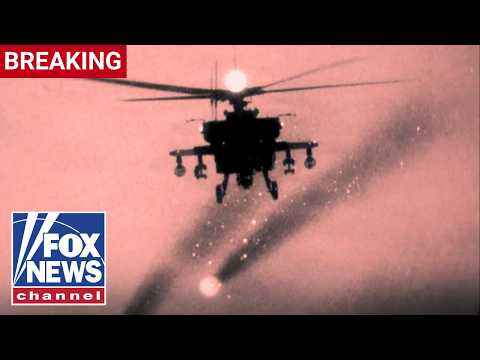
    Donald Trump stated that Iranian military forces shot down a United States helicopter operating in the Strait of Hormuz, a critical maritime chokepoint between the Persian Gulf and the Gulf of Oman. The announcement immediately escalated geopolitical tensions between Washington and Tehran. It raised urgent questions about the safety of U.S. Central Command (CENTCOM) personnel stationed in the Middle East and the stability of global energy markets. The assertion places a sudden spotlight on one of the most heavily militarized and economically vital waterways on the planet.

    The Announcement and the Immediate Geopolitical Shockwave

    The statement arrived without prior warning. It bypassed traditional Department of Defense channels and entered the public consciousness directly. The claim that a U.S. rotary-wing aircraft was brought down by hostile Iranian fire represents a massive escalation in a region already defined by perpetual brinkmanship. Washington and Tehran have engaged in a shadow war for decades. Direct, kinetic military action against a manned U.S. aircraft is a red line that historically demands a severe proportional response.

    Military analysts immediately began parsing the available data. U.S. Navy surface combatants and aviation assets operate under strict rules of engagement in the Persian Gulf. A shootdown implies either a deliberate targeted attack by Iranian air defense systems or a catastrophic miscalculation by local commanders within the Islamic Revolutionary Guard Corps (IRGC). The Pentagon’s immediate posture involves asset accountability, search and rescue protocol activation, and intelligence verification. The White House and the National Security Council face a rapidly closing window to establish the facts on the ground before public pressure dictates a military response.

    The international community watches the Persian Gulf with intense scrutiny. European allies, dependent on Middle Eastern energy exports, view any kinetic military action in the Strait of Hormuz as a direct threat to their economic security. Diplomatic backchannels, often routed through intermediaries in Oman or Switzerland, activate instantly during such crises. The goal is always to prevent a localized tactical incident from spiraling into a broader regional conflict.

    The Geography of a Chokepoint: Understanding the Strait of Hormuz

    To understand the gravity of the claim, one must understand the geography. The Strait of Hormuz is a narrow stretch of water separating the Arabian Peninsula from the Iranian coastline. At its narrowest point, the strait is only 21 miles wide. The shipping lanes that accommodate massive supertankers are just two miles wide in each direction, separated by a two-mile buffer zone. This geographic bottleneck forces civilian and military vessels into close proximity.

    The northern shore is entirely controlled by the Islamic Republic of Iran. The southern shore is shared by the Sultanate of Oman and the United Arab Emirates. The Musandam Peninsula juts northward, creating the intricate coastal geography that defines the waterway. Iranian forces maintain heavily fortified positions on Qeshm Island, Larak Island, and Abu Musa. These outposts are equipped with anti-ship cruise missiles, radar installations, and sophisticated air defense systems.

    The economic reality of the Strait cannot be overstated. Approximately 20 percent of the world’s total global petroleum consumption transits through this single waterway. That equates to roughly 21 million barrels of crude oil every single day. Liquefied natural gas (LNG) from Qatar also relies entirely on the Strait for access to Asian and European markets. If the Strait of Hormuz closes, the global economy halts. The mere threat of military conflict in these waters causes immediate spikes in the price of Brent Crude and West Texas Intermediate (WTI).

    U.S. Naval Aviation in the Persian Gulf

    The United States maintains a massive military footprint in the region to ensure the free flow of commerce. The U.S. Navy’s Fifth Fleet is headquartered in Manama, Bahrain. From this strategic hub, CENTCOM projects power throughout the Persian Gulf, the Red Sea, and the Arabian Sea. Naval aviation is a critical component of this power projection.

    Helicopters are the workhorses of the Fifth Fleet. The primary rotary-wing asset utilized by the U.S. Navy in these waters is the Sikorsky MH-60R Sea Hawk. These advanced helicopters operate from the flight decks of Arleigh Burke-class guided-missile destroyers and Nimitz-class aircraft carriers. They are tasked with anti-submarine warfare, surface warfare, search and rescue, and logistics support. When a U.S. warship transits the Strait of Hormuz, an MH-60R is almost always airborne, providing an over-the-horizon radar picture and physical escort.

    The U.S. Army also operates AH-64 Apache attack helicopters from bases in the region, occasionally conducting joint maritime patrols. These aircraft fly low and slow. They are inherently vulnerable to man-portable air-defense systems (MANPADS) and concentrated anti-aircraft artillery fire. Operating a helicopter in the Strait of Hormuz means flying within visual range of Iranian fast-attack craft and coastal missile batteries. The margin for error is zero. The airspace is congested, heavily monitored, and intensely hostile.

    The Islamic Revolutionary Guard Corps and Asymmetric Warfare

    The conventional Iranian military, the Artesh, shares responsibility for national defense with the Islamic Revolutionary Guard Corps. In the Strait of Hormuz, the IRGC Navy (IRGCN) holds primary jurisdiction. The IRGCN does not fight like a traditional Western navy. They rely on the doctrine of asymmetric warfare.

    Instead of fielding large, vulnerable frigates and destroyers, the IRGCN utilizes a massive fleet of heavily armed fast-attack craft (FAC) and fast inshore attack craft (FIAC). These small, maneuverable vessels are designed to swarm larger enemy ships. They are armed with heavy machine guns, unguided rockets, and anti-ship missiles. The IRGCN frequently uses these vessels to harass U.S. warships and commercial oil tankers transiting the strait. This harassment is designed to project power, test U.S. response times, and assert Iranian sovereignty over the waterway.

    The IRGC Aerospace Force controls Iran’s strategic missile and air defense assets. Over the past decade, Tehran has heavily invested in indigenous surface-to-air missile (SAM) systems. Systems like the Bavar-373 and the Khordad 15 provide a layered defense network covering the entire Persian Gulf. The proliferation of these advanced SAM systems has fundamentally altered the risk calculus for U.S. aviators operating in the region. The airspace over the Strait is a contested environment where radar lock-ons and radio warnings are a daily occurrence.

    Historical Precedent: From Praying Mantis to the Global Hawk

    The claim of a downed helicopter echoes a long, violent history of U.S.-Iran engagements in the Persian Gulf. The historical precedent dictates how Washington will likely respond. On April 18, 1988, the U.S. Navy launched Operation Praying Mantis in retaliation for the Iranian mining of the USS Samuel B. Roberts. The operation resulted in the destruction of half of Iran’s operational fleet and multiple offshore intelligence platforms. It remains the largest surface naval engagement for the United States since World War II.

    More recently, the airspace over the Strait has been the site of direct kinetic action. On June 20, 2019, the IRGC shot down a U.S. Navy RQ-4A Global Hawk unmanned surveillance drone. Iran claimed the drone had entered its territorial airspace. The United States maintained the aircraft was operating in international airspace over the Strait of Hormuz. The incident brought the two nations to the absolute brink of war. A retaliatory strike was authorized by the White House but famously called off with only minutes to spare.

    The distinction between an unmanned drone and a manned helicopter is profound. The loss of a $130 million drone is a financial and technological blow. The loss of a helicopter involves the loss of American lives. The U.S. military doctrine requires a definitive and overwhelming response to the deliberate killing of its service members. If the claim of a downed helicopter is verified, the diplomatic off-ramps that prevented war in 2019 will be significantly narrower.

    Economic Ramifications: Oil Markets and Global Supply Chains

    The global economy is deeply sensitive to the security of the Strait of Hormuz. Energy markets do not wait for official Pentagon confirmation before reacting to breaking news. The mere mention of military conflict in the Persian Gulf triggers algorithmic trading protocols and panic buying on the commodities exchanges.

    Brent Crude, the global benchmark for oil prices, experiences immediate volatility in response to Strait disruptions. A sustained closure of the waterway, or even a significant increase in maritime insurance premiums due to perceived risk, directly impacts the cost of gasoline, diesel, and aviation fuel worldwide. This inflationary pressure cascades through global supply chains, affecting the price of consumer goods, food transportation, and industrial manufacturing.

    The strategic petroleum reserves held by the United States and other industrialized nations serve as a buffer against such shocks. However, these reserves cannot replace the 21 million barrels per day that flow past the Musandam Peninsula. The economic reality is that the Strait of Hormuz is too big to fail. The U.S. military presence exists precisely to ensure that no single state actor can hold the global economy hostage by mining the waterway or threatening civilian shipping.

    The Diplomatic Calculus in Washington and Tehran

    In Washington, a confirmed shootdown forces a rapid consolidation of crisis management protocols. The National Security Council convenes to weigh kinetic and non-kinetic options. Kinetic options range from targeted strikes against the specific anti-aircraft battery responsible for the attack to a broader degradation of IRGC naval and aerospace infrastructure. Non-kinetic options involve severe economic sanctions, cyber warfare, and diplomatic isolation. The objective is to restore deterrence without triggering a regional conflagration that could draw in proxy forces in Iraq, Syria, Lebanon, and Yemen.

    In Tehran, the calculus is equally complex. The Supreme National Security Council must evaluate the domestic and international implications of the event. If the shootdown was a deliberate order from the highest levels of the IRGC, it represents a calculated gamble that the United States lacks the political will for a sustained conflict. If the shootdown was the result of a rogue local commander or a misidentified radar track, Tehran faces the difficult task of de-escalation while maintaining a posture of defiance for its domestic audience.

    The communication architecture between the two nations is notoriously fragile. There is no direct hotline between the Pentagon and the Iranian Ministry of Defense. Messages are relayed through the Swiss Embassy in Tehran or via backchannels managed by the Sultanate of Oman. This indirect communication increases the risk of misinterpretation and unintended escalation during a fast-moving crisis.

    The Burden of Verification

    The period immediately following a breaking military claim is defined by the fog of war. Initial reports are frequently inaccurate, incomplete, or deliberately manipulated. The burden of verification falls heavily on the U.S. intelligence community and the Department of Defense. Satellite imagery, signals intelligence (SIGINT), and radar telemetry are rapidly analyzed to construct an objective timeline of events.

    The fate of the aircrew remains the paramount concern. The U.S. military possesses robust combat search and rescue (CSAR) capabilities in the region. If an aircraft goes down, a massive coordinated effort involving surface ships, fixed-wing aircraft, and special operations forces is immediately launched. The waters of the Persian Gulf are shallow and heavily trafficked, complicating rescue operations while increasing the likelihood of rapid recovery.

    The geopolitical landscape of the Middle East is fundamentally altered by the introduction of lethal force against U.S. personnel. The deterrence architecture built over decades is tested in real-time. The credibility of U.S. security guarantees to regional allies is scrutinized. Every action and reaction is weighed against the overarching strategic goal of maintaining stability in the world’s most volatile region.

    The Enduring Standoff

    The Strait of Hormuz remains a theater of perpetual tension. It is a geographic reality that forces adversaries into uncomfortable proximity. The claims of downed aircraft, harassed shipping, and contested airspace are symptoms of a deeper, unresolved conflict between competing strategic visions for the Middle East. The U.S. seeks to maintain freedom of navigation and regional stability. Iran seeks to project regional hegemony and deter foreign military presence near its borders.

    This fundamental clash of interests ensures that the waters between the Persian Gulf and the Gulf of Oman will remain heavily militarized. The presence of U.S. naval aviation is a necessary component of the deterrence strategy, but it carries inherent risks. The men and women operating MH-60R Sea Hawks and Arleigh Burke-class destroyers bear the daily burden of this strategic standoff. They operate in an environment where a single spark can ignite a global crisis.

    The world watches the Strait. The flow of commerce continues under the shadow of military power. The rhetoric escalates and de-escalates in a familiar, dangerous rhythm. The physical reality of the chokepoint remains unchanged. Diplomats draft statements. Markets adjust prices. Fleets adjust positions. Hormuz.