Tag: Metro Goldwyn Mayer

  • The Audition Error That Made Comedy History – Jennifer Coolidge’s ‘Legally Blonde’ Revelation

    The Audition Error That Made Comedy History – Jennifer Coolidge’s ‘Legally Blonde’ Revelation

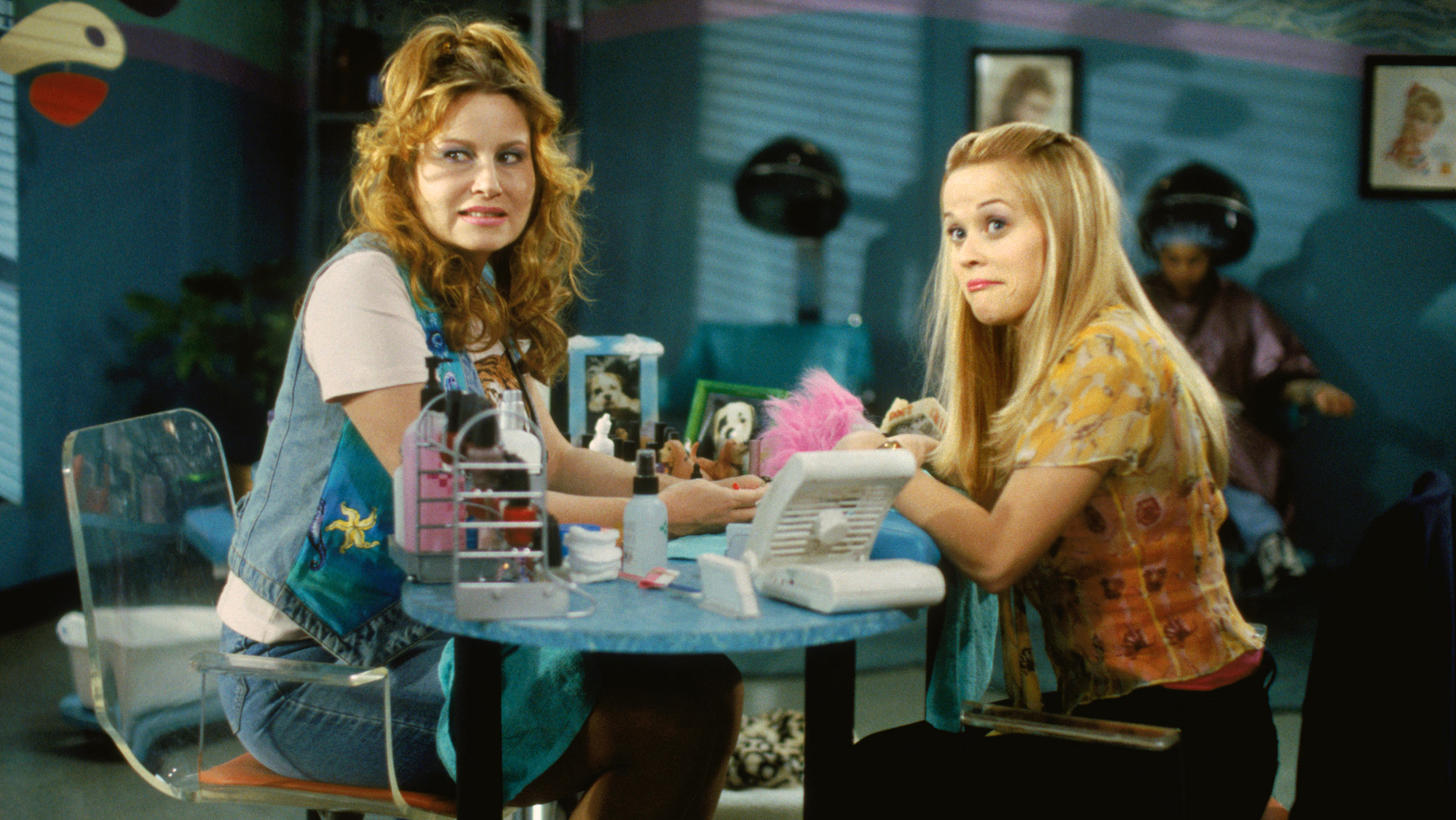
    In June 2026, actress Jennifer Coolidge revealed a decades-old Hollywood secret: she arrived at her audition for the 2001 comedy Legally Blonde believing she was reading for the lead role of Harvard-bound sorority girl Elle Woods. The role ultimately went to Reese Witherspoon. Coolidge instead secured the supporting part of Paulette Bonafonté, the Boston manicurist who became one of her signature characters.

    The admission surfaced in a report by Deadline Hollywood. Coolidge described the misunderstanding as a “stupid” mistake. She walked into the Metro-Goldwyn-Mayer casting room prepared to channel a bubbly, twenty-something fashion merchandising major.

    The reality of Hollywood casting quickly set in. The casting directors steered her toward the quirky, vulnerable salon worker. The misstep altered comedy history. Had Coolidge not walked into that room under false pretenses, the cinematic landscape of the early 2000s would look fundamentally different.

    The Anatomy of a 2000 Casting Room Error

    The year was 2000. Metro-Goldwyn-Mayer was actively assembling the cast for a new comedy based on Amanda Brown’s novel. The script, penned by Karen McCullah and Kirsten Smith, required a precise comedic tone.

    Director Robert Luketic was making his feature film debut. Casting director Joseph Middleton was tasked with finding the perfect ensemble. The search for Elle Woods was exhaustive. The studio needed an actress who could balance high-fashion frivolity with genuine intellectual grit.

    Coolidge received the audition materials. In the pre-digital era of Hollywood, sides were often faxed or couriered by agencies. Miscommunications were common. Coolidge, fresh off her breakout role in the 1999 teen comedy American Pie, read the script and assumed the studio wanted her for the lead.

    She prepared for Elle Woods. She memorized the dialogue intended for a character fourteen years her junior. She walked into the audition room ready to defend a fictional murder suspect using the rules of haircare.

    The casting team quickly realized the error. They did not dismiss her. Instead, they recognized her unique comedic rhythm. They handed her the sides for Paulette Bonafonté. A supporting character was born.

    From Stifler’s Mom to Boston Manicurist

    To understand the audacity of the misunderstanding, one must look at Coolidge’s career in the late nineties. She was a working actor fighting against immediate typecasting.

    In 1999, Universal Pictures released American Pie. Coolidge played Jeanine Stifler, globally recognized as “Stifler’s Mom.” The role was iconic but limiting. It cemented her as a hyper-sexualized comedic caricature.

    Hollywood executives rarely view character actors as leading ladies. The industry relies on established hierarchies. Coolidge wanted to break the mold. Auditioning for Elle Woods, even by mistake, represented a desire to step into the center of the frame.

    The pivot to Paulette proved to be a masterclass in scene-stealing. Paulette was not a caricature. She was a deeply insecure woman recovering from a toxic relationship with her ex-husband, Dewey. She just wanted to keep her dog, Rufus.

    Coolidge grounded the absurdity of the film. When Elle Woods enters the Neptune Beauty Salon, the movie shifts gears. The dynamic between the hyper-confident sorority girl and the defeated manicurist became the emotional anchor of the narrative.

    The Creation of a Cultural Phenomenon

    Legally Blonde hit theaters on July 13, 2001. Metro-Goldwyn-Mayer took a calculated risk on the summer release. The gamble paid off immediately.

    The film grossed $141.7 million worldwide against a modest $18 million production budget. It dominated the cultural conversation. It spawned a cottage industry of pink merchandise, legal parodies, and quotable dialogue.

    Coolidge’s performance generated one of the most recognizable sequences in modern cinema. The “Bend and Snap” routine. Choreographed in the middle of the salon, the move was designed to attract the attention of the UPS delivery man, played by Bruce Thomas.

    The scene is a masterclass in physical comedy. Coolidge executes the move with catastrophic results, breaking the delivery man’s nose. It remains one of the most frequently referenced moments in early 2000s pop culture. It does not exist without her specific comedic timing.

    The Economics of Early 2000s Comedies

    In the early 2000s, the mid-budget studio comedy was a reliable economic engine. Metro-Goldwyn-Mayer needed a summer hit. The film’s $141.7 million theatrical gross was only the beginning.

    The early 2000s marked the golden age of the DVD market. Home video sales and rental revenue from Blockbuster Video frequently doubled a film’s theatrical take. Legally Blonde became a staple of home entertainment.

    This repetition cemented the characters in the public consciousness. Paulette Bonafonté was no longer just a character in a movie theater. She was a fixture in millions of living rooms.

    Reese Witherspoon and the Fight for Elle

    While Coolidge was accidentally auditioning for the lead, Reese Witherspoon was actively fighting for it. Her path to Elle Woods was not guaranteed.

    Witherspoon had recently starred in the 1999 dark comedy Election. She played Tracy Flick, an intensely unlikable, overachieving high school student. Studio executives at Metro-Goldwyn-Mayer conflated the actor with the character. They feared Witherspoon was too abrasive to play the effervescent Elle Woods.

    Producer Marc Platt championed Witherspoon. He understood that Elle required a formidable intelligence hidden beneath a superficial exterior. Witherspoon met with studio head Marcel Sarmiento. She dressed the part. She proved she could carry the picture.

    The contrast between Witherspoon and Coolidge in the audition process highlights the subjective nature of casting. One actor had to prove she wasn’t too serious. The other actor didn’t realize she wasn’t supposed to be the star. Both ended up exactly where the film needed them.

    The Mechanics of Pre-Digital Casting

    In the year 2000, Breakdown Services delivered character descriptions to talent agencies via printed daily packets. Agents scoured these physical pages for opportunities.

    When a match was found, physical scripts were dispatched. There were no secure PDF watermarks. There were no digital audition links. Information passed through assistants, receptionists, and managers.

    A simple miscommunication over the phone could result in an actor preparing for the wrong role. Coolidge’s representation likely submitted her for the project without clarifying the specific character track. The actor received the script, saw a prominent female lead, and made a logical, if incorrect, assumption.

    The Legacy of Amanda Brown’s Source Material

    The foundation of the film rests on the real-life experiences of Amanda Brown. Brown attended Stanford Law School. She compiled letters detailing her experiences surrounded by peers who dismissed her fashion-conscious personality.

    Those letters formed the manuscript for the novel Legally Blonde. The journey from unpublished manuscript to Metro-Goldwyn-Mayer feature film was swift. Producer Marc Platt secured the rights before the book was even published.

    The adaptation process required flattening some of the novel’s sharper edges to fit the Hollywood comedy mold. The character of Paulette in the novel is slightly different from the cinematic version. Coolidge’s interpretation brought a specific working-class Boston energy that contrasted sharply with Elle’s Bel Air background. This class contrast became a central comedic engine for the film.

    The White Lotus Renaissance and Retrospective Truths

    The June 2026 revelation arrives at a specific moment in Coolidge’s career. She is no longer just a supporting player. She is a recognized powerhouse.

    Her collaboration with creator Mike White on the HBO anthology series The White Lotus changed her industry standing. Playing the wealthy, erratic Tanya McQuoid earned Coolidge two Primetime Emmy Awards. It triggered a massive career renaissance.

    This elevated status grants her a new level of candor. Actors rarely share stories of audition failures or misunderstandings early in their careers. It signals vulnerability. It invites mockery from industry gatekeepers.

    But a multi-award-winning actor in 2026 can laugh at a mistake made in 2000. Coolidge framing the audition error as “stupid” is a flex of her current security. She survived the Hollywood machine. She outlasted the executives who typecast her.

    The Enduring Power of the Supporting Character

    The Hollywood ecosystem relies heavily on character actors. While leading stars secure the box office funding, supporting actors provide the texture. Coolidge’s career is a testament to this dynamic.

    For decades, she elevated mediocre material and anchored great material. Her work in Christopher Guest’s mockumentaries, including Best in Show (2000) and A Mighty Wind (2003), proved her improvisational genius. Legally Blonde placed that genius inside a mainstream studio vehicle.

    The impact of the 2001 comedy continues to expand. The film spawned a 2003 sequel, Legally Blonde 2: Red, White & Blonde. It generated a highly successful 2007 Broadway musical, which introduced a new generation to the characters.

    Amazon MGM Studios continues to develop the intellectual property. Discussions of a third film, Legally Blonde 3, have circulated for years. The franchise refuses to fade into obscurity.

    At the center of that endurance is the chemistry of the original cast. The magic of the first film relies on the specific alchemy of its performers. Luke Wilson as Emmett Richmond. Selma Blair as Vivian Kensington. Victor Garber as Professor Callahan.

    And Jennifer Coolidge as Paulette. A role she never intended to read for. A role she only secured after failing to land the lead.

    Hollywood operates on a foundation of planned precision. Budgets are calculated. Demographics are targeted. Marketing campaigns are focus-grouped months in advance.

    Yet the art itself often relies on accidents. A misread fax. A misunderstood phone call. An actor walking into a room with the wrong lines memorized.

    The scripts printed. The actors read. The cameras rolled.

    Hollywood.

  • The Guardian of the Crawford Legacy – Casey LaLonde Dies at 54

    The Guardian of the Crawford Legacy – Casey LaLonde Dies at 54

    Casey LaLonde, the grandson of Academy Award-winning actress Joan Crawford and a dedicated archivist of her Hollywood legacy, has died at the age of 54. His passing severs one of the last direct, public-facing ties to the Golden Age of cinema and the complex, deeply fractured Crawford family tree. LaLonde was the son of Cathy Crawford, one of the twin daughters adopted by the screen legend in 1947.

    For decades, the Crawford name was synonymous with scandal. The 1978 publication of Mommie Dearest cast a long, dark shadow over the actress. The public remembered the wire hangers. They remembered the screaming. They remembered the theatrical cruelty.

    But the story does not end with Christina Crawford’s allegations. LaLonde spent his adult life building a counter-narrative. He offered the public a different version of the silver screen legend. He became the guardian of a different truth.

    The Lineage of Hollywood Royalty

    To understand Casey LaLonde, one must understand the unique structure of the Crawford family. Joan Crawford was a powerhouse at Metro-Goldwyn-Mayer. She controlled her image with an iron grip. That control extended to her personal life.

    Crawford adopted four children. Christina was adopted in 1939. Christopher was adopted in 1943. The family dynamic was notoriously strained. In 1947, Crawford adopted twin girls, Cathy and Cynthia. This second generation of adoptions created a distinct dividing line within the household.

    Cathy and Cynthia experienced a different mother. They did not share the harrowing memories detailed by their older siblings. They grew up in a strict but loving environment. They attended boarding schools. They moved to New York when Joan married Pepsi-Cola executive Alfred Steele in 1955.

    Cathy eventually settled in Pennsylvania. She married and had children, including Casey in the early 1970s. Casey grew up far removed from the glaring lights of Los Angeles. He knew his grandmother simply as “Jojo.” He remembered visits to her Manhattan apartment. He remembered a woman who was fastidious, elegant, and deeply affectionate toward her grandchildren.

    The 1977 Will and the Financial Aftermath

    The fracture in the Crawford family became permanent in May 1977. Joan Crawford died of a heart attack in her New York apartment. Her will was read shortly after. The document was a final, undeniable statement of her familial allegiances.

    Christina and Christopher were explicitly disinherited. The will stated this was done “for reasons which are well known to them.” The bulk of the $2 million estate went to charity. Cathy and Cynthia, however, were provided for. They each received $77,500 from the estate.

    This financial and emotional division set the stage for a decades-long war over the Crawford legacy. Christina struck back immediately. She had already been drafting a memoir. The disinheritance poured gasoline on the fire. The battle lines were drawn. Cathy and Cynthia stood on one side. Christina stood on the other. Christopher remained largely silent.

    Casey LaLonde was a young child when his grandmother died. He was shielded from the immediate fallout. But he would grow up in the shadow of the explosion that followed.

    The 1978 Cultural Earthquake of Mommie Dearest

    In 1978, William Morrow and Company published Mommie Dearest. The book was a cultural earthquake. It shattered the carefully cultivated image of the Hollywood studio system. It was the first major celebrity tell-all of its kind.

    The book detailed horrific allegations of physical and emotional abuse. It painted Joan Crawford as an alcoholic, narcissistic monster. The public devoured the narrative. The book spent 42 weeks on the New York Times Best Seller list. It sold millions of copies.

    In 1981, Paramount Pictures released the film adaptation. Faye Dunaway delivered a manic, campy performance as Joan. The film grossed $39 million. It cemented the “wire hangers” caricature in the global consciousness. Joan Crawford the actress was erased. Joan Crawford the monster was born.

    Cathy and Cynthia were devastated. They publicly denied the allegations. They sued Christina for defamation, though the legal avenues were limited because Joan was deceased. They stated they never witnessed any of the abuse described in the book. They maintained that their mother was strict but loving.

    This was the environment Casey LaLonde inherited. He watched his mother fight a losing battle against a Hollywood blockbuster. The truth of the twins was drowned out by the spectacle of Faye Dunaway.

    Casey LaLonde Steps Forward

    As LaLonde entered adulthood, he recognized the historical injustice facing his grandmother’s legacy. The public perception was entirely one-sided. The 1990s brought a wave of classic film retrospectives. The internet began to connect film historians and fans. LaLonde saw an opportunity.

    He decided to step into the public arena. He did not yell. He did not engage in bitter mudslinging. He adopted a strategy of factual, calm refutation. He became the family spokesperson.

    LaLonde began granting interviews to classic film historians. He attended screenings of his grandmother’s greatest hits, like Mildred Pierce and Whatever Happened to Baby Jane?. He spoke directly to the audiences. He shared personal anecdotes of “Jojo.” He humanized the caricature.

    His message was consistent. He acknowledged that Joan Crawford was a demanding perfectionist. He acknowledged the pressures of the studio system. But he firmly rejected the narrative of monstrous abuse. He pointed to the experiences of his mother, Cathy, as proof that Christina’s account was not the absolute truth of the household.

    The Archivist of the Golden Age

    LaLonde’s most significant contribution was his archival work. When Cathy Crawford died, LaLonde inherited an extensive collection of Joan Crawford’s personal effects. This was not just family memorabilia. This was Hollywood history.

    The archive included thousands of unseen photographs. It included personal letters spanning decades. It included original studio contracts from Metro-Goldwyn-Mayer and Warner Bros. It included wardrobe pieces and customized jewelry.

    LaLonde did not hoard these items. He recognized their historical value. He worked closely with biographers and documentarians. He provided primary source materials that contradicted the Mommie Dearest narrative. He showed the meticulous, professional, and deeply human side of the actress.

    In 2008, he contributed heavily to the centennial celebrations of Joan Crawford’s birth. He provided rare home movies for the documentary Joan Crawford: The Ultimate Movie Star. These films showed a relaxed, smiling woman playing with her children in the pool. They were a stark contrast to the Faye Dunaway portrayal. LaLonde let the footage speak for itself.

    Feud and the Modern Resurgence

    The cultural conversation around Joan Crawford shifted again in 2017. Ryan Murphy created the FX series Feud: Bette and Joan. The series chronicled the legendary rivalry between Crawford and Bette Davis during the filming of Whatever Happened to Baby Jane?.

    Jessica Lange portrayed Crawford. The performance was nuanced, empathetic, and deeply tragic. It explored the rampant sexism and ageism of the Hollywood studio system. It framed Crawford not as a monster, but as a survivor fighting for her career in a brutal industry.

    LaLonde praised the series. He noted that it finally offered a three-dimensional view of his grandmother. He appreciated that the narrative shifted away from Christina’s book and focused on Joan’s professional struggles. He used the renewed public interest to further share his archival materials.

    The modern era of celebrity accountability also played a role in the re-evaluation of Crawford. Audiences began to question the media narratives of the past. They recognized how the press historically vilified ambitious women. LaLonde capitalized on this cultural shift. He positioned his grandmother as a pioneer who controlled her own business empire long before it was acceptable for women to do so.

    The Final Years in Pennsylvania

    In his later years, LaLonde remained in Pennsylvania. He continued to manage the archive. He maintained a quiet, private life outside of his duties to the Crawford legacy. He worked in local business. He raised his own family.

    He remained active in online classic film communities. He frequently answered questions from fans. He debunked persistent internet rumors. He was a reliable, grounded source of truth in a landscape often dominated by sensationalism.

    His death at 54 marks the end of an era. The direct, living connection to the Crawford household is now almost entirely gone. The responsibility of maintaining the legacy now falls to historians and film preservationists.

    LaLonde succeeded in his primary mission. He did not erase Mommie Dearest from the cultural lexicon. That was an impossible task. But he ensured that it was no longer the only narrative. He forced the public to look at the other side of the coin. He restored a measure of dignity to a woman who had been systematically stripped of it.

    The Weight of Memory

    The history of Hollywood is written by the survivors. It is shaped by those who control the narrative. For decades, Christina Crawford held the pen. Casey LaLonde spent his life wrestling it back.

    He used facts. He used photographs. He used the quiet dignity of his mother’s memory. He built a fortress of evidence against a tidal wave of camp and cruelty.

    Biographers gathered the letters. Fans watched the retrospectives. A grandson guarded the truth. Silence.