Tag: Metoo

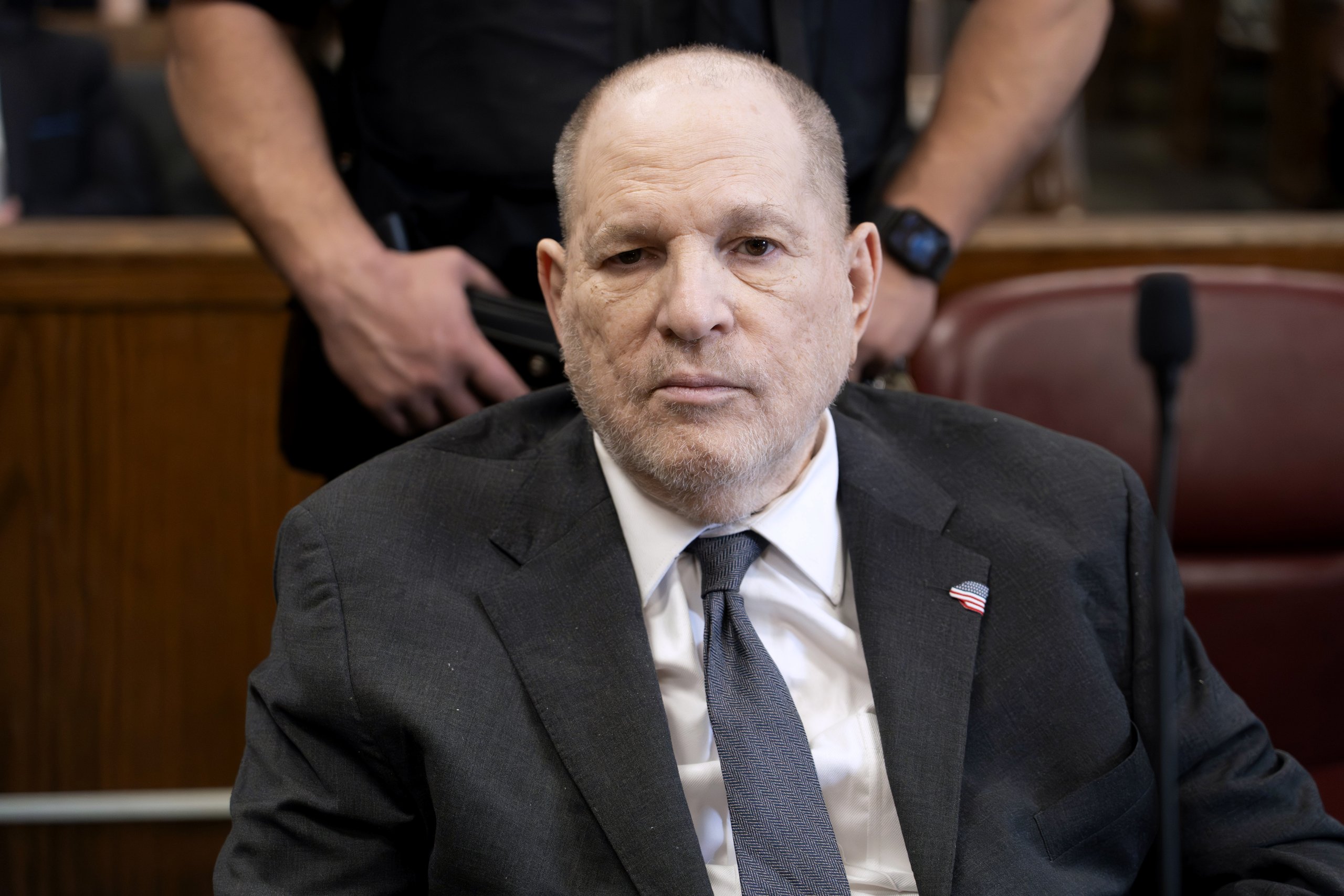
  • Harvey Weinstein Hospitalized – Severe Breathing Issues Reported

    Harvey Weinstein Hospitalized – Severe Breathing Issues Reported

    Harvey Weinstein’s Ongoing Health Challenges

    On July 1, 2026, former film producer Harvey Weinstein was hospitalized after reportedly experiencing severe breathing issues. This medical event occurred while Weinstein is serving significant prison sentences for sexual assault convictions. The hospitalization marks another instance of health complications for the once-powerful Hollywood figure, whose legal battles have spanned several years and jurisdictions.

    Weinstein’s medical condition has frequently been cited by his legal teams during his numerous court appearances and appeals. These health concerns have ranged from cardiac issues to diabetes and back problems. The severity of the breathing issues reported on July 1, 2026, led to his transfer from a correctional facility to a medical institution.

    The Legal Landscape: Convictions and Appeals

    Harvey Weinstein’s legal troubles began to escalate dramatically in October 2017 with a series of investigative reports. These reports, published by The New York Times and The New Yorker, detailed decades of alleged sexual harassment and assault. The revelations ignited the #MeToo movement, bringing widespread attention to issues of sexual misconduct and power dynamics within the entertainment industry and beyond.

    In March 2020, Weinstein was convicted in New York of a criminal sexual act in the first degree and rape in the third degree. He was subsequently sentenced to 23 years in state prison. This landmark conviction was seen by many as a turning point for accountability in Hollywood.

    Despite this conviction, Weinstein’s legal team immediately pursued an appeal. They argued that judicial errors, including the admission of testimony from uncharged prior bad acts witnesses, prejudiced the jury. The New York Court of Appeals overturned his 2020 conviction on April 25, 2024, citing these procedural errors.

    The New York County District Attorney’s office stated its intention to retry the case. This decision was announced shortly after the appeals court ruling. The prospect of a new trial in New York adds another layer of complexity to Weinstein’s legal future.

    California Conviction and Sentencing

    Separately, in December 2022, Weinstein was convicted in Los Angeles, California, on charges of rape and sexual assault. The Los Angeles County Superior Court found him guilty on three of seven counts. These charges related to an incident that occurred in 2013 involving an actress known as Jane Doe 1.

    On February 23, 2023, the Los Angeles court sentenced Weinstein to 16 years in state prison for these California crimes. This sentence was ordered to run consecutively to any other sentence he was serving. Consequently, even with the New York conviction overturned, Weinstein remained incarcerated due to the California conviction.

    His legal team also filed an appeal against the California conviction. Arguments in this appeal mirror some of those presented in New York, focusing on evidentiary rulings and the inclusion of testimony from uncharged accusers. The California appeal process remains ongoing as of July 1, 2026.

    The Impact of #MeToo

    Weinstein’s case became a focal point for the #MeToo movement. This movement empowered countless individuals to come forward with their own stories of sexual harassment and assault. It led to significant cultural shifts and legislative changes in various industries.

    The public discourse surrounding Weinstein’s trials highlighted systemic issues. These included the abuse of power, the silencing of victims, and the challenges of achieving justice for sexual misconduct. His convictions, even with subsequent appeals, represented a significant moment for victim advocacy and legal reform.

    Numerous individuals, including prominent actresses and former employees, provided testimony against Weinstein. Their bravery in sharing their experiences was central to the prosecution’s cases. These testimonies often detailed patterns of behavior that spanned decades.

    Weinstein’s Health in Confinement

    Since his incarceration, reports of Harvey Weinstein’s declining health have been frequent. He has been seen using a walker in court appearances. His legal team has consistently raised concerns about his physical condition, often requesting medical accommodations.

    The breathing issues reported on July 1, 2026, are part of a pattern of health challenges. These challenges complicate his prison sentence and legal proceedings. Correctional facilities are tasked with providing adequate medical care for inmates, a responsibility that becomes more complex with high-profile individuals with chronic conditions.

    His medical needs have required transfers to various medical facilities outside of the immediate prison environment. These transfers ensure he receives specialized care. The nature of his current breathing issues has not been publicly detailed beyond the initial report of severity.

    The Road Ahead: Legal and Medical

    For Harvey Weinstein, the immediate future involves continued medical evaluation and treatment for his respiratory issues. Simultaneously, his legal battles are far from over. The New York District Attorney’s office is preparing for a potential retrial. The appeal of his California conviction is still under review by higher courts.

    The outcomes of these legal proceedings will continue to shape his legacy. His case remains a benchmark for discussions on accountability, justice, and the complexities of the legal system in high-profile sexual assault cases. The confluence of his health and legal status presents an ongoing narrative.

    His hospitalization on July 1, 2026, serves as a reminder of the human element within these legal sagas. It underscores the physical tolls that prolonged legal battles and incarceration can exact. The public watches, the legal system proceeds, and the medical community intervenes.

    Farmers gathered. Activists gathered. Lawyers gathered. Physicians gathered. Reporters gathered. The public watched.

    Justice.

  • Jane Campion’s Weinstein Comments Reopen the ‘Art vs. Artist’ Debate

    Jane Campion’s Weinstein Comments Reopen the ‘Art vs. Artist’ Debate

    When Jane Campion recently spoke about the legacy of her 1993 masterpiece The Piano, she offered a blunt assessment that immediately ignited a firestorm within the film industry. The acclaimed director acknowledged that disgraced mogul Harvey Weinstein did “some horrific things,” yet she simultaneously praised his “brilliant” awards campaign for her film, stating that the aggressive and successful Oscar push “was his vision.” This juxtaposition, condemning the man’s predatory behavior while acknowledging his undeniable professional acumen, forces Hollywood into an uncomfortable confrontation with its own history.

    Campion’s remarks do not exist in a vacuum. They arrive at a moment when the entertainment industry is still actively litigating the boundaries of accountability and the complex task of separating the art from the architect of its success. Weinstein, currently serving a lengthy prison sentence for rape and sexual assault following the explosive #MeToo revelations of 2017, was once the undisputed king of the independent film world. His company, Miramax, was synonymous with prestige cinema and ruthless, effective Oscar campaigns. Campion’s comments underscore a painful reality for many filmmakers of her generation: their defining triumphs were often inextricably linked to a man whose methods were as monstrous as his eye for talent was sharp.

    The conversation sparked by Campion is not merely about Weinstein; it is about the systemic structures of power, the compromises inherent in ambition, and the enduring challenge of reconciling brilliant results with brutal realities.

    The Miramax Machine and The Piano

    To understand the weight of Campion’s comments, one must examine the specific context of 1993. The Piano, a startlingly original and fiercely feminist film, was not an obvious candidate for mainstream Oscar glory. It was a brooding, atmospheric drama set in 19th-century New Zealand, featuring a mute protagonist and a complex exploration of female desire. It was the kind of film that, prior to the rise of Miramax, might have been relegated to the arthouse circuit, celebrated by critics but largely ignored by the Academy of Motion Picture Arts and Sciences.

    Enter Harvey Weinstein. Miramax acquired the distribution rights to The Piano and immediately recognized its potential. Weinstein deployed the aggressive, relentless campaign strategies that would soon become his trademark. He recognized that the film needed to be positioned not just as an artistic achievement, but as an event. The campaign focused heavily on Campion’s unique vision, Holly Hunter’s extraordinary performance, and the film’s groundbreaking nature as a female-directed powerhouse.

    The results were undeniable. The Piano became a critical and commercial sensation, grossing over $40 million domestically, a staggering sum for an independent film at the time. More importantly, it secured eight Academy Award nominations. It ultimately won three Oscars: Best Actress for Holly Hunter, Best Supporting Actress for Anna Paquin, and Best Original Screenplay for Jane Campion herself. Campion also became only the second woman in history to be nominated for Best Director. The success of The Piano cemented Miramax’s reputation as an unstoppable force in the awards race and established Campion as a major cinematic voice.

    The Dissonance of Acknowledgment

    When Campion describes Weinstein’s campaign as “brilliant,” she is stating a historical fact. The strategy was innovative, relentless, and wildly successful. It changed the trajectory of her career and altered the landscape of independent film distribution. However, this acknowledgment creates a profound dissonance when placed alongside the reality of Weinstein’s crimes.

    The tension lies in the assumption that praising a specific professional action somehow mitigates or excuses the broader pattern of horrific behavior. Campion’s comments challenge this binary thinking. She is essentially arguing that two contradictory truths can exist simultaneously: Harvey Weinstein was a predator who destroyed lives, and Harvey Weinstein was a brilliant strategist who championed her work. Acknowledging the latter does not erase the former; it merely reflects the complicated reality of navigating a deeply flawed industry.

    This dissonance is particularly acute for female filmmakers who benefited from Weinstein’s support. For years, Miramax was one of the few places where complex, female-driven narratives could find significant backing and aggressive promotion. The realization that this support was provided by a man who was simultaneously abusing women creates a profound moral conflict. Campion’s willingness to articulate this conflict publicly is a rare moment of unvarnished honesty in an industry often characterized by carefully curated narratives.

    The Enduring ‘Art vs. Artist’ Debate

    Campion’s remarks inevitably reignite the perennial debate regarding the separation of art from the artist, or, in this case, the art from the distributor. Can we celebrate the triumph of The Piano without acknowledging the machinery that propelled it to success? If that machinery was operated by a monster, does it taint the art itself?

    The cultural conversation has shifted dramatically in recent years. The #MeToo movement demanded a holistic reckoning, arguing that the personal conduct of powerful figures could no longer be ignored or compartmentalized. The idea that “genius” or “brilliance” excuses abuse has been largely dismantled. However, the practical application of this reckoning remains messy. How do we engage with the vast catalog of films produced, distributed, or championed by individuals later revealed to be abusers?

    Some argue for a complete boycott, suggesting that any engagement with these works indirectly validates the perpetrators. Others advocate for a more nuanced approach, arguing that the art itself, often the result of collaboration among hundreds of individuals, should not be discarded due to the sins of one powerful figure. Campion’s comments seem to align with this latter perspective. She is not defending Weinstein the man; she is defending the specific, undeniable impact of his professional vision on her film.

    The Reality of Industry Complicity

    Perhaps the most uncomfortable aspect of Campion’s comments is what they reveal about the broader complicity of the film industry during the Weinstein era. The “brilliant” campaigns that Campion praises were not executed in a vacuum. They required the participation of publicists, journalists, academy members, and rival executives. The aggressive tactics, the bullying, the relentless pressure, these were known quantities within the industry long before the allegations of sexual assault became public.

    By acknowledging the effectiveness of Weinstein’s methods, Campion inadvertently highlights the ecosystem that allowed him to thrive. The industry rewarded his behavior with Oscars, box office success, and unparalleled influence. The brilliance of his campaigns was inextricably linked to his ruthless consolidation of power, the very power he used to silence his victims.

    Campion’s honesty forces a reckoning not just with Weinstein, but with the structures that enabled him. It asks the industry to consider how much collateral damage it was willing to accept in exchange for prestige and profit. The answer, historically, has been deeply troubling.

    Navigating the Legacy of The Piano

    So, where does this leave the legacy of The Piano? The film remains a towering achievement in cinema, a vital piece of feminist art that continues to resonate with audiences. Its significance is not diminished by the actions of its distributor. However, Campion’s comments ensure that the story of its success will forever be complicated by the shadow of Harvey Weinstein.

    This complication is not necessarily a negative thing. It demands a more mature, nuanced engagement with film history. It requires us to acknowledge that great art is often produced within flawed systems and championed by deeply flawed individuals. It forces us to confront the uncomfortable reality that progress and predation can sometimes exist in the same space.

    Jane Campion’s refusal to offer a simple, sanitized narrative is a testament to her intellectual rigor. She is demanding that we look at the whole picture, even the parts that are difficult to reconcile. In doing so, she has sparked a necessary conversation about the true cost of success in Hollywood and the enduring challenge of separating the brilliance of the work from the brutality of the men who controlled the machinery.

    The debate will continue. The lines will be drawn and redrawn. But Campion’s comments stand as a stark reminder that history is rarely simple, and the truth is often found in the uncomfortable spaces between condemnation and acknowledgment.

    Hollywood.