Tag: Media Scrutiny

  • Brad Pitt’s Sobriety: The Hollywood Narrative of Redemption and Relapse

    Brad Pitt’s Sobriety: The Hollywood Narrative of Redemption and Relapse

    KEY TAKEAWAYS

    • Brad Pitt‘s sobriety has been a prominent part of his public image for years.
    • Recent reports from The Daily Beast allege Pitt was seen drinking with A-listers prior to his public sobriety confession.
    • This raises questions about the authenticity of celebrity narratives and the industry’s role in shaping them.
    • The public’s fascination with celebrity struggles and transformations remains high.
    • The incident highlights the ongoing challenge of maintaining sobriety under intense public scrutiny.

    The Spark & Public Reflex

    Brad Pitt, a name synonymous with Hollywood royalty, has for years been the poster child for a particular kind of celebrity redemption arc: the public battle with addiction, the confession, and the subsequent journey to sobriety. His candid interviews about alcohol abuse and his commitment to Alcoholics Anonymous provided a powerful, relatable narrative that resonated deeply with fans and media alike. It was a story of vulnerability, growth, and the possibility of change, even for those at the pinnacle of fame. This carefully constructed image, however, now faces scrutiny following a report from The Daily Beast, alleging Pitt was observed drinking with A-listers before his widely publicized sobriety confession. The immediate public reflex is a mix of disappointment, skepticism, and a renewed, almost voyeuristic, interest in the true nature of celebrity struggles.

    The Industry Mechanics & Cultural Stakes

    The mechanics of Hollywood often demand a narrative, a clean arc, especially when it comes to personal struggles. A star’s journey to recovery isn’t just a personal one; it’s a public relations opportunity, a chance to reframe a career, and to connect with an audience on a deeper, more human level. The cultural stakes here are immense. When a figure like Brad Pitt speaks openly about sobriety, it offers hope and destigmatizes addiction for millions. But when the timeline or authenticity of that narrative is questioned, it erodes trust, not just in the individual celebrity, but in the entire machinery that crafts these public personas. The industry thrives on these transformations, presenting them as definitive victories. Yet, the reality of addiction, as many know, is rarely a linear path. The public’s fascination isn’t just with the fall, but with the perceived hypocrisy, the gap between the curated image and the whispered reality. It forces us to confront the uncomfortable truth that even the most polished narratives can be more complex, and perhaps more fragile, than they appear.

    The Mirror Turn & Cultural Resonance

    This isn’t merely about Brad Pitt; it’s a mirror reflecting our own desires for perfect narratives and our collective struggle with authenticity in an age of constant performance. Why do we crave these stories of celebrity redemption so intensely? Perhaps it’s because they offer a simplified version of complex human challenges, suggesting that even the most entrenched problems can be overcome with enough will and public declaration. When these narratives falter, it resonates because it touches upon our own experiences with imperfection, with the gap between who we present ourselves to be and who we truly are. The cultural resonance lies in the universal human experience of striving for self-improvement, facing setbacks, and the constant negotiation between public perception and private reality. We watch, we judge, we empathize, because in some fundamental way, Brad Pitt’s struggle, real or perceived, is a magnified version of our own.

    “The public’s fascination isn’t just with the fall, but with the perceived hypocrisy, the gap between the curated image and the whispered reality.”

    The desert wind whips around the empty rehab facility, a single, forgotten coffee cup on a dusty window sill.

    Frequently Asked Questions

    What are the recent allegations regarding Brad Pitt’s sobriety?

    The Daily Beast reported that Brad Pitt was seen drinking with other celebrities prior to his public announcement about his sobriety and commitment to Alcoholics Anonymous.

    How has Brad Pitt previously discussed his sobriety?

    Pitt has been very open in past interviews about his struggles with alcohol abuse and his journey to recovery, often crediting Alcoholics Anonymous for his progress.

    Why is this news significant for celebrity culture?

    This situation highlights the tension between carefully managed celebrity public images and the often-complex realities of personal struggles, raising questions about authenticity and the narratives presented to the public.

    What is the public’s reaction to these reports?

    The public reaction is a mix of renewed interest, skepticism, and disappointment, reflecting a broader cultural fascination with celebrity redemption arcs and their potential fragility.

  • Sami Sheen Claims No Financial Support from Charlie Sheen, Promotes OnlyFans

    Sami Sheen Claims No Financial Support from Charlie Sheen, Promotes OnlyFans

    Sami Sheen’s Public Declaration

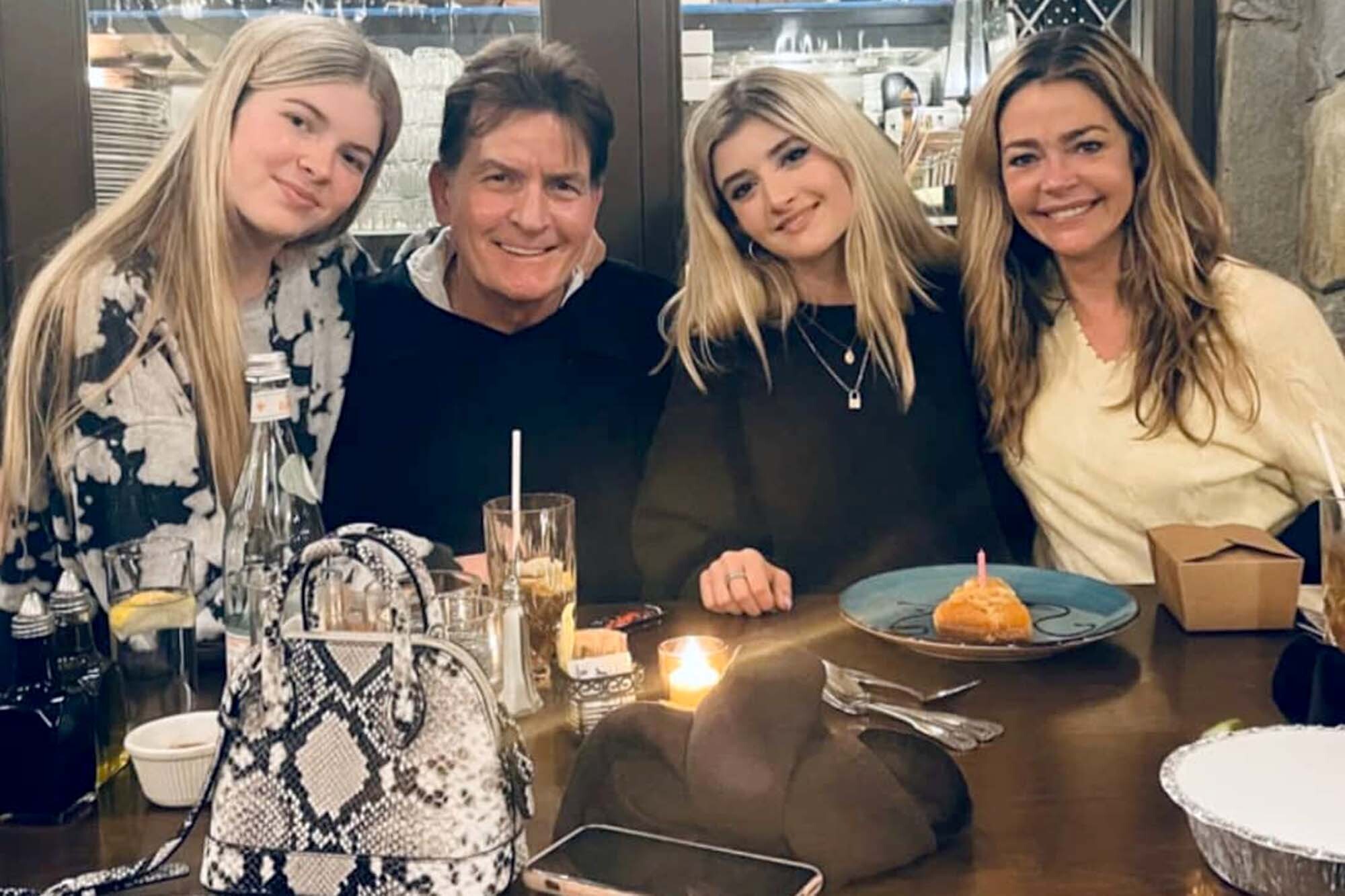
    Sami Sheen, the daughter of prominent actor Charlie Sheen and actress Denise Richards, publicly declared on July 19, 2026, that she receives no financial assistance from her father. She stated that her income is derived solely from her OnlyFans account, a subscription-based content platform. This assertion directly addresses and refutes previous reports and rumors concerning Charlie Sheen’s financial contributions to her upkeep.

    Her statement, made through public channels, included an explicit promotion of her OnlyFans page, urging potential subscribers to engage with her content. This move places her personal financial situation and professional endeavors squarely in the public spotlight, drawing attention to the dynamics within the Sheen-Richards family.

    The History of Parental Disputes

    The relationship between Sami Sheen and her parents, Charlie Sheen and Denise Richards, has been a subject of public interest for several years. Charlie Sheen and Denise Richards married in June 2002. They welcomed Sami in March 2004 and their second daughter, Lola Rose, in June 2005. Richards filed for divorce in March 2005, citing irreconcilable differences. The divorce was finalized in November 2006, initiating a protracted period of public and private disputes over custody, child support, and parental responsibilities.

    Throughout the years, both Sheen and Richards have made various public statements regarding their co-parenting challenges and financial arrangements. These statements often played out in the media, providing a narrative of a family navigating complex personal issues under intense scrutiny. The children, including Sami, were frequently mentioned in these discussions, particularly as they approached adulthood.

    Sami Sheen and OnlyFans

    Sami Sheen first joined OnlyFans in June 2022. At the time, her decision garnered significant media attention and public discussion. Her father, Charlie Sheen, initially expressed disapproval of her choice to join the platform, citing concerns about exploitation. He stated through his publicist, Jeff Ballard, that he did not condone the decision but acknowledged Sami was an adult. He reportedly urged her to keep it “classy and creative.”

    Denise Richards, Sami’s mother, took a different stance. She publicly supported her daughter’s decision, emphasizing the importance of parental support and acknowledging that Sami is an adult capable of making her own choices. Richards herself later joined OnlyFans in June 2022, days after Sami, further highlighting the family’s differing perspectives on the platform and personal autonomy.

    Richards stated that she wanted to understand the platform better and support her daughter, dispelling any notion of judgment. She also indicated that she felt it was important for parents to be open-minded and not dismiss their children’s choices outright, especially when those choices involve modern forms of income generation and self-expression.

    Financial Support and Public Perception

    Sami Sheen’s recent assertion on July 19, 2026, directly challenges a narrative that has circulated in the media. Reports from September 2021 indicated a change in Charlie Sheen’s child support obligations. A Los Angeles court filing from September 2021 reportedly showed that Sheen, with Richards’ consent, requested a modification to his child support payments for Sami and Lola. The filing cited that Sami, then 17, was living with her father and no longer residing with her mother, leading to a reduction in financial obligations to Richards.

    Further reports in October 2021 suggested that Sami was still living with Sheen, having moved back in with Richards much later in 2022. These shifts in living arrangements often coincide with adjustments in financial support arrangements, which are typically determined by court orders based on factors like custody and income.

    The rumor of Charlie Sheen purchasing a beach house for Sami gained traction in various celebrity news outlets. These reports, often unsubstantiated, contributed to the public perception that Sami Sheen was receiving significant financial assistance from her father. Her recent statement explicitly contradicts this, suggesting that any past support or rumored gifts do not translate to ongoing financial dependence.

    The public’s interest in celebrity children’s financial independence and lifestyle choices remains high. The contrast between perceived celebrity wealth and individual financial autonomy often fuels such discussions. Sami Sheen’s statement positions her as an individual who is actively earning her own living, separate from her father’s resources.

    The Broader Context of Celebrity Children

    Children of celebrities often face unique challenges and expectations regarding their personal and professional lives. They are frequently subjected to public scrutiny, with their choices and financial situations becoming fodder for media discussion. The pressure to forge their own paths, sometimes in the shadow of famous parents, can be significant.

    Many celebrity offspring choose to enter the entertainment industry, following in their parents’ footsteps. Others pursue entirely different careers, seeking to establish identities independent of their family name. The decision to use platforms like OnlyFans, while a modern form of income generation, can be particularly polarizing, drawing both support and criticism.

    The discussion around Sami Sheen’s financial independence also touches upon broader themes of generational wealth, parental responsibility, and the evolving nature of work in the digital age. For some, her reliance on OnlyFans represents a modern entrepreneurial spirit. For others, it raises questions about the responsibilities of wealthy parents and the choices available to their children.

    The Sheen-Richards family has a long history of public challenges. Charlie Sheen’s career has been marked by both significant success and highly publicized personal struggles, including legal issues, substance abuse, and health concerns. These events have often had ripple effects on his family, including his children, who have grown up under constant media attention.

    Denise Richards has also maintained a public profile, often addressing the complexities of co-parenting with Sheen. Her efforts to protect her children from the more tumultuous aspects of their father’s life have been documented in various interviews and public appearances. The family’s journey has been a public spectacle, with each new development drawing renewed interest.

    Navigating Public Scrutiny and Personal Choices

    Sami Sheen’s direct declaration about her financial independence and her promotion of OnlyFans underscores a growing trend among younger generations to leverage digital platforms for income and personal branding. This approach allows individuals to directly monetize their content and build an audience without traditional intermediaries.

    Her assertion that she receives no financial aid from her father aims to clarify her current financial standing and potentially to establish a distinct personal and professional identity. This act of public self-definition is a common strategy for individuals seeking to move beyond the shadow of famous relatives.

    The ongoing public discourse surrounding Sami Sheen’s financial status and career choices reflects contemporary attitudes towards celebrity, family dynamics, and the economic opportunities presented by online platforms. Her statement on July 19, 2026, adds a new chapter to the complex narrative of her family’s public life, emphasizing her agency in her own financial future.

    The Evolving Landscape of Digital Entrepreneurship

    OnlyFans, launched in 2016, has grown into a significant platform for content creators to earn revenue directly from their subscribers. It allows creators to post various forms of content, including photos, videos, and live streams, often behind a paywall. The platform is particularly known for its adult content, though it also hosts creators from other genres such as fitness, music, and cooking.

    The rise of platforms like OnlyFans has democratized content creation and monetization, offering an alternative to traditional employment and media structures. For individuals like Sami Sheen, it provides a direct avenue to generate income and build a personal brand, separate from established family connections or traditional career paths.

    This shift in economic models also brings new discussions about labor, privacy, and social perception. While some view it as empowering, others remain critical of the platform’s association with adult content and potential for exploitation. Sami Sheen’s public embrace of OnlyFans and her assertion of financial independence through it contribute to this ongoing societal conversation.

    The decision to promote her OnlyFans account while simultaneously stating her lack of financial support from her father creates a clear narrative: she is self-reliant. This narrative may resonate with audiences who value independence and direct entrepreneurship, especially in an era where traditional career paths are increasingly challenged.

    The family’s public history, combined with Sami’s modern approach to income generation, illustrates the complex interplay between personal choices, celebrity status, and evolving digital economies. Her statement marks a definitive stance on her financial autonomy.

    The media continues to document these developments. The public remains engaged. The narrative of self-sufficiency. The promotion of a platform. The Sheen-Richards family saga continues.

  • The Disproportionate Pummeling, How Pamela Anderson Guided Olivia Wilde Through the ‘Don’t Worry Darling’ Backlash

    The Disproportionate Pummeling, How Pamela Anderson Guided Olivia Wilde Through the ‘Don’t Worry Darling’ Backlash

    Olivia Wilde found her survival guide in an unlikely place. Speaking to Variety in June 2026, the director revealed that Pamela Anderson served as a vital mentor during the chaotic 2022 rollout of her sophomore film, Don’t Worry Darling. When the internet turned a psychological thriller into a daily soap opera, Anderson offered a blueprint for enduring the fire. The scrutiny, Wilde noted, was not just intense. It was “insanely disproportionate.”

    The revelation bridges two eras of Hollywood media cycles. It connects the tabloid cruelty of the 1990s with the algorithmic outrage of the 2020s. Both women experienced the sensation of having their professional work eclipsed by manufactured public narratives. Both women watched as audiences consumed their personal lives as entertainment.

    But the story of this mentorship does not begin in 2026. It begins four years earlier. It begins on a stage in Las Vegas, peaks on a red carpet in Italy, and ends with a quiet realization about the mechanics of fame.

    The Anatomy of a Public Pummeling

    The timeline of the Don’t Worry Darling drama remains a case study in modern media combustion. The spark ignited on April 26, 2022. Wilde was standing on stage at CinemaCon inside Caesars Palace in Las Vegas. She was presenting the first footage of her highly anticipated follow-up to the 2019 hit Booksmart.

    An unidentified person approached the stage. They slid a manila envelope marked “Personal and Confidential” across the floor. Inside were custody papers from her former partner, actor Jason Sudeikis.

    The moment went viral instantly. It shattered the traditional boundaries between professional promotion and private turmoil. Warner Bros. executives scrambled. Security protocols at the annual theater convention were permanently rewritten. But for Wilde, the envelope was merely the opening act of a relentless months-long siege.

    By August 2022, the narrative had spiraled entirely out of the studio’s control. Rumors of a rift between Wilde and the film’s lead actress, Florence Pugh, began to dominate social media. Pugh notably limited her promotional duties for the film, citing scheduling conflicts with the production of Dune: Part Two. The internet rejected the logistical explanation. The internet wanted a feud.

    The Video Leak and the Venice Boiling Point

    The situation escalated when Shia LaBeouf, who was originally cast in the lead role before being replaced by Harry Styles, contacted the press. In late August 2022, LaBeouf forwarded emails and a video to Variety. The video showed Wilde driving a car, asking LaBeouf to reconsider leaving the project, and referring to Pugh as “Miss Flo.”

    The leak was catastrophic for the film’s press tour. It provided raw, out-of-context video evidence for the internet to analyze, dissect, and weaponize. The conversation was no longer about a $35 million psychological thriller set in a 1950s utopian community. The conversation was entirely about interpersonal friction.

    Then came September 5, 2022. The Venice Film Festival.

    The world premiere of Don’t Worry Darling at the Sala Grande was arguably the most intensely scrutinized red carpet event of the decade. Every glance, every seating arrangement, and every absence was treated like forensic evidence. Pugh arrived late, walking the carpet but skipping the official press conference. Wilde faced reporters alone, attempting to steer the conversation back to the cinematography, the production design, and the work.

    “The pummeling that I took was so insanely disproportionate. You look around and realize the rules of engagement are entirely different depending on who is standing at the center of the room.”

    The internet ignored the work. Instead, social media users spent days analyzing a brief video clip of Harry Styles taking his seat next to co-star Chris Pine. A bizarre optical illusion convinced millions of people that Styles had spat on Pine. The phenomenon, dubbed “Spitgate,” forced representatives for both actors to issue formal denials. It was a mass digital hallucination. It was the peak of the frenzy.

    Enter Pamela Anderson: The Architect of Resilience

    Surviving a media cycle of that magnitude requires a specific kind of endurance. Very few people in Hollywood understand the sheer weight of global, sustained, and gendered mockery. Pamela Anderson is one of them.

    Throughout the 1990s, Anderson was reduced to a punchline. Her image was commodified. Her private life, most notably the theft and illegal distribution of her private tape with Tommy Lee, was consumed by the public with zero regard for her humanity. She was pummeled by late-night hosts, tabloid magazines, and paparazzi.

    But by 2023, Anderson had engineered one of the most remarkable narrative reclamations in modern pop culture. She released a bestselling memoir, Love, Pamela. She partnered with Netflix for the documentary Pamela, a love story. She attended Paris Fashion Week completely bare-faced, stripping away the glamorous armor the public had come to expect. She stopped fighting the noise and simply transcended it.

    This was the blueprint Wilde needed. The connection between the two women makes profound sense in hindsight. Both were forced to navigate a public square that demanded their humiliation. Both were expected to apologize for surviving.

    The “Insanely Disproportionate” Standard

    Wilde’s specific phrasing to Variety in 2026 is critical. She called the pummeling “insanely disproportionate.” The data supports her claim.

    Historically, male directors have presided over chaotic sets, massive budget overruns, and actual physical altercations without facing a fraction of the character assassination Wilde endured. Directors like Francis Ford Coppola and James Cameron are often praised as visionary auteurs when their productions spiral into madness. Their chaotic methods are romanticized as the price of genius.

    Wilde, a female director transitioning from a beloved indie comedy to a mid-budget studio thriller, was afforded no such grace. The friction on her set was not framed as the byproduct of a passionate artistic endeavor. It was framed as petty drama. It was reduced to a catfight. It was weaponized to undermine her authority as a filmmaker.

    Anderson understood this double standard intimately. For decades, her intelligence was actively ignored by a media apparatus that preferred her as a two-dimensional caricature. Anderson’s advice to Wilde likely centered on the futility of trying to correct a narrative that the public enjoys consuming.

    The Financial Reality Behind the Fiction

    The ultimate irony of the Don’t Worry Darling saga is that the internet’s perception did not match the financial reality. The digital echo chamber declared the film a disaster. The box office receipts told a different story.

    • Production Budget: $35 million
    • Opening Weekend (Domestic): $19.3 million
    • Final Global Box Office: $87.7 million

    By any traditional Hollywood metric, the film was a commercial success. Warner Bros. turned a profit. The core demographic turned out to theaters. But the financial victory was entirely eclipsed by the cultural noise. The film’s legacy was cemented not by its ticket sales, but by TikTok explainers and Twitter threads.

    Wilde stepped back from the public eye following the film’s release. She focused on her children. she quietly developed new projects. She let the outrage cycle burn itself out. This, too, echoes the Anderson playbook. Silence, when deployed strategically, is a highly effective shield.

    The Hollywood Renaissance Playbook

    By June 2026, the dust has long settled. Florence Pugh is a massive blockbuster star. Harry Styles continues to sell out stadiums. Jason Sudeikis concluded his run on Ted Lasso. And Olivia Wilde is ready to speak about the experience on her own terms.

    The revelation of Anderson’s mentorship highlights a quiet network of support among women in Hollywood. When the industry apparatus fails to protect its creators from the mob, the creators must protect each other. The advice is passed down. The survival strategies are shared.

    Anderson survived the analog tabloids. Wilde survived the digital algorithms. The medium changed, but the mechanics of the public square remained identical. The crowd demands a spectacle. The crowd demands a villain.

    Wilde refused to play the part permanently. She took the hit. She absorbed the disproportionate pummeling. And then, guided by a woman who had walked through the exact same fire two decades earlier, she simply walked out the other side.

    The cameras flashed. The internet typed. The timeline refreshed.

    Survival.