Tag: Marvel Cinematic Universe

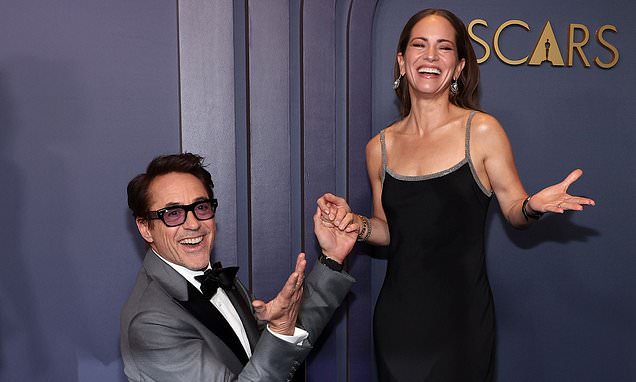
  • Susan Downey: The Producer Who Rebuilt Robert Downey Jr. Into Hollywood’s Highest-Paid Star

    Susan Downey: The Producer Who Rebuilt Robert Downey Jr. Into Hollywood’s Highest-Paid Star

    Susan Downey walked onto the set of Gothika in 2003 as a Silver Pictures executive producer. Robert Downey Jr. was there as an actor still dragging the wreckage of multiple arrests, prison time, and a career most studios considered radioactive. Two decades later, she stands as the architect behind one of Hollywood’s most lucrative comebacks.

    The math is simple. Before Susan: arrests in 1996, 1999, 2000, and 2001. Substance abuse rehab cycles. Ally McBeal firing. Career death spiral. After Susan: Iron Man in 2008. Avengers franchise anchor. A reported $75 million payday that made him the highest-paid actor in film history.

    The Gothika Meeting and the Ultimatum

    Susan Levin was 29 years old and already a rising producer at Silver Pictures when she met Robert on the Gothika set. He was 38, freshly out of his most recent rehab stint, and still considered uninsurable by most major studios. The attraction was immediate. The relationship carried a condition.

    Susan reportedly told Robert she wouldn’t continue seeing him unless he got sober. Not rehab-sober. Actually sober. The kind that stuck. Robert later told multiple interviewers that her ultimatum was the inflection point. He entered treatment again in 2003. This time it held.

    They married on August 27, 2005, in a Jewish ceremony at the Windy Dunes estate in Amagansett, New York. Susan converted to Judaism for the wedding. Robert wore a yarmulke. The guest list was small. The vows were private. The marriage became the foundation for everything that followed.

    Team Downey and the Strategic Career Rebuild

    Susan didn’t just stabilize Robert personally. She rewired his professional infrastructure. In 2010, the couple launched Team Downey, a production company designed to give Robert creative control and Susan executive oversight. Their first major project: the Sherlock Holmes franchise.

    The 2009 Sherlock Holmes film grossed $524 million worldwide. The 2011 sequel, Sherlock Holmes: A Game of Shadows, pulled in $545 million. Susan served as producer on both. She also executive produced The Judge (2014), Dolittle (2020), and the upcoming HBO Max series The Sympathizer.

    But the real leverage play was Marvel. Jon Favreau cast Robert as Tony Stark in Iron Man after Susan helped negotiate insurance and backend participation deals that made Robert bankable again. The film grossed $585 million in 2008. By Avengers: Endgame in 2019, Robert was reportedly earning $75 million per film when you factored in profit participation points.

    Forbes named him Hollywood’s highest-paid actor three years running: 2013, 2014, and 2015. His total MCU earnings are estimated north of $400 million. Susan executive produced or consulted on the deal structures for most of those contracts.

    Family Structure and the Indio Factor

    Robert had a son, Indio Falconer Downey, from his first marriage to actress and singer Deborah Falconer. Indio was born in September 1993. The marriage collapsed in 2001 amid Robert’s repeated arrests. Susan stepped into that dynamic when Indio was 10 years old.

    She didn’t try to replace Deborah. She created space. Indio struggled with his own substance abuse issues in his early twenties—he was arrested for cocaine possession in 2014. Robert and Susan both supported his rehab and recovery. Indio is now sober, works as a musician, and maintains a relationship with both his father and Susan.

    Susan and Robert had their first child together, Exton Elias Downey, in February 2012. Their daughter, Avri Roel Downey, was born in November 2014. The family splits time between a Malibu estate and a Hamptons property. Susan homeschools both children for part of the year. She keeps them off social media. The family operates under a strict press blackout for the kids.

    The Producer Track Record

    Susan Downey’s IMDb page lists 37 producer or executive producer credits as of August 2026. Before Robert, she produced Kiss Kiss Bang Bang (2005), the Shane Black neo-noir that became Robert’s first critical comeback vehicle. She produced both RocknRolla (2008) and The Book of Eli (2010) under her Silver Pictures tenure.

    Team Downey’s slate expanded after the Marvel windfall gave them capital and clout. They produced Perry Mason for HBO, a gritty Matthew Rhys-led reboot that ran two seasons. They’re currently in post-production on Play Dirty, a World War II action film, and Sweet Tooth Season 3 for Netflix, based on the Jeff Lemire comic.

    Susan sits on the board of the RAND Corporation’s Center for Middle East Public Policy. She’s a member of the Academy of Motion Picture Arts and Sciences. She donates heavily to the Motion Picture & Television Fund, the American Cinematheque, and several addiction recovery nonprofits, though she rarely attaches her name publicly.

    The Iron Man Departure and What’s Next

    Robert Downey Jr. officially exited the Marvel Cinematic Universe with Avengers: Endgame on April 26, 2019. Tony Stark died on screen. The character arc closed. The paychecks stopped. Susan and Robert pivoted immediately.

    Team Downey signed a first-look deal with Netflix in 2020. They’re developing a Pinocchio adaptation, a Monte Cristo reboot, and a limited series about the Church of Scientology’s early years. Robert won his first Academy Award for Best Supporting Actor on March 10, 2024, for his role as Lewis Strauss in Oppenheimer. Susan sat front row. They left the after-party early.

    The career Susan rebuilt is now diversified, debt-free, and vertically integrated. Robert owns his likeness rights. Team Downey controls their IP. The kids have trust funds structured to avoid the pitfalls that destroyed other Hollywood legacy families.

    Susan Downey doesn’t give interviews about her marriage. She doesn’t post on Instagram. She doesn’t write memoirs. She shows up on set at 6 a.m., runs the production, and goes home to Malibu. The result is a 21-year marriage, two healthy kids, one recovered stepson, and a husband who went from uninsurable to untouchable. The work speaks. The rest is noise.

    Frequently Asked Questions

    How did Susan Downey help Robert Downey Jr. get sober?

    Susan Downey gave Robert an ultimatum when they started dating in 2003: get sober or she wouldn’t continue the relationship. Robert entered treatment again in 2003 and has remained sober since. They married in 2005 after he demonstrated sustained sobriety.

    When did Robert Downey Jr. become the highest-paid actor?

    Robert Downey Jr. became Hollywood’s highest-paid actor during his Marvel Cinematic Universe run, earning a reported $75 million per film when including profit participation. Forbes named him the highest-paid actor in 2013, 2014, and 2015.

    What is Team Downey and what does it produce?

    Team Downey is a production company founded by Robert and Susan Downey in 2010. It has produced the Sherlock Holmes films, Perry Mason for HBO, Sweet Tooth for Netflix, and several other film and television projects.

    How many children do Robert and Susan Downey have?

    Robert and Susan Downey have two children together: Exton Elias Downey (born February 2012) and Avri Roel Downey (born November 2014). Susan also helped raise Robert’s son Indio from his first marriage to Deborah Falconer.

    When did Robert Downey Jr. leave the Marvel Cinematic Universe?

    Robert Downey Jr. officially exited the Marvel Cinematic Universe with Avengers: Endgame, which was released on April 26, 2019. His character Tony Stark died in the film, closing out his role in the franchise.

  • The Limits of the Algorithm, Why Tom Holland Says AI Cannot Replicate the Human Soul

    The Limits of the Algorithm, Why Tom Holland Says AI Cannot Replicate the Human Soul

    Tom Holland stated in June 2026 that human creativity remains completely safe from artificial intelligence because AI inherently lacks a soul. Speaking on the intersection of technology and art, the actor argued that while generative algorithms can replicate patterns and synthesize existing data, they cannot originate the raw emotional truth required for genuine storytelling. The statement arrives as Hollywood studios increasingly test generative video models to cut production costs. The debate over artificial intelligence in filmmaking has moved from abstract theory to daily operational reality.

    The integration of machine learning into the cinematic process is no longer a distant threat. It is a line item on studio budgets. Executives at major conglomerates view generative technology as a necessary evolution. Actors and writers view it as an existential boundary. Holland stands firmly on the side of the human element. His argument does not center on the technical capabilities of the software. His argument centers on the metaphysical void inside the machine.

    The Anatomy of a Soul in Performance

    Acting is not merely the recitation of dialogue. It is the spontaneous reaction to an unscripted moment. It is the micro-expression that flashes across a face when a scene partner changes their inflection. Algorithms do not react. They predict. They calculate the most statistically probable pixel arrangement based on billions of hours of ingested training data.

    Holland understands this distinction intimately. His career bridges the gap between massive digital spectacle and raw human vulnerability. He serves as the anchor of the Marvel Cinematic Universe, starring in films like Spider-Man: No Way Home alongside Zendaya and Jacob Batalon. Those productions rely heavily on green screens, motion capture suits, and armies of visual effects artists. Yet, beneath the digital rendering, the performance remains human.

    A machine can generate the image of a man crying. It can map the tears falling at the correct physical velocity. It can adjust the lighting to reflect a somber mood. But it cannot understand the grief that caused the tears. It cannot draw upon a lived memory to inform the tension in the jaw. This is the soul Holland describes. It is the invisible weight of human experience translated into art.

    “Creativity is safe from AI. It doesn’t have a soul. It doesn’t have a heartbeat. It doesn’t have a history.”

    Those words encapsulate the modern artistic defense against the algorithm. Technology synthesizes. Humanity originates.

    Hollywood’s Algorithmic Reality in 2026

    The context surrounding Holland’s assertion is critical. The entertainment industry in 2026 operates under immense financial pressure. The era of unchecked streaming spending ended abruptly in the early 2020s. Wall Street demands profitability. Studio heads like Bob Iger at The Walt Disney Company and David Zaslav at Warner Bros. Discovery face constant pressure to reduce overhead.

    Blockbuster budgets routinely exceed $200 million. A significant portion of that capital flows into post-production and visual effects. Generative AI promises a radical reduction in those costs. Tools developed by OpenAI, such as the Sora video generation model, and competitors like Runway Gen-3, offer the ability to create photorealistic establishing shots, background crowds, and complex environmental physics with simple text prompts.

    The temptation for studios is undeniable. Why pay a location scouting team, a second-unit director, and a massive crew to capture a sunset over the Swiss Alps when a machine can generate a flawless, royalty-free alternative in sixty seconds? The economic gravity pulls toward automation.

    The Legacy of the SAG-AFTRA Strikes

    This tension is not new. It is the direct continuation of the battles fought during the 2023 Hollywood labor strikes. The Screen Actors Guild-American Federation of Television and Radio Artists (SAG-AFTRA) halted production for 118 days. Led by president Fran Drescher and chief negotiator Duncan Crabtree-Ireland, the union fought the Alliance of Motion Picture and Television Producers (AMPTP) over the very soul of the profession.

    The strike established crucial guardrails. It required informed consent and fair compensation for the creation and use of digital replicas. It prevented studios from scanning background actors and using their likenesses in perpetuity without payment. But contracts only cover what can be defined. The technology evolves faster than the legal frameworks.

    By 2026, the conversation has shifted from digital replicas of existing actors to entirely synthetic performers. If a studio generates a synthetic human who does not exist in the real world, no union rules apply. No residual checks are mailed. No limits on working hours exist. The synthetic actor does not complain about the catering. The synthetic actor does not demand a larger trailer.

    The Theater Contrast: A Return to the Analog

    Holland’s defense of the human soul in art is bolstered by his recent career choices. In 2024, he returned to the stage. He starred in a West End production of Romeo & Juliet directed by Jamie Lloyd at the Duke of York’s Theatre in London. Live theater represents the ultimate anti-algorithmic medium.

    Theater is transient. Every performance is unique. The energy in the room shifts based on the audience. An actor might drop a line, forcing their scene partner to improvise. A prop might break, requiring spontaneous adaptation. These imperfections are the lifeblood of the medium. They are the undeniable proof of a soul at work.

    An algorithm cannot perform live theater. It cannot feel the tension in the stalls. It cannot adjust its pacing because a cough in the third row interrupted a dramatic pause. Holland’s time on the stage likely crystallized his perspective on the limitations of artificial intelligence. When you strip away the cameras, the editing, and the visual effects, all that remains is the human connection.

    The Writer’s Room vs. The Prompt Engineer

    The debate extends beyond acting. It permeates every creative discipline in Hollywood. Screenwriters face the threat of large language models. Studios have experimented with using AI to generate script outlines, punch up dialogue, or adapt public domain material. The Writers Guild of America (WGA) fought fiercely to ensure that AI cannot be credited as a writer and that AI-generated material cannot be considered “source material” to diminish a human writer’s credit.

    Yet, the fundamental issue remains the same. A language model does not write. It predicts the next logical word in a sequence based on vast archives of human literature. It creates a statistical average of creativity. It can write a script that follows the structural beats of a classic hero’s journey. It can insert a plot twist exactly at page 30. But it cannot inject a script with a unique worldview.

    It cannot write from the perspective of a marginalized voice. It cannot infuse a scene with the specific, agonizing grief of losing a parent. It can only mimic the way humans have previously described that grief. Mimicry is not art. Mimicry is a parlor trick.

    The Economics of the Artificial

    Despite the philosophical arguments, the economic reality of Hollywood pushes forward. The global box office remains unpredictable. Audiences are selective. The cost of marketing a major theatrical release often equals the production budget. In this environment, risk mitigation is the primary directive of studio executives.

    AI is the ultimate risk mitigation tool. It allows for rapid iteration. If a test audience dislikes the ending of a film, generative tools could potentially alter the scene without requiring expensive reshoots. If a director wants to change the lighting of a sequence months after filming wrapped, AI can relight the scene digitally.

    These tools are undeniably powerful. They democratize certain aspects of filmmaking. Independent filmmakers with small budgets can achieve visual fidelity that was previously restricted to major studios. But efficiency should not be confused with inspiration. The ability to render a dragon quickly does not make the story about the dragon compelling.

    The Uncanny Valley of Emotion

    The human brain is remarkably adept at detecting the artificial. This phenomenon, known as the uncanny valley, originally applied to robotics and 3D animation. When a digital human looks almost real, but not quite, it triggers a feeling of revulsion in the observer. The eyes lack depth. The movements lack weight.

    As generative AI improves, the visual uncanny valley is slowly being conquered. Synthetic humans look increasingly photorealistic. But a new uncanny valley is emerging: the emotional uncanny valley. A scene may look perfect, but it feels hollow. The dialogue is grammatically correct, but it lacks subtext. The performance hits the emotional beats, but it lacks resonance.

    This is the void Holland identifies. The audience may not be able to articulate exactly what is missing, but they feel its absence. They feel the lack of a soul. They recognize that no human being bled for the work. Art requires sacrifice. It requires an artist to expose a part of themselves to the world. A machine has nothing to expose.

    The Enduring Human Element

    The history of cinema is a history of technological disruption. The transition from silent films to talkies destroyed careers. The advent of color television threatened the theatrical experience. The rise of computer-generated imagery fundamentally altered practical filmmaking. Through every disruption, the core of the medium survived.

    Artificial intelligence represents the most significant technological shift since the invention of the camera. It challenges the fundamental definition of creation. But it cannot replace the creator. The desire to tell stories is a uniquely human trait. It is how we make sense of a chaotic universe. It is how we connect across time and space.

    Tom Holland’s assertion is not a rejection of technology. It is a defense of humanity. It is a reminder that the tools we use to make art are secondary to the impulse that drives us to create it in the first place. The algorithms will continue to improve. The models will become more sophisticated. The generated images will become indistinguishable from reality.

    But a flawless image is not a story. A statistical prediction is not a performance. The soul cannot be coded. It cannot be prompted. It cannot be rendered.

    • The algorithms processed.
    • The studios calculated.
    • The models rendered.

    The soul remained.