Tag: Marshall

  • Larry Birkhead Distances from Anna Nicole Smith Film, Files Medical Complaint

    Larry Birkhead Distances from Anna Nicole Smith Film, Files Medical Complaint

    Larry Birkhead has publicly confirmed he is not involved in the upcoming Anna Nicole Smith movie. This film is reportedly based on a book authored by Dr. Sandeep Kapoor. Birkhead has also filed a formal complaint against Dr. Kapoor with the California Medical Board.

    This dual announcement by Birkhead brings renewed attention to the complex legal and personal aftermath of Anna Nicole Smith’s untimely death in 2007. It highlights the ongoing disputes over her legacy and the narratives that continue to emerge.

    The Proposed Film and Its Origin

    Details regarding the new Anna Nicole Smith movie project have begun to surface. The film is said to draw its source material from a book written by Dr. Sandeep Kapoor. Dr. Kapoor is a central figure in the final years of Smith’s life.

    His book offers a perspective on the events leading up to her death. This perspective is now being adapted for the screen.

    The exact title of Dr. Kapoor’s book and the film’s production timeline remain largely undisclosed. However, the involvement of Dr. Kapoor’s account suggests a focus on the medical and personal circumstances surrounding Smith.

    This project is distinct from previous dramatizations of Smith’s life. It promises to revisit a period marked by intense media scrutiny and legal challenges.

    Larry Birkhead’s Stance on the Production

    Larry Birkhead has unequivocally stated his non-participation in the film. His declaration signals a potential divergence in how Smith’s story is told.

    As the father of Dannielynn Birkhead, Anna Nicole Smith’s only surviving child, Larry Birkhead has consistently sought to protect his daughter’s interests and Smith’s memory. His decision to distance himself from this particular production suggests concerns about its portrayal or underlying narrative.

    Birkhead’s public comments indicate a desire for accuracy and respect regarding Smith’s life. His non-involvement could influence public perception of the film’s authenticity.

    This move underscores the ongoing sensitivity surrounding Smith’s legacy, nearly two decades after her passing.

    The Complaint Against Dr. Sandeep Kapoor

    Concurrent with his film announcement, Larry Birkhead has filed a complaint against Dr. Sandeep Kapoor with the California Medical Board. The specifics of the complaint have not been fully detailed publicly.

    However, such actions typically involve allegations of professional misconduct or violations of medical standards.

    Dr. Kapoor’s history with Anna Nicole Smith is well-documented. He was one of several individuals charged in 2009 with conspiring to illegally provide prescription drugs to Smith. These charges were brought by the Los Angeles County District Attorney’s Office.

    In 2010, Dr. Kapoor, along with Smith’s lawyer Howard K. Stern and psychiatrist Dr. Khristine Eroshevich, faced trial.

    Previous Legal Proceedings Involving Dr. Kapoor

    The 2010 trial captured significant public attention. Prosecutors alleged that Dr. Kapoor and the others engaged in a conspiracy to furnish Smith with controlled substances, contributing to her drug dependency.

    However, Dr. Kapoor was ultimately acquitted of the most serious charges. The jury found him not guilty of conspiracy and unlawfully prescribing controlled substances. He was acquitted of all charges.

    The legal system ultimately cleared Dr. Kapoor of criminal culpability related to Smith’s death. This history forms the backdrop for Birkhead’s new complaint to the Medical Board.

    The California Medical Board is responsible for licensing and regulating physicians. It investigates complaints of unprofessional conduct, incompetence, or negligence. A complaint initiates a review process that can lead to disciplinary actions, including license suspension or revocation, if violations are found.

    Anna Nicole Smith’s Enduring Legacy

    Anna Nicole Smith’s life and death continue to be subjects of public fascination. Born Vickie Lynn Hogan in Houston, Texas, in 1967, she rose to fame as a model and television personality.

    Her marriage to oil billionaire J. Howard Marshall II in 1994, when he was 89 and she was 26, propelled her into the spotlight. This marriage led to a protracted legal battle over his estate after his death in 1995, a battle that continued posthumously for Smith.

    Smith’s E! reality show, ‘The Anna Nicole Show,’ further cemented her celebrity status in the early 2000s. The show offered an unvarnished look into her life, showcasing her eccentric personality.

    Her life was marked by both immense success and profound personal tragedy. The death of her son, Daniel Wayne Smith, in September 2006, just days after Dannielynn’s birth, was a particularly devastating event.

    The Circumstances of Her Death

    Anna Nicole Smith died on February 8, 2007, at the Seminole Hard Rock Hotel and Casino in Hollywood, Florida. Her death was ruled an accidental overdose of prescription drugs.

    The combination of multiple medications, including chloral hydrate, led to acute combined drug intoxication. Her passing ignited a media frenzy and triggered numerous investigations into the circumstances surrounding her access to prescription drugs.

    The subsequent legal proceedings, including the conspiracy trial involving Dr. Kapoor, sought to assign responsibility for the environment that enabled her drug use.

    Despite the legal outcomes, the public discourse around Smith’s death has persisted. It fuels ongoing interest in projects like the proposed film.

    The Role of Medical Boards in Oversight

    Medical boards play a critical role in maintaining public trust in the healthcare system. They serve as regulatory bodies, ensuring that licensed medical professionals adhere to ethical and professional standards.

    When a complaint is filed, the board typically conducts an investigation. This investigation may include reviewing patient records, interviewing witnesses, and consulting with medical experts. The process is designed to determine if a physician has violated medical practice acts or regulations.

    The California Medical Board, like its counterparts in other states, has the authority to impose various sanctions. These can range from letters of reprimand to probation, license suspension, or permanent revocation. The severity of the disciplinary action depends on the nature and gravity of the findings.

    Birkhead’s complaint introduces a new dimension to the long-standing public scrutiny of Dr. Kapoor’s involvement in Smith’s care. It shifts the focus from criminal liability to professional medical conduct.

    Public Interest and Celebrity Cases

    Cases involving celebrities often draw heightened public and media attention. This scrutiny can intensify the pressure on legal and regulatory bodies.

    The public’s interest in Anna Nicole Smith’s story remains strong. Any new development, whether a film or a medical board complaint, tends to reignite discussions about celebrity, addiction, and accountability.

    Larry Birkhead’s actions can be seen as an effort to shape the narrative surrounding Smith’s life and death. He aims to ensure that any public portrayal or professional conduct is scrutinized through a lens he deems appropriate.

    This ongoing engagement reflects the complex interplay between personal grief, public memory, and the legal framework that governs professional conduct.

    The legal battles continue. The stories continue. The public watches.

    Anna Nicole Smith.

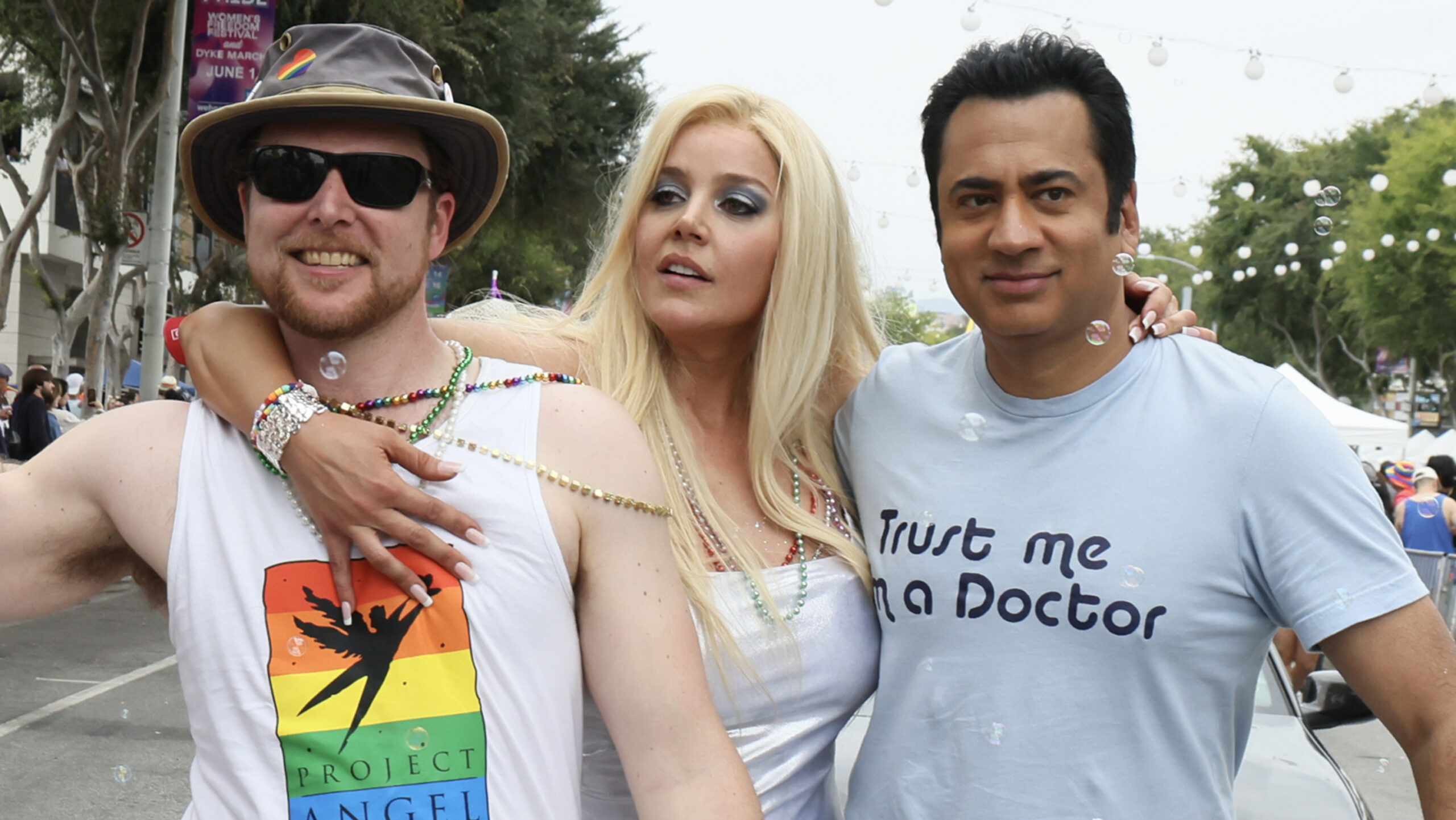
  • Abbie Cornish Embodies Anna Nicole Smith in ‘Trust Me, I’m a Doctor’

    Abbie Cornish Embodies Anna Nicole Smith in ‘Trust Me, I’m a Doctor’

    Abbie Cornish has undertaken the role of Anna Nicole Smith in the forthcoming production titled ‘Trust Me, I’m a Doctor.’ This portrayal brings renewed attention to Smith’s life, a figure who captivated public imagination through her modeling career, marriage to J. Howard Marshall II, and subsequent legal battles. Cornish’s transformation into Smith is a central aspect of the project, aiming to capture both the physical likeness and the complex essence of the public figure.

    The Enduring Appeal of Anna Nicole Smith

    Anna Nicole Smith, born Vickie Lynn Hogan in Houston, Texas, on November 28, 1967, rose to prominence in the early 1990s. Her career began with modeling, notably for Guess jeans. She quickly became a symbol of American glamour, often compared to Marilyn Monroe. Smith’s public persona was carefully cultivated, blending vulnerability with overt sexuality.

    Her marriage to octogenarian oil magnate J. Howard Marshall II in 1994 drew international headlines. The union sparked widespread speculation about her motives. Marshall’s death in 1995 ignited a prolonged legal battle over his estate. This legal saga extended for over a decade, reaching the Supreme Court of the United States multiple times.

    Smith’s life was marked by both extreme highs and profound lows. She navigated the intense scrutiny of the media. Her story became a public spectacle, encompassing fame, wealth, legal disputes, and personal tragedy. The public’s fascination with her narrative has not waned, nearly two decades after her death.

    Abbie Cornish’s Transformation

    Abbie Cornish, an Australian actress known for roles in ‘Bright Star’ and ‘Three Billboards Outside Ebbing, Missouri,’ takes on this iconic role. The casting requires a significant physical and performative transformation. Early images from the production indicate a meticulous effort to replicate Smith’s distinctive look and mannerisms. This process involves detailed costume design, makeup artistry, and potentially prosthetics.

    Cornish’s preparation for the role likely includes extensive research into Smith’s life. This would involve studying interviews, documentaries, and biographical accounts. The goal is to move beyond superficial imitation. The aim is to delve into the psychological and emotional landscape of Smith’s experiences. This level of immersion is crucial for depicting a figure as complex and often misunderstood as Anna Nicole Smith.

    The Challenges of Portrayal

    Portraying a well-known public figure presents unique challenges. Actors must balance accuracy with interpretation. The performance must resonate with public memory while offering new insights. Cornish’s task is to humanize Smith, moving beyond tabloid headlines. She must explore the vulnerabilities and strengths that defined Smith’s tumultuous existence.

    The project’s title, ‘Trust Me, I’m a Doctor,’ suggests a narrative approach that might explore themes of authenticity, perception, and the often-deceptive nature of public image. This title could imply a critique of how Smith was perceived by the media and the public. It might also hint at the internal struggles she faced, hidden beneath her public persona.

    The Legacy of Anna Nicole Smith

    Anna Nicole Smith’s life concluded tragically on February 8, 2007, at the age of 39. Her death, attributed to an accidental overdose, occurred just months after the death of her son, Daniel Wayne Smith. These events added another layer of sorrow to her already complex narrative. Her story became a cautionary tale about the pressures of fame and the fragility of human existence.

    The cultural impact of Anna Nicole Smith extends beyond her lifetime. She remains a subject of documentaries, biopics, and academic discussions. Her story touches upon themes of class, gender, celebrity, and the American dream. She represents a particular era of celebrity culture, one that blurred the lines between reality and performance.

    “Anna Nicole Smith was more than just a tabloid fixture; she was a reflection of societal obsessions with beauty, wealth, and tragedy.”

    Her ongoing relevance is evident in projects like ‘Trust Me, I’m a Doctor.’ These productions seek to re-examine her narrative through a contemporary lens. They aim to understand the forces that shaped her life and public image. The persistent interest in her story underscores its enduring power and its ability to provoke reflection on broader societal issues.

    ‘Trust Me, I’m a Doctor’: What to Expect

    Details about the full scope of ‘Trust Me, I’m a Doctor’ remain under wraps. However, the initial announcement and images confirm its focus on Anna Nicole Smith. The project is expected to offer a comprehensive look at her journey. This would include her rise from humble beginnings, her iconic modeling career, and her high-profile marriage.

    The production will likely explore the legal battles that consumed much of her later life. These protracted court cases defined her public image for many years. They involved intricate details of estate law and family disputes. The project could also delve into her personal relationships and her struggles with addiction.

    Kal Penn is also associated with the project, though his specific role has not been detailed. His involvement suggests a production with a diverse cast and potentially a nuanced approach to the narrative. The combination of Cornish’s transformative performance and Penn’s presence indicates a significant dramatic undertaking.

    The Cinematic Approach

    The title ‘Trust Me, I’m a Doctor’ could signal a variety of narrative styles. It might imply a satirical take on celebrity culture. It could also suggest a more empathetic exploration of Smith’s life. The tone will be critical in shaping how audiences perceive this new interpretation of her story. The film’s creators will face the challenge of presenting a balanced portrayal, avoiding sensationalism while addressing the dramatic elements of her life.

    The project’s release will undoubtedly reignite discussions about Smith’s legacy. It will prompt audiences to reconsider her impact on popular culture. It will also invite reflection on the ethics of media representation and the pressures faced by public figures. The film offers an opportunity to re-evaluate a life lived under intense public scrutiny.

    Abbie Cornish prepares. The production team finalizes details. Audiences anticipate. The story of Anna Nicole Smith continues.

  • The Origins of a Gathering City Part 5 – The Tenth Ballot Heartbreak

    The Origins of a Gathering City Part 5 – The Tenth Ballot Heartbreak

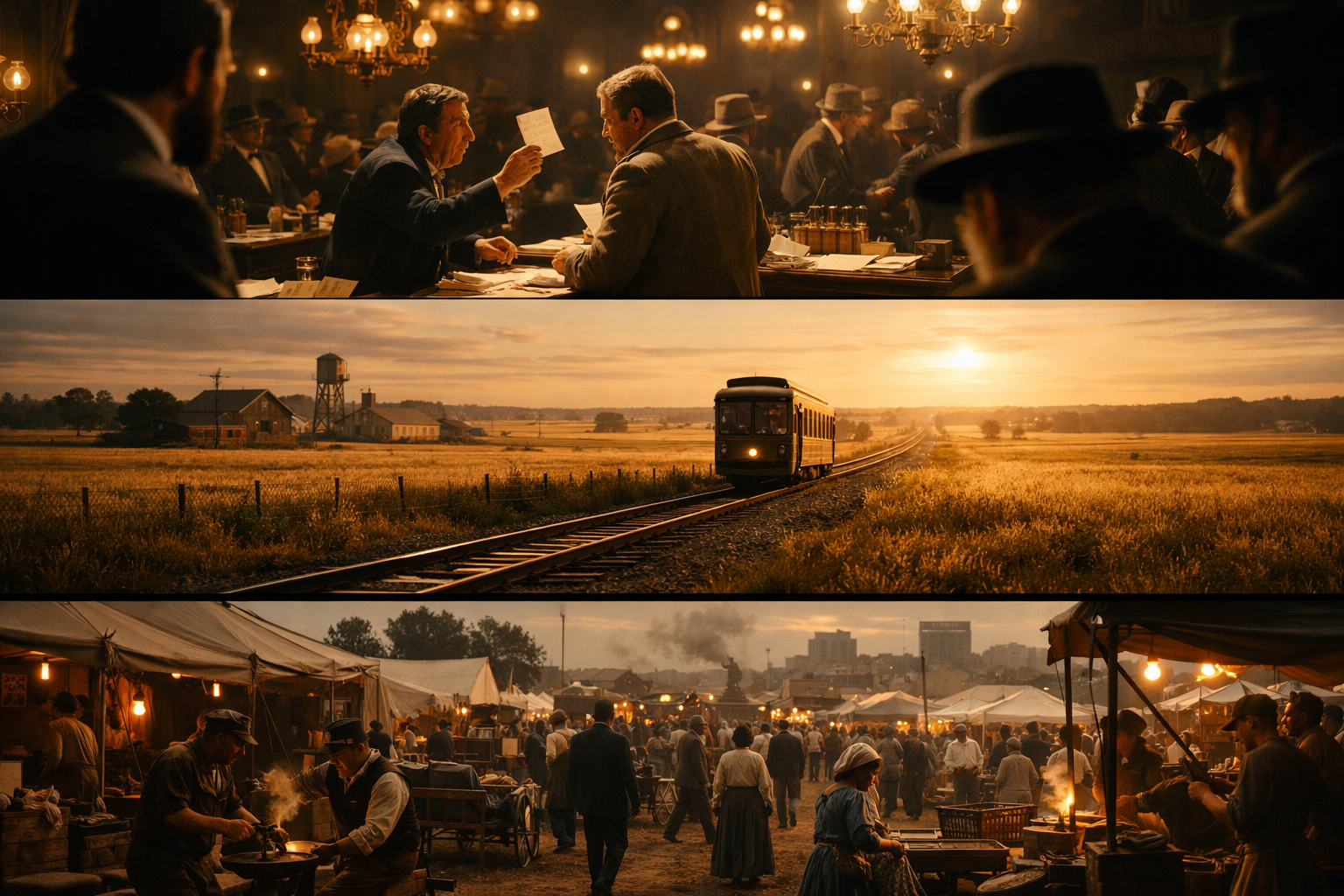
    The Baldwin Theatre was barely eight years old when Missouri decided to pick a fight. Not with Springfield directly. What the state did in 1899 was far more consequential it announced that it was finally ready to build something permanent. A centralized, state-sanctioned home for Missouri’s agricultural identity. Something that had never existed in Missouri’s history. And it invited every city willing to prove itself to step forward and make its case. Springfield stepped forward. What happened next would expose something the Baldwin’s chandelier could not illuminate and the Metropolitan’s elevator could not reach. Something that had quietly followed the city from the improvised dining tents of 1883 through every ribbon cutting and grand opening since. Springfield knew how to build a stage. It did not yet know how to build a foundation.

    A State Without a Center

    To understand what was at stake in 1899, you have to understand what Missouri had been living without and how long it had been living without it. For decades after the Civil War, the state’s agricultural identity had no permanent address. Missouri was not a minor player. It was a national leader in mules, cattle, and swine, and its horse breeders were among the most respected in the world, collecting recognition at expositions far beyond the state’s borders. And yet, unlike neighboring Illinois, Iowa, and Kansas, Missouri had no permanent, state-supported fair to serve as a centralized hub for what its farmers and breeders were producing. The most prominent exhibition in the state, the St. Louis Exposition, had been running since 1856 but was increasingly problematic by the late 1890s. Its board was mired in financial instability, and there was a widening cultural rift between the urban-centric St. Louis events and the rural farmers of central Missouri. These were men reluctant to haul their livestock and products into a major city for a fair that did not reflect the agrarian realities of the countryside. Missouri’s success at the 1893 Chicago World’s Fair had sharpened that frustration. The state’s livestock won thousands of dollars in cash awards and numerous premiums at Chicago, proving Missouri had the quality necessary for a world-class exhibition. What it lacked was the permanent infrastructure to sustain that standard at home. The previous attempt at a statewide fair, established in Boonville in 1853, had collapsed after just two years. What followed was four decades of county fairs, regional exhibitions, and borrowed spaces that left Missouri’s agricultural identity fragmented across county lines. By 1897, the people who felt that absence most acutely had grown impatient enough to organize.

    The Man Who Wrote the Law

    The push that turned frustration into legislation began in 1897 at the fifth annual meeting of the Missouri Swine Breeders Association in Lexington. N.H. Gentry, a distinguished Sedalia breeder with deep influence in livestock circles, introduced a resolution pushing the General Assembly to establish a permanent state fair. The Horse Breeders’ Convention followed. The Missouri State Poultry Association followed. The momentum moved through association after association, building the kind of coordinated pressure that a legislature cannot easily ignore. By January 1899, the political machinery was in motion. The man who carried it into the 40th General Assembly was Representative Cyrus F. Clark of Mexico, Missouri. Clark was not a typical legislator. Born in New Hampshire in 1847, he came to Audrain County in 1867 as a teacher, shifted into farming and real estate, and eventually rose to Vice-President of the Southern Bank in Mexico. When he returned to the legislature for the 1899 session, he was appointed Chairman of the Ways and Means Committee. Clark’s motivation for this bill was personal as much as political. Northwest of Mexico, he and his brother-in-law Joseph Potts ran the Prairie Home breeding farm, a serious operation in the American Saddlebred industry. In 1887 they built what became known as the Big Barn on the Boulevard, a $5,000 structure housing Clark’s string of racehorses and trotters. Their Clark and Potts Combination Sales auctions drew buyers from across the United States and from foreign countries directly to Mexico, Missouri. They also employed and championed Tom Bass, a legendary African American horse trainer who became one of the most celebrated figures in the industry. Clark understood from inside that world that Missouri’s dominance in livestock was being undersold. A state fair was not just a civic amenity. It was a standardized stage where the work Missouri breeders were producing could be seen, judged, and valued by the broadest possible audience. He introduced House Bill 279 on January 23, 1899. Governor Lon V. Stephens called the fair an essential barometer of the state’s economic health. The bill passed the House 88 to 21 on April 5th, cleared the Senate on April 14th, and was signed into law on April 19, 1899. The Missouri State Fair was now a legal entity. All that remained was deciding where it would live. And that decision would ignite a war.

    The Call for Bids

    House Bill 279 gave the State Board of Agriculture eighty days to select a permanent site. The legislation was specific: the fair had to be located in a rural area in the central part of the state, easily accessible to exhibitors and visitors. Each bidding city was required to donate at least 100 acres of land and provide comprehensive infrastructure including water, electricity, roads, and sidewalks. Six primary cities answered: Centralia, Chillicothe, Marshall, Mexico, Moberly, and Sedalia. It is worth noting what that list contains. Mexico, Missouri, the home of Cyrus F. Clark himself, the man who wrote the bill, was now competing for the institution its own representative had created. That detail captures the texture of turn-of-the-century civic ambition, where personal vision and municipal interest operated as a single engine. Springfield, representing the entire Ozark region, stepped in as what the historical record describes as a shadow campaign. A determined push operating outside the formal structure of the six primary bidders, driven by the conviction that Southwest Missouri deserved representation in whatever institution the state was about to build. Local businessman Louis Reps led the effort. The argument was regional as much as logistical. The Ozarks were not Little Dixie. The farms were different, the soil was different, the relationship to the land was different. To let central Missouri claim the state fair without contest was to let that difference go permanently unrecognized.

    Red Carpets and Quiet Professionalism

    The Board of Agriculture conducted a site visit to each competing city before the final vote, and what the tour revealed was that every city had a strategy and no two were alike. Marshall came in with social muscle. A $3-a-plate banquet, pledges of $20,000 in facility contributions, and promises of streetcar service and electricity directly to the site. Mexico played to civic enthusiasm. When the Board of Directors arrived by train, Mexico sent a brass band to meet them and kept that brass band playing at every subsequent stop on the tour, following the directors from station to station as a traveling advertisement for Audrain County’s spirit. Centralia deployed coordinated crowds of supporters to the platform, leaning on its central location and community solidarity as its primary arguments. Sedalia, which was the first stop on the tour, performed none of this. A small group of local businessmen met the Board with quiet professionalism and one overwhelming asset the Van Riper tract. One hundred and sixty acres of contiguous land at the edge of the city, historically set aside in 1896 during a previous attempt to relocate the Missouri State Capitol from Jefferson City to Sedalia. Land that had once been considered worthy of the state’s highest offices. Land already integrated with Sedalia’s electric streetcar system and served by two steam railroads. Sedalia also offered the immediate use of its existing Liberty Park fairgrounds, meaning the fair could begin operations without waiting for permanent construction to be completed. Springfield’s presentation asked the Board to believe in potential. The city’s agricultural exhibitions were nomadic, traveling displays of Ozark crafts and handwork that moved between borrowed locations within the city, including a site at Pickwick and Grand Streets. There was no permanent headquarters and no fixed, dedicated ground that could be placed beside the Van Riper donation in the same conversation without the gap becoming obvious. Springfield had the Queen City’s confidence and Louis Reps’ regional conviction. What it did not have was 160 acres.

    The Tenth Ballot

    The final vote took place in Jefferson City on June 3, 1899. The hall carried the energy of a high-stakes political convention. Every competing city had sent its delegates to the capital for closing arguments, and hundreds of supporters crowded outside while the Board convened inside to begin balloting. What followed was not a quick decision. Round after round, the board deadlocked. Regional alliances held firm. The central Missouri bloc fractured votes without consolidating behind a single candidate. Springfield’s delegates pushed hard for the Southwest, arguing that the state’s agricultural representation could not be complete without the Ozarks at the table. The voting stretched past midnight, past the point where the banquets and the brass bands and the hospitality still mattered. What remained in those early morning hours was the bare architecture of the decision: ground, transit, and permanence. On the tenth and final ballot, Sedalia won. The margin came down to what it had always pointed toward. Sedalia offered the largest and most credible land commitment in the entire field, the most developed transportation infrastructure for moving large volumes of visitors, and the Van Riper tract carrying the institutional gravity of having once been considered for the state’s highest purpose. The aftermath was not graceful. Springfield’s delegates left Jefferson City with what the historical record describes as significant grumbling, with some accusing the Board of political fixing. The Mexico Intelligencer newspaper expressed open curiosity about how Sedalia had turned the trick. Centralia lodged formal complaints, convinced that political bias had worked against them. And then it was discovered that the land abstract for the Sedalia property was faulty. A defect in the deed. While Sedalia officials worked to correct the paperwork, the losing cities continued to press formal objections hoping the technicality might unwind the decision. The State Board of Agriculture stood firm. The deed was corrected. The decision held.

    What the Loss Actually Said

    It would be easy to read the tenth ballot as a story about land. Sedalia had more of it, committed to it earlier, and wrapped it in a bid the Board could not argue against on purely practical grounds. That reading is not wrong. But the loss said something more specific about Springfield, something that connected directly back to the improvised dining tents on E.G. Blake’s grounds in 1883 and the city’s long pattern of gathering through ingenuity rather than infrastructure. Springfield had spent two decades learning to host. It had built the Metropolitan, opened the Opera House, and constructed the Baldwin. It had proven, repeatedly, that it could gather people. But gathering people and institutionalizing a gathering are two different things. One requires a good building and a willing city. The other requires ground, dedicated and permanent, legally committed ground that tells a state board and a legislature and a hundred years of future visitors that this place was built for exactly this purpose and no other. The Board of Agriculture did not rule against the Ozarks. It ruled for permanence. And in 1899, permanence belonged to Sedalia.

    The Queen City Does Not Fold

    The grumbling in Jefferson City was real. So was the sting of the loss. But what Springfield did next was more revealing than anything that happened in that hall on the night of the tenth ballot. The city did not accept the verdict as final. It accepted it as a challenge. If the state would not bring its institution to the Ozarks, the Ozarks would build an institution of its own. The recognition that dedicated, permanent exhibition space was the difference between competing and winning began to reshape how the city’s leaders thought about what needed to be built and on whose terms. That work would not happen overnight. The road from the tenth ballot to a permanent Ozark fairground would be long and uneven. But the direction had been set in the small hours of a Jefferson City morning, somewhere between the final ballot and the long ride back to Greene County. Springfield had lost the Missouri State Fair. The Queen City was not finished gathering.

    Next in the Series

    The tenth ballot closed a door. What Springfield built in response would take years, and it would have to be built on its own terms, without the state’s endorsement and without the central Missouri infrastructure that had carried Sedalia to victory. The Resilience Era had begun. And the Queen City was about to prove that losing a vote is not the same thing as losing a vision.