Tag: Mar A Lago

  • Palm Beach Rejects Data Center Near Mar-a-Lago

    Palm Beach Rejects Data Center Near Mar-a-Lago

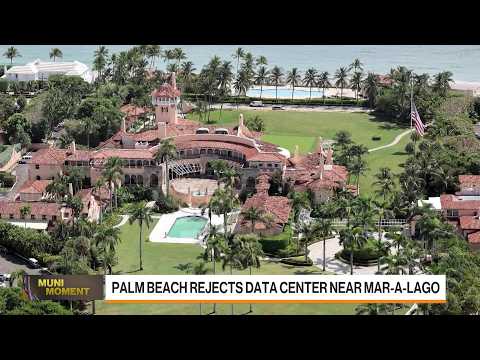
    Palm Beach County commissioners recently rejected a proposal for a data center planned for a location roughly 20 miles from President Donald Trump’s Mar-a-Lago club. This decision came after extensive debate and community input. The proposed facility aimed to establish a significant technological footprint in a predominantly residential and historic area.

    The rejection highlights the ongoing tension between technological expansion and the preservation of established community aesthetics and infrastructure. Local officials weighed the economic potential against the environmental and social impacts. The proximity to a high-profile property like Mar-a-Lago added another layer of complexity to the discussion.

    The Proposal and Its Location

    The data center proposal outlined plans for a substantial building housing numerous servers and cooling systems. The exact address of the proposed site has not been publicly detailed, but its proximity to Mar-a-Lago was a key point of contention. Data centers require significant power, cooling, and network infrastructure.

    Developers typically seek locations with access to reliable power grids and fiber optic networks. Palm Beach, while affluent, is not traditionally a hub for industrial-scale data operations. The proposal suggested a shift in the town’s typical development patterns.

    The land parcel under consideration was zoned for commercial use, but its immediate surroundings are largely residential. This created a direct conflict with the town’s character. Residents voiced concerns about the precedent such a development might set for future projects.

    Community Opposition Mounts

    Local residents organized quickly to oppose the data center. Petitions were circulated, and community meetings saw high attendance. Many residents expressed worries about increased traffic, particularly heavy equipment during construction and maintenance phases.

    Noise pollution was another frequently cited concern. Data centers operate 24/7, with cooling systems and generators producing constant hums. This would disrupt the quiet residential atmosphere of Palm Beach. The aesthetic impact of a large, windowless building in a town known for its architectural beauty also drew criticism.

    Environmental concerns were also raised. Data centers consume vast amounts of electricity, leading to questions about their carbon footprint. Water usage for cooling systems also became a point of debate, especially in a region susceptible to water management issues.

    Infrastructure Strain and Security Concerns

    Town officials focused heavily on the potential strain on existing municipal infrastructure. The power demands of a large data center could challenge the local electrical grid. Water and sewage systems would also need to accommodate increased usage. Upgrades to these systems would be costly and disruptive.

    Security emerged as a paramount concern, particularly given the location near Mar-a-Lago. The presence of a major data facility could attract unwanted attention or become a target. This raised questions about the Town of Palm Beach’s capacity to provide adequate security resources for such an installation.

    Local law enforcement and emergency services voiced their perspectives during public hearings. They highlighted the unique challenges associated with securing a critical infrastructure asset in a high-profile area. The potential for increased security protocols and their impact on daily life for residents was also discussed.

    The Role of Mar-a-Lago

    Mar-a-Lago, President Trump’s residence and private club, is a significant landmark in Palm Beach. Its presence influences many local development decisions. The property is a National Historic Landmark, adding to its cultural and historical importance.

    Any development in its vicinity undergoes intense scrutiny. The potential impact on property values in the area surrounding Mar-a-Lago was another factor. Residents feared a decline in property values if a large industrial facility were constructed nearby.

    The club also hosts numerous high-profile events and receives frequent visits from political figures. The optics of a data center, with its industrial appearance and operational demands, were seen as incongruous with the elegant image of Mar-a-Lago and its surroundings.

    The Town Council’s Deliberation

    The Palm Beach Town Council held several hearings on the data center proposal. These sessions included presentations from the developers, expert testimonies, and extensive public comment. Council members carefully weighed the various arguments presented.

    The economic benefits, such as potential tax revenue and job creation, were acknowledged. However, these were ultimately deemed insufficient to outweigh the perceived negatives. The council’s decision reflected a commitment to maintaining the established character of Palm Beach.

    Voting results were decisive, indicating a clear consensus against the project. The council’s rejection sent a strong message about the town’s priorities. It underscored a preference for preservation over unchecked commercial development, especially when it encroaches on residential tranquility.

    Precedent and Future Development

    The rejection of the data center sets a precedent for future development proposals in Palm Beach. It signals that projects with significant environmental, aesthetic, or infrastructural impacts will face stringent review. Developers considering projects in the town will now need to carefully assess community compatibility.

    This decision aligns with a broader trend in many affluent communities. Residents often prioritize quality of life, environmental protection, and the preservation of historical character over industrial growth. The unique nature of Palm Beach, with its high property values and historical significance, amplifies these considerations.

    The town continues to attract high-net-worth individuals, which contributes to its distinct character. Maintaining this appeal requires careful management of development. The data center decision reinforces the idea that Palm Beach aims to remain a premier residential destination, not an industrial hub.

    Economic Impact and Alternatives

    The developers behind the data center proposal likely sought Palm Beach for specific reasons, such as favorable tax structures or proximity to a wealthy client base. The rejection means they will need to seek alternative locations. This could include other communities in Florida or different states entirely.

    The economic impact of the rejection on the Town of Palm Beach is minimal. The town’s economy is primarily driven by tourism, luxury retail, and high-end real estate. A data center would have represented a different type of economic activity, one not entirely congruent with the town’s existing profile.

    The decision underscores the power of local governance in shaping community development. It demonstrates that even significant technological projects can be halted if they do not align with local values and concerns. The town prioritizes its long-term vision over short-term economic gains from a single project.

    The Long-Term Vision for Palm Beach

    Palm Beach has long cultivated an image of exclusivity and refined living. Its strict zoning laws and historical preservation efforts reflect this vision. The rejection of the data center is a direct manifestation of these deeply held values.

    The town’s leadership consistently works to protect its unique environment. This includes architectural review boards and careful planning for public spaces. The community values its green spaces, beach access, and quiet neighborhoods.

    The outcome of this proposal confirms the town’s commitment to these principles. It reinforces the idea that Palm Beach will continue to prioritize its residential character and historical integrity. The decision will likely be referenced in future debates over development and land use.

    Residents advocated. Officials deliberated. The community decided.

    Palm Beach.

  • Donald Trump’s 2025 Financial Disclosure: Real Estate and Brand Licensing

    Donald Trump’s 2025 Financial Disclosure: Real Estate and Brand Licensing

    President Donald Trump’s financial disclosure for the calendar year 2025 indicates a financial profile heavily vested in real estate and brand licensing, reflecting continued reliance on his established business ventures. This mandatory filing, made public as of July 17, 2026, covers the period from January 1, 2025, through December 31, 2025, providing a general overview of his economic activities through reported ranges for assets, liabilities, and income sources.

    These disclosures are a cornerstone of government transparency. They offer the public and oversight bodies a glimpse into the financial interests of high-ranking officials. The approach of using ranges allows for public scrutiny without revealing precise personal financial data, adhering to standard federal disclosure practices.

    The Purpose of Presidential Financial Disclosures

    Financial disclosures represent a critical component of ethical governance. Their primary design is to prevent conflicts of interest. They achieve this by making public the financial holdings that could potentially influence an official’s decisions.

    For the President of the United States, this level of transparency is paramount. It helps maintain public trust and ensures accountability in the executive branch.

    Oversight by the Office of Government Ethics

    The Office of Government Ethics (OGE) serves as the primary federal agency responsible for overseeing these filings. The OGE establishes the reporting requirements for executive branch officials.

    The agency reviews submissions for completeness and compliance. It also provides guidance to officials throughout the disclosure process. This role is crucial in ensuring that public trust is maintained through a system of financial accountability.

    Annual Reporting Requirements

    Every year, the President and other senior executive branch officials must submit these financial forms. The information contained within these filings then becomes publicly accessible.

    This public access allows media organizations, watchdog groups, and individual citizens to examine the financial landscape of their leaders. This scrutiny acts as an important check on potential ethical lapses.

    Key Holdings and Income Streams in 2025

    President Trump’s 2025 disclosure highlights significant and continued investment in his core real estate portfolio. These assets form the foundation of his reported wealth and income.

    Properties consistently listed include Trump Tower in New York City. Mar-a-Lago in Florida is also prominently featured. Various golf courses across the United States and abroad are itemized, indicating a global reach for his real estate holdings.

    These properties represent substantial assets. They are reported within multi-million dollar valuation ranges, underscoring their significant financial contribution.

    Primary Income Sources

    Income streams for 2025 largely derive from these real estate properties. Revenue from golf course operations constitutes a significant portion.

    Club memberships at his various properties also generate considerable income. Rental income from commercial and residential units within his real estate portfolio is itemized as well. Brand licensing agreements continue to be a notable source of income, reflecting the ongoing use of the Trump name in various ventures globally.

    Liabilities and Debts

    The 2025 disclosure also outlines President Trump’s liabilities. These typically include mortgages on properties. Other business-related debts are also reported.

    Similar to assets, these liabilities are reported within broad ranges. This provides an indication of the scale of financial obligations. Exact figures are not disclosed, adhering to the standard format.

    Understanding the Full Financial Picture

    Understanding the full scope of liabilities is as important as understanding assets. It completes the financial picture for public review.

    This information offers context for the overall financial health of the filer. It also sheds light on potential financial pressures that could influence decision-making, though the disclosure does not explicitly state such pressures.

    The Disclosure Process and Public Scrutiny

    The filing of a presidential financial disclosure initiates a period of intense public and media scrutiny. This process is integral to the American political system.

    Financial analysts examine the data for any significant changes from previous years. They look for new investments or divestitures. Journalists often seek to connect reported holdings with policy decisions or potential areas of conflict, ensuring accountability.

    Checks and Balances

    This scrutiny serves as an essential check and balance in the American political system. It helps ensure that elected officials are acting in the public interest. The process aims to deter actions motivated by personal financial gain.

    The information provided, even in ranges, offers sufficient detail for meaningful oversight. It allows for a general understanding of the President’s financial dealings without revealing proprietary business details.

    Comparative Analysis

    The 2025 disclosure will be compared against previous filings. This comparative analysis helps identify trends or shifts in President Trump’s financial strategies over time.

    Any substantial deviations from prior years typically prompt further inquiry. This ensures continuous oversight of the financial activities of high-ranking officials. The public disclosure system aims for transparency.

    The Role of Conflicts of Interest

    The primary reason for these disclosures is to identify and mitigate potential conflicts of interest. A conflict of interest arises when an official’s private financial interests could improperly influence their public duties.

    For a president, the scope of potential conflicts is vast. Decisions on foreign policy, domestic regulations, and economic initiatives can all have direct or indirect impacts on personal holdings.

    Ethical Guidelines and Compliance

    The OGE provides ethical guidelines to help officials navigate these complexities. Compliance with these guidelines is mandatory for all executive branch personnel.

    The disclosure forms require officials to list not only their own assets but also those of their spouse and dependent children. This broad scope ensures a more complete picture of potential financial influences on a public servant.

    The Evolution of Financial Transparency

    The requirement for financial disclosures for federal officials has evolved over decades. It reflects an ongoing effort to strengthen public trust in government.

    Legislation like the Ethics in Government Act of 1978 significantly expanded the scope and frequency of these disclosures following public concerns about government integrity.

    Modern Disclosure Standards

    Modern disclosure standards balance the public’s right to know with an individual’s right to privacy. The use of financial ranges is a key component of this balance. It allows for transparency without requiring the exact disclosure of personal wealth figures.

    This system acknowledges that while the public needs to understand potential influences, the precise valuation of complex, privately held assets can be difficult and is not always necessary for oversight purposes.

    Public Reaction and Media Coverage

    Upon release, presidential financial disclosures typically generate significant media coverage. News organizations analyze the documents for new developments or controversial holdings.

    Watchdog groups often issue detailed reports. These reports highlight specific assets or income sources that they believe warrant further public discussion or investigation.

    Citizen Engagement

    The public also engages with these disclosures, often through the lens of media analysis. This engagement contributes to a well-informed citizenry.

    It empowers individuals to hold their elected officials accountable for their financial dealings. The transparency fostered by these disclosures is a cornerstone of democratic governance.

    Looking Ahead

    The 2025 financial disclosure provides a snapshot of President Trump’s economic position during that calendar year. It reinforces patterns observed in previous filings.

    Ongoing analysis will continue to assess any shifts in his financial portfolio. This will include monitoring changes in asset values, debt levels, and income sources.

    The cycle of disclosure, scrutiny, and public discussion will continue. It represents a vital mechanism for maintaining integrity in public service.

    Analysts reviewed. Journalists reported. The public observed.

    Transparency.

  • Why Ian McKellen Shouted ‘Mar-a-Lago’ on the Set of Avengers: Doomsday

    Why Ian McKellen Shouted ‘Mar-a-Lago’ on the Set of Avengers: Doomsday

    While filming Marvel Studios’ Avengers: Doomsday in early 2026, actor Sir Ian McKellen openly mocked former President Donald Trump by shouting “Mar-a-Lago!” when directors asked him to visualize an object of intense hatred for his character to destroy. The 86-year-old actor, reprising his iconic role as the mutant Magneto, used Trump’s Palm Beach, Florida estate as his mental motivation during a heavy visual-effects sequence, according to a report published by Variety. The moment immediately bridged the gap between comic book fiction and modern American politics.

    The incident occurred on a closed soundstage. The cameras were rolling. The background was entirely green.

    Marvel Studios relies heavily on digital environments. Actors are frequently asked to perform intense emotional beats while staring at tennis balls on sticks or blank walls. To ground the performance, directors often ask actors to substitute real-world emotions and targets into the scene.

    McKellen did exactly that. The result was a political flashpoint delivered in the middle of a $300 million superhero production.

    The Scene at Trilith Studios

    Production for Avengers: Doomsday brought thousands of crew members to Trilith Studios in Fayetteville, Georgia. The sprawling complex serves as the manufacturing hub for the Marvel Cinematic Universe. Security is notoriously tight. Leaks are rare.

    But moments of genuine unscripted levity often make their way out of the soundstages. The Variety report detailed a specific day of filming involving McKellen and the film’s directors, Anthony and Joe Russo.

    The Russo brothers returned to Marvel to helm the two-part finale of Phase 6: Doomsday and Secret Wars. Their directing style is known for balancing massive digital spectacle with intimate character work. On this particular day, the schedule called for a demonstration of Magneto’s terrifying power over metal.

    McKellen stood in the center of the stage. He wore the motion-capture markers that would later be replaced by Magneto’s signature armor. The script required the Master of Magnetism to rip apart a massive, unseen structure.

    According to the set source, Joe Russo offered a simple piece of direction over the studio microphone. “Picture what you hate most. What is the monument to everything Magneto despises?”

    McKellen did not hesitate. He raised his hands, contorted his face into a mask of pure fury, and shouted the name of the 427-room, $160 million private club in Palm Beach.

    The crew erupted into laughter. The take was ruined for audio, but the physical performance was exactly what the directors needed.

    The Method of Magneto

    To understand why the joke landed, one must understand the character of Magneto. Max Eisenhardt, later known as Erik Lehnsherr, is not a traditional villain. He is a survivor.

    In Marvel lore, Magneto is a Holocaust survivor who witnessed the absolute worst of human nature. His entire ideology is built on the belief that humanity will inevitably attempt to exterminate mutants, just as the Nazis attempted to exterminate the Jewish people. Magneto’s violence is preemptive. His anger is rooted in historical trauma.

    McKellen first took on the role in Bryan Singer’s X-Men in 2000. For over two decades, he has infused the character with a deep, theatrical gravity. He has never treated the material as cheap pulp.

    For McKellen, the parallels between mutant oppression and real-world political marginalization are not subtle. They are the text.

    When a director asks Magneto what he hates, the answer is always the same. He hates the architecture of exclusion. He hates the estates of the powerful who legislate against the vulnerable. In the context of 2026 American politics, McKellen found a real-world proxy for that architecture.

    A Knighted Activist’s Track Record

    The Mar-a-Lago comment was not out of character for Sir Ian McKellen. The British actor has been a fierce, vocal political activist for more than three decades.

    He publicly came out as gay in 1988 during a BBC Radio broadcast. He did so specifically to protest Section 28, a British law that prohibited the “promotion of homosexuality” by local authorities. He co-founded Stonewall, a massive LGBTQ+ rights lobbying group in the United Kingdom.

    McKellen has spent his life fighting conservative legislation that targets minority groups. He has frequently spoken out against authoritarian rhetoric and populist politicians who use marginalized communities as scapegoats.

    Donald Trump’s political career, defined by hardline immigration policies, conservative judicial appointments, and divisive cultural rhetoric, stands in direct opposition to McKellen’s lifelong activism.

    The actor has never hidden his disdain for the former president. In previous interviews, McKellen has criticized Trump’s approach to human rights. The shout on the Marvel set was simply a private political stance bleeding into a public, multi-million-dollar workspace.

    The Cultural Collision of 2026

    The leak of the Mar-a-Lago joke arrives at a highly fractured moment in American culture. Entertainment and politics are no longer parallel tracks. They are the same track.

    Audiences increasingly consume media through the lens of political alignment. A single quote from a Hollywood set can trigger massive online campaigns. The reaction to the Variety report followed a predictable, immediate pattern.

    Progressive fans celebrated the moment. Social media platforms quickly populated with memes of Magneto tearing the roof off the Palm Beach estate. Left-leaning political commentators praised McKellen for maintaining his activist edge at 86 years old.

    Conservative commentators reacted with immediate hostility. Right-wing media outlets framed the anecdote as further proof of Hollywood’s inherent bias against Donald Trump and the Republican base. Calls for boycotts of Avengers: Doomsday began trending within hours of the article’s publication.

    This is the modern ecosystem of blockbuster cinema. Every piece of news is weaponized. Every joke is a declaration of war.

    The Economics of a Marvel Boycott

    For Marvel Studios President Kevin Feige, the situation presents a familiar headache. The Walt Disney Company, Marvel’s parent corporation, has spent years caught in the crossfire of America’s culture wars.

    Disney has battled politicians over state legislation. They have faced boycotts from both the left and the right over casting choices, employee walkouts, and public statements. Feige’s primary job is to protect the intellectual property and ensure maximum box office return.

    Avengers: Doomsday is not just another movie. It is a critical pivot point for the franchise. Following a string of mixed box office results in Phase 4 and Phase 5, Disney invested heavily in nostalgia and proven star power for Phase 6.

    They brought back Robert Downey Jr. to play the villainous Doctor Doom. They brought back the Russo brothers. They negotiated complex contracts to bring legacy Fox actors like McKellen into the fold.

    A multi-million-dollar marketing campaign is designed to appeal to everyone. A political controversy threatens to alienate half the audience.

    Historically, politically motivated boycotts of massive franchise films rarely impact the final global box office. Captain Marvel faced intense online boycotts in 2019 and still grossed over $1.1 billion worldwide. However, the media narrative surrounding the release becomes chaotic. PR teams are forced to play defense rather than offense.

    Disney executives will likely decline to comment on the Mar-a-Lago anecdote. The strategy is almost always silence. Let the internet exhaust itself. Keep the focus on the product.

    The Blurring Lines of Fiction and Reality

    The irony of the situation is deeply embedded in the Marvel narrative itself. The X-Men franchise has always been a political allegory.

    Stan Lee and Jack Kirby created the X-Men in the 1960s during the height of the American Civil Rights Movement. The conflict between Professor X and Magneto was largely modeled on the divergent philosophies of Martin Luther King Jr. and Malcolm X.

    When audiences watch an X-Men film, they are watching a story about prejudice, government registration acts, and the fear of the “other.” Politics is the foundation of the property.

    McKellen understands this better than anyone. He has stated in numerous interviews that he accepted the role of Magneto specifically because of its thematic resonance with the gay rights movement. He saw the script as a way to smuggle radical empathy into a popcorn blockbuster.

    By shouting “Mar-a-Lago” on set, McKellen simply closed the loop. He took a fictional character born from real-world political struggles and aimed him back at a real-world political figure.

    The Final Cut

    When Avengers: Doomsday finally hits theaters, audiences will not see Donald Trump’s estate on the screen. They will see a digital rendering of whatever multiverse fortress Doctor Doom has constructed.

    They will see Magneto, cape billowing, tearing apart steel and concrete with his mind. They will hear the thunderous sound design of a Marvel climax. They will see the culmination of thousands of hours of visual effects labor.

    But the performance underneath the digital spectacle will carry a specific, human anchor. The rage on McKellen’s face will not be entirely manufactured. It will be grounded in a very real, very specific frustration.

    A green screen is just a canvas. An actor must paint the emotion. On a soundstage in Georgia, an 86-year-old knight of the British Empire reached into the American political landscape to find his target.

    The crew laughed. The directors got their shot. The internet exploded. Action.

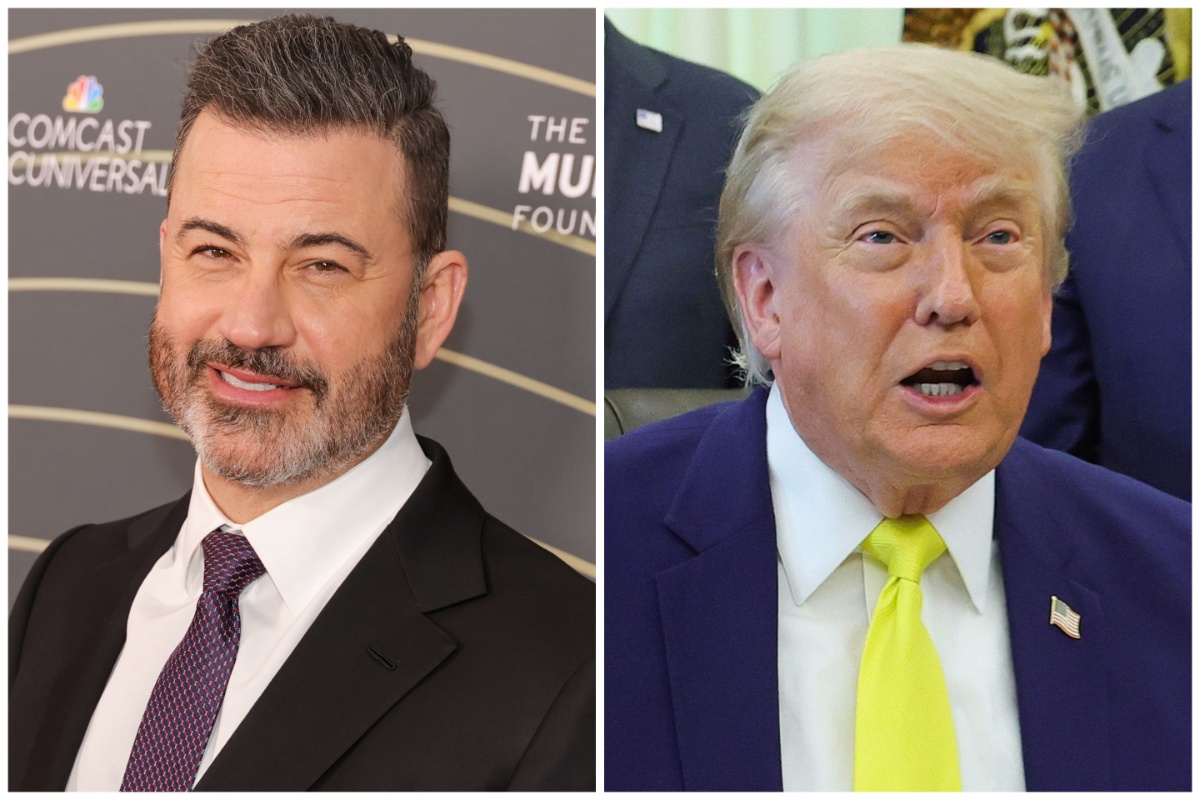
  • Jimmy Kimmel’s Epstein-Themed Birthday Card to Donald Trump – A Late-Night Escalation

    Jimmy Kimmel’s Epstein-Themed Birthday Card to Donald Trump – A Late-Night Escalation

    On June 14, 2026, ABC late-night host Jimmy Kimmel marked Donald Trump’s 80th birthday by broadcasting a custom-designed, Jeffrey Epstein-inspired birthday card during his opening monologue on Jimmy Kimmel Live!. The segment immediately triggered a polarized cultural response, blending late-night comedy with the dark legacy of the convicted sex offender. The broadcast utilized historical photographs of Trump and Epstein from the 1990s, weaponizing the past social association between the two men for political satire.

    The visual landed exactly as intended. The studio audience at the El Capitan Entertainment Centre in Hollywood erupted. Social media platforms fractured along predictable partisan lines. Variety reported on the segment within hours, cementing its status as a viral media event.

    But the story does not begin with a single monologue in 2026. What looks like a spontaneous late-night joke is actually the culmination of a decade-long media war. It is a story about the changing mechanics of television, the weaponization of scandal, and the total collapse of the neutral American broadcaster.

    The Broadcast from Hollywood

    The mechanics of the modern late-night monologue are highly engineered. The writing staff of Jimmy Kimmel Live! works hours before the 11:35 PM EST broadcast to isolate the day’s most flammable political topics. On June 14, the target was obvious.

    Donald Trump’s birthday has long served as a focal point for both his supporters and his political detractors. Kimmel chose to bypass traditional political critiques regarding policy or legal battles. Instead, he reached for the most radioactive cultural figure of the 21st century.

    Jeffrey Epstein died at the Metropolitan Correctional Center in Manhattan on August 10, 2019. His legacy as a financier and convicted sex offender continues to cast a long shadow over global elites. By linking Trump’s milestone birthday to Epstein, Kimmel bypassed standard comedy. He deployed a deliberate, associative attack.

    The card displayed during the broadcast featured well-documented imagery. It relied on photographs taken at Mar-a-Lago and various Manhattan social events during the late 1990s and early 2000s. These images show Trump and Epstein in close proximity, often accompanied by Ghislaine Maxwell.

    Kimmel delivered the punchline with practiced precision. The camera cut to the custom graphic. The joke was brief. The cultural fallout was immediate.

    A Decade of Hostility

    Jimmy Kimmel and Donald Trump were not always adversaries. During the early 2000s, Trump was a frequent guest on late-night television. He promoted The Apprentice, discussed real estate deals, and participated in lighthearted banter. The relationship was transactional and mutually beneficial.

    The dynamic fractured permanently in 2015. When Trump descended the escalator at Trump Tower to announce his presidential campaign, the late-night ecosystem shifted. By the time Trump assumed the presidency in January 2017, hosts like Kimmel, Stephen Colbert, and Seth Meyers had transformed their programs into nightly opposition broadcasts.

    The feud between Kimmel and Trump became deeply personal. It transcended standard political satire. Trump frequently targeted Kimmel on Twitter, and later on Truth Social. He mocked Kimmel’s ratings. He criticized his hosting abilities. He labeled the comedian a partisan hack.

    Kimmel returned fire consistently. He dedicated vast portions of his nightly monologues to dissecting Trump’s administration. The conflict reached a historic peak on March 10, 2024.

    “Has there ever been a worse host than Jimmy Kimmel at the Oscars?”

    Trump posted that question on Truth Social during the 96th Academy Awards. Kimmel, hosting the live broadcast on ABC, read the post to a global audience of nearly 20 million viewers. He followed it with a direct jab at Trump’s legal troubles. The exchange proved that the feud had become a permanent fixture of American pop culture.

    The 2026 birthday card was simply the latest ammunition in an ongoing war. It was designed to provoke. It succeeded.

    The Epstein Association as Political Weapon

    The use of Jeffrey Epstein as a comedic weapon requires specific context. Epstein was a fixture of high society. His contact book, often referred to as the “black book,” contained the names of politicians, scientists, actors, and billionaires.

    Both Bill Clinton and Donald Trump had documented social interactions with Epstein. This bipartisan proximity made Epstein a unique figure in modern political warfare. Opposing political camps frequently use Epstein’s memory to attack their rivals.

    For Kimmel, the strategy was clear. The visual evidence of Trump and Epstein socializing in Palm Beach provides undeniable fodder. Trump’s defenders routinely point out that Trump banned Epstein from Mar-a-Lago after a dispute over real estate, long before Epstein’s 2008 conviction in Florida.

    Late-night comedy does not concern itself with nuanced timelines. It concerns itself with impact. The image of the two men laughing together in the 1990s is a potent visual. Kimmel’s writing team understood the algorithm. They knew the image would generate millions of impressions across X, TikTok, and YouTube.

    The birthday card was not just a prop. It was a calculated piece of viral engineering.

    The Economics of Outrage

    Late-night television is an expensive enterprise. Producing five hours of original content a week requires massive capital. In 2026, linear television ratings continue to decline. Networks like ABC, owned by The Walt Disney Company, rely heavily on digital distribution to justify the costs.

    A standard monologue joke might generate a few hundred thousand views on YouTube. A highly polarized, controversial attack generates millions. It drives engagement. It forces media outlets like Variety to write aggregation pieces. It creates a self-sustaining news cycle.

    The Epstein birthday card was engineered for this ecosystem. The moment it aired, it was clipped and distributed. Conservative commentators shared the clip to express outrage, accusing Kimmel of crossing a line of decency. Progressive commentators shared the clip to applaud Kimmel’s willingness to attack the former president aggressively.

    Both reactions serve the same master. Both reactions generate ad revenue. Both reactions keep Jimmy Kimmel relevant in a fractured media landscape.

    • The Linear Broadcast: Captured the older, traditional television demographic.
    • The YouTube Upload: Captured the morning-after office crowd and international viewers.
    • The TikTok Cut: Captured Gen Z users through aggressive algorithmic pushing.
    • The News Cycle: Captured the political media class, ensuring the joke lived for 48 hours instead of 10 minutes.

    The Walt Disney Company maintains a delicate balance. They operate theme parks built on family-friendly intellectual property. They also operate a television network that relies on highly partisan, aggressive political comedy to maintain cultural relevance. The Epstein card tested the limits of that balance.

    The Death of the Neutral Monologue

    To understand the gravity of the broadcast, one must look at the history of the medium. Johnny Carson hosted The Tonight Show for 30 years. He was the undisputed king of late night. His political jokes were mild. He mocked the president, regardless of party, for basic incompetence or physical stumbles. He never alienated half his audience.

    Jay Leno followed the same playbook. He was a populist. He wanted everyone in the tent.

    Jon Stewart changed the paradigm. With The Daily Show, Stewart proved that an audience craved sharp, ideologically driven satire. He proved that you did not need everyone in the tent. You only needed a fiercely loyal demographic.

    Jimmy Kimmel adopted this model out of necessity. When he launched his show in 2003, he was a former co-host of The Man Show. He was known for frat-boy humor. Over two decades, he reinvented himself. He became an emotional, highly political voice for the American center-left.

    The transition was complete by the time Trump entered politics. Kimmel’s tearful monologues about healthcare policy in 2017 established his new brand. The 2026 Epstein birthday card solidified it. There is no longer any attempt to appeal to the broad American public. The goal is to rally the base.

    The Cultural Fallout

    The aftermath of the broadcast followed a predictable script. Political action committees drafted fundraising emails referencing the joke. Cable news panels spent hours debating the ethics of using a convicted sex offender as a punchline. The Federal Communications Commission received a minor spike in routine complaints.

    None of it changed the trajectory of the culture. The outrage cycle is baked into the business model. The controversy is not a byproduct of the broadcast. The controversy is the product.

    Jimmy Kimmel understood the assignment. The writers understood the assignment. The network executives understood the assignment. They delivered exactly what the 2026 media environment demands. They provided friction.

    They took a birthday. They added a scandal. They pressed broadcast. The machine did the rest.

    Writers drafted the script. Hosts delivered the lines. Audiences picked their sides. Television.